6 Key Features of Energy Storage PCS You Should Know
2025-04-30
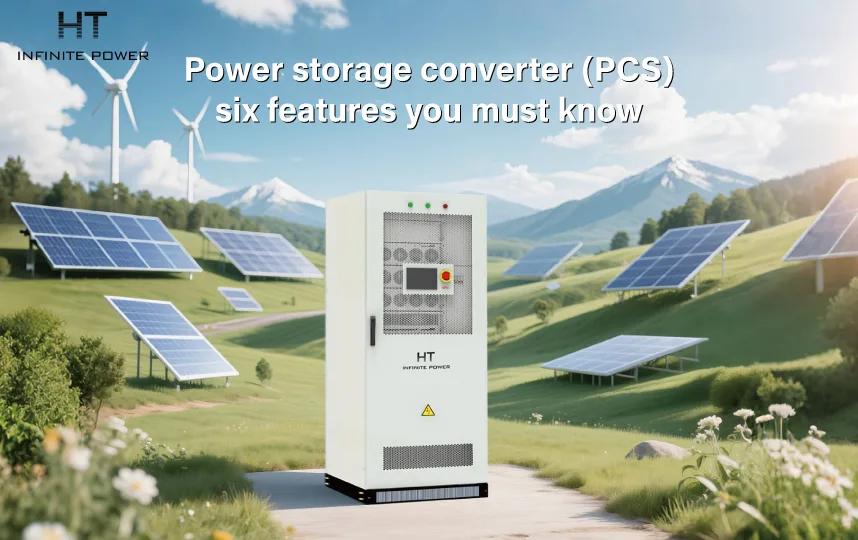
Against the backdrop of global energy structural transformation, energy storage technology, as a key means to solve the imbalance between energy supply and demand and improve energy utilization efficiency, is ushering in unprecedented development opportunities. As the core equipment of the energy storage system, the performance of the power conversion system (PCS, Power Conversion System) directly affects the operating efficiency and reliability of the energy storage system.
1. PCS: "Energy Router" of Energy Storage System
The energy storage converter (PCS) is a key device that connects energy storage batteries and power grids/loads. Its main function is to realize bidirectional conversion and control of electric energy. It accurately controls the charging and discharging process of the battery according to system requirements to ensure the efficient and stable operation of the energy storage system. In modern energy systems, the role of PCS is similar to that of an "energy router", which can flexibly allocate the flow of electric energy to meet energy needs in different scenarios.
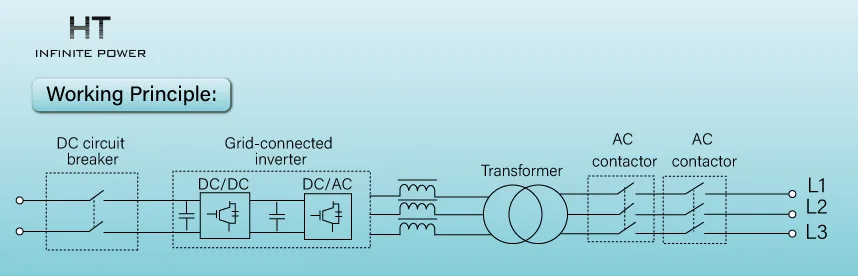
Working principle: PCS is based on the principle of a controllable four-quadrant operating converter on the AC and DC sides, and realizes the bidirectional flow of electric energy by executing a constant power or constant current control strategy. On the grid side, PCS charges or discharges according to grid requirements; on the battery side, it accurately controls the charging and discharging current and voltage of the battery to ensure the safety and efficient operation of the battery. For example, when the grid load is low, PCS can store electric energy in the battery; when the load is high, PCS can release the electric energy in the battery to the grid to achieve optimal energy configuration.
2. Technical architecture: core components of PCS
(1). Power electronic devices
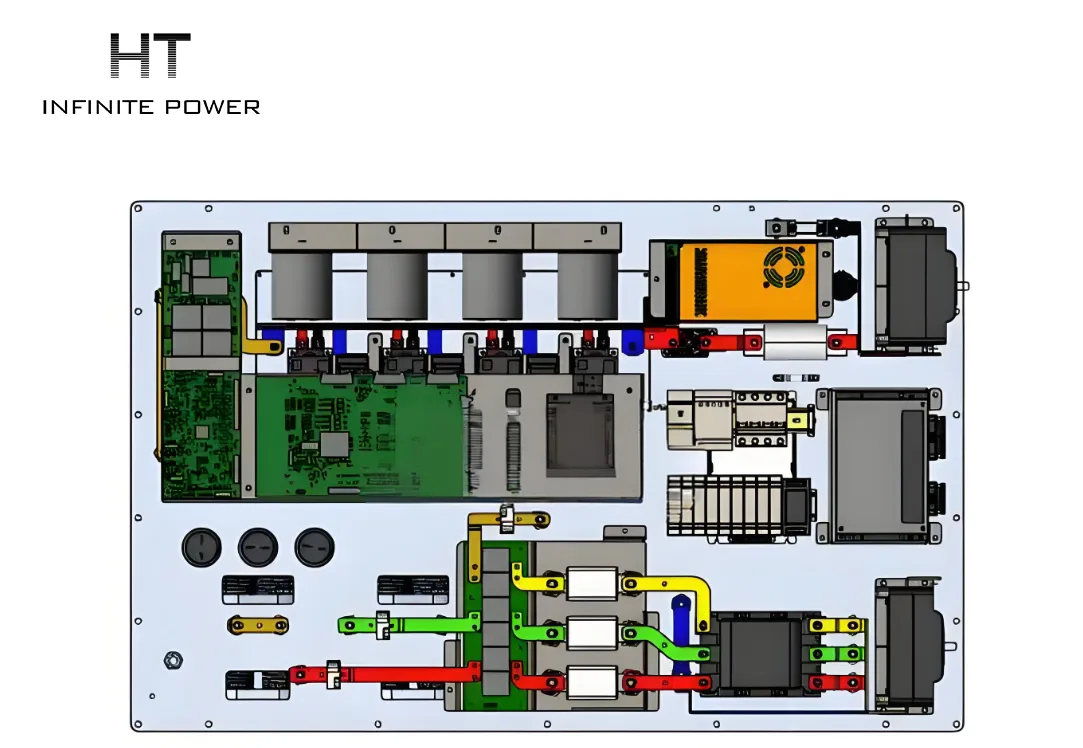
Power electronic devices are the core of PCS, mainly including thyristors (SCR), insulated gate bipolar transistors (IGBT), metal oxide semiconductor field effect transistors (MOSFET), etc. These devices achieve efficient conversion and control of electrical energy by controlling the switching state of current and voltage. In recent years, with the application of wide bandgap semiconductor materials (such as silicon carbide and gallium nitride), the performance of power electronic devices has been continuously improved, further improving the conversion efficiency and power density of PCS.
(2). Control circuit
The control circuit is the "brain" of PCS, responsible for signal acquisition, processing and control algorithm execution. The signal acquisition module is responsible for collecting key signals such as current, voltage, and temperature; the processing module filters and preprocesses the collected signals; the control algorithm module calculates accurate control signals based on the processed signals to drive the switching action of power electronic devices. Advanced control algorithms can achieve more accurate charge and discharge control and improve the overall performance of the system.
(3). Electrical connection components
Electrical connection components are an important part of PCS, including cables, plugs and sockets, and wiring terminals. These components are required to have good conductivity and reliable contact performance to ensure stable transmission of electrical energy. In practical applications, the quality of electrical connection components directly affects the operating reliability and safety of PCS, so their quality needs to be strictly controlled.
3. Working mode: flexible application of PCS
(1). Grid-connected mode
In grid-connected mode, PCS realizes bidirectional energy conversion between battery packs and the grid. It can charge the battery during the low load period of the grid and release the battery's power to the grid during the peak period to achieve "peak-valley arbitrage". In addition, PCS can also perform active and reactive power compensation when the power quality is poor to improve the stability of the grid. For example, when the grid voltage fluctuates or the frequency deviation is large, PCS can adjust the output power and stabilize the grid parameters through rapid response.

(2). Off-grid mode
In off-grid mode, PCS is disconnected from the main grid, provides AC power to some local loads, and independently undertakes the task of stabilizing voltage and frequency. In this mode, PCS becomes the core power source of microgrid or off-grid system, ensuring continuous power supply of key loads. For example, in scenarios such as remote areas or islands that cannot access the main grid, off-grid PCS can provide reliable power supply to local residents or enterprises.
(3). Hybrid mode
Hybrid mode is an advanced operating mode of PCS, which can flexibly switch between grid-connected and off-grid modes. In this mode, PCS can automatically select the optimal operating mode according to the grid conditions and system requirements to improve the reliability and flexibility of the system. For example, during grid failure or maintenance, PCS can automatically switch to off-grid mode to ensure the power supply of local loads; after the grid returns to normal, it can seamlessly switch back to grid-connected mode.
4. Selection points: accurate matching of PCS
(1). Power and capacity
The power and capacity of PCS should be determined according to the actual load demand in the microgrid, the capacity of distributed power generation energy, and the scale and application requirements of the energy storage system. At the same time, it is also necessary to select the appropriate converter type in combination with the voltage level of the project. For example, for a small distributed energy storage system, a low-power, high-efficiency PCS can be selected; for a large energy storage power station, a high-power, high-capacity PCS is required to meet the demand.

(2). Transformer ratio
The transformer ratio is determined by the battery voltage range and must be matched with the voltage of the energy storage battery system. Reasonable transformer ratio selection can improve the conversion efficiency of the system and reduce energy loss. In actual selection, the transformer ratio should be accurately calculated based on the nominal voltage of the battery and the rated voltage of the system to ensure stable operation of the system.
(3). Reliability
Reliability is the basic requirement for energy storage converters. When selecting, PCS products with high reliability design should be given priority, such as redundant design and high-quality components, to ensure the stable operation of the system. For example, a PCS with dual power supply redundancy design can automatically switch to another power supply when one power supply fails to ensure the continuous operation of the equipment.
(4). Efficiency
An efficient PCS can reduce losses during energy conversion and lower operating costs. When selecting a model, you should pay attention to the efficiency performance of the PCS under different working conditions and choose high-efficiency products. For example, some advanced PCS can achieve a conversion efficiency of more than 98% at full load, and can also maintain a high efficiency at light load, thereby effectively reducing system losses.
(5). Communication and remote monitoring functions
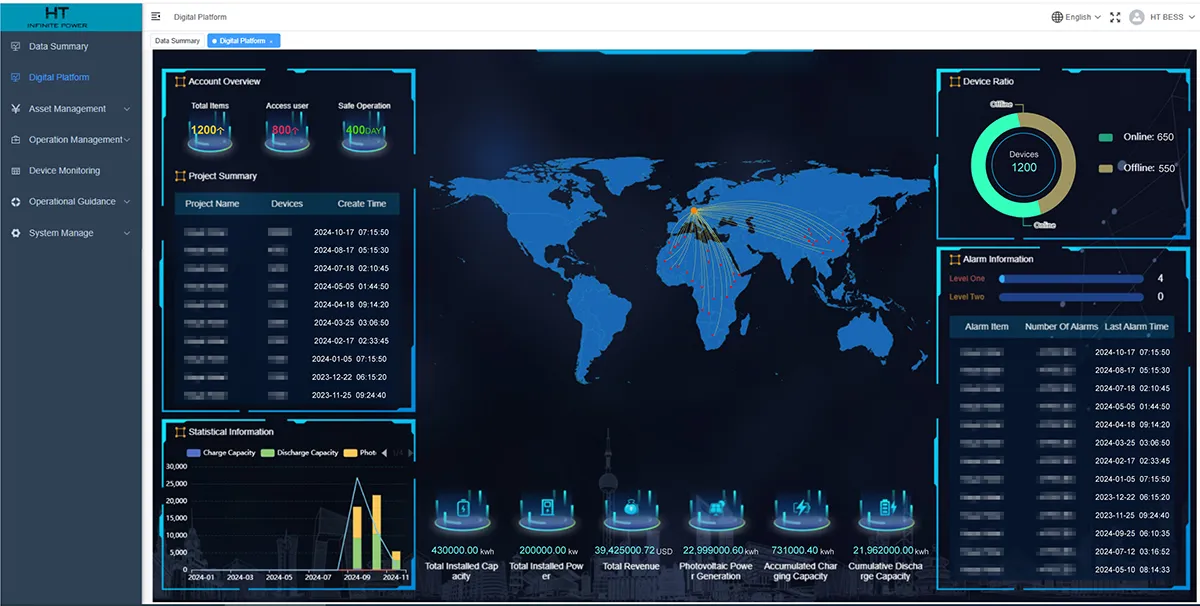
Modern energy storage systems usually need to have communication and remote monitoring functions to monitor and remotely control the operating status of the PCS in real time. When selecting, PCS products that support standard communication protocols (such as Modbus, Profibus, etc.) and have complete remote monitoring functions should be given priority. Through remote monitoring, operation and maintenance personnel can obtain the operating data of the equipment in real time, discover and handle faults in a timely manner, and improve the operation and maintenance efficiency of the system.
(6). Cost
On the premise of meeting performance requirements, PCS products with high cost performance should be selected as much as possible. When selecting, factors such as equipment purchase cost, operation and maintenance cost, and replacement cost should be comprehensively considered to select the solution with the lowest life cycle cost. For example, although the initial purchase cost of high-performance PCS products is high, if they have high operating efficiency and good reliability, in the long run, they may bring lower operation and maintenance costs and higher economic benefits.
5. Application scenarios: Multiple values of PCS
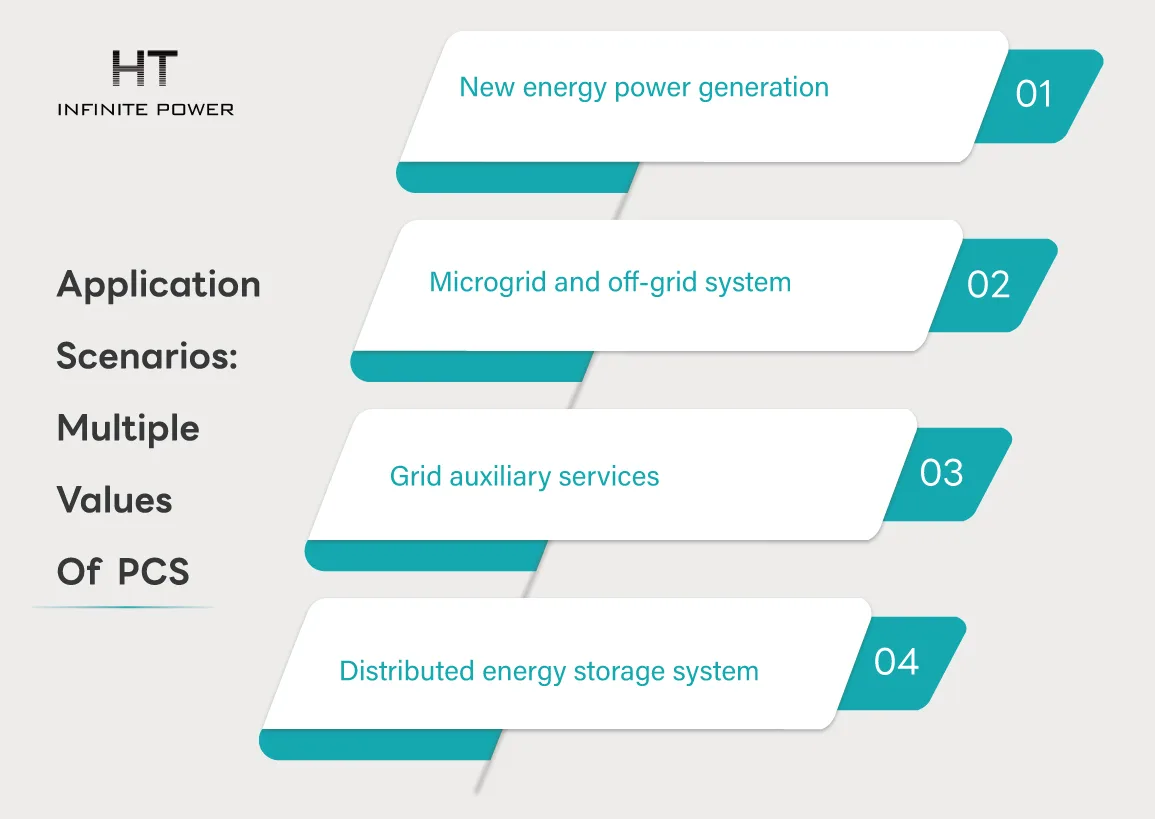
(1). New energy power generation
In new energy power generation scenarios such as photovoltaic and wind power, PCS can smooth the volatility of new energy and improve the absorption capacity of new energy. Through the charge and discharge control of PCS, real-time matching of new energy power generation and grid load can be achieved. For example, in a photovoltaic power station, PCS can store excess electricity in the battery when there is sufficient sunlight during the day, and release electricity at night or on cloudy days, thereby improving the stability and reliability of the photovoltaic power station.
(2). Microgrid and off-grid system
In microgrid or off-grid system, PCS, as the core power supply equipment, can ensure the continuous power supply of key loads. Through the flexible control of PCS, efficient and stable operation of microgrid or off-grid system can be achieved. For example, in the island microgrid, PCS can work with diesel generators, solar panels and other equipment to optimize energy configuration, reduce dependence on diesel generators, and reduce operating costs.
(3). Grid auxiliary services
PCS can participate in the auxiliary service market of the grid, such as frequency regulation and peak regulation. Through the rapid response and precise control of PCS, the stability and reliability of the grid can be improved. For example, in the grid frequency regulation service, PCS can quickly adjust the charging and discharging power according to the changes in the grid frequency to stabilize the grid frequency.
(4). Distributed energy storage system
In a distributed energy storage system, PCS can realize centralized control and optimized scheduling of multiple energy storage units. Through the coordinated control of PCS, the overall performance and economic benefits of the distributed energy storage system can be improved. For example, in a distributed energy storage system of a commercial building, PCS can flexibly adjust the charging and discharging strategy of the energy storage unit according to the building's electricity load and electricity price changes, achieving "peak shaving and valley filling" and reducing electricity costs.
6. Future Trends: Technological Evolution of PCS
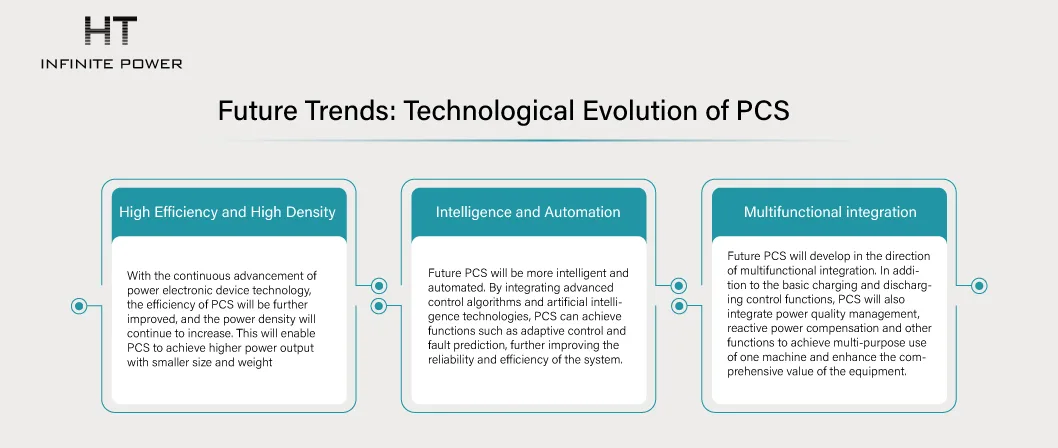
(1). High Efficiency and High Density
With the continuous advancement of power electronic device technology, the efficiency of PCS will be further improved, and the power density will continue to increase. This will enable PCS to achieve higher power output with smaller size and weight.
(2). Intelligence and Automation
Future PCS will be more intelligent and automated. By integrating advanced control algorithms and artificial intelligence technologies, PCS can achieve functions such as adaptive control and fault prediction, further improving the reliability and efficiency of the system.
(3). Multifunctional integration
Future PCS will develop in the direction of multifunctional integration. In addition to the basic charging and discharging control functions, PCS will also integrate power quality management, reactive power compensation and other functions to achieve multi-purpose use of one machine and enhance the comprehensive value of the equipment.
Conclusion: PCS opens a new energy future
With the continuous advancement of technology and the continuous expansion of application scenarios, PCS will usher in a broader development prospect. In the future energy system, PCS will become a key link connecting new energy, power grid and load, providing solid support for the sustainable development of human society.
How to choose a suitable installation location for industrial and commercial energy storage systems?
2025 Global Energy Storage PCS Development Trends and Outlook