What is the difference between BMS and EMS?
2024-08-06

In today's world, where sustainable energy solutions are becoming increasingly important, efficient management of battery systems is essential. Two key components in this area are the battery management system (BMS) and the energy management system (EMS). While both play a key role in optimizing battery performance, they have different functionalities. Understanding how their functionalities compare is essential to deploying effective energy storage solutions.
In this article, we take an in-depth look at the comparison between BMS and EMS, focusing on three key aspects: battery charge and discharge management, charge estimation and condition monitoring, and battery protection.
Battery Charge and Discharge Management

Effective management of battery charge and discharge cycles is critical to maximizing energy storage capacity, extending battery life, and ensuring safe operation. Battery Management Systems (BMS) and Energy Management Systems (EMS) play a vital role in overseeing these processes, albeit with different focuses and functions.
Battery Management System
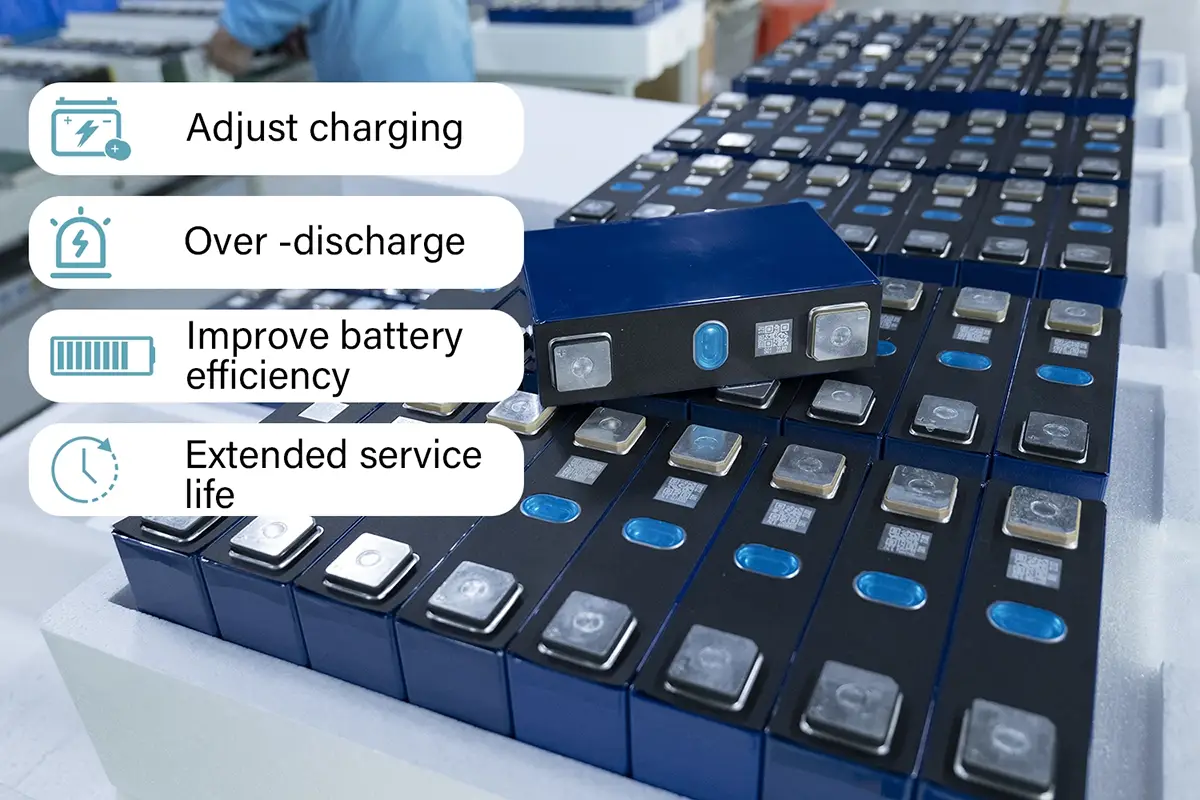
A battery management system (BMS) acts as a guardian for the individual battery cells within a battery pack, carefully managing their charge and discharge cycles. One of its primary functions is to regulate the charging process to ensure that each cell receives the appropriate voltage and current levels. This involves monitoring the battery voltage and adjusting the charge current to prevent overcharging, which can lead to thermal runaway or electrolyte decomposition. During discharge, the BMS continuously monitors the battery voltage to prevent over-discharge, which can cause irreversible damage to the battery and compromise overall battery pack performance. In addition, the BMS facilitates cell balancing, redistributing energy between cells to ensure consistent voltage levels and maximize overall battery pack capacity. By maintaining optimal charging and discharging conditions, the BMS can improve battery efficiency, extend service life, and minimize the risk of premature failure. While an energy management system (EMS) also oversees the battery charging and discharging process, its scope extends beyond a single battery pack to encompass a broader energy ecosystem. An EMS optimizes energy flows by coordinating the charging and discharging of batteries based on energy demand forecasts, grid conditions, and economic considerations. It considers factors such as electricity prices, renewable energy availability, and grid stability requirements to make informed decisions about energy storage and utilization. In addition to managing battery charging and discharging schedules, EMS integrates with renewable energy sources, grid connections, and energy-consuming devices to efficiently coordinate energy flows. By leveraging real-time data and advanced algorithms, EMS maximizes system efficiency, minimizes energy costs, and enhances grid stability. In addition, EMS dynamically adapts to changing energy demand patterns and grid conditions, ensuring optimal performance in different situations.
Power Estimation and Condition Monitoring
Power estimation and condition monitoring are key aspects of battery management and are essential to maintaining optimal performance and ensuring long-term reliability. Battery Management Systems (BMS) and Energy Management Systems (EMS) play a vital role in these functions, leveraging advanced algorithms and real-time data to assess battery health and predict performance. Battery Management Systems (BMS) employ complex algorithms and sensor data to estimate the state of charge (SoC) and state of health (SoH) of individual cells and battery packs. By continuously monitoring parameters such as voltage, current, temperature, and impedance, a BMS can assess the battery’s performance and degradation over time. One of the main functions of a BMS in power estimation is to accurately predict the remaining capacity of a battery. This involves analyzing historical charge and discharge data, as well as accounting for factors such as temperature variations and aging effects. By accurately estimating remaining capacity, a BMS is able to make informed decisions about energy storage and utilization, preventing unexpected power outages and maximizing battery life. In addition to power estimation, a BMS also plays a vital role in condition monitoring, detecting potential faults or anomalies in battery operation. By analyzing sensor data and comparing it to predefined thresholds, the BMS can identify issues such as cell imbalance, overcharging, or overheating, enabling timely maintenance intervention to prevent catastrophic failure. In addition, the BMS tracks performance trends over time, providing valuable insights into battery health and degradation mechanisms.
Energy Management Systems

Energy management systems (EMS) also assist with power estimation and condition monitoring, albeit from a broader system-level perspective. EMS leverages real-time data from a variety of sources, including weather forecasts, energy consumption patterns, and grid conditions, to estimate available energy resources and predict energy demand. In power estimation, EMS analyzes real-time data to forecast energy production from renewable energy sources and predict energy consumption patterns. By taking into account factors such as weather conditions, time-of-day energy pricing, and demand-side management strategies, EMS optimizes energy storage and utilization, minimizing costs and maximizing efficiency. In addition, EMS monitors the performance of energy storage systems and adjusts operating parameters to maintain optimal performance and reliability. By integrating with the BMS and receiving real-time alerts and status updates, EMS can respond quickly to critical events and reduce risks, ensuring that the battery system operates safely and efficiently within the larger energy ecosystem.
Battery Protection
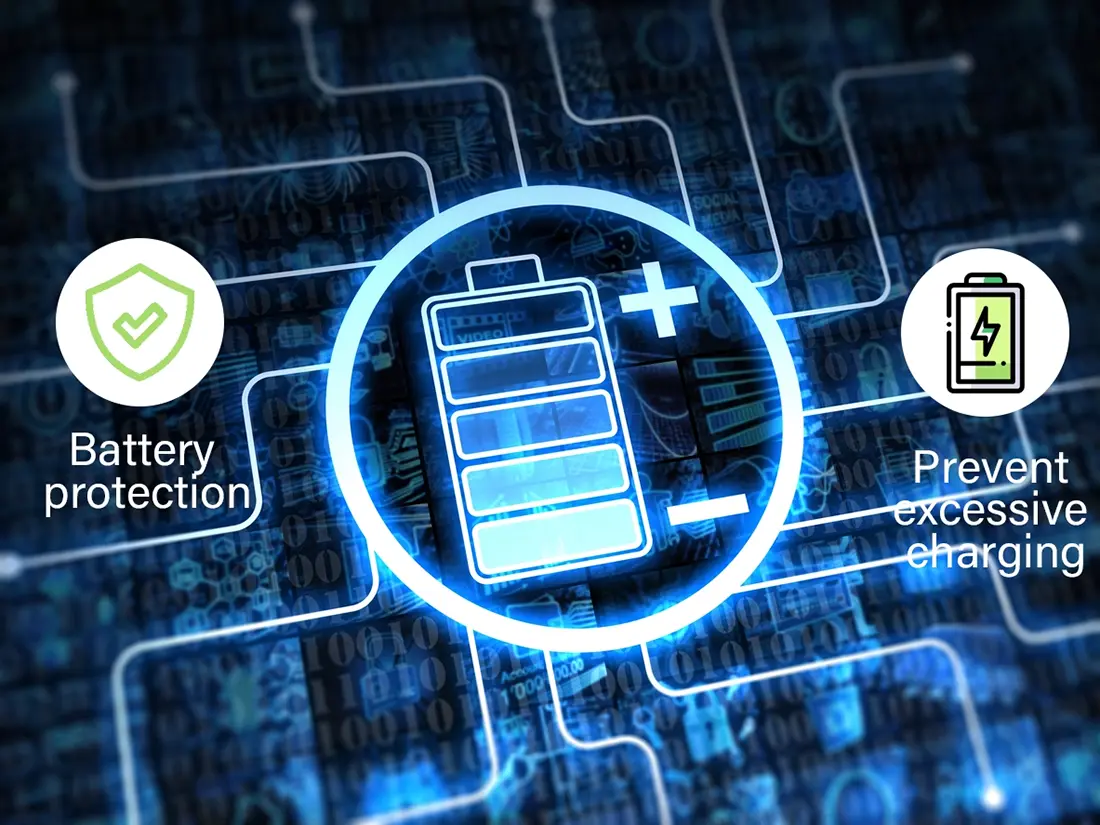
Ensuring the safety and longevity of battery systems is critical to battery management, and the Battery Management System (BMS) and Energy Management System (EMS) play a vital role in implementing protective measures to protect the battery from various risks and hazards. At the forefront of battery protection is the Battery Management System (BMS), which integrates multiple layers of protection mechanisms to reduce potential risks and ensure safe operation. One of the main functions of the BMS in battery protection is to prevent overcharging, a condition that can lead to thermal runaway, electrolyte decomposition, and ultimately battery failure. The BMS achieves this by closely monitoring the battery voltage during the charging process and adjusting the charging current to maintain a safe voltage level. Similarly, the BMS protects the battery from over-discharging, a condition that can cause irreversible damage to the battery and compromise overall battery pack performance. By continuously monitoring the battery voltage during the discharge cycle, the BMS ensures that the battery operates within a safe voltage range, thereby preventing over-discharge and maintaining battery health. In addition, the BMS also employs protection mechanisms to reduce risks such as overcurrent that may be caused by short circuits or external faults. If the current is too large, the BMS triggers a protection action, such as disconnecting the battery from the load or charger, thereby preventing damage to the battery and related equipment. In addition, the BMS monitors battery temperature and activates thermal management systems to prevent overheating, which can accelerate battery degradation and pose safety hazards. By regulating temperature through active cooling or heating systems, the BMS ensures that batteries operate within an optimal temperature range, thereby improving performance and life. While energy management systems (EMS) are primarily focused on optimizing energy flow and maximizing system efficiency, they also help protect batteries in the broader context of energy management. EMS monitors battery parameters and responds to critical events by adjusting energy dispatch strategies to prevent battery overload or overstress.
In addition, EMS integrates with BMS to receive real-time alerts and status updates, enabling coordinated actions to reduce risks and ensure system safety. When the BMS detects a battery fault or abnormal condition, the EMS can adjust energy storage and utilization strategies to minimize the impact on system operation and prevent cascading failures. In addition, EMS plays a role in grid-level protection by ensuring that energy storage systems comply with grid codes and safety standards. By monitoring grid conditions and adjusting energy dispatch strategies accordingly, EMS helps maintain grid stability and reliability while protecting battery assets from potential grid-related risks.
Conclusion
While both battery management systems (BMS) and energy management systems (EMS) contribute to the efficient operation and protection of battery systems, they have unique but complementary functions. BMS specifically manages individual battery packs, ensuring their safety and optimal performance, while EMS coordinates energy flows within a larger energy ecosystem, optimizing efficiency and resilience. By integrating BMS and EMS capabilities, energy storage systems can achieve superior performance, reliability, and sustainability, driving the transition to a greener, more resilient energy future.
HT INFINITEPOWER has been focusing on the research and development of energy storage technology for 10 years. It has independently developed an efficient and safe 3-level architecture BMS system and digital EMS system. Combined with the HT cloud platform, it monitors the operating status of the energy storage system in all directions and adjusts the system operation strategy in real time. It not only guarantees the safe operation of the energy storage system to the greatest extent, but also greatly improves the operating efficiency of the energy storage system, shortens the operating cycle of the factory energy storage system, and increases user benefits.

In energy storage power stations, BMS adopts a three-level architecture (slave control, master control, and master control) to achieve hierarchical management and control from battery module (pack) to cluster and stack.
The following is a brief introduction to the three-level architecture of HT INFINITEPOWER's BMS system.

First level:
Battery management unit (slave control), usually called BMU (Battery Management Unit). Since there is no strict unified standard name, some manufacturers also call it ESBMM (Energy Storage Battery Management Module), CSC (Cell Supervision Circuitnit), etc. The function of this level is mainly to realize the collection of battery cell voltage and temperature, and is responsible for the implementation of battery balancing strategy. Information collection communicates with the second level through the communication link, usually using CAN or daisy chain communication.
Second level:
Battery cluster control management unit (master control), usually represented by BCU (Battery Cluster management Unit) or ESBCM (Energy Storage Battery Cluster Module). The main function of this level is to realize the collection of battery cluster voltage, current, battery cluster insulation information, control of battery pack protection contactors, collection of first-level BMU information, battery state (SoX) estimation, etc. After information collection, it communicates with the third level through the communication link, usually using CAN or Ethernet communication.
Level 3:
BMS system management host or stack management unit (master control), usually represented by BSU (Battery Stack managemnet Unit), ESMU (Energy System Management Unit), BAMS (Battery Array Management System), BAU (Battery Array Unit), etc. The main function of this level is to collect information transmitted by the second-level BCU, store and display the information, etc. It has real-time alarm function, control and contact feedback function of the main circuit breaker, and real-time communication function with PCS, EMS and local monitoring. In addition, BSU also realizes the transparent transmission and control function of dynamic environment equipment such as air conditioning and fire protection. BSU usually communicates with EMS using Ethernet, and communicates with PCS using network port, 485 or CAN.
What is the difference between a microgrid and a main grid?
Applications and advantages of commercial bess