What is the difference between a microgrid and a main grid?
2024-08-15

Concept of microgrid
A microgrid is a small-scale, independently operated power system composed of renewable energy (such as solar energy, wind energy, hydropower, etc.) and other energy (such as fuel generators, energy storage systems, etc.) distributed in different locations, providing reliable, flexible and efficient power supply solutions for local power consumption sites. It is usually a centralized or distributed energy system that is self-sufficient and can achieve local power generation, non-relay protection, control, regulation and power coordination. It also has high autonomy and environmental protection.
The core characteristics of microgrids are intelligence, high reliability, efficient energy utilization, strong adaptability, etc. It can flexibly adjust power according to user needs and has good adaptability. In addition, the distributed energy used in microgrids is renewable and low-carbon, and has no pollution or burden on the environment.
Microgrids are currently mainly used in local power supply sites such as industrial areas, residential areas, rural areas and continuous or isolated islands. It can promote the development and utilization of clean energy, improve energy utilization and the quality of power supply, and provide efficient, reliable and environmentally friendly power solutions for more regions.
The concept of the main power grid
The main power grid is an important part of the power system, also known as the power high-voltage transmission network. It is a power transmission system connecting power plants and substations. In the power system, it is mainly used to transmit the high-voltage AC generated by the power plant to the substation for transformation. The main power grid is mainly composed of high-voltage transmission lines, substations, distribution stations, etc. Its function is to ensure that power can be transmitted stably and meet the power needs of users. It is the blood of the power grid.
The main features of the main power grid are as follows:
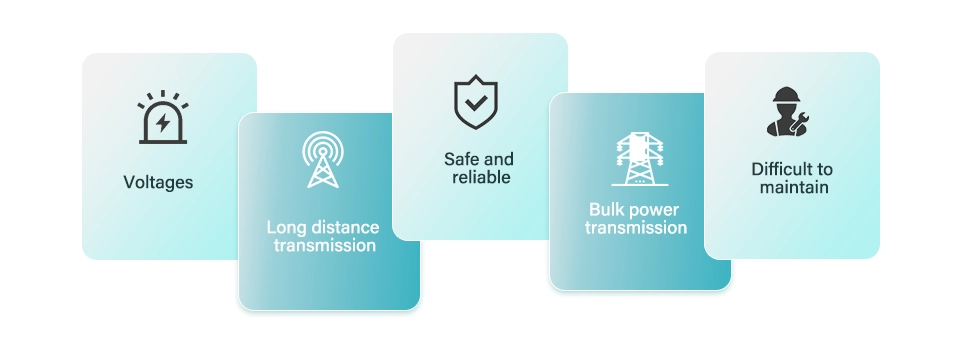
1. High voltage:
The voltage of the main power grid is usually 220 kV, 330 kV, 500 kV and other high-voltage voltage levels. It is usually stepped down to medium voltage and low voltage levels through substations and transformers and supplied to users to reduce resistance loss and line loss.
2. Long-distance transmission:
Due to the long distance between the power plant and the power consumption location, there must be losses in the transmission. The design of the main power grid can minimize the energy loss in the transmission process and avoid the power loss caused by resistance.
3. Safe and reliable:
The high-voltage cables, high-voltage switches and other components in the main power grid have stable structures, safe and reliable. However, it is still necessary to strictly abide by the safety operation regulations in daily maintenance and inspection to protect the lives and property of workers and the public.
4. Large-capacity power transmission:
The power transmission capacity of the main power grid is generally large, and it can stably transmit large-capacity power to meet the power needs of customers with high power consumption.
5. Difficult maintenance:
Due to factors such as the scale and line length of the main power grid, the maintenance of the main power grid is very difficult, and professional maintenance personnel are required to conduct regular inspections, upgrades and maintenance to ensure the efficient operation of the main power grid.
In short, the main power grid is an important part of the entire power system, connecting power plants and substations to ensure that power can be transmitted stably and reliably and meet the power needs of users. Its scale and power transmission capacity are very large, and it needs to strengthen management and maintenance.
Working principle of microgrid
The working principle of microgrid is to integrate and manage multiple power sources and loads through power electronic converters and controllers to make them an autonomous energy group to achieve efficient energy utilization and low energy consumption.

Specifically, the working principle of microgrid can be divided into the following steps:
1. Energy generation:
The energy sources in microgrid include renewable energy sources such as solar photovoltaic, wind power and traditional fuel cells. The electricity generated by these energy sources can be fed to different nodes in the microgrid.
2. Energy management:
Storage devices in microgrids (such as backup batteries) can efficiently handle the imbalance of power generation, while also providing the network with short-term rapid adjustment capabilities. The energy manager can control the grid and power flow according to load demand, remaining energy and other conditions.
3. Energy sales and loans:
Microgrid systems sometimes generate excess energy. At this time, the energy can be sold by lending to the utility network, selling to other users, etc., so as to obtain more funds and resources for updating and expansion.
4. Energy consumption:
Under the coordination of the energy manager, the microgrid can effectively deliver energy to the consumption node. Due to its local energy supply capability, microgrids can continue to operate device nodes in local energy blackout emergencies.
5. Energy feedback:
The energy manager of the microgrid can also obtain feedback information after utilizing environmental energy through precision detection. Energy feedback can provide management with more quantitative details about system utilization and station data.
In short, the working principle of microgrids is to utilize multiple energy sources and loads, and achieve sustainable energy utilization and complex and diverse management and control through the efficient integration of power electronics and controllers. This can integrate independent energy systems into one, providing more solutions for the reliable and stable development of future energy.
Working principle of the main power grid
The working principle of the main power grid is to transmit the electric energy generated by the power plant to the electrical equipment of each user through the high-voltage transmission line. The specific steps are as follows:
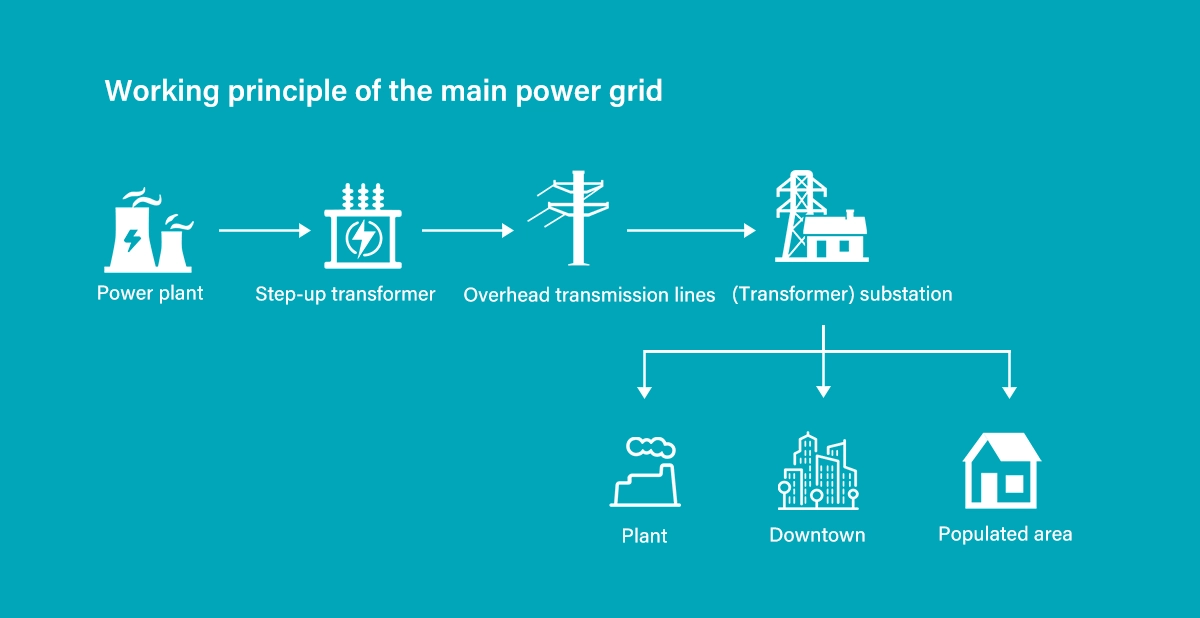
1. Power plant generates electric energy:
Power plants generate electric energy through various means, such as coal, gas, hydropower, wind power, etc.
2. Electric energy is transformed and frequency-converted through the substation:
Since the peak value of electric energy generated by the power plant is usually much lower than the maximum voltage value allowed by the transmission line, in order to transmit electricity over long distances, the electric energy needs to be transformed and frequency-converted by the transformer before being sent to the substation to make it meet the working conditions of the transmission line.
3. Electric energy is transmitted through the transmission line:
The electric energy transformed and frequency-converted by the substation is transmitted to the access point of each user through the high-voltage transmission line, and then the distribution transformer is used to reduce the voltage, frequency-convert and provide power supply to the user.
4. Electric energy is stepped down through distribution transformers:
Electric energy transmitted through high-voltage transmission lines needs to be stepped down to supply power to the electrical equipment of households, enterprises and other users. At the same time, in order to meet the working voltage requirements of different users, the electric energy needs to be transformed and frequency-converted.
5. Use of user electrical equipment:
The electric energy transmitted through the main power grid is directly supplied to the electrical equipment of households and enterprises to provide power services for all parties.
In short, as an important part of the power system, the main power grid is responsible for transmitting electric energy from power plants to various users through high-voltage transmission lines. The whole process is completed through power generation, transformation, transmission and distribution to meet the power needs of users.
The difference between microgrid and main grid
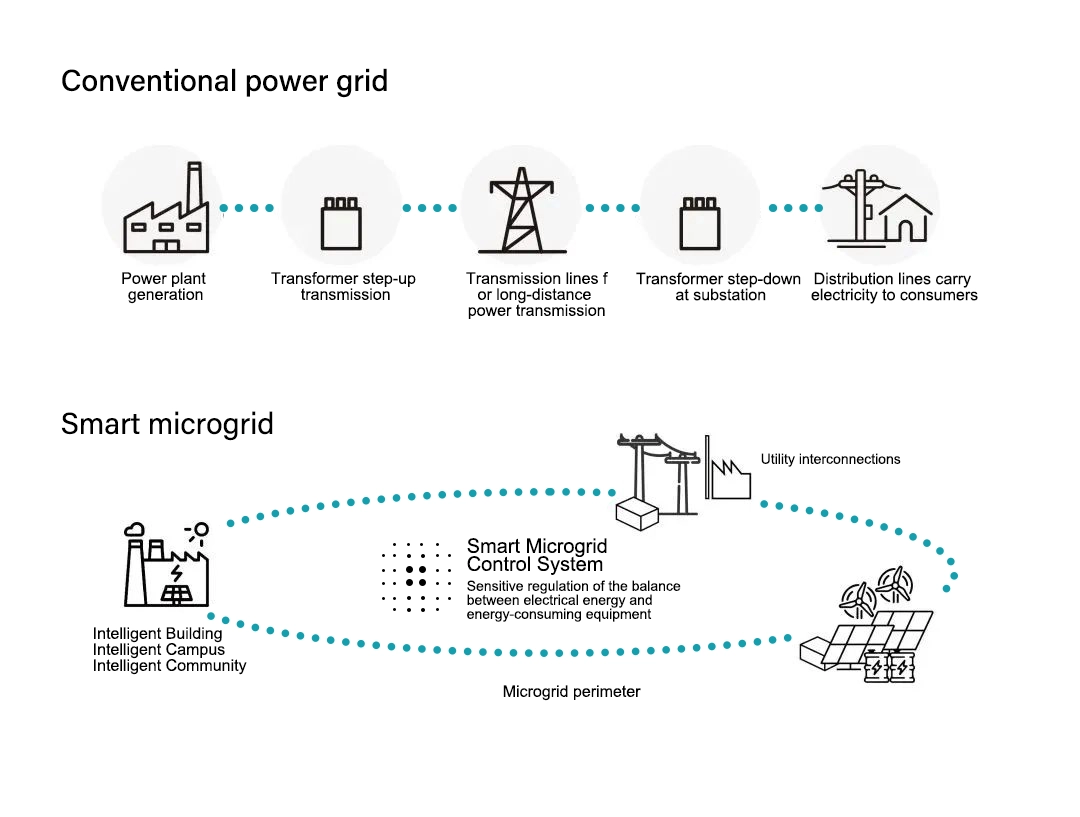
Microgrid and main grid are both part of the power system. The difference between the two is mainly reflected in the following aspects:
1. Scope:
The scope of microgrid is relatively small, generally concentrated in local power consumption places such as residential areas, factories, and enterprises. The main grid is a power transmission network covering the entire power system.
2. Construction form:
Microgrids are usually built in a small centralized or distributed mode, mainly relying on renewable energy or local power generation and battery energy storage to achieve self-sufficiency and coordinated power distribution. The main grid is a central power plant that transmits electricity to various places through high-voltage transmission lines.
3. Stability:
The power supply of microgrid is relatively unstable, but due to its small energy transmission distance, load changes and other factors, it can respond quickly to changes and maintain its energy demand and production balance. In comparison, the power supply of the main grid is relatively more stable, but due to the long power lines, the stability is not as good as that of microgrid.
4. Purpose:
The purpose of microgrid is to provide power supply solutions for small-scale power needs, and it also has high autonomy and environmental protection. The main grid serves large-scale, large-capacity, and long-distance power transmission, and is a channel connecting various power systems.
Characteristics of microgrids
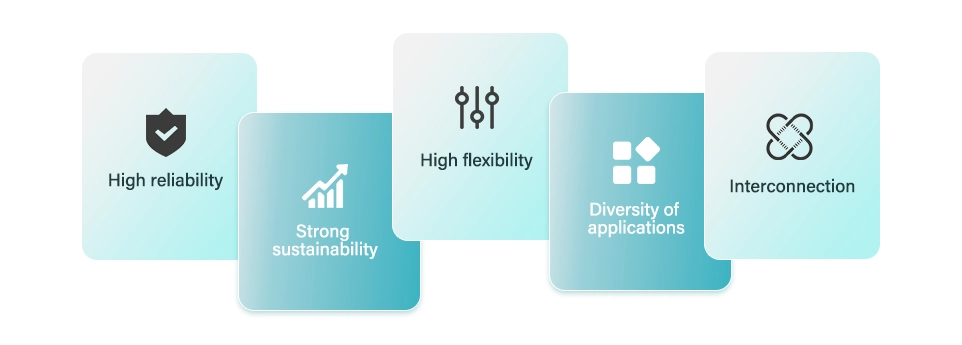
1. High reliability:
Microgrids have a high degree of reliability. Since microgrids are relatively independent systems, even if the main grid is powered off, microgrids can continue to operate and meet the basic power needs of users. This reliability is particularly important for some places with high requirements for power supply, such as hospitals, data centers, etc.
2. Strong sustainability:
Microgrids use renewable energy (such as solar energy, wind energy, etc.) and distributed energy systems to reduce dependence on traditional energy and realize the use of sustainable energy. This can not only reduce energy costs, but also reduce environmental pollution and promote sustainable development.
3. High flexibility:
Microgrids have great flexibility. It can be autonomously adjusted and managed according to the needs of power load. For example, when the power load is small, the microgrid can store excess power through the energy storage system, and when the power load is large, the microgrid can generate electricity through the distributed energy system. This flexibility allows microgrids to flexibly adjust power supply methods and energy utilization according to actual needs.
4. Diversity of applications:
Microgrids have a wide range of applications. It can be used in rural power grid upgrades, island energy supply, industrial park power distribution and other scenarios. In addition, microgrids can also be used for disaster relief and emergency power supply to provide reliable power supply.
5. Interconnection:
Microgrids can be interconnected with traditional power grids. When the main power grid is supplying power normally, the microgrid can support the main grid and realize complementary power supply; when the main grid fails or is overloaded, the microgrid can operate independently by disconnecting from the main grid to ensure the continuity of power supply.
Development Trend of Microgrids
With the rapid development of renewable energy and the transformation of power systems, microgrids are receiving more and more attention and applications. In the future, the development trends of microgrids are as follows:
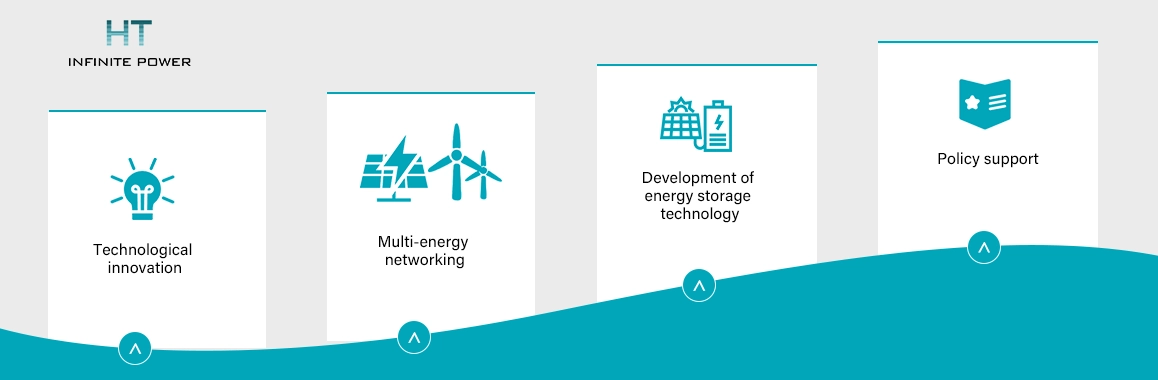
1. Technological innovation:
Microgrid technology will continue to innovate and develop to improve energy conversion efficiency and power supply reliability. For example, use artificial intelligence and big data analysis technology to accurately control and optimize the management of microgrids.
2. Multi-energy networking:
Network different energy sources to form a microgrid system with energy complementarity and optimized utilization. For example, interconnect multiple renewable energy sources such as photovoltaic power generation, wind power generation, and bioenergy to achieve the optimal configuration of energy. Microgrids have a wide range of applications. It can be used for rural power grid upgrades, island energy supply, industrial park power distribution and other scenarios.
3. Development of energy storage technology:
With the continuous innovation and development of energy storage technology, the development of microgrids will be promoted. New energy storage technologies such as hydrogen energy storage and compressed air energy storage will provide more options for microgrids.
4. Policy support:
Government support and policy support for microgrids will promote their rapid development. Encouraging R&D innovation, providing financial support and preferential policies will promote the widespread application of microgrids. Connect different energy sources to form a microgrid system that complements and optimizes energy utilization.
In short, as a new type of power system, microgrid has high reliability, sustainability and flexibility. It realizes the effective use of renewable energy by utilizing distributed energy systems and energy storage technology. The development of microgrids will further promote the transformation of the power system and promote sustainable development and energy transformation.
HT INFINITEPOWER focuses on the design, production and installation of microgrids to help global energy stability and sustainable development.
How does utility scale battery storage work?
What is the difference between BMS and EMS?