What is a step up transformer?
2025-02-07

The step-up transformer, also known as the variable frequency transformer, is a kind of electrical equipment, which is mainly used to change the voltage and frequency. At present, the step-up transformer is widely used in the power system and plays an important role.
This article will introduce the step-up transformer from the aspects of principle, structure and application.
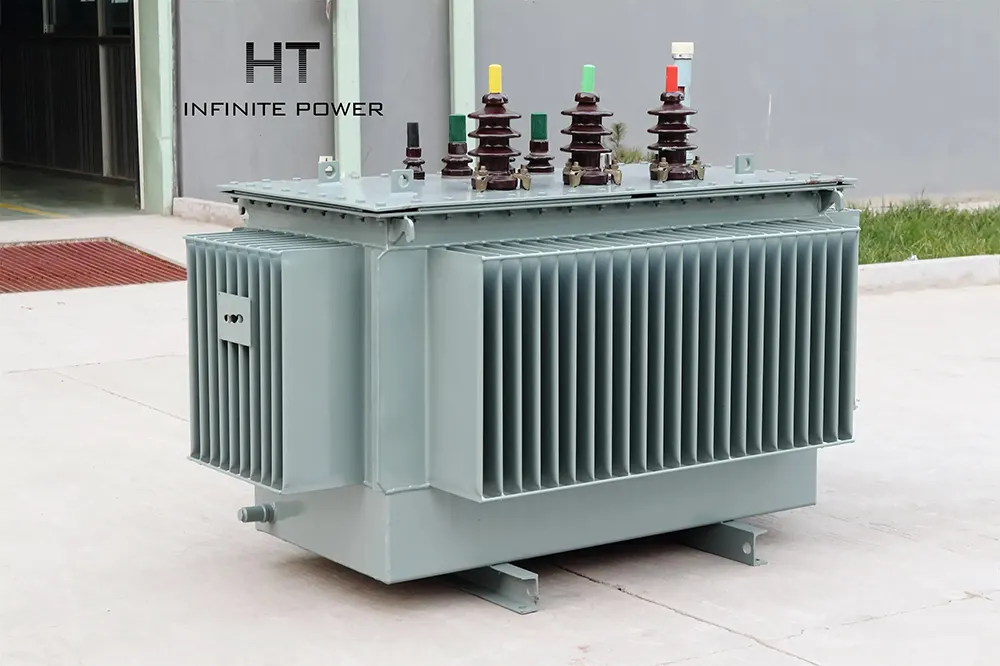
Principle of step-up transformer
The main principle of step-up transformer is to change the voltage by using the function of mutual inductor. The mutual inductor is composed of a main coil and a secondary coil. When the main coil is energized, a magnetic field is generated, which passes through the secondary coil, thereby inducing an electromotive force on the secondary coil.
According to Lenz's law, the magnitude of the electromotive force is proportional to the ratio of the number of turns of the primary and secondary coils. By changing the ratio of the number of turns of the primary and secondary coils, the purpose of changing the voltage can be achieved.

Functions and advantages of step-up transformers
1. Increase voltage
Step-up transformers can turn low voltage into high voltage, which is very important for some electrical equipment that requires high voltage. For example, high-voltage bulbs cannot be lit without step-up transformers, and the high voltage required by some medical instruments also needs to be provided by step-up transformers.
2. Save energy
Using step-up transformers can make the lines for transmitting electric energy longer, thereby reducing the line area and construction costs. In addition, step-up transformers can increase the voltage of transmission lines, reduce line losses and energy waste.
3. Extend equipment life
Since step-up transformers can provide stable voltage, they can protect electrical equipment from voltage fluctuations and extend the life of equipment.

4. Reduce line losses
When transmitting electric energy, electric energy will produce certain losses due to line resistance. When the transmission distance increases, the line loss will also increase. Using step-up transformers can increase the voltage of transmission lines, thereby reducing line losses.
5. Protect equipment
Step-up transformers can protect equipment from excessive voltage and avoid equipment damage or burning. In addition, step-up transformers can also provide overload protection and short-circuit protection to ensure the safe operation of equipment.
Structure of step-up transformer
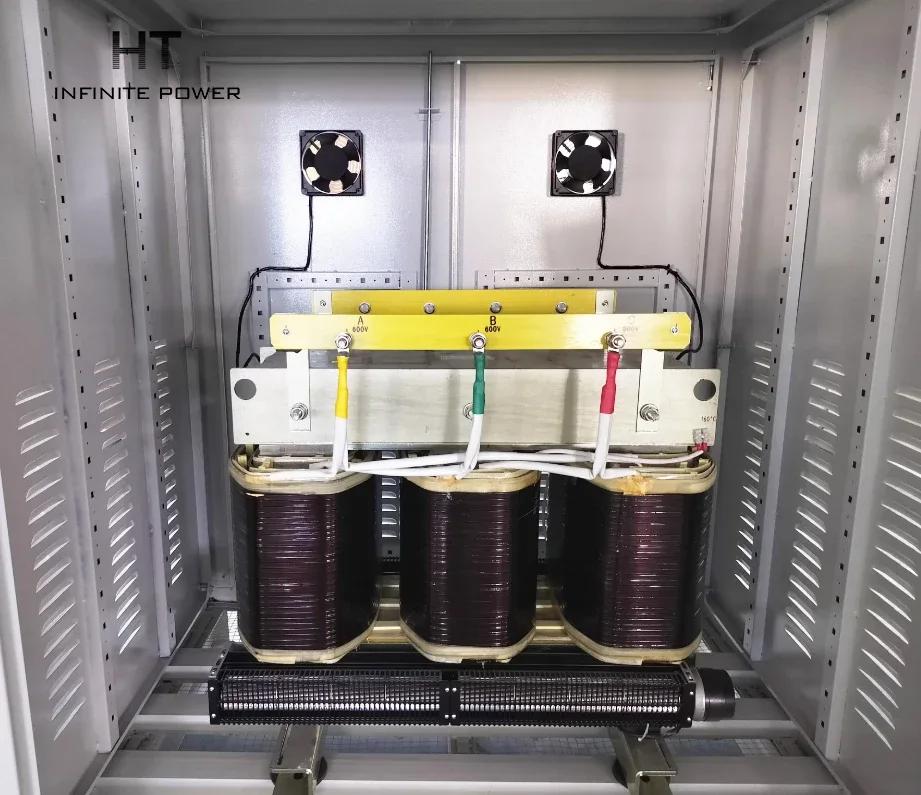
The step-up transformer consists of an iron core and a coil. The iron core is made of a material with high magnetic permeability, which can effectively concentrate the magnetic lines of force and increase the magnetic flux.
The coil is divided into a main coil and a secondary coil. The main coil is usually connected to the power supply, and the secondary coil is usually connected to the load. In order to reduce energy loss, the coil is made of a material with high conductivity. In addition, in order to reduce the hysteresis loss of the iron core, the iron core is also treated with silicon or nickel-iron alloy.
Classification of step-up transformers
High-frequency type
The high-frequency step-up transformer adopts a high-frequency voltage doubler rectifier circuit, applies the latest PWM pulse width modulation technology and power IGBT devices, and adopts special processes based on electromagnetic compatibility theory to make the DC generator high-quality and portable.
It consists of a control box and a voltage doubler. It has a built-in protective resistor and has voltage zero gate protection, overcurrent and overvoltage protection functions. It is small in size, light in weight, easy to carry, convenient, safe and reliable. It is suitable for on-site DC high-voltage tests in power departments, DC characteristic tests of lightning arresters and other occasions requiring DC high voltage.
DC type
DC step-up transformer has the characteristics of small size, light weight, compact structure, complete functions, strong versatility and easy use.
It is especially suitable for power systems, industrial and mining enterprises, scientific research departments, etc. to conduct insulation strength tests on various high-voltage electrical equipment, electrical components, and insulation materials under high voltage or DC. It is an indispensable and important equipment in high-voltage tests.
AC type
AC step-up transformer is a device that converts AC voltage, current and impedance. When AC current flows through the primary coil, AC magnetic flux is generated in the iron core (or magnetic core), which induces voltage (or current) in the secondary coil.
AC step-up transformer has the characteristics of small size, light weight, compact structure, complete functions, strong versatility and easy use.
Dry type
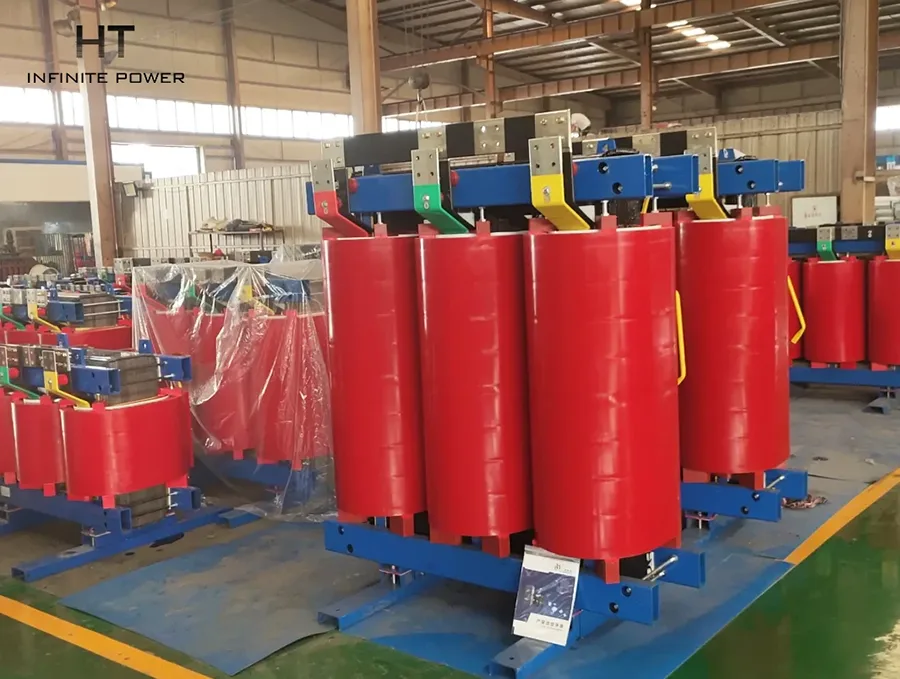
Compared to oil-type step-up transformers, dry-type step-up transformers do not have oil, so there are no problems such as fire, explosion, pollution, etc., and the loss and noise are reduced to a new level. The safe operation and service life of dry-type step-up transformers depend to a large extent on the safety and reliability of transformer winding insulation.
Low frequency type
The core flux of the low frequency step-up transformer is related to the applied voltage. In the current, the excitation current does not increase with the increase of load.

Application of step-up transformers
Step-up transformers are widely used in power systems.
In power stations, step-up transformers are used to convert low-voltage electricity generated by generators into high-voltage electricity for easy transmission and distribution.
In transmission lines, step-up transformers are used to convert high-voltage electricity into low-voltage electricity to meet the needs of the load.
In addition, step-up transformers are also used in the industrial field, such as adapting mechanical equipment to different voltage and frequency requirements.
Differences and connections between step-up transformers and step-down transformers
Differences:
• Function:
Step-up transformers increase voltage, while step-down transformers decrease voltage.
• Turns ratio:
The secondary coil of a step-up transformer has more turns than the primary coil, while the secondary coil of a step-down transformer has fewer turns than the primary coil.
• Application scenarios:
Step-up transformers are used in transmission networks and high-voltage equipment, while step-down transformers are used in home and industrial equipment.
• Voltage direction:
The output voltage of a step-up transformer is higher than the input voltage, while the output voltage of a step-down transformer is lower than the input voltage.
Connection:
• Both achieve voltage changes through the principle of electromagnetic induction.
• Step-up and step-down transformers are important power equipment used in various electrical systems.
• Step-up and step-down transformers are important power equipment used in various electrical systems.
Application of step-up transformers in industrial and commercial energy storage systems
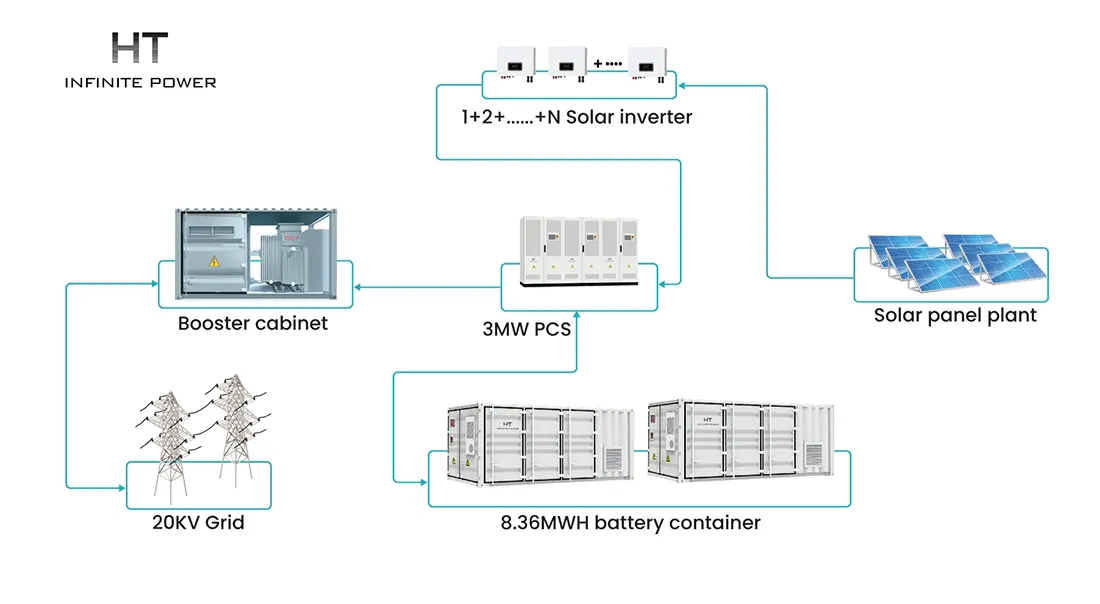
Working principle of energy storage and booster
Energy storage and booster is an energy conversion device that can convert DC power into AC power and store and boost the power.
It mainly consists of three parts: energy storage unit, booster unit and control unit.
The energy storage unit is generally composed of lithium-ion batteries, hydrogen energy storage, supercapacitors, etc., which are used to store electrical energy.
The boost unit is mainly composed of power semiconductor devices, transformers, etc., which are used to boost the stored DC power into AC power to improve energy utilization efficiency.
The control unit is the brain of the energy storage and boosting machine. By controlling the energy storage unit and the boost unit, it can adjust and manage the entire system.
Features and advantages of the inverter-boost integrated cabinet
Applicable to the field of new energy power generation (photovoltaic, wind power, energy storage), reducing the abandonment of light and wind, improving economic benefits, strong environmental adaptability, effectively improving electrolysis efficiency, reducing comprehensive power consumption, and providing a stronger converter module for the energy storage system.
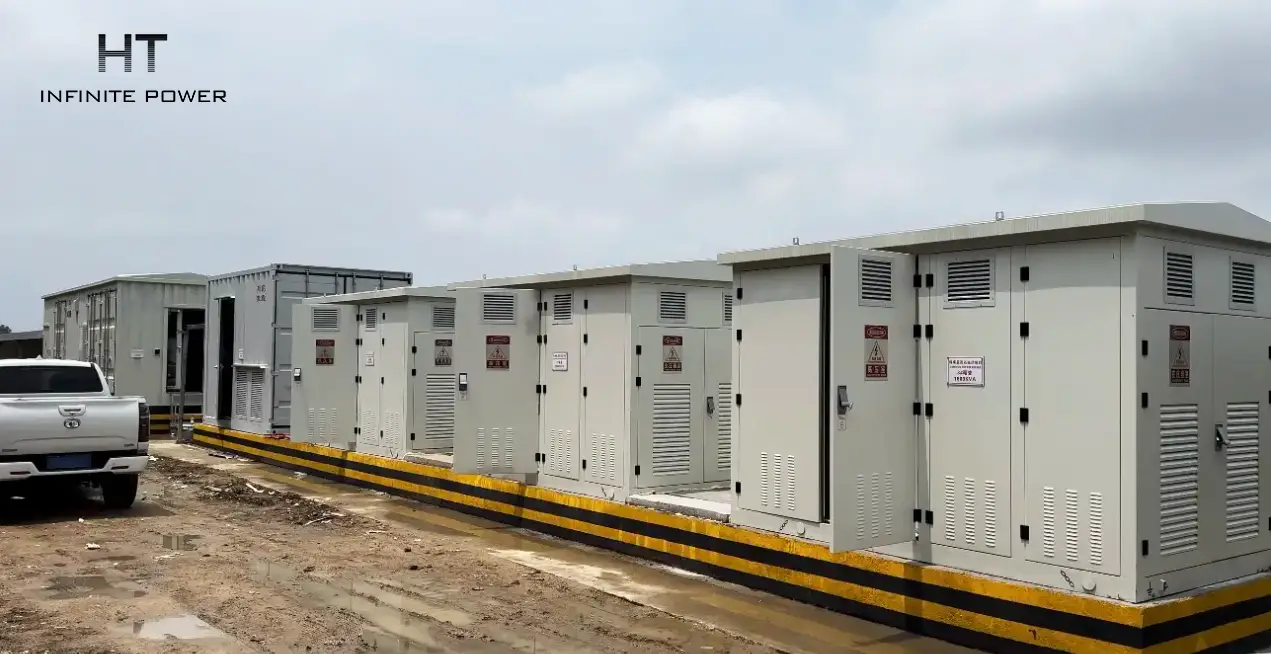
Flexible configuration
6kV~35kV dry transformer and oil transformer are optional, the maximum capacity of a single unit can reach 10MW, integrating photovoltaic inverter, transformer, switch cabinet, and overall debugging before delivery.
High safety
The shell can be container-type, with an anti-corrosion grade of up to C5. The shell is equipped with an insulation board, which has good fire prevention, heat insulation and thermal insulation effects. The air inlet is specially designed to effectively prevent dust and sand, with multiple protection effects. The product is safer and more reliable, with strong weather resistance, and can adapt to ambient temperatures of -30~60℃. It has the characteristics of anti-wind and sand, high temperature resistance and severe cold resistance, and can be adapted to the outdoor environment of Shagohuang.
Economical and efficient
The optimized structure saves two low-voltage switch cabinets between the inverter and the step-up transformer, streamlines the configuration, reduces the number of installation bases from 2 to 1, saves 50% of the installation and commissioning time, and quickly puts into production. The equipment operates efficiently and stably, is durable, and has low maintenance costs.
Energy storage and booster integrated machine is an important support for the development of new energy, which can help solve the volatility problem of new energy and improve energy utilization efficiency.
In the future, with the continuous upgrading of new energy technology and the continuous expansion of application scenarios, the prospects of energy storage and booster integrated machine will be broader.
What is Lifepo4 battery?
What is Power conversion system(PCS)?
Related Article