What Is a Communication Protocol in an Energy Storage System?
2026-04-03
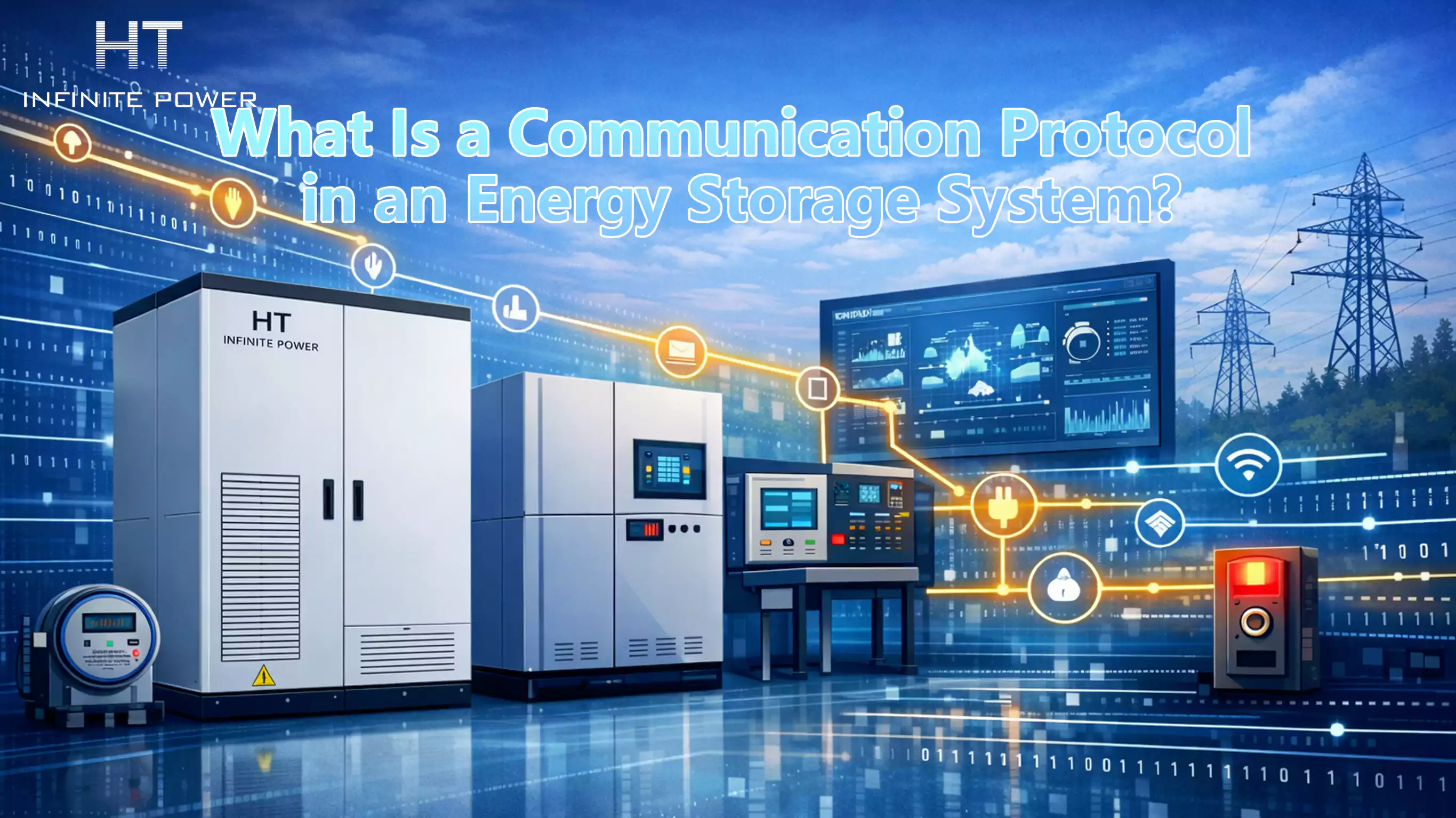
A commercial and industrial energy storage system is never just a battery cabinet sitting beside a PCS. In a real project, the number of connected devices quickly grows: battery cells, battery modules, slave BMS units, master BMS, PCS units, smart meters, HVAC systems, fire protection equipment, site controllers, EMS software, remote monitoring platforms, and sometimes even grid dispatch interfaces. Each device may come from a different manufacturer, use a different communication interface, and speak a different data language.
That is where communication protocols become essential.
Without them, the system can still be physically connected, but it cannot truly operate as one coordinated platform. The BMS would not know whether the PCS is charging or discharging. The EMS would not know whether the site is currently exporting power, how much load is online, or whether a thermal alarm is already building. The utility dispatch center would not receive the operating data it needs. Remote operators would have no reliable way to monitor faults or send commands.
So when people ask what a communication protocol is in an energy storage system, the answer is not just “a method for transmitting data.” It is the rule set that allows every device in the system to understand what the others are doing, when they are doing it, and how they should respond.
Why communication protocols matter so much in energy storage
In a small electrical system, communication can be simple. In an energy storage project, it becomes part of the control architecture itself.
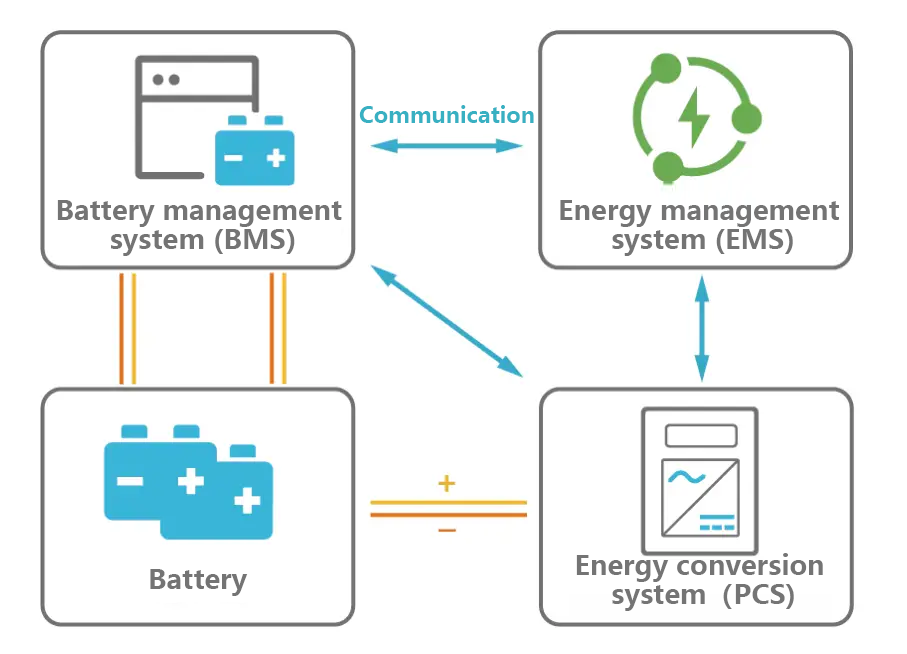
A storage system has to do several things at once. It has to protect the battery. It has to convert power efficiently. It has to follow dispatch instructions. It has to coordinate with meters, HVAC equipment, and fire suppression systems. It has to report status to the cloud. It may also need to receive grid-side commands or support demand response.
All of that only works if the communication layer is designed properly.
A communication protocol is therefore not just a technical detail hidden inside the system. It is what makes the whole project manageable. It defines how messages are sent, how values are encoded, how alarms are reported, how commands are acknowledged, and how fast the system reacts. In other words, it is the nervous system of the energy storage plant.
The four communication scenarios inside a storage system
When you look closely at a storage project, the communication flow usually falls into four major scenarios. Each one serves a different purpose, and each one uses protocols in a slightly different way.
Battery-level communication
At the battery level, the main job is safety and state collection. A battery pack communicates with slave BMS units, and those slave units communicate upward to the master BMS. This layer handles cell voltage, temperature, current, state of charge, state of health, balancing status, insulation status, and fault alarms.
This is usually the fastest and most protection-focused part of the system. If a cell overheats or voltage drifts too far, the information has to move quickly enough for the BMS to act. In many designs, protocols such as CAN or RS485-based communication are used here because they are robust and suitable for short-distance, device-level control.
Station-level control communication
The station level is where the real coordination starts. Here, the master BMS communicates with the PCS, the EMS, the smart meter, the HVAC system, and the fire protection system. This layer controls charging and discharging, enforces operating limits, and coordinates safety interlocks.
This is also the layer where many integration problems appear in the field. Different manufacturers may support different mappings, response times, or command formats. A PCS may understand a command one way, while the EMS expects a slightly different response logic. If the protocol design is weak, the station may still work, but it will not work smoothly.
Grid dispatch communication
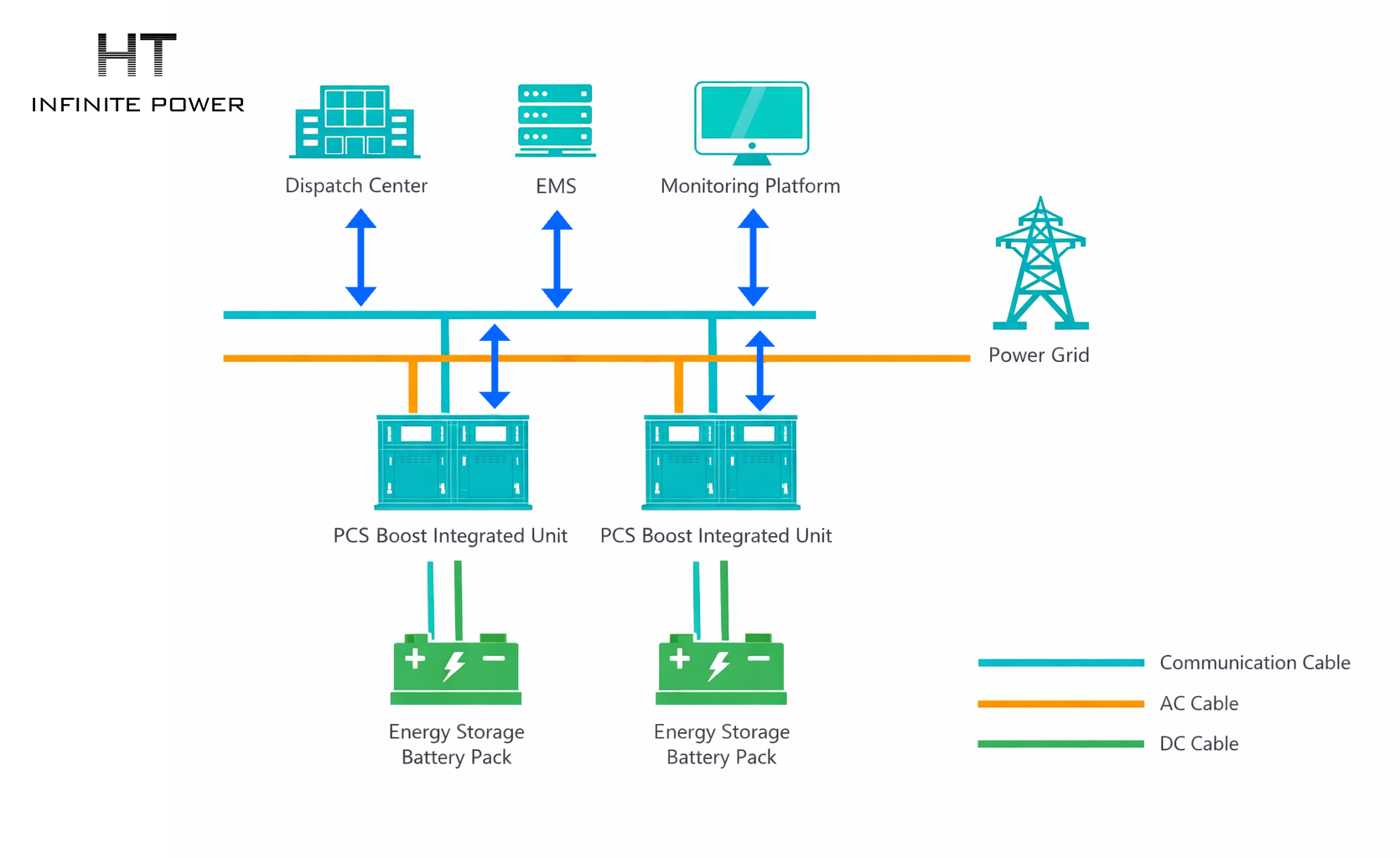
If the project is connected to a utility or participates in grid scheduling, the EMS also needs to communicate with the dispatch center. That layer is responsible for receiving dispatch instructions and sending operational data back upstream. It supports things like active power setpoints, reactive power requests, fault reporting, and operating status confirmation.
This is a more formal communication environment. Stability, compatibility, and data consistency matter more than convenience. The protocol must fit the utility side of the world, not just the equipment side.
Remote operation and cloud monitoring
The last scenario is remote operation. The site devices communicate with a cloud platform, and that platform is then accessed through a computer or mobile terminal. This layer is about alarms, trend charts, fault diagnosis, maintenance records, and long-term performance tracking.
At this level, the protocol is no longer only about control. It becomes part of digital operations. The system should not just tell you whether something is broken; it should help you understand how the asset is aging, what triggered the fault, and whether the operating pattern needs to change.
The five most common communication protocol families
There is no single protocol that fits every energy storage scenario. That is why real projects usually combine several communication methods. The protocol choice depends on the layer, the device type, the data frequency, and the integration requirements.

Modbus RTU and Modbus TCP
Modbus is probably the most familiar protocol in energy storage projects. It is simple, widely supported, and easy to integrate. Many PCS units, meters, HVAC systems, and auxiliary controllers support it.
Modbus RTU is usually used over RS485 and is common in short-distance, low-cost device communication. Modbus TCP runs over Ethernet and is more suitable for networked station-level communication. Its biggest strength is compatibility. Its biggest weakness is that it is not especially advanced in terms of structure or high-speed control.
That said, because it is so widely understood, Modbus often becomes the practical backbone of many project integrations.
CAN and CANopen
CAN is especially common in battery systems. It is suitable for the internal communication between battery modules, slave BMS, and master BMS because it is reliable, resistant to noise, and good at handling multiple nodes in a compact system.
In a battery environment, that matters. Battery data is not just “interesting.” It is safety-critical. CAN is well suited for fast and robust communication inside the battery cluster. It is not always the best choice for large-scale station management, but inside the battery subsystem it is a very natural fit.
IEC 104
IEC 104 is widely used when the storage system needs to communicate with a utility dispatch center. It is a standard protocol in power systems and is commonly used for telemetry, remote indication, and remote control.
This protocol matters because it fits the language of the grid. It helps the energy storage plant present itself not as a collection of separate devices, but as a controllable electrical asset that the dispatch center can understand and trust.
IEC 61850
IEC 61850 is more advanced and more structured. It is often associated with digital substations, but its role in energy storage is growing, especially in larger and more complex power environments.
Its advantage is that it supports a more standardized and object-oriented data model. That makes it attractive for projects that need a high degree of interoperability and future expansion. The learning curve is steeper than Modbus, but the long-term architectural benefit can be substantial.
MQTT and OPC UA
These protocols are more common in remote monitoring, cloud platforms, and industrial internet applications. MQTT is lightweight and works well for pushing data to cloud-based systems. OPC UA is more structured and more semantic, which makes it useful when the system needs richer industrial data integration.
These protocols are not usually the first choice for battery protection or fast interlock logic. Instead, they are what make remote operations, analytics, and platform-based asset management possible.
Protocol selection is really about system design
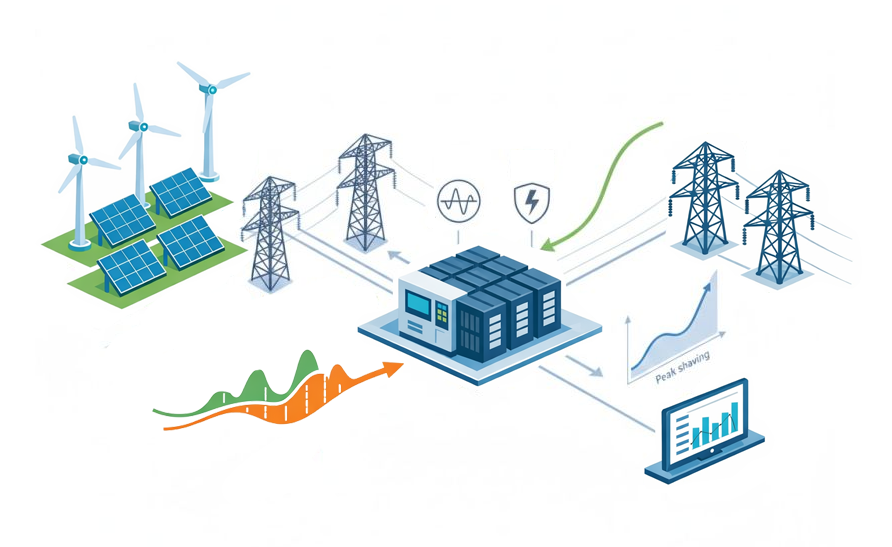
One of the biggest mistakes in energy storage communication design is to ask only, “Which protocol should we use?” The better question is, “Which protocol belongs at which layer?”
That is because the communication needs are different at each level.
Battery-level communication must be fast and safe. Station-level communication must be flexible and reliable. Grid-level communication must be standardized and compatible. Cloud-level communication must be convenient, scalable, and easy to integrate with software systems.
If all of those requirements are forced into one protocol, the system usually becomes awkward. It may work at commissioning, but it becomes difficult to maintain, difficult to expand, and difficult to troubleshoot later.
Data structure matters as much as the protocol name
People often focus too much on protocol names and too little on the actual data model. In practice, the register map, point definition, alarm code logic, and timestamp handling are just as important as the protocol itself.
Two devices can both support Modbus and still fail to integrate cleanly if one uses a different register structure or different scaling logic. The communication problem is not just about transmission. It is about interpretation.
That is why a well-designed storage project always needs a clear communication point list, a proper data dictionary, and a consistent naming convention. Without those, even a technically compatible system can become a maintenance headache.
Communication stability matters more than simply “connecting”
A storage system is not a chat application. It is not enough for the devices to be able to “talk.” They have to talk reliably, continuously, and with predictable behavior.
If a signal is delayed, dropped, or misread, the result is not just a missing value on a screen. It may be a delayed charge command, a missed alarm, or a failed safety response. In an energy storage system, communication reliability is directly tied to operational safety and revenue performance.
This is especially true in commercial and industrial projects, where the system may need to react to load changes, tariff windows, dispatch instructions, and thermal or electrical alarms at the same time. A weak communication architecture can quickly become the hidden reason a project underperforms.
Why modern storage systems increasingly need a layered protocol architecture
As storage systems become larger and more digital, the communication stack naturally becomes layered.
The battery layer handles safety and state collection. The station layer manages operational coordination. The grid layer handles dispatch and compliance. The cloud layer handles monitoring and analytics. Each layer has its own purpose, and each layer needs a communication method that fits its job.
That is why modern projects increasingly look less like isolated equipment installations and more like integrated digital infrastructure. The communication protocol is what allows that infrastructure to function as a single system instead of a loose collection of parts.
Conclusion
A communication protocol in an energy storage system is much more than a data transmission standard. It is the mechanism that allows batteries, PCS units, EMS software, meters, HVAC systems, fire protection systems, cloud platforms, and grid dispatch centers to work together.
In a commercial and industrial storage project, that coordination is not optional. It is what makes the system safe, controllable, expandable, and operable over its entire lifecycle.
The more complex the storage system becomes, the more important the communication architecture becomes. And in many projects, the difference between a system that merely exists and a system that truly performs comes down to how well its communication layer has been designed.
PCS vs. PV Inverter: What Actually Sets Them Apart?
Rebuilding Data Center Power Architecture for the AI Era: From Medium-Voltage AC to 800V DC