What Are the Cost Differences Between Integrated and Modular Energy Storage Systems?
2025-08-21
Introduction – Why Cost Matters in Energy Storage Decisions
In recent years, energy storage has become a cornerstone of both residential and commercial renewable energy solutions. Whether homeowners want to store excess solar energy for nighttime use or businesses aim to reduce peak demand charges, understanding the financial implications of storage options is critical. While upfront costs often draw the most attention, long-term considerations—including maintenance, scalability, and total cost of ownership—can dramatically influence the real value of a system.
As more households and companies adopt energy storage, two primary system types dominate the market: integrated (all-in-one) storage and modular (split) storage. While both accomplish the same fundamental goal—storing electricity for later use—their design, flexibility, and cost profiles differ significantly. This article delves into the cost distinctions, helping decision-makers make informed choices tailored to their budget and energy needs.
Understanding Integrated (All-in-One) Energy Storage
Definition and Key Features
Integrated, or all-in-one, energy storage systems combine all essential components—batteries, inverters, battery management systems (BMS), and sometimes even hybrid controllers—into a single compact unit. These systems appeal to homeowners seeking a plug-and-play solution and businesses looking for straightforward installation.
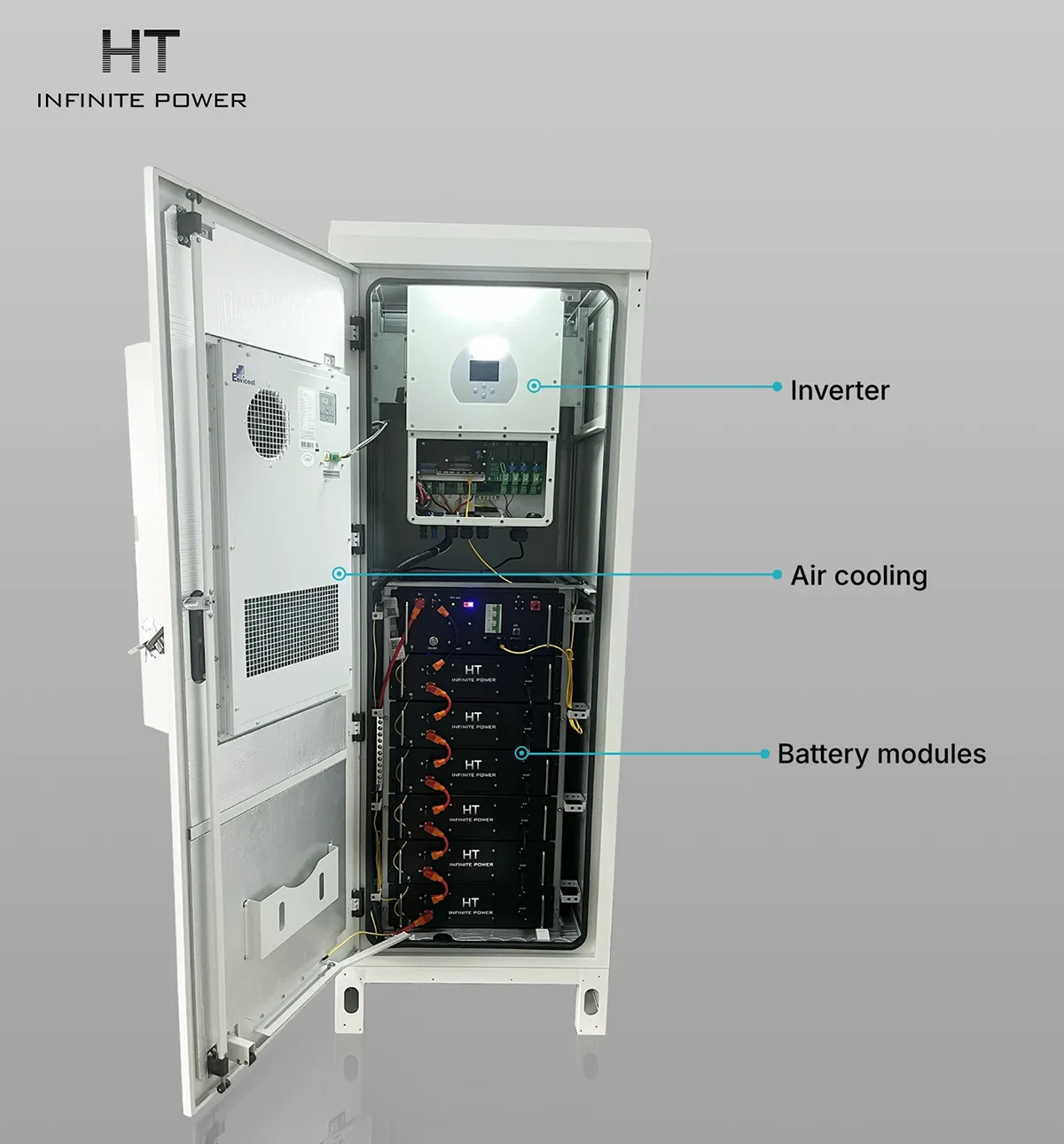
Key features include:
- Compact, self-contained design
- Simplified installation and wiring
- Pre-configured system management
- Limited expansion capability
The all-in-one approach minimizes setup complexity but offers less flexibility for future capacity increases.
Cost Components of Integrated Systems
Integrated storage costs can be broken down into several components:
1.Equipment Costs – High-quality integrated systems include all components in one package, often resulting in a higher initial price per kilowatt-hour compared to modular systems.
2.Installation Costs – Installation tends to be simpler and faster, sometimes reducing labor costs despite the higher equipment price.
3.Maintenance Costs – Since the system is compact and self-contained, maintenance is generally straightforward, though upgrading capacity later can be expensive.
In practical terms, an integrated 10 kWh home battery system may cost more upfront but saves time and complexity during installation.
Understanding Modular (Split) Energy Storage
Definition and Key Features
Modular energy storage systems, also known as split systems, separate batteries, inverters, and management controllers into distinct modules. Each module can operate independently or be combined, providing flexibility for incremental expansion. This design is particularly attractive for businesses or households that anticipate future energy needs or larger power requirements.

Key features include:
- Scalability: add modules as energy needs grow
- Flexibility in system design and component replacement
- Often lower initial investment per module
- Requires careful planning for integration and monitoring
Cost Components of Modular Systems
Modular systems have a different cost profile than integrated systems:
1.Initial Equipment Costs – The upfront cost per module can be lower, but achieving a full system comparable to an integrated 10 kWh unit may require multiple purchases.
2.Installation Costs – Installation is more complex, potentially increasing labor costs and commissioning time.
3.Maintenance and Upgrades – While routine maintenance may require more effort, the modular design allows easy replacement of individual modules and gradual system expansion, which can save costs in the long term.
In many cases, modular systems offer better value over the lifespan of the system, especially for growing households or businesses anticipating higher energy demand.
Comparing Costs Between Integrated and Modular Storage
Initial Purchase Costs
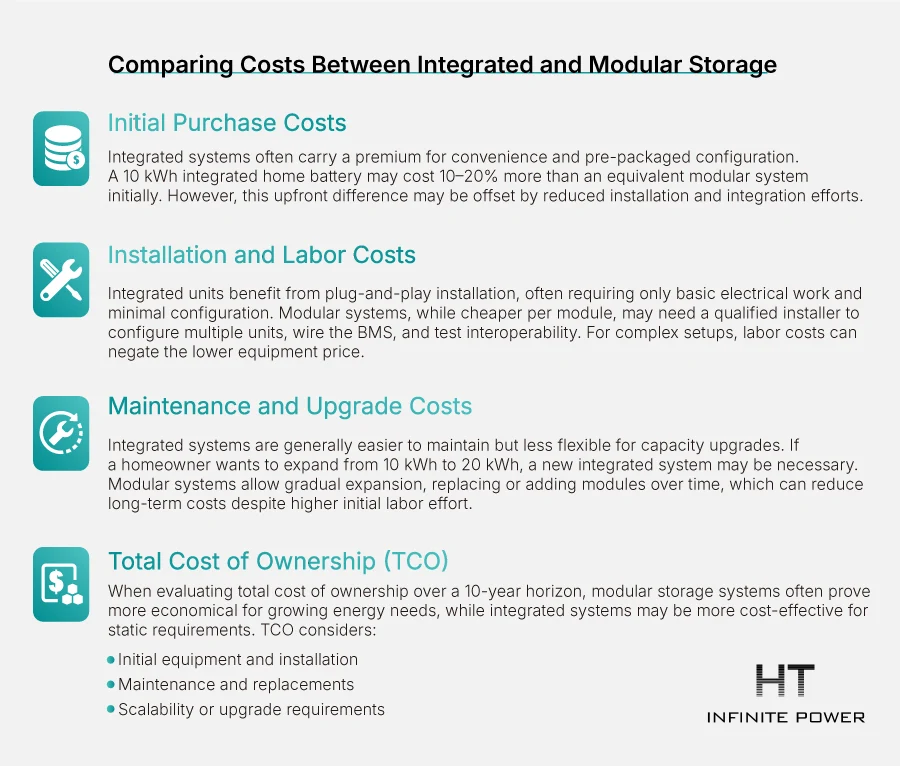
Integrated systems often carry a premium for convenience and pre-packaged configuration. A 10 kWh integrated home battery may cost 10–20% more than an equivalent modular system initially. However, this upfront difference may be offset by reduced installation and integration efforts.
Installation and Labor Costs
Integrated units benefit from plug-and-play installation, often requiring only basic electrical work and minimal configuration. Modular systems, while cheaper per module, may need a qualified installer to configure multiple units, wire the BMS, and test interoperability. For complex setups, labor costs can negate the lower equipment price.
Maintenance and Upgrade Costs
Integrated systems are generally easier to maintain but less flexible for capacity upgrades. If a homeowner wants to expand from 10 kWh to 20 kWh, a new integrated system may be necessary. Modular systems allow gradual expansion, replacing or adding modules over time, which can reduce long-term costs despite higher initial labor effort.
Total Cost of Ownership (TCO)
When evaluating total cost of ownership over a 10-year horizon, modular storage systems often prove more economical for growing energy needs, while integrated systems may be more cost-effective for static requirements. TCO considers:
- Initial equipment and installation
- Maintenance and replacements
- Scalability or upgrade requirements
Factors Influencing Storage Costs
Several factors affect the relative costs of integrated versus modular systems:
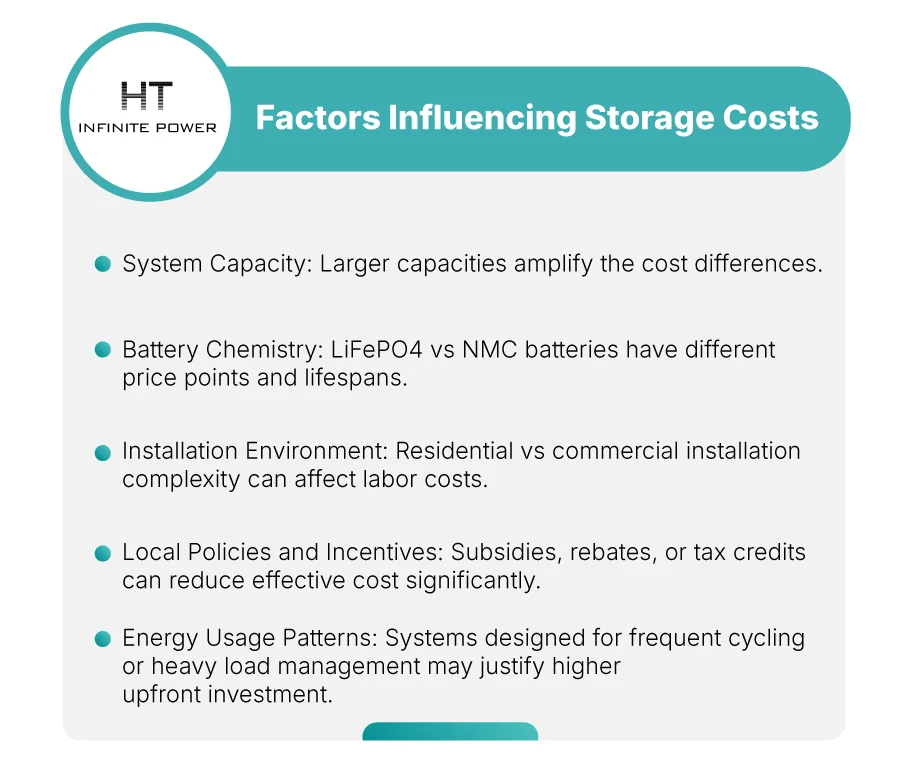
- System Capacity: Larger capacities amplify the cost differences.
- Battery Chemistry: LiFePO4 vs NMC batteries have different price points and lifespans.
- Installation Environment: Residential vs commercial installation complexity can affect labor costs.
- Local Policies and Incentives: Subsidies, rebates, or tax credits can reduce effective cost significantly.
- Energy Usage Patterns: Systems designed for frequent cycling or heavy load management may justify higher upfront investment.
Real-World Examples and Case Studies
- Home Example: A 10 kWh integrated battery installed in a suburban home costs roughly $12,000–$14,000, including installation. Expansion requires replacing the entire unit.
- Business Example: A modular 50 kWh system in a small commercial office allows gradual expansion over three years, starting at $45,000 for the initial 20 kWh modules. Adding modules later costs less per kWh and avoids upfront overspending.
A comparison table illustrates the trade-offs:
| Feature | Integrated | Modular |
|---|---|---|
| Upfront Cost | Higher | Lower per module |
| Installation Complexity | Low | Medium–High |
| Scalability | Limited | Flexible |
| Maintenance | Simple | Slightly more complex |
| Long-Term Cost | Static | Can be optimized |
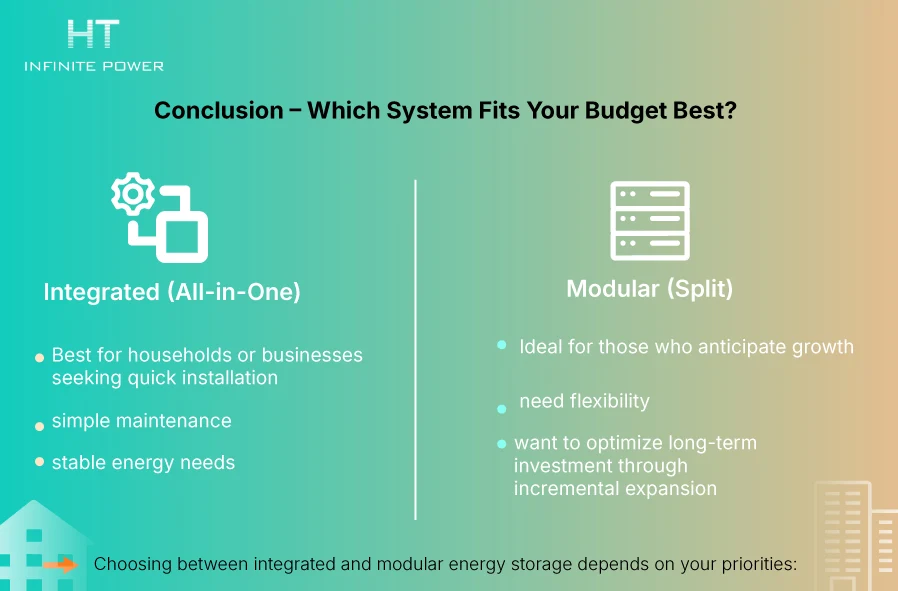
Conclusion – Which System Fits Your Budget Best?
Choosing between integrated and modular energy storage depends on your priorities:
- Integrated (All-in-One): Best for households or businesses seeking quick installation, simple maintenance, and stable energy needs.
- Modular (Split): Ideal for those who anticipate growth, need flexibility, and want to optimize long-term investment through incremental expansion.
By understanding the cost dynamics—from initial purchase to total cost of ownership—decision-makers can align storage solutions with both financial constraints and energy goals.
10 Essential Steps to Install Your Home Energy Storage System
Extreme Heat on the Rise: The Emergency Role of Commercial Energy Storage in Global Heatwaves