kVA to Amps Calculator for Inverters and Energy Storage
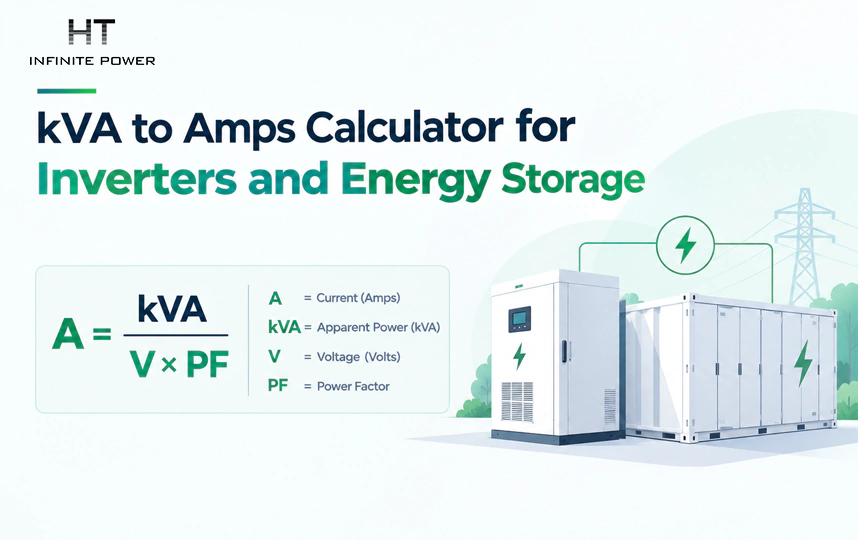
Quick Answer
kVA cannot be converted to amps unless the system voltage is known.
The required formula depends on whether the system is single‑phase or three‑phase.
Single‑Phase Formula
A = kVA × 1000V
Three‑Phase Formula
A = kVA × 1000√3 × V
Where:
- A = current (amps)
- kVA = apparent power
- V = voltage
- √3 = 1.732 for three‑phase systems
A system with a higher voltage requires less current for the same kVA rating. This is why residential inverters, commercial electrical systems, and energy storage installations operate at different voltages depending on their power requirements.
1. Why kVA Cannot Be Converted to Amps Without Voltage
One of the most common mistakes in electrical calculations is assuming that kVA can be converted directly to amps.
Unlike some other unit conversions, there is no fixed relationship between kVA and current. Voltage must also be known.
For example, consider a 10 kVA system:
- At 230V single‑phase, the current is about 43.5A.
- At 120V single‑phase, the current is about 83.3A.
- At 400V three‑phase, the current is only about 14.4A.
The power rating remains the same, but the required current changes significantly because the voltage changes.
This is why any accurate kVA to amps calculator must include voltage as an input.
2. Understanding kVA and Amps
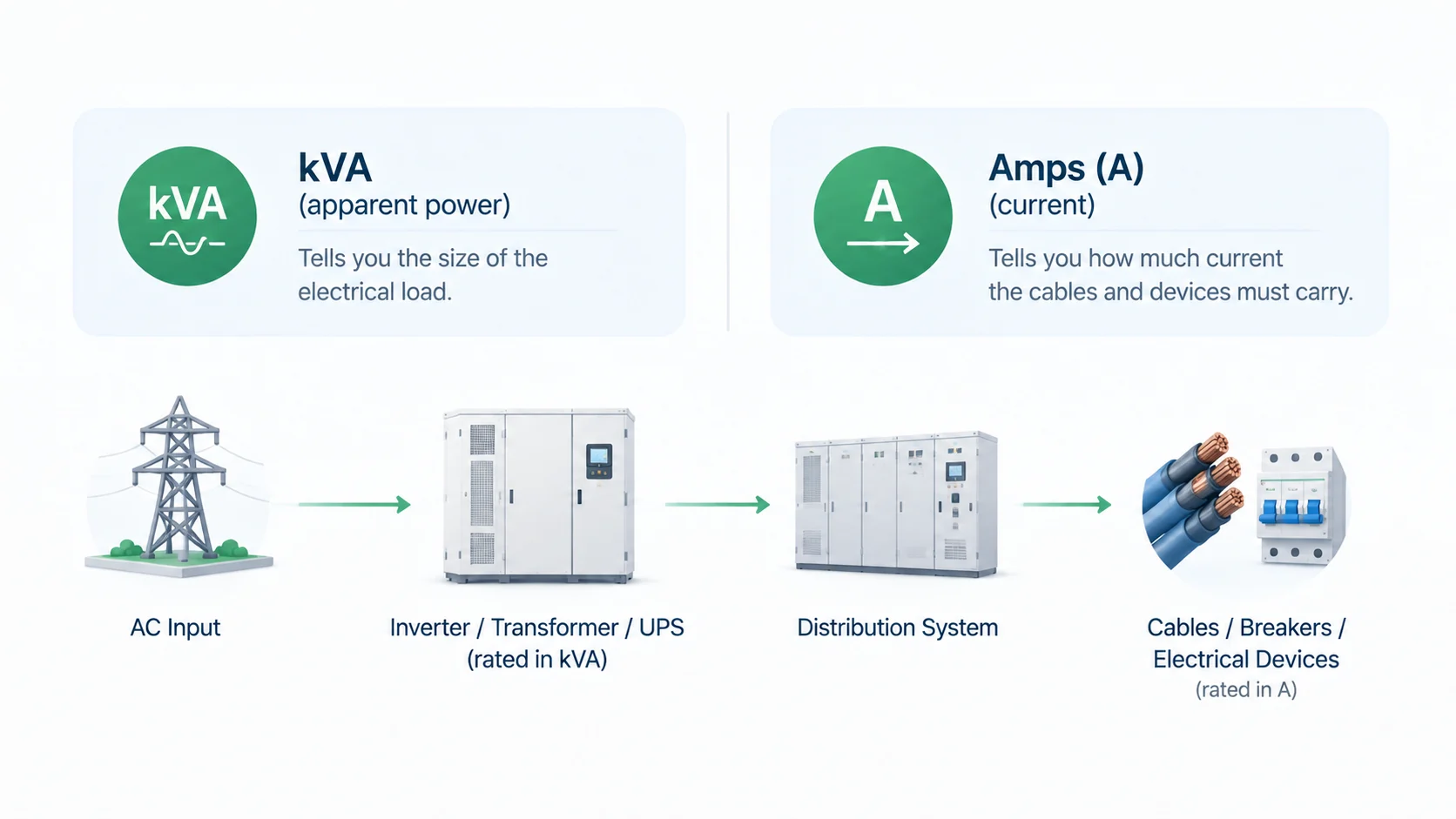
Before performing a conversion, it helps to understand what these units describe.
kVA (kilovolt‑amps) measures apparent power in an AC electrical system. It represents the total power that must be supplied by an inverter, transformer, UPS, or electrical distribution system.
Amps (A) measure electrical current, which is the amount of electrical flow moving through conductors and equipment.
A kVA rating tells you the size of the electrical load. The amp value tells you how much current the cables, breakers, and electrical devices must carry.
This distinction is important when selecting:
- Inverters
- Circuit breakers
- Cables
- Transformers
- PCS equipment
- Energy storage systems
3. kVA to Amps Formula
The correct formula depends on the type of AC system.
Single‑Phase Systems
For residential electrical systems and many smaller inverters:
A = kVA × 1000V
Example
A 5 kVA inverter operating at 230V:
A = 5 × 1000230 ≈ 21.7 A
Three‑Phase Systems
For commercial and industrial installations:
A = kVA × 1000√3 × V
Example
A 10 kVA three‑phase system operating at 400V:
A = 100001.732 × 400 ≈ 14.4 A
The same kVA rating requires much less current because the three‑phase system shares the load across three conductors.
4. How to Convert kVA to Amps
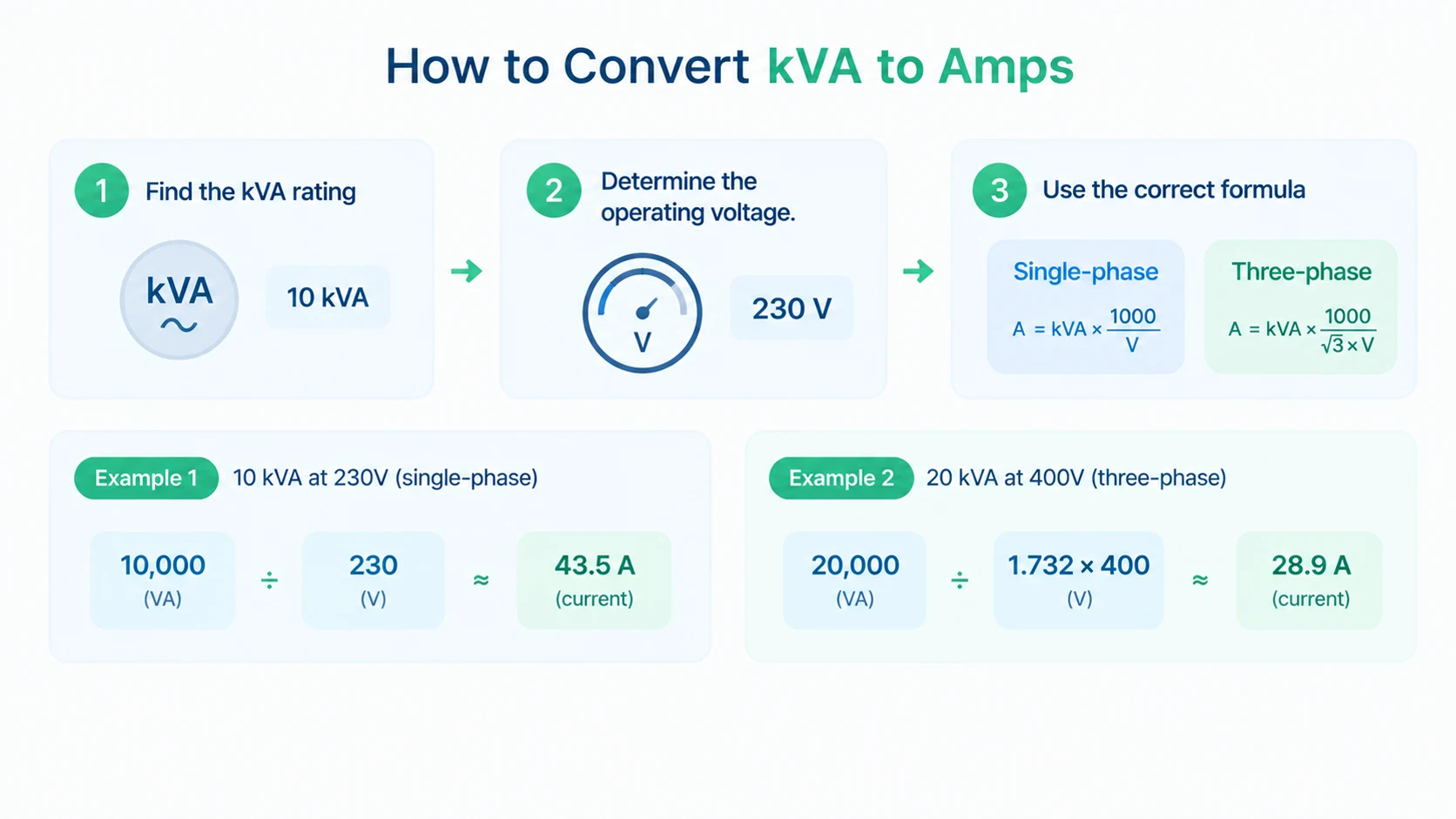
Converting kVA to amps is a simple three‑step process.
Step 1
Identify the kVA rating.
Step 2
Determine the operating voltage.
Step 3
Choose the correct formula for either single‑phase or three‑phase systems.
Example 1
10 kVA at 230V single‑phase: 10000230 ≈ 43.5 A
Example 2
20 kVA at 400V three‑phase: 200001.732 × 400 ≈ 28.9 A
5. How Many Amps Is 1, 5, 10, 15, 20 and 50 kVA?
The table below shows common conversions for both single‑phase and three‑phase systems.
|
kVA
|
230V Single‑Phase | 400V Three‑Phase |
| 1 kVA | 4.3A | 1.4A |
| 5 kVA | 21.7A | 7.2A |
| 10 kVA | 43.5A | 14.4A |
| 15 kVA | 65.2A | 21.7A |
| 20 kVA | 87.0A | 28.9A |
| 50 kVA | 217.4A | 72.2A |
These values provide a quick reference for the most commonly searched kVA ratings.
6. kVA to Amps Conversion Chart
The following chart shows how current changes as kVA increases.
Single‑Phase 230V
| kVA | Current |
| 1 | 4.3A |
| 2 | 8.7A |
| 5 | 21.7A |
| 10 | 43.5A |
| 20 | 87.0A |
| 30 | 130.4A |
| 50 | 217.4A |
| 100 | 434.8A |
Three‑Phase 400V
| kVA | Current |
| 1 | 1.4A |
| 2 | 2.9A |
| 5 | 7.2A |
| 10 | 14.4A |
| 20 | 28.9A |
| 30 | 43.3A |
| 50 | 72.2A |
| 100 | 144.3A |
One thing becomes clear immediately: higher voltage and three‑phase power dramatically reduce current requirements.
7. Real‑World Applications
Most people encounter kVA ratings when working with backup power systems, electrical distribution equipment, and larger AC loads.
For example, a small UPS rated at 5 kVA may draw around 22A at 230V. A commercial inverter rated at 20 kVA may require nearly 87A if connected to a single‑phase system.
Likewise, EV chargers, industrial machinery, and HVAC systems are often sized according to kVA ratings because those ratings reflect the overall electrical capacity required.
Understanding amperage is important because cable sizes, breakers, connectors, and protection devices are selected according to current, not kVA.
8. kVA to Amps for Inverters
Inverters are one of the most common places where kVA and current calculations are used.
5 kVA Inverter
230V output:
5000230 ≈ 21.7 A
10 kVA Inverter
230V output:
10000230 ≈ 43.5 A
20 kVA Inverter
230V output:
20000230 ≈ 87 A
These calculations help determine the correct breaker size, cable rating, and distribution design.
A larger inverter may have a relatively modest kVA rating, but the resulting current can still be substantial at lower voltages.
9. kVA to Amps for Energy Storage Systems
Energy storage systems frequently include PCS equipment that is rated in kVA.
For example, a 50 kVA PCS connected to a 400V three‑phase system delivers: 500001.732 × 400 ≈ 72 A
A 100 kVA PCS under equivalent conditions delivers approximately: 1000001.732 × 400 ≈ 144 A
These values are important when sizing switchgear, breakers, cables, and AC distribution panels.
Although battery systems are often discussed in terms of kWh and DC voltage, the AC side of the system is frequently evaluated using kVA and current.
10.Why Inverters and PCS Are Rated in kVA
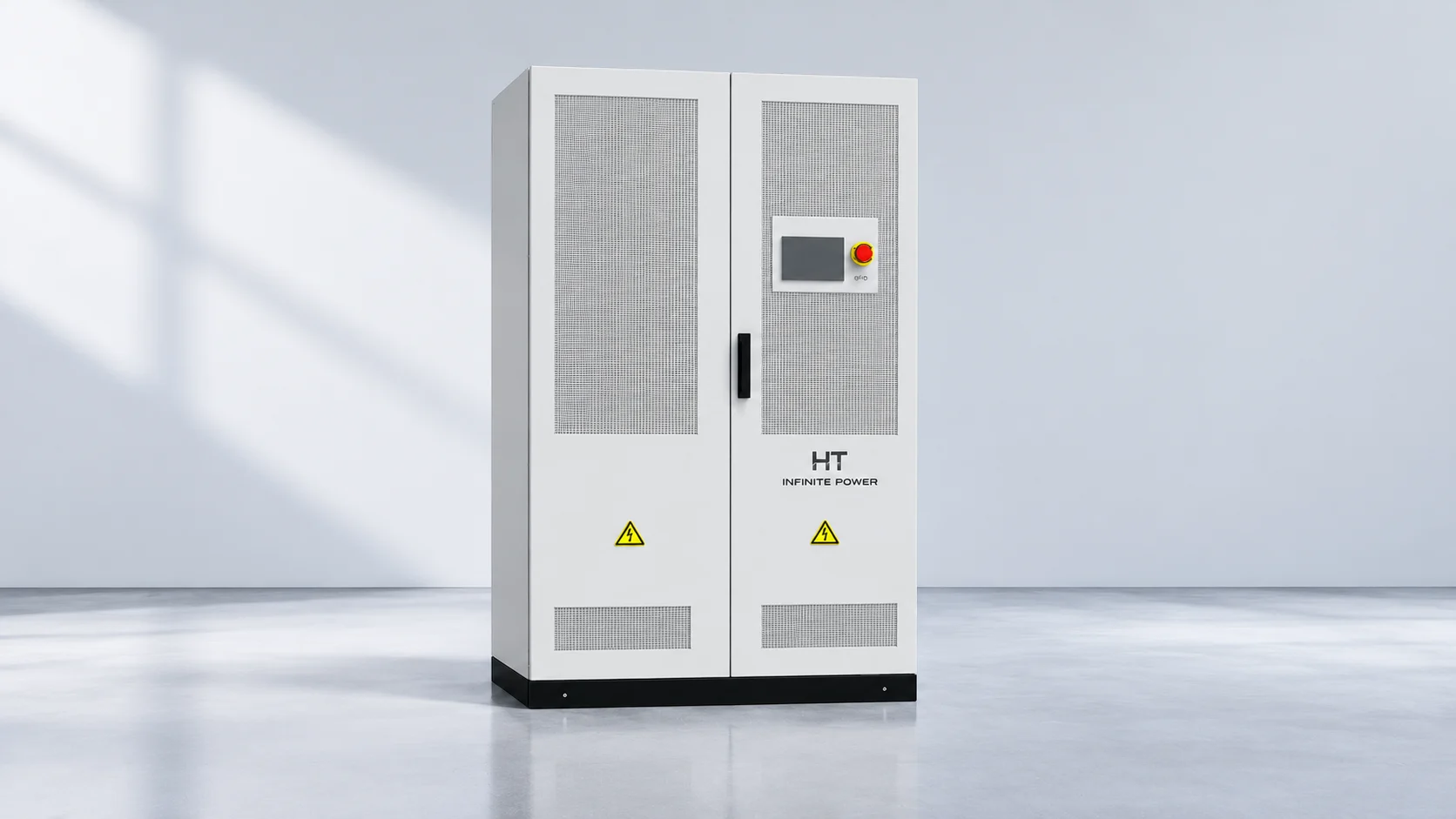
Many users notice that inverters, UPS systems, transformers, and PCS units are frequently rated in kVA rather than amps.
The reason is that kVA represents the total apparent power that the equipment must handle, regardless of the operating current. Current can change with voltage, system configuration, and operating conditions, but a kVA rating provides a consistent way to describe equipment capacity.
For example, a 50 kVA PCS connected to a 400V three‑phase system delivers approximately 72A. The same PCS could operate at a different current level if connected to another voltage system, while still maintaining the same 50 kVA rating.
This is why manufacturers commonly specify the capacity of inverters, PCS units, UPS systems, and transformers in kVA. Current calculations remain essential when sizing conductors, breakers, switchgear, and protection devices, but kVA provides a more universal measure of AC system capacity.
Understanding the difference between kVA and current helps users select the right inverter, PCS, or energy storage equipment while avoiding common sizing mistakes.
11. Single‑Phase vs Three‑Phase Current
Many users are surprised to discover that the same kVA rating produces different current values depending on system configuration.
Consider a 20 kVA system:
Single‑Phase 230V
20000230 ≈ 87 A
Three‑Phase 400V
200001.732 × 400 ≈ 28.9 A
The three‑phase system requires much less current because the load is distributed across three phases and operates at a higher voltage.
This is one reason commercial facilities, industrial equipment, and large energy storage systems commonly use three‑phase power.
12. Why Higher Voltage Usually Means Lower Current
For a fixed kVA rating, increasing voltage reduces current.
For example:
- 10 kVA at 120V ≈ 83.3A
- 10 kVA at 230V ≈ 43.5A
- 10 kVA at 400V three‑phase ≈ 14.4A
The electrical capacity remains the same, but the current requirement changes significantly.
Lower current can reduce conductor losses, voltage drop, and cable size requirements when other system conditions remain comparable. This is one reason larger inverter systems, PCS equipment, and commercial energy storage installations frequently operate at higher voltages.
13. Common Mistakes
Ignoring Voltage
Confusing kVA and kW
Using a Single‑Phase Formula for Three‑Phase Systems
Ignoring System Configuration
Using Nameplate Ratings Incorrectly
Conclusion
A kVA to amps calculator is useful because current depends not only on apparent power but also on system voltage and configuration. By applying the correct single‑phase or three‑phase formula, you can accurately determine current for inverters, UPS systems, electrical distribution equipment, and energy storage installations. Understanding the relationship between kVA, voltage, and current makes it easier to select the right cables, breakers, and power equipment while avoiding costly sizing mistakes.
More Electrical Unit Conversions
FAQ
How do I convert kVA to amps?
For single‑phase systems: A = kVA × 1000V
For three‑phase systems: A = kVA × 1000√3 × V
Can kVA be converted directly to amps?
No. Voltage must be known.
How many amps is 10 kVA?
At 230V single‑phase:
10000230 ≈ 43.5 A
How many amps is 50 kVA?
At 400V three‑phase:
500001.732 × 400 ≈ 72 A
What is the difference between kVA and kW?
kVA measures apparent power, while kW measures real power.
How do I calculate three‑phase amps from kVA?
Use:
A = kVA × 1000√3 × V
Why are inverters rated in kVA?
kVA represents the apparent power capacity of an inverter. Current can vary with voltage and operating conditions, but the inverter's kVA rating remains unchanged.
Why do PCS ratings use kVA?
PCS units operate on AC systems where voltage, current, and power factor all affect performance. A kVA rating provides a consistent way to describe their power handling capability.
Can I size an inverter using amps only?
Not reliably. Voltage, kVA, power factor, and operating conditions should all be considered when selecting inverter capacity.
Volts to Amps Calculator for Batteries, Inverters and Energy Storage
Related Article