3 Storage Fires, 1 Week: Thermal Runaway Is a Global Wake-Up Call
author: HT infinitepower
2026-08-25
The U.S. energy storage industry faced three separate fire incidents within a single week, raising renewed concerns about battery safety.
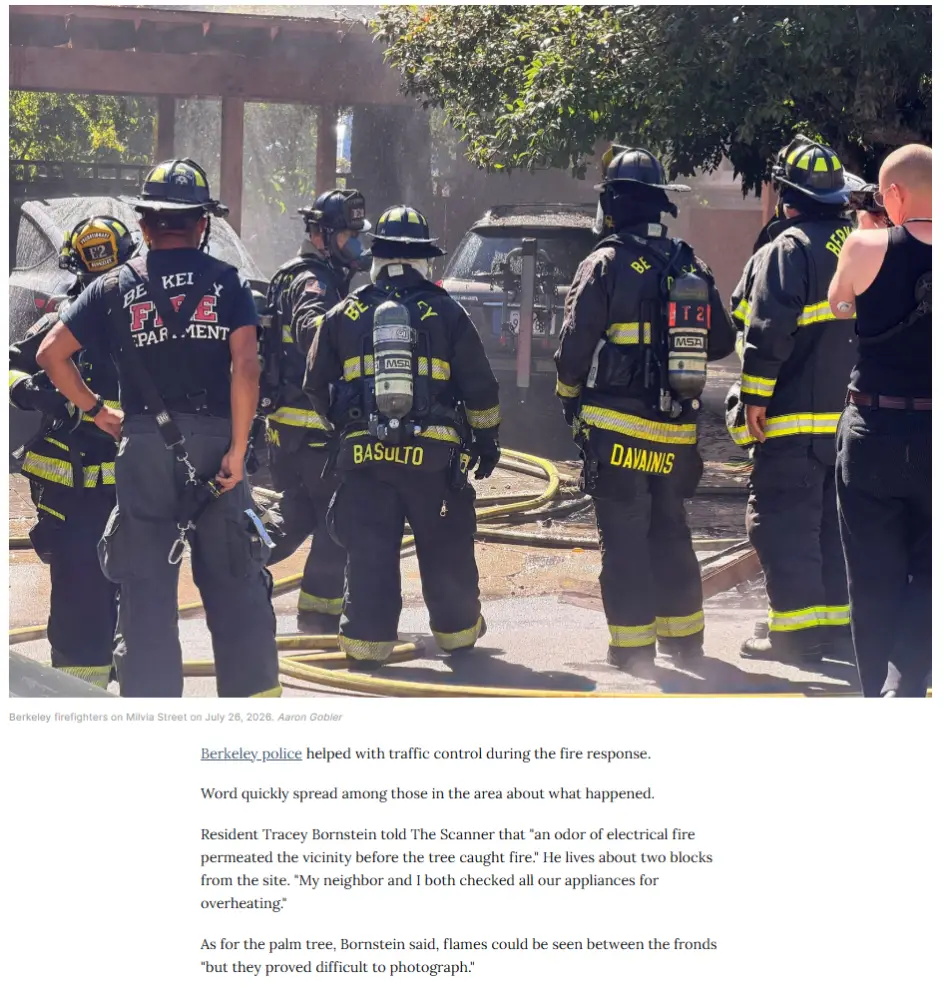
On July 26, in North Berkeley, California, a residential lithium battery system paired with rooftop solar experienced a thermal runaway event. The fire spread rapidly and eventually ignited nearby palm trees. The battery system was primarily used to provide power for Tesla vehicles, and witnesses reported a noticeable electrical burning smell at the site before the incident occurred.
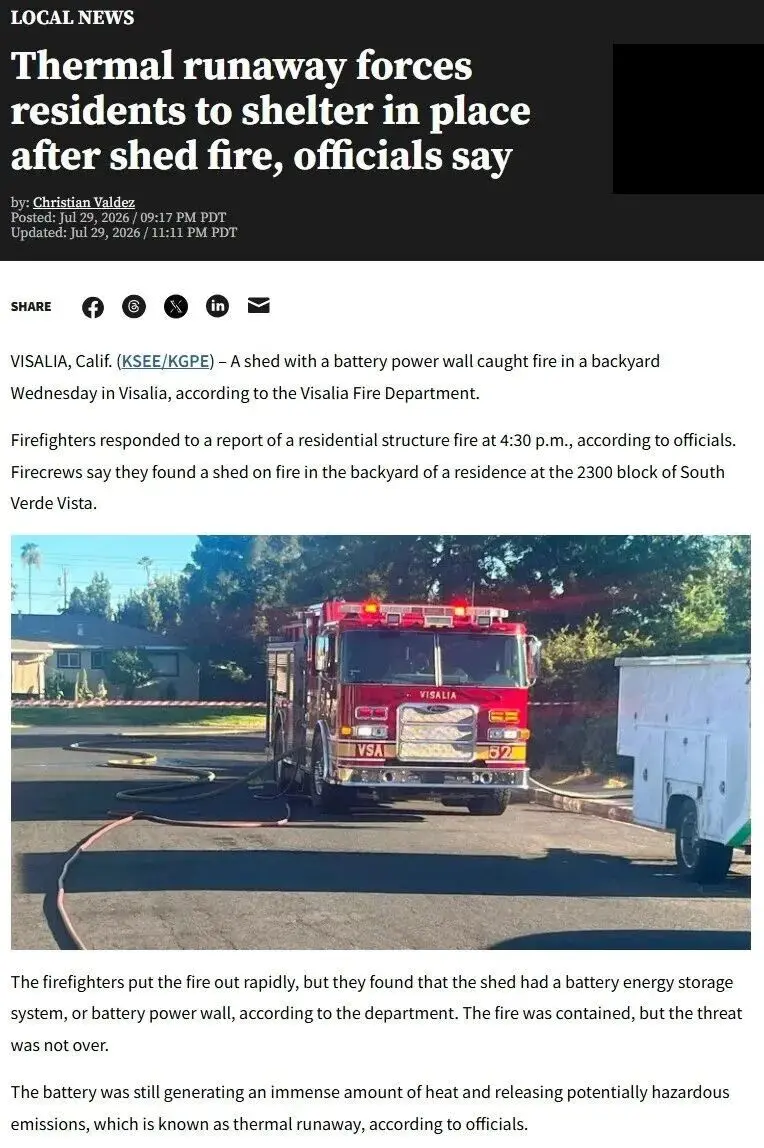
Just three days later, another residential energy storage system caught fire in Visalia, California. Even after the visible flames were extinguished, the battery remained in a state of thermal runaway. Firefighters were forced to block nearby roads, instruct surrounding residents to shelter in place, and wait for the internal chemical reactions within the battery to naturally subside.
On the same day, a container storing lithium-ion batteries caught fire at a logistics facility in North Carolina. Concerned about continued heat release and the potential emission of hazardous gases, local firefighters established a safety perimeter and adopted a controlled response strategy, allowing the fire to burn out while monitoring the situation.
Three fires in just one week, involving multiple application scenarios including residential energy storage, home battery systems, and battery storage warehouses.
For the energy storage industry, the more important question is not simply where these incidents occurred or what equipment was damaged. The deeper issue is this: as global energy storage deployments continue to accelerate, can safety remain something that is only addressed after an incident happens?
The Most Dangerous Risk in Energy Storage Is Not Fire — It Is Thermal Runaway
A closer look at these three incidents reveals one common factor: thermal runaway.
So, what exactly is thermal runaway? In simple terms, it occurs when a battery—especially a lithium-ion battery—generates heat faster than it can dissipate it due to internal or external factors. As the temperature rises rapidly, it triggers a series of irreversible exothermic chemical reactions, eventually leading to uncontrolled physical and chemical events such as fire, explosions, or the release of high-temperature gases.
This is also why energy storage fires require a completely different response approach compared with conventional fires. In the recent Visalia, California incident, firefighters were able to quickly extinguish the visible flames, but the battery cells continued releasing extreme heat and hazardous gases internally. Local authorities had to close surrounding roads, organize shelter-in-place measures for nearby residents, and wait for the internal chemical reactions to naturally come to an end.
The same challenge appeared in the North Carolina logistics facility fire. Rather than attempting to immediately dismantle or relocate the affected battery containers, firefighters established a safety perimeter and adopted a controlled monitoring approach.
The reason is simple: once thermal runaway begins inside a lithium battery system, extinguishing the external flames does not necessarily mean the danger has ended. The internal reaction process can continue long after the visible fire disappears.
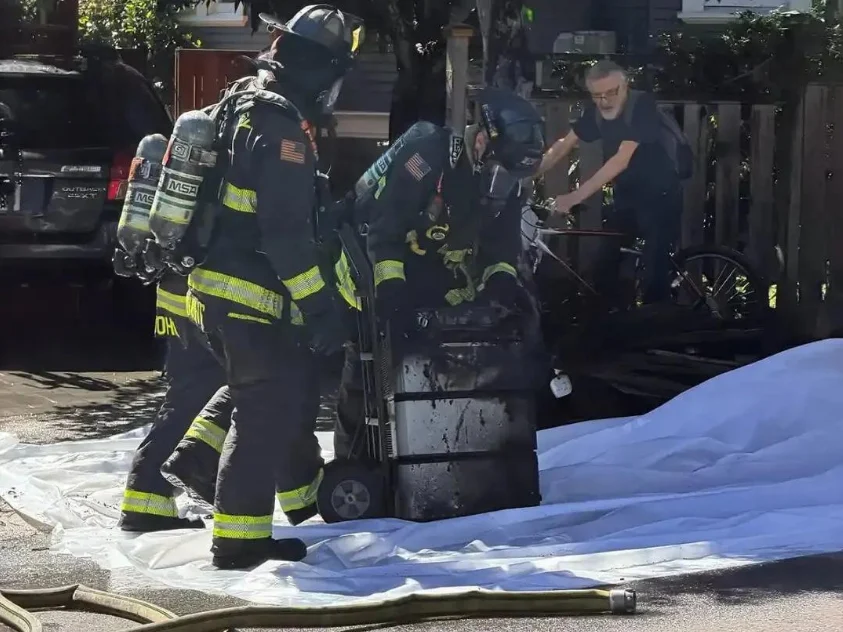
The Fire May Be Out, But the Danger Is Not Over
What deserves more attention is that as energy storage deployment continues to expand rapidly, this risk is no longer limited to isolated incidents. It is becoming a challenge that the entire industry must address.
Research shows that lithium batteries become increasingly vulnerable to self-heating under conditions such as mechanical impact, electrical abuse, and high-temperature environments as they age. Over time, thermal stability can gradually decline, meaning the pressure on energy storage safety will only continue to increase as more systems enter long-term operation.
That is why, over the past year, the energy storage industry has been continuously raising its safety standards.
From the implementation of China’s first mandatory national safety standard for energy storage lithium batteries in August 2025, to the introduction of the Design Standard for Electrochemical Energy Storage Power Stations, and the enforcement of the Standards for Determining and Managing Major Power Safety Hazards, regulatory requirements covering battery cells, battery systems, and the entire lifecycle of energy storage projects have continued to become more stringent.
Safety is gradually shifting from a voluntary commitment by companies into a fundamental industry requirement that every participant must meet.
At the same time, a new competition centered around safety capabilities has already begun. Leading companies such as CATL, BYD Energy Storage, and Huawei Digital Power are investing heavily in large-scale fire testing and advanced thermal runaway protection technologies. The objective is clear: to eliminate potential risks before products ever reach the market.
Can a Different Battery Technology Completely Solve the Safety Problem?
The recent series of energy storage fires has forced the industry to rethink a fundamental question: if lithium-ion batteries cannot completely avoid thermal runaway risks, could switching to a different battery technology eliminate the safety problem altogether?
The answer is not that simple.
Over the past several years, the industry has continued exploring alternative solutions. From sodium-ion batteries and flow batteries to solid-state batteries and aluminum-air batteries, a wide range of emerging technologies have entered the market, with many being considered potential candidates for the next generation of energy storage.
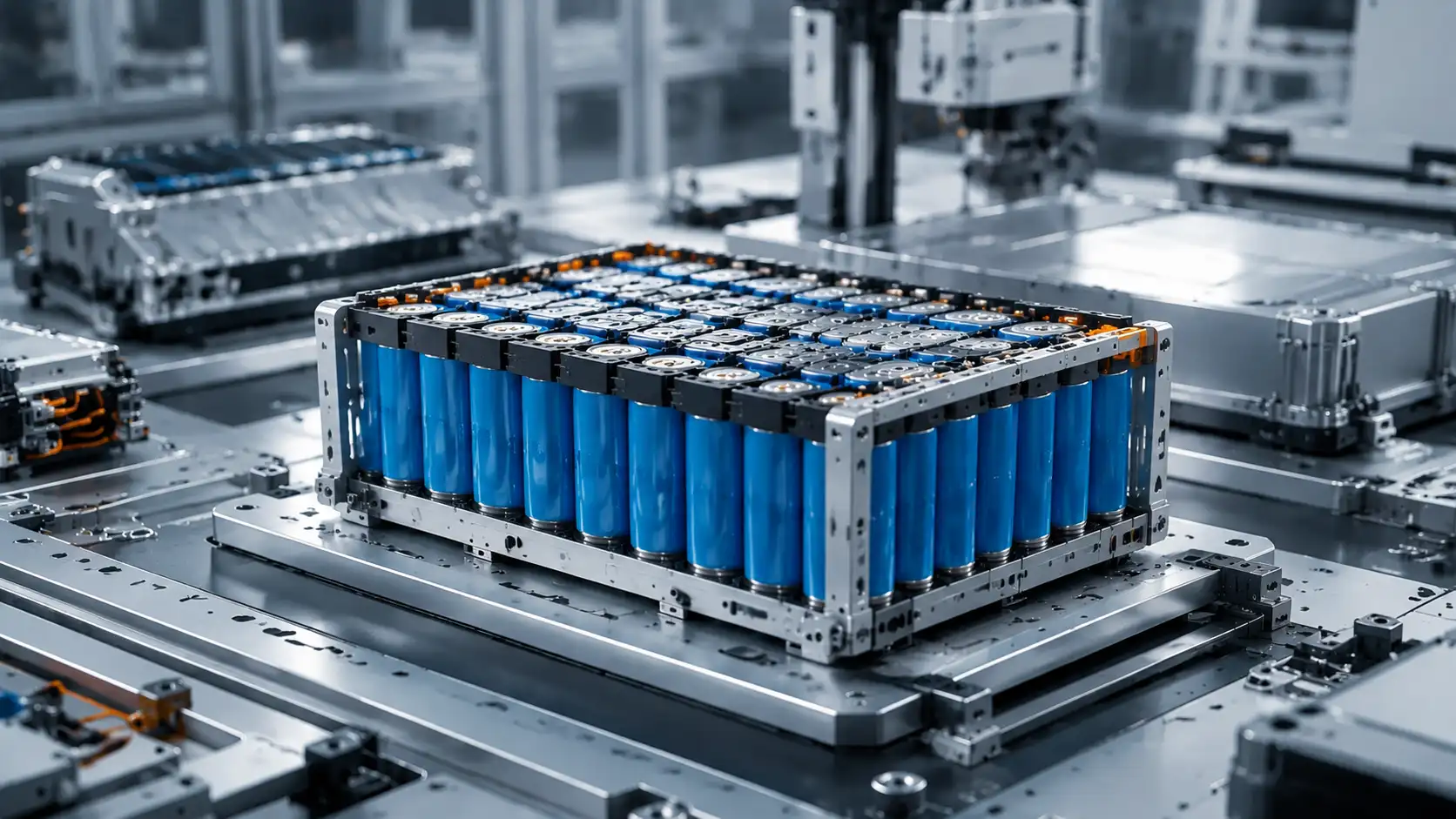
However, a closer analysis shows that these technologies address different challenges rather than completely eliminating safety risks.
Sodium-ion batteries, which have attracted significant attention recently, are a typical example. Compared with lithium-ion batteries, sodium-ion batteries offer stronger thermal stability, a higher thermal runaway trigger temperature, and a more stable internal structure, making them less likely to develop cascading reactions caused by localized short circuits.
Their advantages become particularly noticeable in low-temperature environments. Sodium-ion batteries can maintain relatively strong capacity performance in cold climates without requiring additional heating systems, further reducing safety risks under extreme operating conditions.
However, sodium-ion technology also introduces new engineering challenges. For example, gas generation during cycling may require more advanced ventilation designs. In addition, because sodium-ion batteries have different charge and discharge characteristics compared with lithium-ion batteries, existing power conversion systems (PCS) and related infrastructure may require adaptation. Replacing battery cells alone is not enough to achieve a complete system-level transition.
Another technology pathway that has attracted significant attention is flow batteries. Represented by vanadium redox flow batteries, their greatest advantage is their inherent safety characteristics. Because they use water-based electrolytes that are non-flammable, they have almost no risk of thermal runaway. This gives them a natural advantage in large-scale energy storage, grid-side storage, and applications where strict fire safety requirements are essential.
However, improved safety also comes with trade-offs. Flow batteries generally have lower energy density, require larger installation footprints, and involve relatively higher upfront costs. These factors make them better suited for stationary, large-scale energy storage projects rather than as a universal replacement for lithium-ion batteries across all applications.
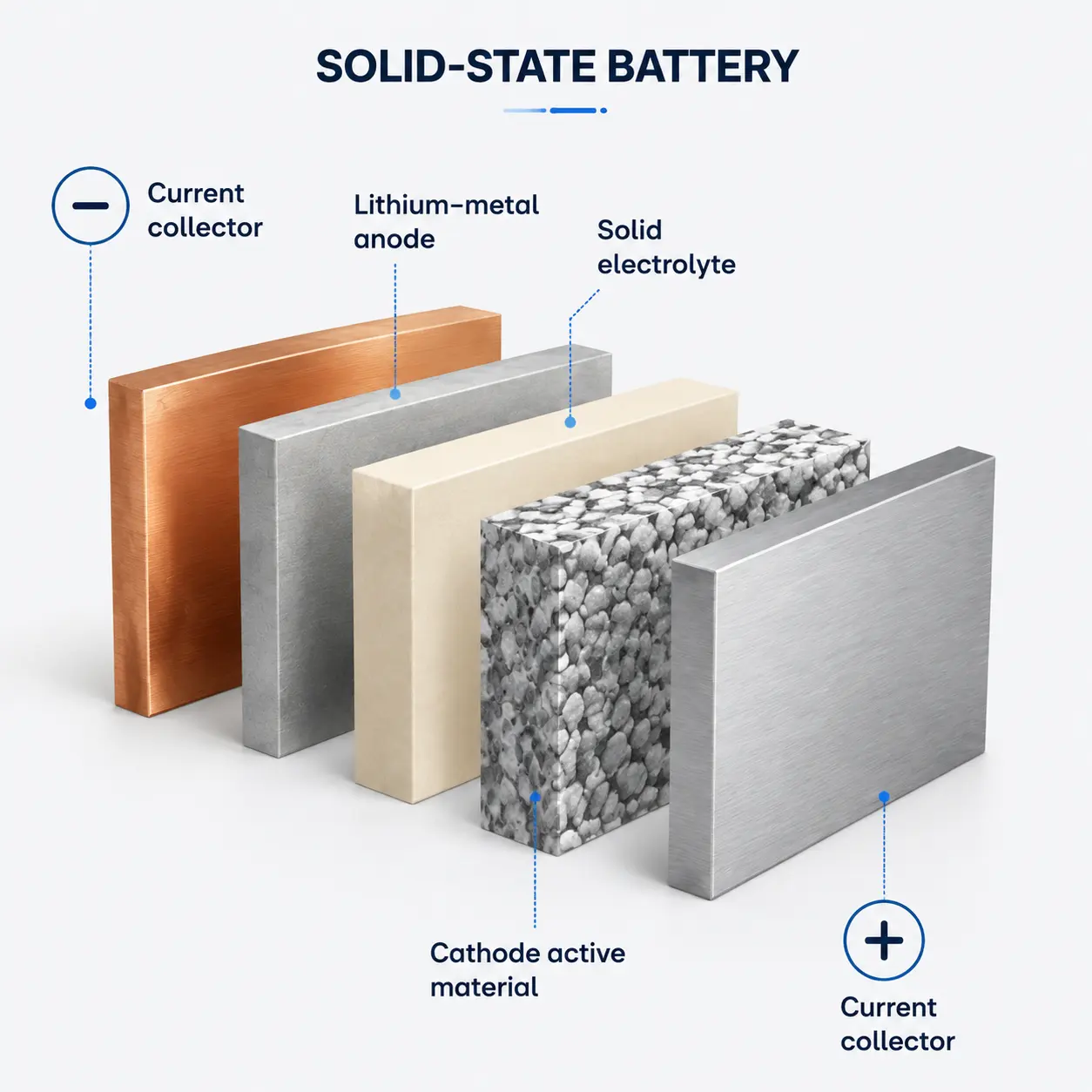
As for solid-state batteries, which have gained significant attention in recent years, their solid electrolytes eliminate the combustion risks associated with traditional liquid electrolytes and remove the possibility of separator melting that can lead to internal short circuits.
However, theoretical safety advantages do not automatically translate into commercial maturity. Solid-state batteries still face technical challenges related to interface stability, contact resistance, and localized heat generation. Large-scale commercialization remains a gradual process, and it will take time before solid-state technology becomes a mainstream solution for energy storage applications.
Beyond these technologies, emerging systems such as aluminum-air batteries are also being actively explored. These battery concepts offer extremely high theoretical energy density and relatively low fire risk. However, their commercial maturity remains limited, and significant technical barriers still need to be overcome before large-scale deployment becomes practical.
The energy storage industry is not lacking new technologies. The real challenge is that no single technology can simultaneously achieve the perfect combination of safety, low cost, and universal applicability across all scenarios.
In many ways, safety has never depended on a single battery chemistry providing a permanent solution. True energy storage safety comes from a complete system approach—one that combines material selection, system architecture, thermal management, fire protection, and long-term operation and maintenance into an integrated safety framework.
Final Thoughts
Over the past few years, the energy storage industry has largely competed around one central theme: who can deploy more capacity, build faster, and achieve lower costs. From price competition to large-scale expansion, the industry’s development has been driven primarily by improving economics and operational efficiency.
However, the recent series of fire incidents has delivered an important reminder: as energy storage enters an era of large-scale deployment, safety will become the fundamental factor determining how far the industry can go.
The future competition in energy storage may no longer be defined only by who offers larger capacity or lower prices. Instead, it will increasingly be determined by who can place safety at the center of technology development, system design, and long-term operation.
kW to kVA Calculator: Easy Conversion Formula, Chart & Load Examples
How We Design Battery Storage Systems for Different Industries