Applications and advantages of commercial bess
2024-07-26

Industrial and commercial bess technology is widely used to improve energy efficiency, reduce costs and promote the application of renewable energy. Its application scenarios include power storage, smart microgrids, grid frequency regulation, backup power supply, electric transportation charging infrastructure and independent energy systems, which help achieve sustainable development goals.
Industrial and commercial bess refers to energy storage technology used in the industrial and commercial fields, aiming to improve energy efficiency, reduce energy costs, and promote the large-scale application of renewable energy.
The following are the top ten application scenarios and revenue sources of industrial and commercial bess
1. Zero-carbon smart park + energy storage

Traditional industrial parks have many equipments, which have the characteristics of high power consumption, long-term high load, and high energy consumption of equipment. In order to achieve the carbon reduction target, renewable energy is widely used in smart parks, but due to its instability, it will lead to insufficient or excessive power supply. At this time, commercial bess is needed to adjust the supply and demand level.
In the "smart park + energy storage" mode, the commercial bess can collect excess electricity such as solar energy and wind energy, and then supply it to the power grid during the main power consumption time. This can not only stabilize the power grid, but the commercial bess can also provide backup power to the power grid in an emergency to ensure the normal operation of the park. In addition, industrial parks have a high electricity price difference, which is suitable for peak-valley arbitrage of energy storage projects.
2. Commercial complex + energy storage

The integrated implementation plan for energy saving, energy storage and charging in commercial complexes is a comprehensive solution, including energy saving, energy storage and charging. By adopting energy-saving technologies and equipment, the energy consumption of commercial complexes can be reduced; distributed new energy power stations are installed in commercial complexes, and electric energy is stored through energy storage equipment for commercial entities to use, thereby reducing dependence on traditional energy. In addition, through energy storage equipment, charging piles can also be set up in parking lots, underground garages and other places of commercial entities to provide charging services for new energy vehicles.
3. Data Center + Energy Storage

Under the implementation of the "dual carbon" strategy, low-carbon data centers will be the future development trend, and "renewable energy + storage integration + virtual power plant" is one of the ways that data centers may achieve carbon neutrality. Through digital and intelligent technologies, distributed energy, energy storage, and load are deeply integrated. By establishing the aggregation effect of the upper platform of the virtual power plant, the data center load, renewable energy power supply, and commercial bess become an organic whole, achieving a self-generated, self-used, and self-managed energy autonomous domain within the region, and truly realizing a carbon-neutral data center.
In this process, the commercial bess improves the economy of data center power operations and enhances the power supply reliability of the data center through mechanisms such as peak shaving and valley filling and capacity allocation. While being low-carbon and energy-saving, it can effectively prevent accidental power outages in the data center from causing data loss, and improve the safety and stability of the power supply system.
4. Photovoltaic storage and charging integration
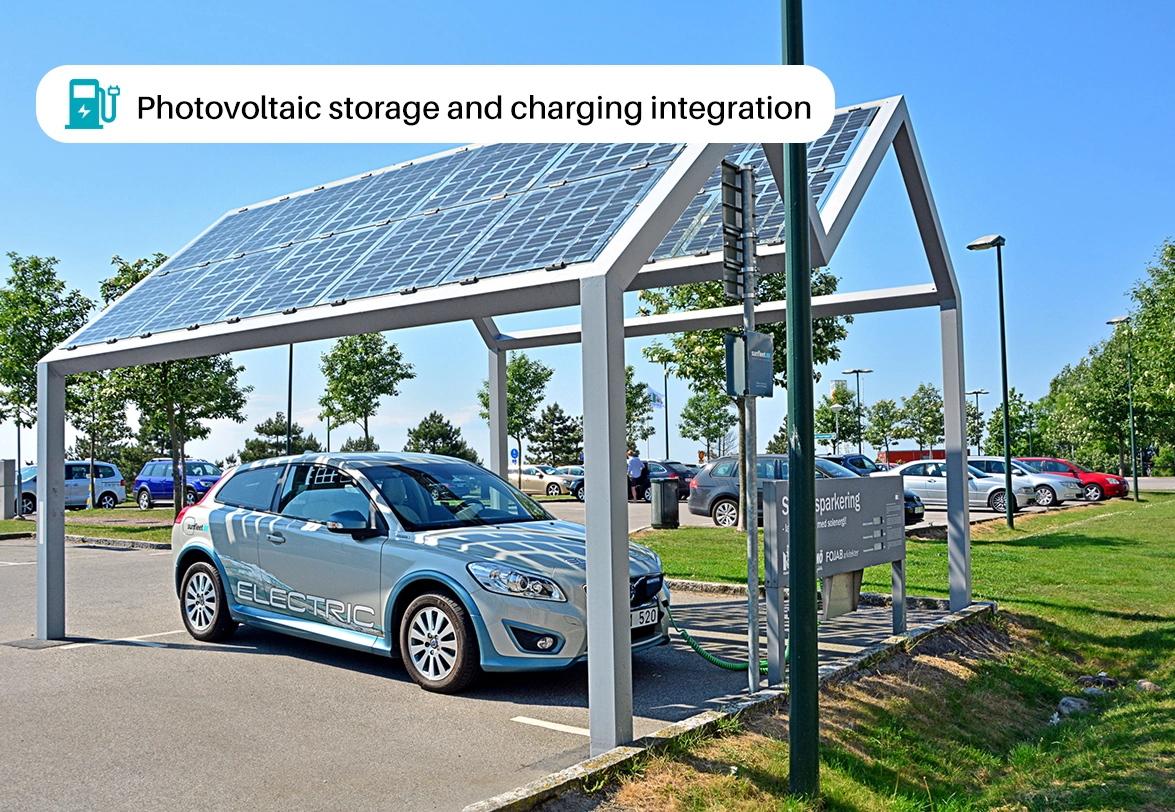
With the rapid development of the new energy vehicle industry, the demand for charging is also growing synchronously, but there is still a huge gap in the current charging pile market all around the world. As a new attempt at green economy, the "photovoltaic storage and charging integrated charging station" has broad development prospects.
The photovoltaic storage charging station integrates multiple technologies such as photovoltaic power generation, large-capacity energy storage batteries, and smart charging piles. It uses the battery energy storage system to absorb valley electricity and support fast charging loads during peak periods to supply green electricity to electric vehicles. At the same time, it is supplemented by the photovoltaic power generation system to achieve auxiliary service functions such as power peak shaving and valley filling, effectively reducing the peak-to-valley difference of the fast charging station load and effectively improving the system operation efficiency.
5. 5G base station + commercial bess

In order to meet the growing number of 5G base stations and electricity demand, and to reduce resource waste, the electrochemical energy storage system has become a suitable choice for 5G base station backup power supply with its flexible, intelligent and efficient technical characteristics.
5G base station storage uses intelligent peak shifting, charging during idle time and discharging during busy time, which solves the pain point that 5G base station construction cannot be smoothly promoted due to power supply problems, and helps to vigorously promote the implementation of 5G base stations and the development of 6G technology.
6. Residential + Energy Storage
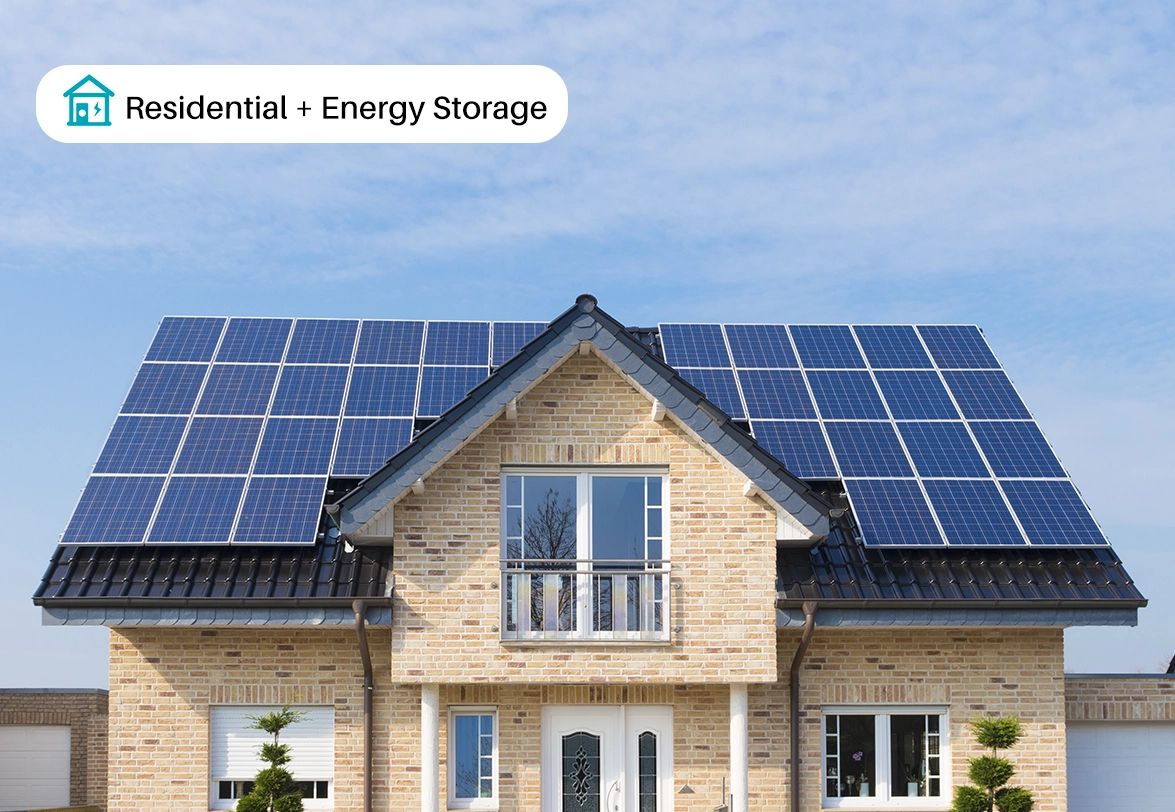
More and more families are beginning to install photovoltaic power stations as a supplement to energy consumption or a source of electricity bill income. The configuration of energy storage power stations has become an important measure to ensure the safety and stability of household electricity consumption.
Residential energy storage usually includes equipment such as batteries, supercapacitors and hot water storage tanks, which can effectively store clean energy such as solar energy and wind energy produced by the family. The advantage of this is that it allows the family to be self-sufficient when needed, and at the same time, it can also sell excess electricity to the power grid, thereby obtaining certain economic benefits.
Residential energy storage can help families be self-sufficient and no longer rely on the power grid, thereby reducing household electricity costs. In addition to self-sufficiency, household energy storage can also sell excess electricity to the power grid, thereby obtaining certain economic benefits. When the power quality is poor, it can also improve the power quality by storing electricity and providing power support.
7. Microgrid + commercial bess

In recent years, many countries have vigorously developed island construction. These islands are inhabited by a small number of residents and island militias, as well as power-consuming equipment such as mobile signal transmission base stations and maritime radar stations. In harsh natural environments, conventional photovoltaic power generation or wind power generation cannot provide stable and reliable electricity for the islands in this scenario.
Install an off-grid smart island microgrid on such an island, use the energy management system to accurately coordinate and control power generation, energy storage, and power consumption conditions, flexibly allocate the connection methods of each user, and realize "source-grid-load-storage" coordinated control and economic operation. The off-grid smart island microgrid not only solves the energy consumption problem of island residents, provides power supply guarantee for island and marine development and protection, but also provides a technical template for the construction of smart island microgrids.
8. Mining area + commercial bess

In areas such as oil exploration and coal mining, there is no reliable, fixed, and economical power supply that can provide continuous power supply. After configuring the commercial bess, when a fault occurs on the grid side or the power supply needs to be stopped for normal maintenance, the battery system on the load side converts the DC in the battery system into AC through the energy storage converter to supply power to the user side.
During normal operation, the time period when the user side draws power from the grid side and the time period when the battery pack stores energy are reasonably allocated by the system controller according to the peak, flat, and valley periods of electricity billing. The offshore oil field power grid is a typical island power grid with small power supply capacity and large load capacity. The moment of large load startup and grid failure will cause large frequency fluctuations. Configuring energy storage can effectively improve the frequency regulation performance of the power system and maintain frequency stability.
9. Emergency energy storage power supply
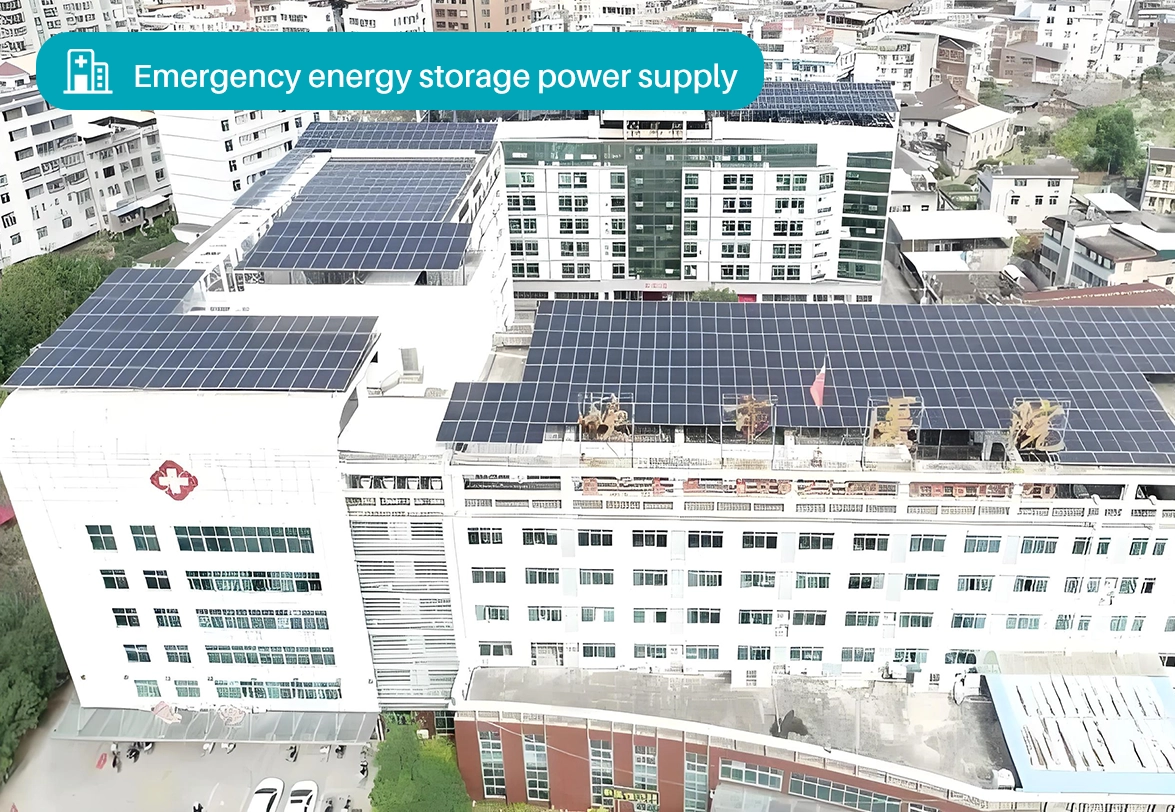
High-power emergency commercial bess power supply is a sub-segment of the new energy battery industry, which can be simply understood as an "oversized power bank". Portable energy storage power supply can be used in outdoor scenes such as RV travel, night fishing, and outdoor camping. In addition, in the event of a failure in the power supply system of the power grid, the emergency energy storage power system can provide power guarantee for emergency rescue, and can be used in a variety of scenarios such as emergency rescue and hospital backup power supply.
10. Urban rail transit + commercial bess

Urban rail transit commercial bess refers to the process of introducing energy storage system to recover and recycle the large amount of regenerative electric energy generated by regenerative braking of urban rail transit vehicles. It is the requirement and development direction for building an energy-saving society in the future.
Flywheel energy storage is the most widely used in urban subways. Flywheel energy storage uses electric motors to drive the flywheel rotor under vacuum magnetic suspension conditions to rotate at high speed to store energy. When the speed increases, it is charged, and when the speed decreases, it can be discharged. High power density and long life are its technical characteristics. It can not only respond to high-power charging and discharging within 5 milliseconds, but also has a charging and discharging life of up to tens of millions of times.
Sources of revenue from industrial and commercial bess.
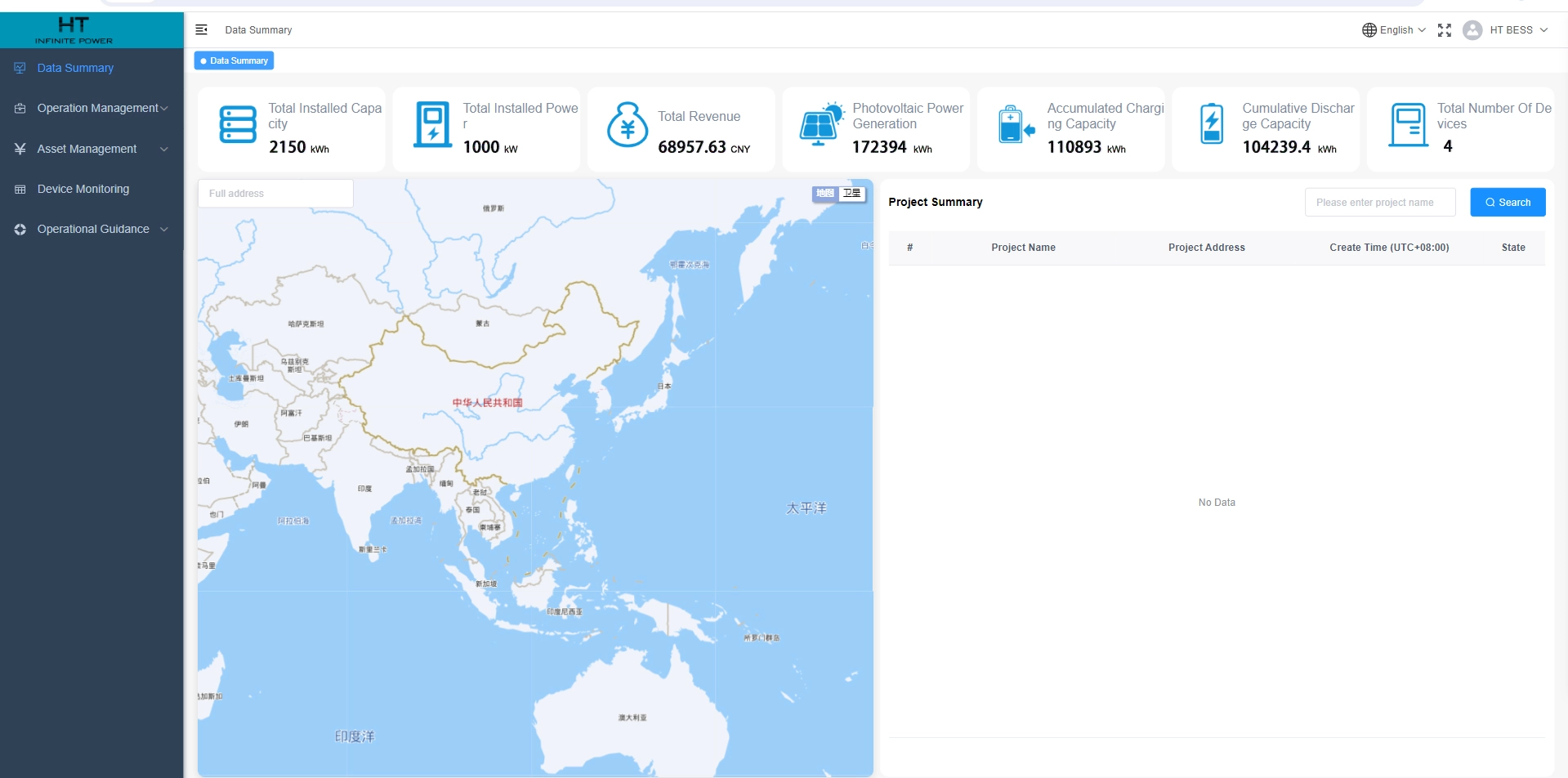
(1) Peak shaving and valley filling:
Utilize the difference between peak and valley electricity prices to charge during valley and flat periods and discharge during peak and peak periods to reduce corporate electricity costs. (Currently, more than 90% of revenue sources)
(2) Balancing demand charges:
Commercial bess can shave peaks and valley fill, eliminate peak loads, smooth the electricity curve, and reduce demand charges.
(3) Dynamic capacity expansion:
The user's transformer capacity is fixed. Generally, when the user needs the transformer to operate at overload during a certain period of time, the transformer capacity needs to be expanded. After installing a matching commercial bess, the transformer load can be reduced during this period through energy storage discharge, thereby reducing the cost of transformer capacity expansion and transformation.
(4) Demand-side response:
After installing the commercial bess, if the power grid issues a demand response, customers do not need to limit power or pay the high electricity bills during that period. Instead, they may participate in demand response transactions through the energy storage system and obtain additional compensation.
Q: How to reduce capacity and demand for customers by configuring industrial and commercial bess?
A: Reducing capacity and demand means reducing the overall capacity demand of transformers through commercial bess, thereby reducing the cost of transformer expansion construction and the subsequent fixed capacity electricity charges or maximum demand electricity charges.
After the enterprise installs the commercial bess, the power of the energy storage machine can replace part of the transformer capacity to supply power to the load, which plays a role in smoothing the load power peak and reducing the overall capacity demand, thereby reducing the cost of transformer construction and the subsequent capacity electricity charges.
Taking the configuration of a 300kW commercial bess as an example, when billing on demand, the energy storage system can release 300kW of power to offset the peak load impact (equivalent to adding a 300kW transformer). The demand-based charge is 40 USD/(kW.month). Calculated, the 300kW energy storage system saves the owner 300×40=12,000 USD in demand charges per month
Q: How can industrial and commercial bess achieve dynamic capacity expansion?
A: The capacity of the user's transformer is fixed. Generally speaking, when the user needs the transformer to operate at overload during a certain period of time, the transformer needs to be expanded. Generally speaking, there are two ways to increase capacity: static capacity expansion and dynamic capacity expansion.
Static capacity expansion refers to applying to the power bureau for a larger transformer, but this method is very expensive.
Dynamic capacity expansion is achieved by installing an energy storage system. The commercial bess stores energy and discharges during the transformer overload operation period, reducing the transformer load and thus reducing the cost of transformer capacity expansion and transformation. The commercial bess can not only greatly reduce costs, but also increase profits through peak-valley arbitrage.
As an important application of new energy storage, industrial and commercial bess is an important support for achieving industrial and commercial carbon peak. Driven by both policies and markets, industrial and commercial energy storage has entered a period of rapid development, and the industry will also usher in qualitative changes.
HT INFINITEPOWER has been focusing on the research and development of industrial and commercial bess technology for 10 years, providing digital, intelligent, economical and integrated commercial energy storage systems to global customers. Helping the sustainable development of global energy.
Welcome to contact our professional customer service to tailor the best commercial bess for you.
What is the difference between BMS and EMS?
Discussion on the structural design and safety of bess container energy storage