Advantages and benefits of installing photovoltaic power plants in the desert
2024-09-19
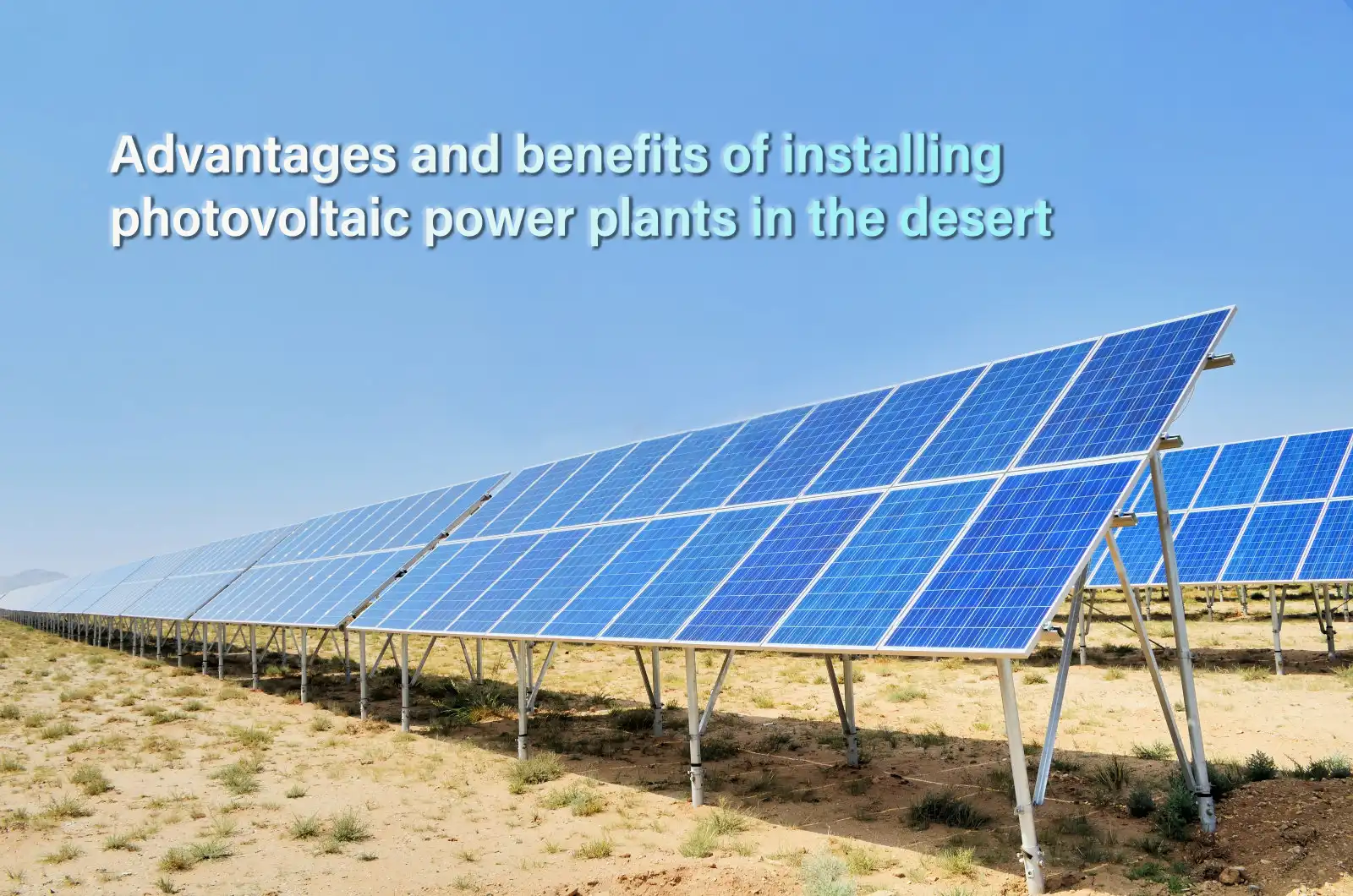
Photovoltaic sand control is a technology that combines photovoltaic power generation and ecological management. By installing photovoltaic power generation systems in deserts and semi-arid areas, multiple goals of windbreak and sand fixation, ecological restoration and energy utilization can be achieved. In recent years, with the advancement of photovoltaic technology and the increase in demand for ecological management, photovoltaic sand control has gradually been promoted around the world and has achieved remarkable results. More and more bess manufacturers are also designing and developing targeted products and solutions for photovoltaic power stations.

1. Principle of photovoltaic sand control
The core principle of photovoltaic sand control is to use photovoltaic power generation systems to form a cover layer in desert areas, reduce surface wind speed, thereby preventing the formation and spread of sandstorms, and at the same time promote vegetation growth by improving microclimate conditions to achieve ecological restoration. Specifically, photovoltaic sand control is mainly achieved through the following aspects:
(1). Wind and sand fixation
Photovoltaic modules are installed on the surface of the desert to form a barrier, slow down surface wind speed, and effectively prevent the formation and spread of sandstorms and the increase in demand for ecological management, photovoltaic sand control has gradually been promoted around the world and has achieved remarkable results. More and more bess manufacturers are also designing and developing targeted products and solutions for photovoltaic power stations.
(2). Ecological restoration
Convert solar energy into electrical energy, and introduce water into the desert through an irrigation system. Plant suitable vegetation around photovoltaic power stations. The shading and cooling effects of photovoltaic modules can improve soil moisture and microclimate conditions, promote plant growth, and achieve ecological restoration.
(3). Energy utilization
Utilize the abundant solar energy resources in desert areas to build photovoltaic power stations, provide clean renewable energy, reduce dependence on fossil energy, and promote energy structure transformation.
2. Global environmental change
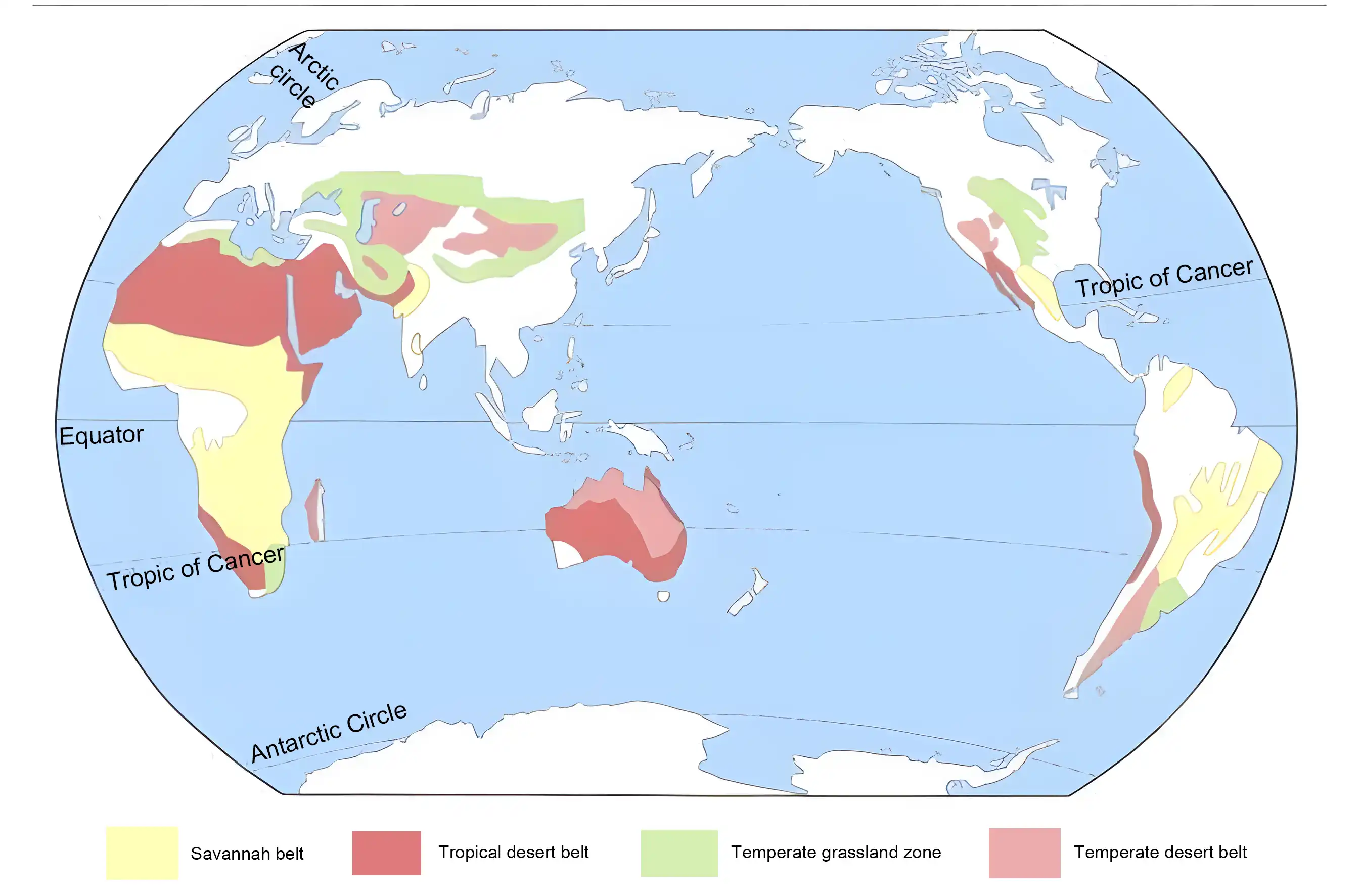
At present, the global desertification area has reached 36 million square kilometers, accounting for 1/4 of the global land area, equivalent to the total land area of Russia, Canada, China and the United States. Nearly 1.2 billion people in more than 100 countries in the world are directly threatened by desertification, of which nearly 135 million are in danger of losing their land in the short term. Desertification devours nearly 21 million hectares of arable land every year, causing the world to lose at least US$42 billion every year. With the accelerated spread of desertification, the arable land for human beings is decreasing, which seriously shakes the foundation of food production and is one of the important reasons why the number of hungry people in the world has increased from 460 million to 550 million in recent years. The United Nations Environment Program issued a warning: "If this continues, the earth will be involved in a catastrophic social and economic disaster."
These areas are not only poor in land resources, but also fragile in ecological environment, but also have rich solar energy resources, providing unique conditions for photovoltaic sand control.
These areas are not only poor in land resources, but also fragile in ecological environment, but also have rich solar energy resources, providing unique conditions for photovoltaic sand control.
Building photovoltaic power stations in the desert with supporting large-scale energy storage batteries (for example, a single 5000 kwh liquid-cooled energy storage container battery can be expanded to a 5 GWH energy storage station) will not only provide superior natural conditions and high power generation, but will also be able to control desertification, improve the ecological environment, and create more economic value.
3. Solar energy resources in deserts, Gobi and wastelands
The solar energy resources in deserts and desertified areas are very rich, mainly manifested as follows:
(1). Long sunshine hours
The annual average sunshine hours in these areas are generally more than 2,000 hours, and some areas even exceed 3,000 hours.
(2). High solar radiation intensity
The annual average total solar radiation in these areas is more than 5,000 megajoules/square meter, and some areas even reach 7,000 megajoules/square meter.
(3). Suitable climatic conditions
The climate in deserts and wastelands is dry and the rainfall is low, which is suitable for the installation and operation of photovoltaic modules.
These superior solar energy resource conditions make deserts and desertified areas an ideal place to develop photovoltaic sand control.
These superior solar energy resource conditions make deserts and desertified areas an ideal place to develop photovoltaic sand control.

4. China’s achievements in photovoltaic desert control
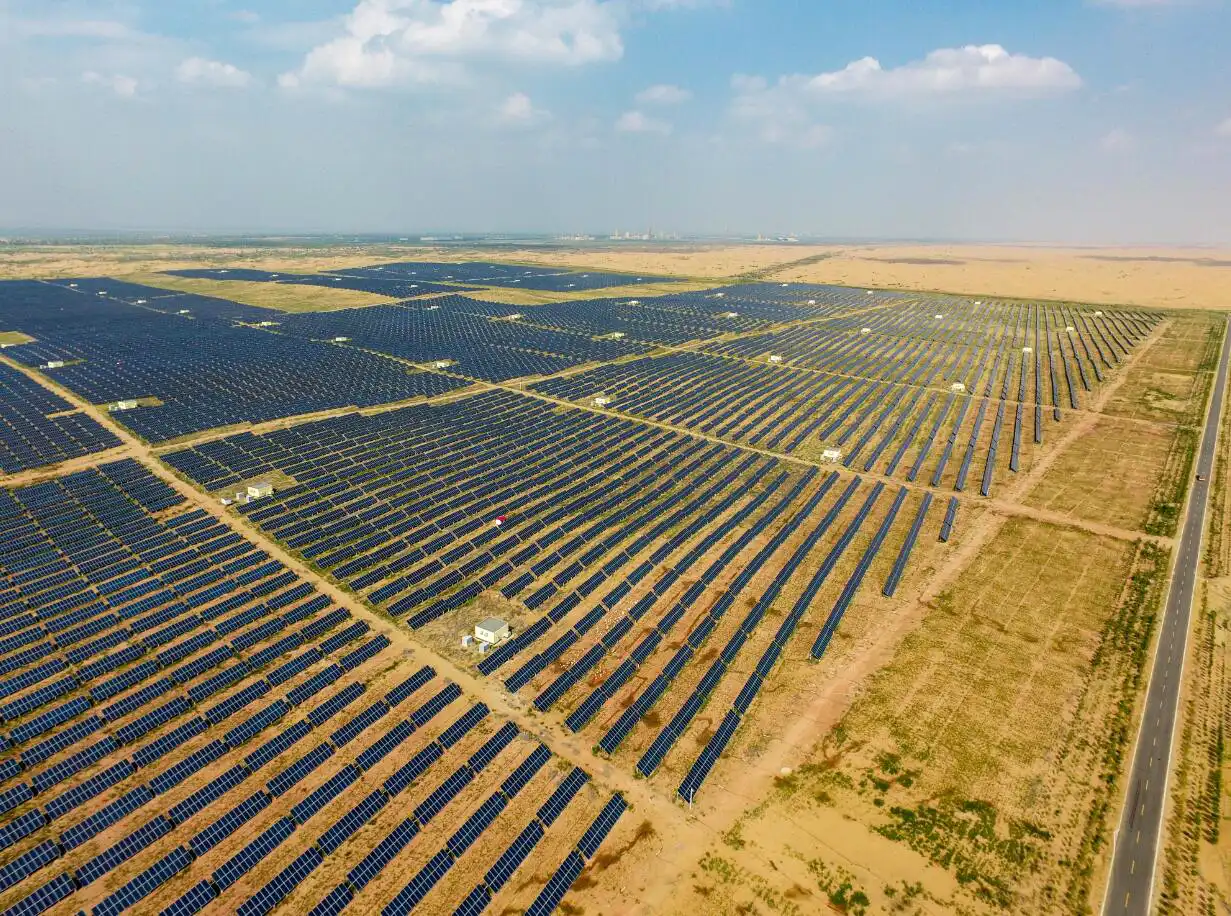
Kubuqi Desert Photovoltaic Desert Control Project: The Kubuqi Desert is the seventh largest desert in China. Through the implementation of the photovoltaic desert control project, the ecological environment of the Kubuqi Desert has been significantly improved. The project not only achieves wind protection and sand fixation, but also promotes local economic development and provides a large number of employment opportunities.
Taklimakan Desert Photovoltaic Desert Control Project: The Taklimakan Desert is the largest desert in China. Today in July, the opening ceremony of the 3.5 million kilowatt Yutian Minfeng, the 800,000 kilowatt Suibian Pishan Desert, and the 600,000 kilowatt photovoltaic desert control projects in Moyu County was held on the same day. The installed capacity of large projects totals 4.9GW. Through photovoltaic desert control projects, vegetation in desert edge areas has been restored and the ecological environment has been significantly improved. The project not only brought considerable economic benefits, but also promoted local sustainable development.
Up to now, the cumulative installed capacity of China's photovoltaic desert control projects has reached tens of gigawatts. Currently, the more successful ones include Ulanqab City in Inner Mongolia, Alxa, Ordos, Xinjiang and other places with a total of 18,000MW, becoming the global leader in the field of photovoltaic desert control.
5. National policies
In order to reduce the huge impact of land desertification on global human survival and development, governments of various countries have introduced many preferential policies to encourage enterprises or organizations to actively participate in the control of land desertification. This also brings huge market opportunities for photovoltaic sand control.
6. Notes on design, selection and construction
During the design, selection and construction of photovoltaic sand control projects, the following points should be noted:
Design stage
(1). Site selection:
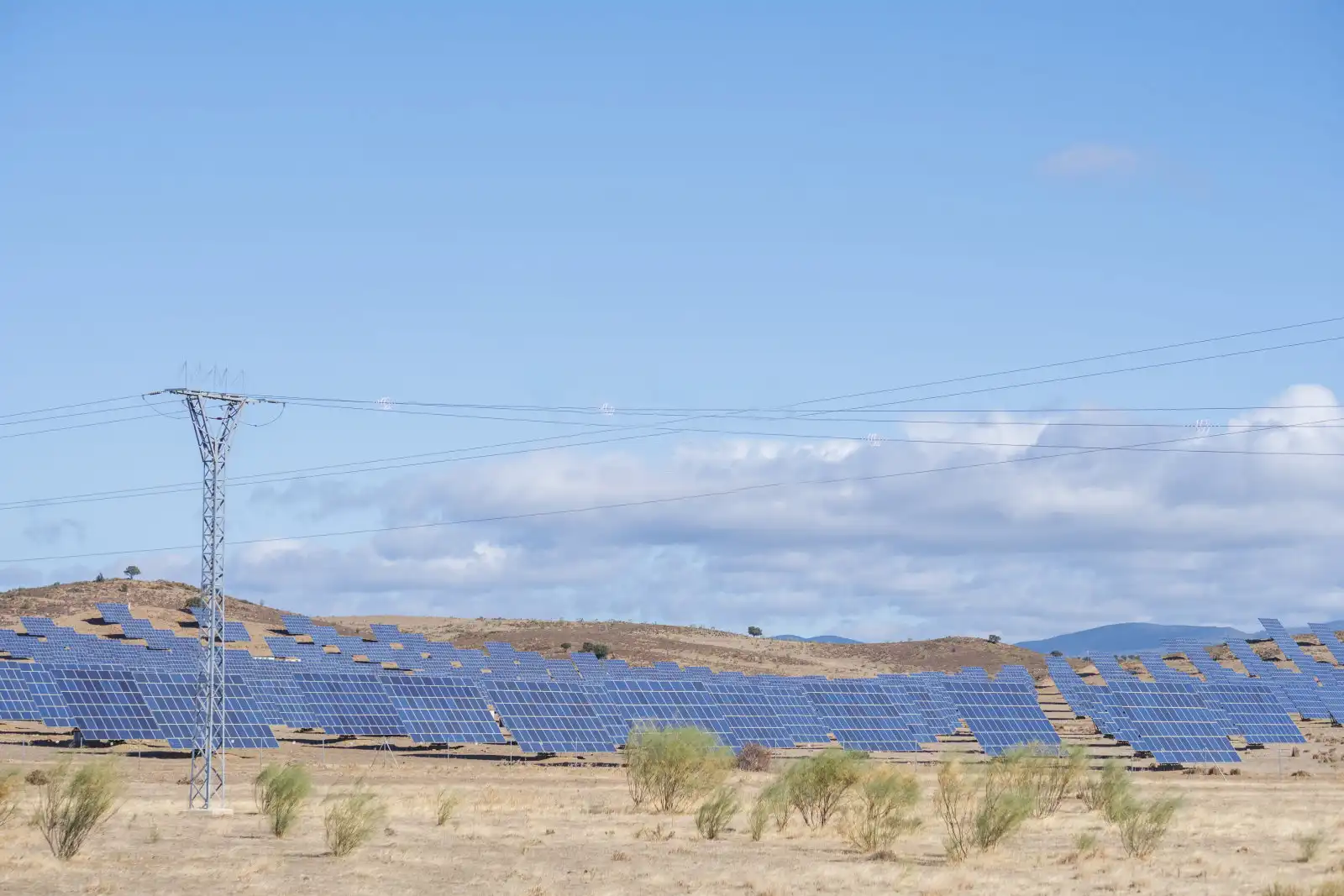
Select deserts or desertified areas with good solar energy resources and suitable climatic conditions to ensure the efficiency and stability of photovoltaic power generation.
(2). Bracket design:
Use corrosion-resistant high-strength aluminum alloy or galvanized steel brackets to ensure the stability and durability of the bracket system in strong winds and dusty environments.
(3). Foundation design:
Design a stable foundation system based on the geological conditions of the desert area to ensure the safe installation of photovoltaic modules.
(4). Ecological restoration design:
Combined with the local ecological environment, design a reasonable vegetation restoration plan to ensure the ecological benefits of the photovoltaic sand control project.
Selection stage
(1). PV module selection:
Select PV modules with high efficiency and durability to ensure long-term stable operation in desert environments.
(2). Inverter selection:
Select inverters with high waterproof level and high temperature resistance to ensure normal operation in harsh environments.
(3). Cable selection:
Select cables with high temperature resistance and UV protection to ensure safe and reliable power transmission.
(4). Energy storage battery:
Select safe and efficient energy storage batteries with strong temperature control capabilities to adapt to the huge temperature difference between day and night in the desert. For example, a large energy storage power station composed of a single 5000 kwh liquid-cooled energy storage container.
Construction phase
(1). Site cleaning:
Clean the site before construction to ensure the cleanliness and safety of the construction environment.
(2). Bracket installation:
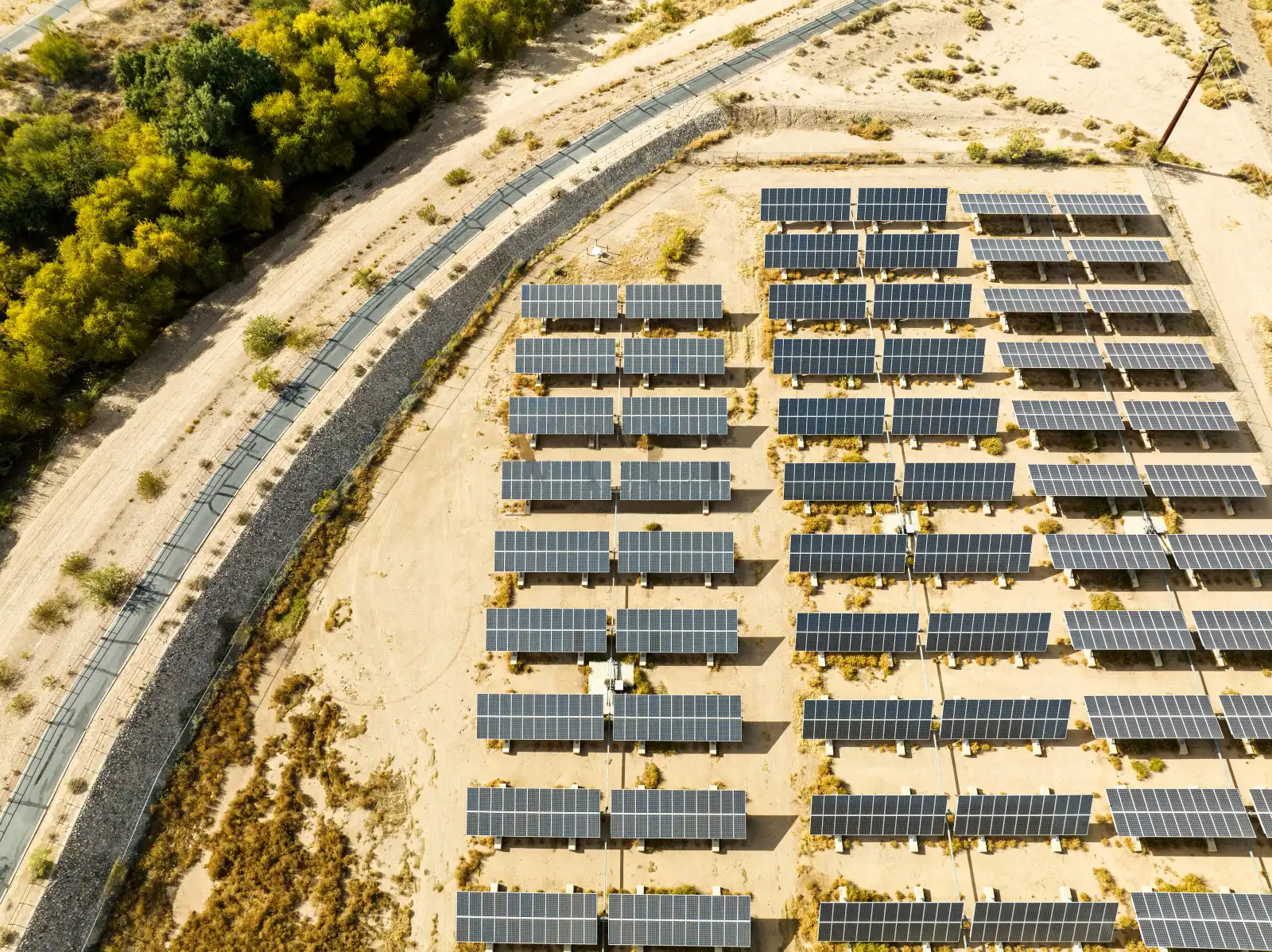
Install the bracket strictly in accordance with the design plan to ensure the stability and durability of the bracket.
(3). Photovoltaic module installation:
Install according to the installation specifications of photovoltaic modules to ensure the stability and power generation efficiency of photovoltaic modules.
(4). Cable laying:
Lay cables reasonably to ensure the safety and beauty of cables.
(5). Ecological restoration construction:
Plant vegetation and restore according to the design plan to ensure the realization of ecological benefits.
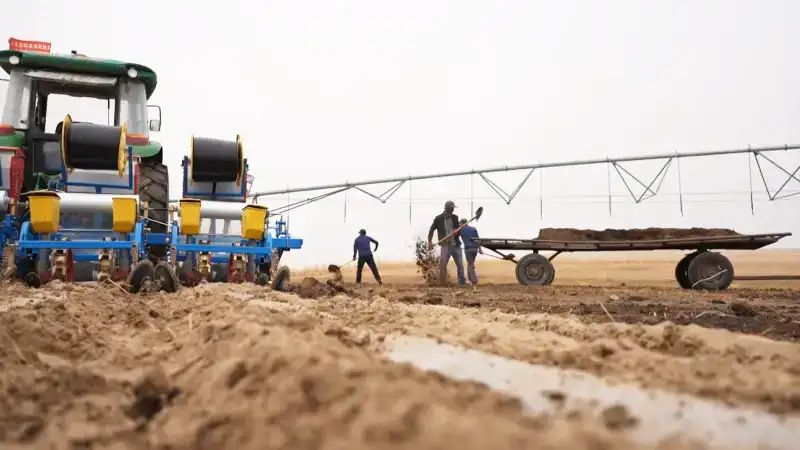
As an innovative technology combining photovoltaic power generation and ecological governance, photovoltaic sand control has been widely used in deserts and desertified areas around the world and has achieved remarkable results. Through scientific design, reasonable selection and fine construction, photovoltaic sand control not only achieves windbreak and sand fixation and ecological restoration, but also makes full use of solar energy resources in desert areas, making important contributions to local economic development and ecological environment improvement. With the continuous advancement of technology and the continuous promotion of applications, photovoltaic sand control will surely play a more important role in global desert governance and new energy utilization.
HT ESS hopes to work with more partners to provide more professional solutions for desert photovoltaic energy storage power stations.
What is a photovoltaic storage and charging integrated machine and its advantages?
Photovoltaic + energy storage + agriculture is opening up a new future