What Is Cell-Level Monitoring and Why It Improves Storage Safety?
2025-08-01
1. Introduction: The Growing Need for Cell-Level Monitoring
Today’s energy landscape—from backyard solar arrays feeding home batteries to vast, containerized systems stabilizing national grids—relies on thousands of individual lithium-ion cells working in concert. But a single rogue cell can trigger a chain reaction: subtle heating here, tiny voltage drift there, and before you know it, an entire pack can go into thermal runaway. That's why cell-level monitoring is no longer optional; it's mission-critical. By equipping each cell with its own sensor, we move from “average pack” thinking to pinpoint precision, catching anomalies before they cascade, and safeguarding both your equipment and your safety.
2. What Is a Battery Cell Monitoring System?
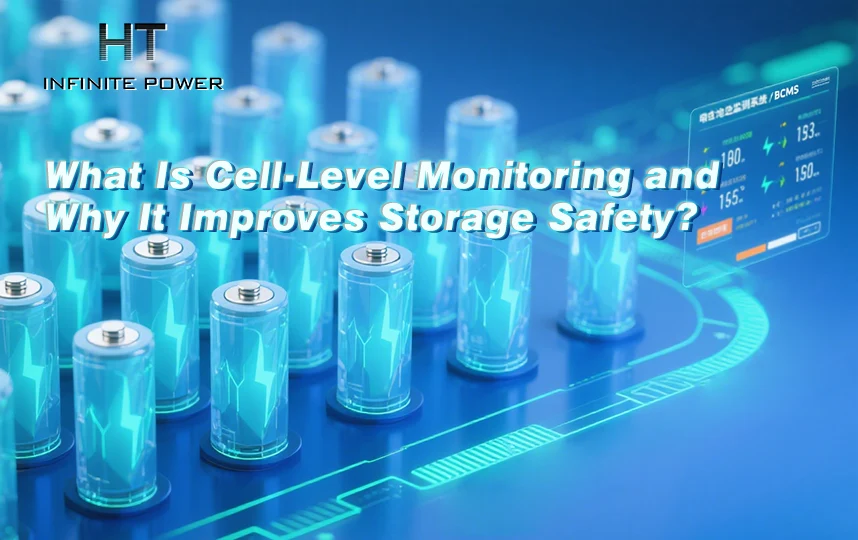
At its heart, a battery cell monitoring system (BCMS) is simply a network of miniature sensors—voltage probes, temperature strips, sometimes even impedance meters—attached to each individual cell. Those sensors stream data to a smart controller, which in turn feeds a visualization dashboard. Unlike traditional BMS setups that report only module-level averages (masking the oddball cell that's running hot), a BCMS highlights exactly which cell is drifting high in voltage or spiking in temperature, often minutes or hours before any pack-level alarm would ever notice.

2.1 Key Components: Sensors, Controllers, and Software
Sensors: These are wafer-thin, flexible strips or tiny clamp-on probes that detect voltage to 1 mV accuracy and temperature to 0.1 °C. They're non-intrusive but rock-solid, designed to survive the harsh chemistry inside a battery cabinet.
Controllers: A dedicated microcontroller board polls each sensor—hundreds at a time—aggregates readings, and enforces user-defined safety thresholds. It can issue commands to rebalance cells, trigger cooling fans, or even isolate a failing cell.
Software Dashboard: Think of it like Google Maps for your battery—real-time heat maps of cell health, historical trend graphs, and instant SMS/email alerts when a parameter drifts out of bounds.
2.2 How It Differs from Traditional BMS
A module-level BMS might say, “Your pack voltage is 48.5 V, temperature 30 °C,” averaging over 48 cells. But that same pack could hide one cell at 55 °C and another at 44 °C. A BCMS says, “Cell 12: 55 °C; Cell 27: 44 °C,” letting you rebalance, cool, or replace selectively. This granularity can prevent a single bad cell from dragging down an entire system.
3. Why Monitor Individual Cells?
3.1 Catching Early Faults Before They Cascade
Cells can develop micro-cracks or separator damage that leak electrolyte. At first, it’s invisible at the pack level, but cell-level sensors catch minute voltage drops and slight temperature rises the moment they start. That early warning gives you hours or even days to intervene—far better than dealing with a melted module or, worse, a fire.
3.2 Balancing Cell State to Maximize Lifespan
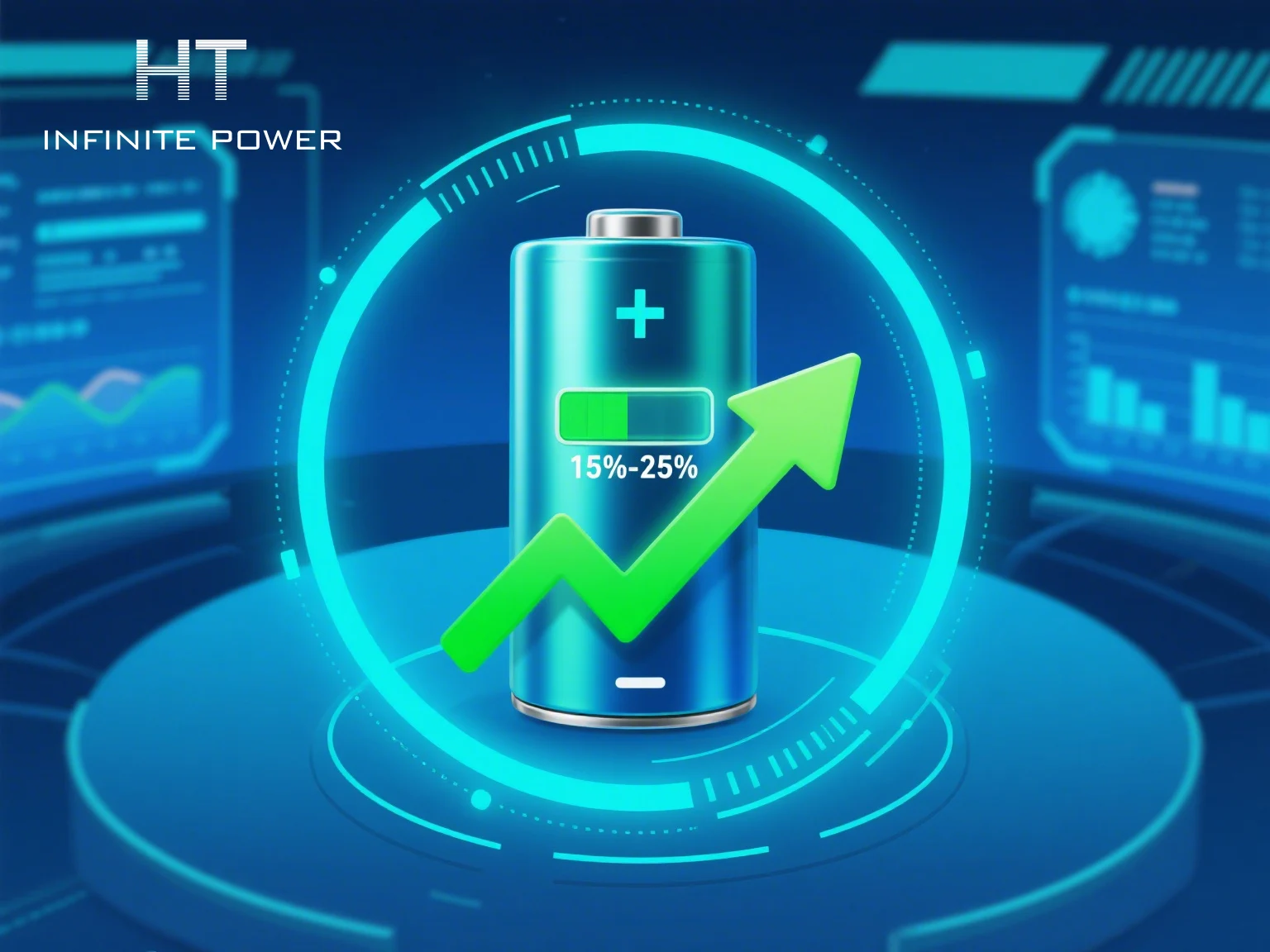
No two cells age identically. Over time, one might gain internal resistance faster, another may lose capacity. Cell-level monitoring enables active balancing—not just shuttling charge between modules, but equalizing each cell’s state-of-charge (SoC) individually. The result: a 15–25% longer overall pack life, fewer replacements, and lower total cost of ownership.
4. Core Benefits for Safety and Reliability
4.1 Over-Voltage and Under-Voltage Protection
With per-cell thresholds, the system can stop charging at 4.10 V for a weak cell even if the pack average is only 4.00V, protecting against lithium plating. Likewise, it won’t let any single cell drop below 2.5 V, guarding against excessive deep discharge and permanent damage.
4.2 Thermal Runaway Prevention
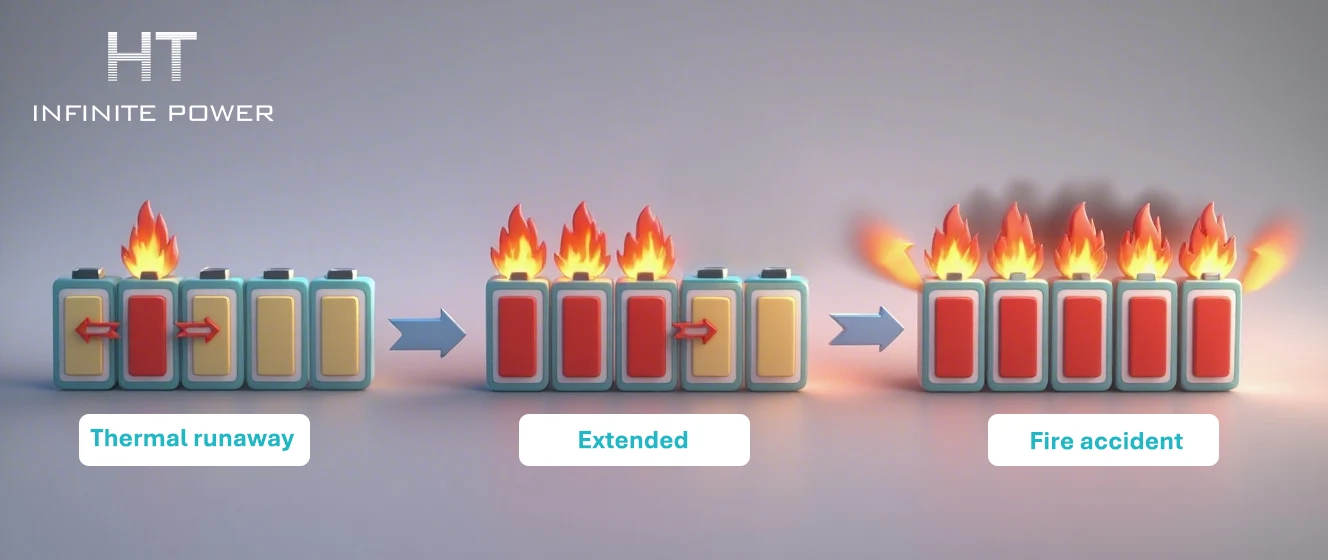
Thermal runaway starts with a single hot cell heating its neighbor, which then heats the next, and so on. Spotting a 5 °C anomaly in one cell and triggering a local fan or load-shed can interrupt that chain reaction, literally saving lives and millions in equipment.
4.3 Fault Isolation and Redundancy
Advanced BCMS can reconfigure the pack on the fly: disconnect a failing cell, reroute currents around it, and keep the rest of the system powering your critical loads—whether that’s a home refrigerator overnight or a data center’s servers during peak demand.
5. Real-World Applications in Home Storage
In a recent installation on a hot Phoenix afternoon, one cell in a homeowner’s 13.5 kWh system spiked to 52 °C while its neighbors hovered at 38 °C. The BCMS throttled charging current by 20% on that string, bringing temperatures back into the safe zone within minutes—no hardware swap, no service call, just a software tweak.
6. Real-World Applications in Industrial & Commercial Storage
A European logistics hub deploying a 1 MWh container noticed two cells (out of 1,024) steadily rising 8 °C above baseline during routine peak-shaving cycles. Early alerts prompted a swap during scheduled maintenance, avoiding a potential $25,000/hour shutdown and preserving crew safety in the process.
7. Best Practices for Implementing Cell-Level Monitoring
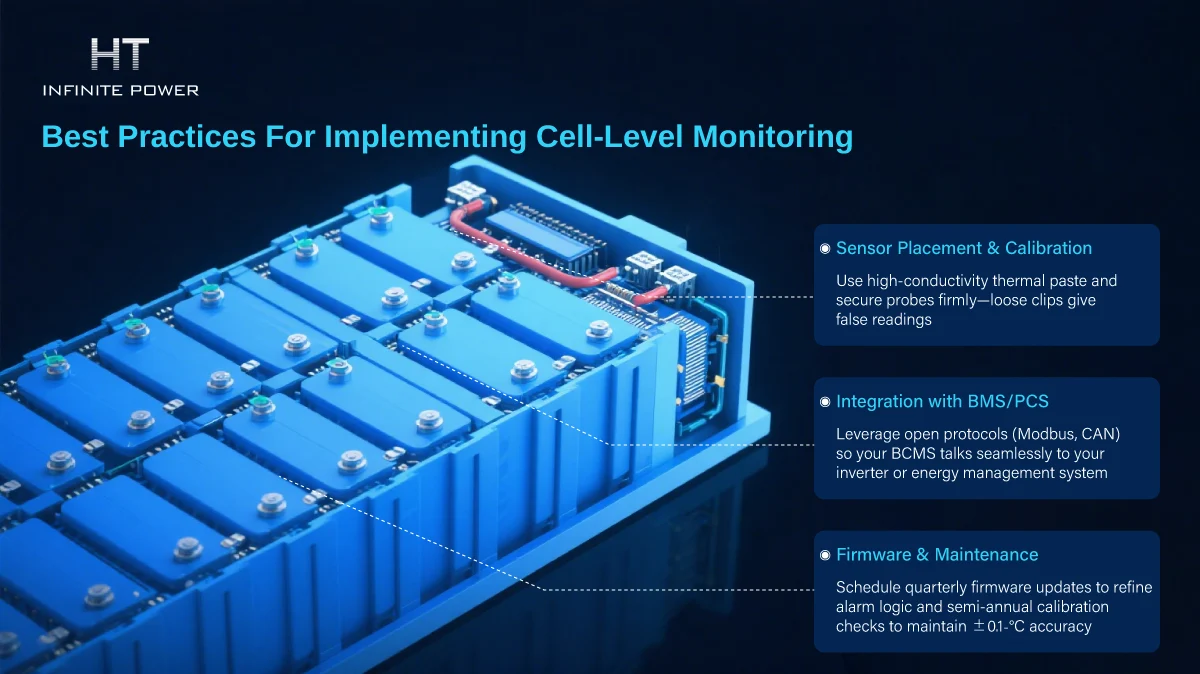
1.Sensor Placement & Calibration: Use high-conductivity thermal paste and secure probes firmly—loose clips give false readings.
2.Integration with BMS/PCS: Leverage open protocols (Modbus, CAN) so your BCMS talks seamlessly to your inverter or energy management system.
3.Firmware & Maintenance: Schedule quarterly firmware updates to refine alarm logic and semi-annual calibration checks to maintain ±0.1 °C accuracy.
8. Challenges and Considerations
Cell-level systems add ~5–10% to pack cost and generate massive data streams. Edge filters or local analytics nodes are essential; naively streaming raw data to the cloud can overwhelm networks. Wireless mesh sensors simplify installation but need robust RF planning to avoid interference in dense rack stacks.
9. Conclusion: Future of Safe Energy Storage
From 5kW home backup units to 50MW grid-services installations, cell-level monitoring is shifting from “nice-to-have” to “must-have.” By catching issues at their birthplace, balancing cells precisely, and integrating with smart-grid controls, this technology transforms lithium-ion systems into safe, reliable workhorses.
10. Frequently Asked Questions (FAQs)
Q1. How does cell-level monitoring differ from module-level?
Module-level averages hide anomalies; cell-level pinpoints each cell’s voltage and temperature in real time.
Q2. Can cell-level faults be isolated automatically?
Yes—modern BCMS can bypass or disconnect faulty cells on the fly, keeping the rest of the pack online.
Q3. What’s the ROI?
In many commercial settings, the cost of a single avoided unscheduled outage pays for monitoring within 12–18 months.
Q4. Are wireless sensors reliable at scale?
Yes—advanced mesh protocols now deliver >99.9% packet delivery rates even in metal-rich rack environments.
Q5. How often should I recalibrate?
Every 6–12 months, depending on your site’s temperature swings and cycle frequency.
Five Common Myths About Battery Storage Debunked
What Is Battery Swelling and What Causes It in Lithium-Ion Systems?