
What Is Battery State of Charge (SoC)?
2025-07-15

Battery State of Charge (SoC) quantifies the remaining energy in a battery as a percentage of its rated capacity. It serves as a critical operational metric, informing users and systems about how much charge is available before the next recharge is necessary. Accurate SoC measurement helps prevent unexpected power loss, ensures efficient energy use, and guides maintenance scheduling.
In applications ranging from portable electronics to utility-scale energy storage, SoC data underpins decision-making. For instance, backup power systems rely on precise SoC thresholds to switch seamlessly during outages. Similarly, industrial equipment uses SoC signals to optimize productivity and avoid downtime.
In applications ranging from portable electronics to utility-scale energy storage, SoC data underpins decision-making. For instance, backup power systems rely on precise SoC thresholds to switch seamlessly during outages. Similarly, industrial equipment uses SoC signals to optimize productivity and avoid downtime.
Understanding SoC: Definition and Importance
Calculating SoC involves comparing the current stored charge to the maximum design capacity. However, real-world batteries undergo chemical changes, self-discharge, and temperature effects that complicate this calculation.
Battery management systems (BMS) translate raw sensor data into actionable SoC readings. These readings inform end-users when to charge, warn against deep discharge, and adjust operating parameters to enhance longevity. In electric vehicles (EVs), SoC directly impacts driving range estimates and charging strategies, helping drivers plan trips and reduce range anxiety.
Battery management systems (BMS) translate raw sensor data into actionable SoC readings. These readings inform end-users when to charge, warn against deep discharge, and adjust operating parameters to enhance longevity. In electric vehicles (EVs), SoC directly impacts driving range estimates and charging strategies, helping drivers plan trips and reduce range anxiety.

State of Charge vs. State of Health
While SoC measures available energy at any moment, State of Health (SoH) assesses the battery’s remaining capacity relative to its original capability. A battery with 80% SoH can only reach 80% of its initial SoC when fully charged. Monitoring both metrics allows operators to forecast replacement timelines and manage warranties effectively.
Why SoC Matters for Performance
Voltage output correlates with SoC. At high SoC, batteries maintain stable voltage under load. At low SoC, voltage droop can cause devices to shut down or throttle performance. For critical systems—such as medical devices or grid-stabilizing batteries—knowing accurate SoC levels prevents failures and maximizes reliability.
How SoC Is Measured
Estimating SoC requires combining sensor data with algorithmic models. Common methods include:
Voltage-Based Estimation
This approach uses the relationship between open-circuit voltage (OCV) and SoC. After resting the battery to eliminate surface charge effects, the OCV reading maps to an SoC value via a pre-defined curve. Although simple, this method demands rest periods and is sensitive to temperature.
Learn more in NREL’s overview.
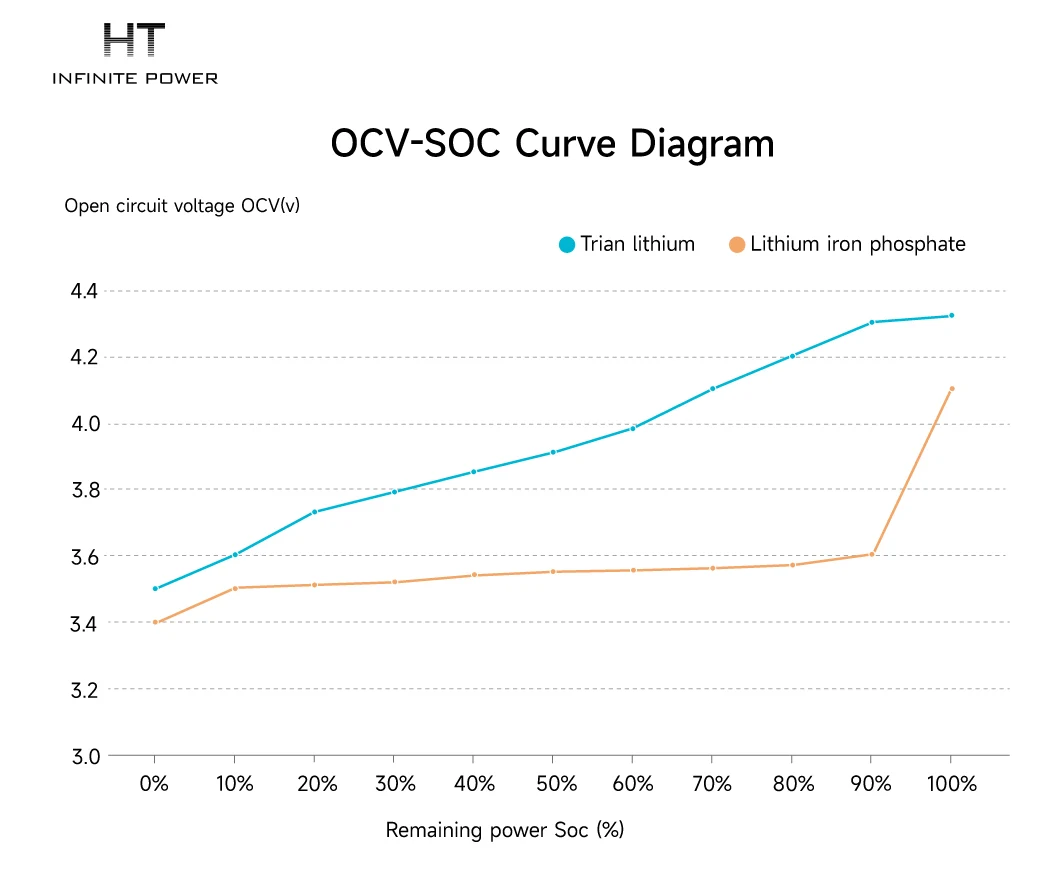
Learn more in NREL’s overview.
Coulomb Counting Methods
By integrating current over time (∫I dt), Coulomb counting tracks charge flow. It excels in short-term accuracy but accumulates drift over long durations. Periodic reset points—such as full-charge events—are required to maintain long-term reliability.
Advanced Kalman Filtering
Kalman filters fuse voltage, current, and temperature measurements using probabilistic models. These filters correct for measurement noise and drift, achieving SoC accuracy of ±1–2% even in dynamic load conditions. Implementation complexity and processing demands are higher, but the precision benefits critical applications.
Factors Affecting SoC Accuracy
Several environmental and operational factors impact measurement precision:
Temperature Influences
Battery chemistry reactions speed up at higher temperatures and slow down in the cold, shifting voltage and capacity curves. Accurate SoC algorithms incorporate temperature compensation to correct for these variations.

Charge/Discharge Rates
High charge or discharge currents lead to voltage overshoot or sag. Simple voltage-based methods misinterpret these effects as SoC changes unless algorithms adjust for C-rate influences.
Battery Chemistry Differences
Lithium iron phosphate (LFP), nickel manganese cobalt (NMC), and lead-acid batteries exhibit distinct electrical characteristics. Designing SoC estimation algorithms requires chemistry-specific calibration and model parameters.
Applications of SoC Monitoring
Accurate SoC underpins various use cases:
Electric Vehicles and Range Estimation
EV navigation systems combine SoC data with map, traffic, and weather information to refine range predictions. Overestimating SoC can leave drivers stranded; underestimating leads to unnecessary charging stops.

Grid-Scale Energy Storage Management
Utilities dispatch battery arrays based on SoC forecasts to provide services like frequency regulation and peak shaving. Misestimations can result in missed market opportunities or compromised grid stability.
Consumer Electronics and Reliability
Smartphones and laptops rely on SoC data to manage charging algorithms, adjust performance, and alert users. Accurate SoC prevents sudden shutdowns and extends device lifespans.
Improving SoC Estimation
Advanced strategies to enhance accuracy include:
Sensor Calibration Techniques
Regular calibration of current sensors and temperature probes against known SoC endpoints—0% and 100%—minimizes drift and maintains model fidelity.
Machine Learning Approaches
Data-driven models analyze historical battery behavior to predict SoC under variable conditions. Research shows machine learning can cut estimation errors by up to 50%. (IBM Research).
Periodic Recalibration & Data Fusion
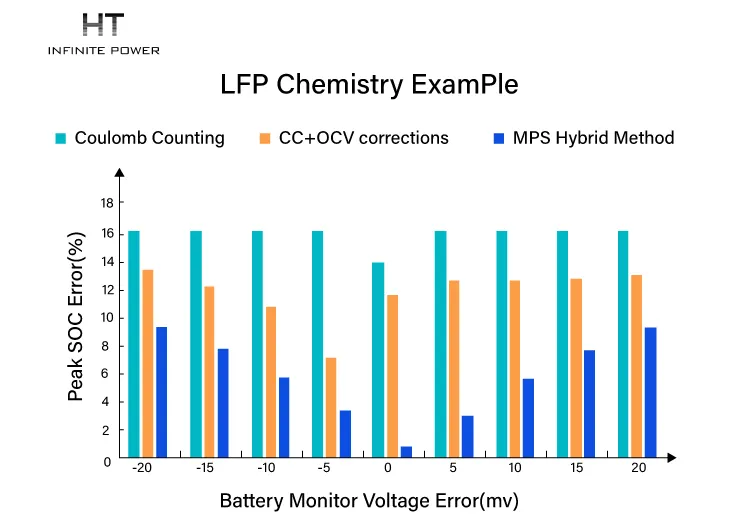
Combining multiple SoC estimation methods—voltage, Coulomb counting, impedance spectroscopy—through data fusion algorithms yields robust results across diverse operating scenarios.
Challenges and Best Practices
Deployment best practices address typical pitfalls:
Dealing with Aging and Drift
Battery cells age at different rates. Implementing cell balancing and updating SoC models based on usage analytics keeps estimations accurate over the system’s lifetime.
Mitigating Measurement Errors
Redundant sensing—voltage, current, and impedance—paired with outlier detection algorithms prevents erroneous data from skewing SoC calculations.
Standardization & Regulatory Frameworks
Adhering to ISO 12405 and UL 2580 ensures SoC reporting meets industry safety and interoperability standards, facilitating cross-platform integration.

Future Trends in SoC Technology
Emerging developments include:
IoT & Real-Time Fleet Monitoring
Networked batteries report SoC to centralized platforms, enabling predictive maintenance and optimized dispatch across mixed fleets.
Second-Life Battery Applications
Tracking historical SoC profiles of retired EV batteries optimizes their reuse in stationary storage, maximizing value and sustainability.
Integration with V2G & Smart Grids
Precise SoC data enables EV-to-grid services, allowing vehicles to supply energy back to the grid during peak demand under controlled conditions.
Conclusion
Battery State of Charge (SoC) is a foundational metric for energy storage systems. Accurate, reliable SoC estimation ensures operational safety, performance optimization, and extended battery life. By leveraging advanced algorithms, rigorous calibration, and emerging analytics, stakeholders can harness the full potential of modern battery technologies.
What is AC and DC Power?
What is Frequency Regulation in Energy Storage?