What Is Anti-Backflow in Energy Storage Systems?
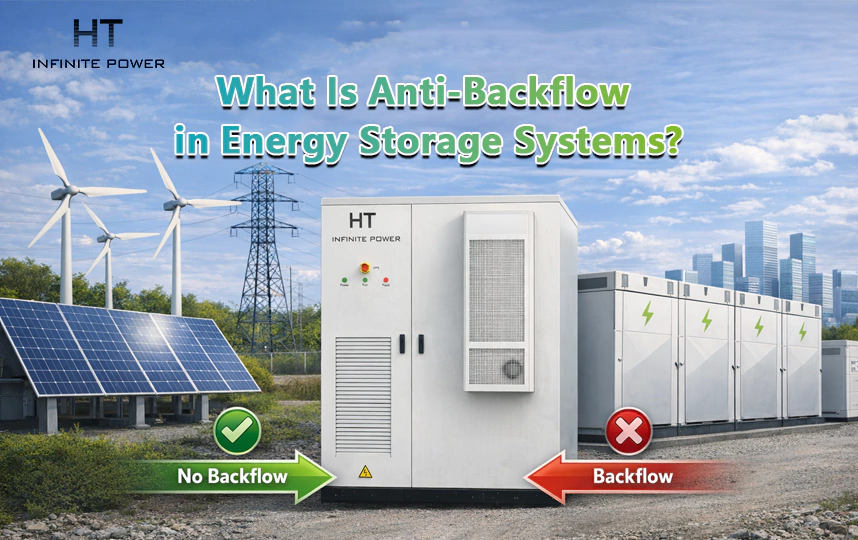
At first glance, it sounds like a very technical concept. In reality, the idea behind it is straightforward: anti-backflow means preventing electricity generated on the user side from flowing back into the grid.
That definition is simple. What makes it interesting—and often complicated—is everything that sits behind it.
When electricity stops behaving in one direction
At certain moments, there is simply more energy available than the local load can absorb. If nothing is done, that excess energy will move upstream, back through the connection point and into the grid. That is what we call backflow.
Anti-backflow is not about stopping electricity altogether. It is about controlling where it goes.
Why backflow is not always welcome
From a purely technical perspective, feeding electricity back into the grid is not inherently wrong. In some markets, it is even encouraged and monetized. But in many real-world projects, especially at the commercial and industrial level, the situation is different.
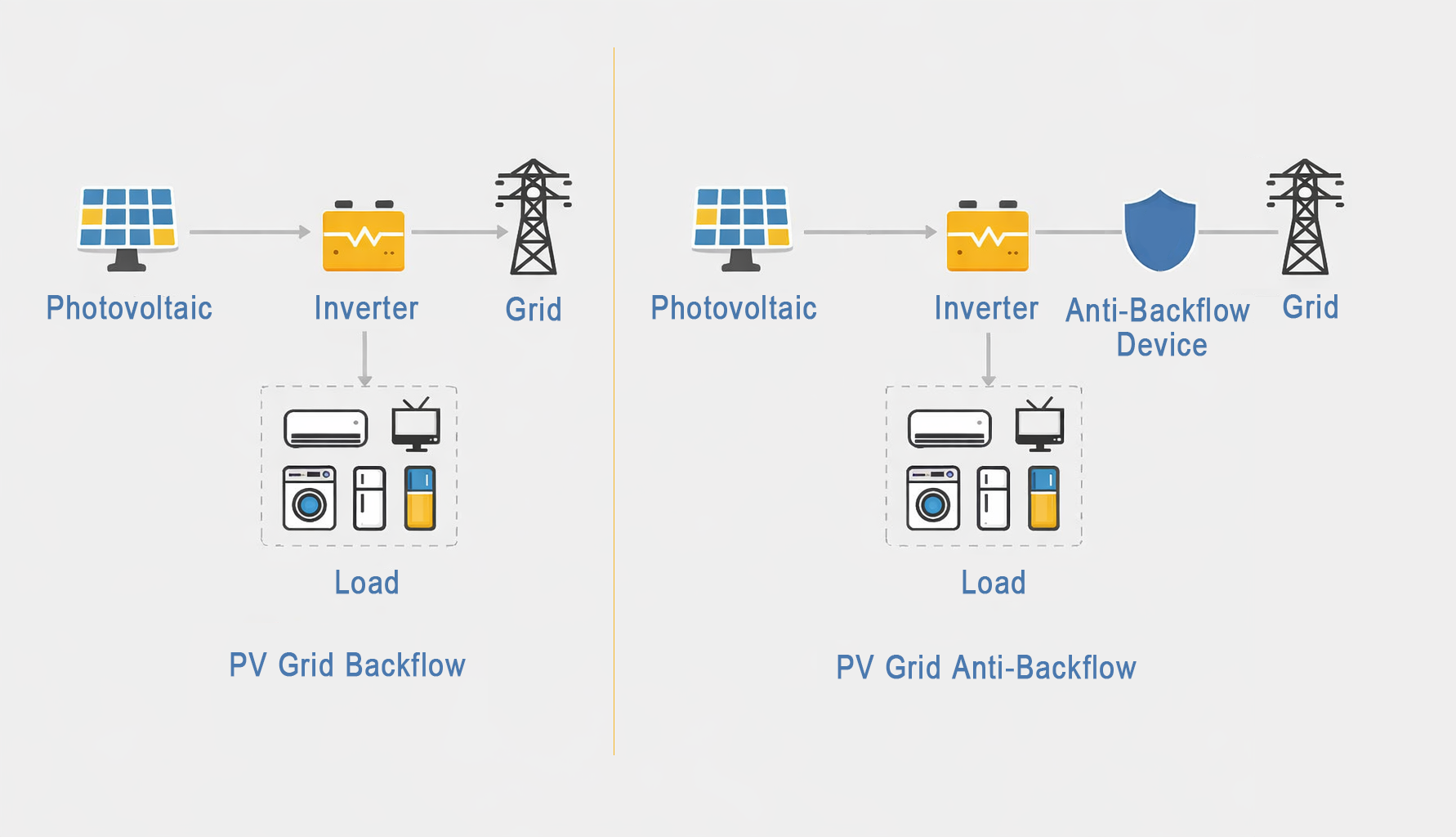
Grid constraints and operational stability
Distribution networks are often not designed to handle large amounts of reverse power flow from end users. Protection settings, transformer loading, and voltage profiles can all be affected. Even small amounts of uncontrolled backflow can complicate grid operation.
For this reason, utilities may impose strict limits or require zero export at the point of connection. In these cases, anti-backflow is not optional—it is a compliance requirement.
Project economics don’t always favor export
Not every project benefits from sending power back to the grid. In many regions, feed-in tariffs are low, capped, or unavailable. The financial logic then shifts toward self-consumption—using as much locally generated energy as possible.
If exporting energy does not generate meaningful revenue, preventing backflow becomes part of optimizing the system’s value.
Anti-backflow in a storage system: more than a switch
It is tempting to think of anti-backflow as a simple protective function—detect reverse power and shut something down. In practice, that approach is too crude for most applications.
A well-designed system does not just block backflow. It continuously adjusts itself to avoid it.
The role of real-time measurement
Everything starts at the point of common coupling (PCC), where the system connects to the grid. A meter or current transformer monitors the direction and magnitude of power flow. This is the system’s reference point—without it, there is no way to know whether backflow is occurring.
Control happens in layers
Once the system knows what is happening at the PCC, it needs to respond. This is where the energy management system (EMS) comes in. It processes real-time data and sends instructions to inverters and storage units.
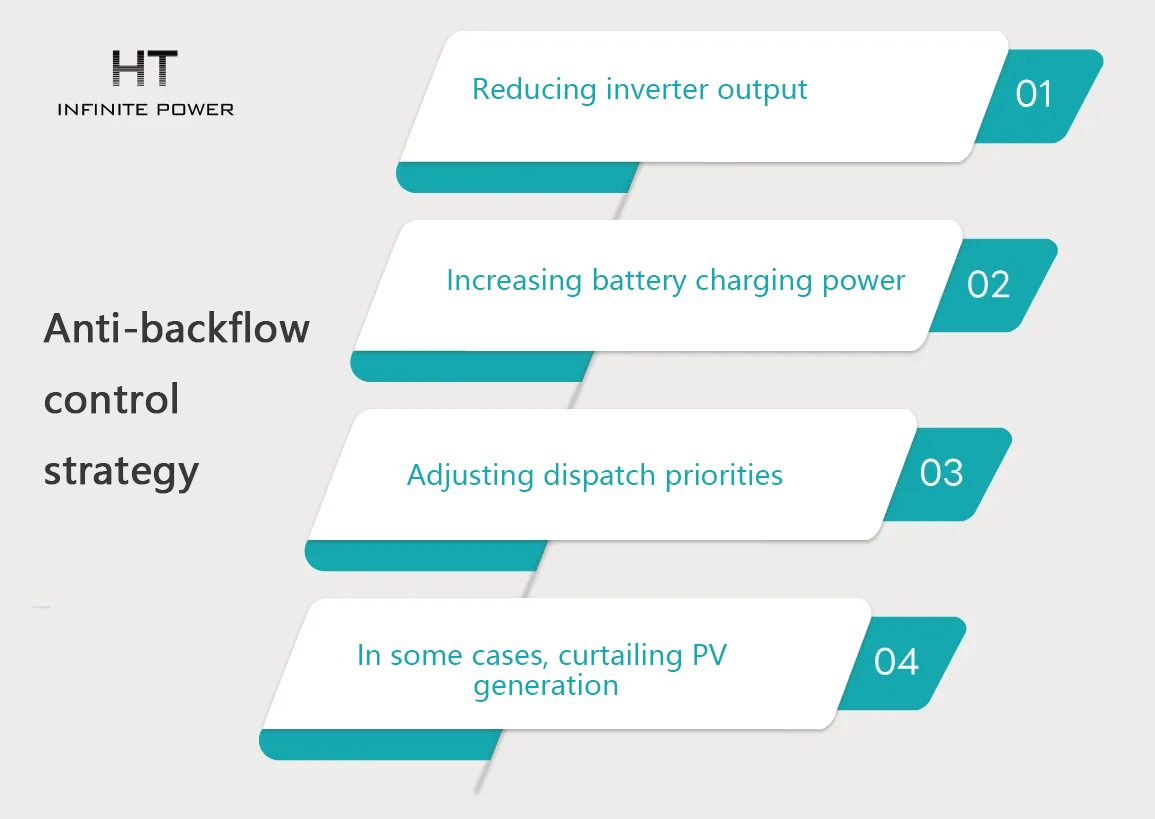
The response is not binary. It can involve:
- Reducing inverter output
- Increasing battery charging power
- Adjusting dispatch priorities
- In some cases, curtailing PV generation
The goal is always the same: keep the net export at or near zero without unnecessarily wasting energy.
Storage changes the equation
Solar-only systems already face backflow issues, but storage adds both complexity and opportunity.
A buffer that can absorb excess energy
When PV generation exceeds load, a battery can step in and absorb the surplus. This reduces the likelihood of backflow and improves local energy utilization. In this sense, storage acts as a buffer between generation and consumption.
But that buffer is not infinite. Once the battery is fully charged, the system has fewer options left.
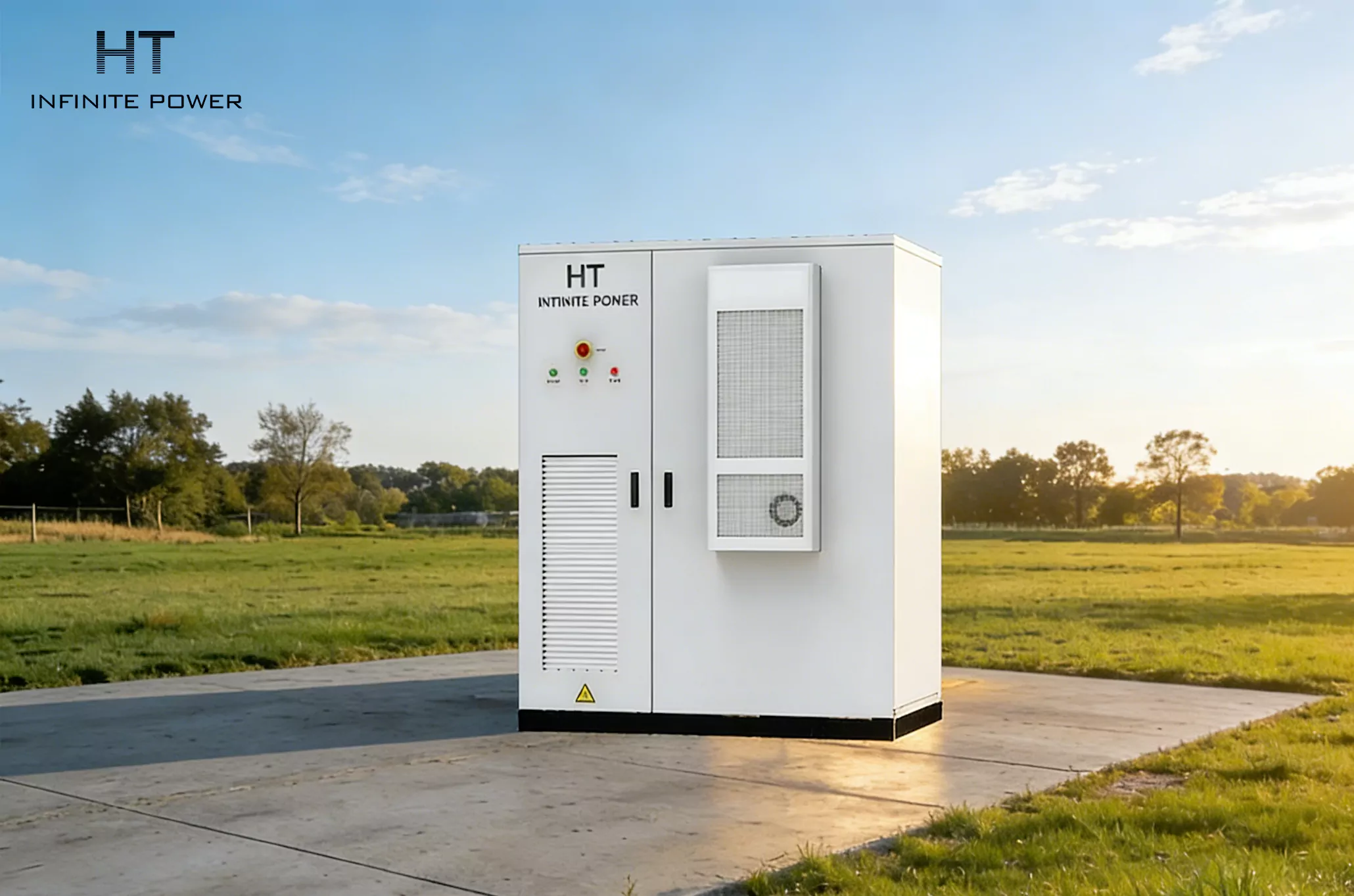
When storage is not enough
This is where system design becomes critical. If the storage capacity is too small relative to PV output, or if charging strategies are not well configured, the battery may reach full state of charge too early in the day. After that point, the system has little choice but to limit generation.
This is why anti-backflow cannot be separated from capacity planning. It is not just about control logic; it is also about sizing the system correctly.
Different ways to achieve anti-backflow
There is no single method that fits all projects. Instead, anti-backflow is usually implemented through a combination of strategies.
Power limiting at the inverter level
One of the most direct approaches is to limit the output power of inverters. When the system detects potential backflow, it reduces generation to match local demand.
This method is simple and effective, but it comes with a trade-off. Limiting output means some available energy is not used. Over time, that can reduce the overall value of the PV system.
Storage-first control strategies
A more flexible approach prioritizes charging the battery whenever excess generation is detected. Instead of curtailing energy immediately, the system stores it for later use.
This works well when storage capacity is sufficient and cycling strategies are properly managed. It also aligns with the goal of maximizing self-consumption.
Hybrid approaches in real systems
Where projects often run into trouble
Why it matters more going forward
A practical way to think about it
Conclusion
Data Center BBU Deep Dive: From 48V to 800V HVDC and Millisecond-Scale Disturbance Immunity
Why Round-Trip Efficiency Decides the Real Value of Battery Energy Storage