What is Energy management system (EMS) and its functions?
2025-01-23
Energy Management System Battery Storage
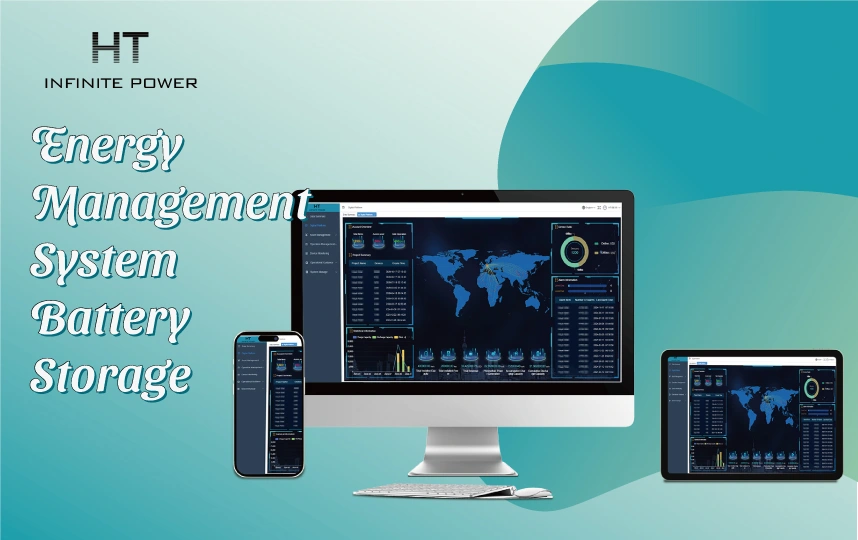
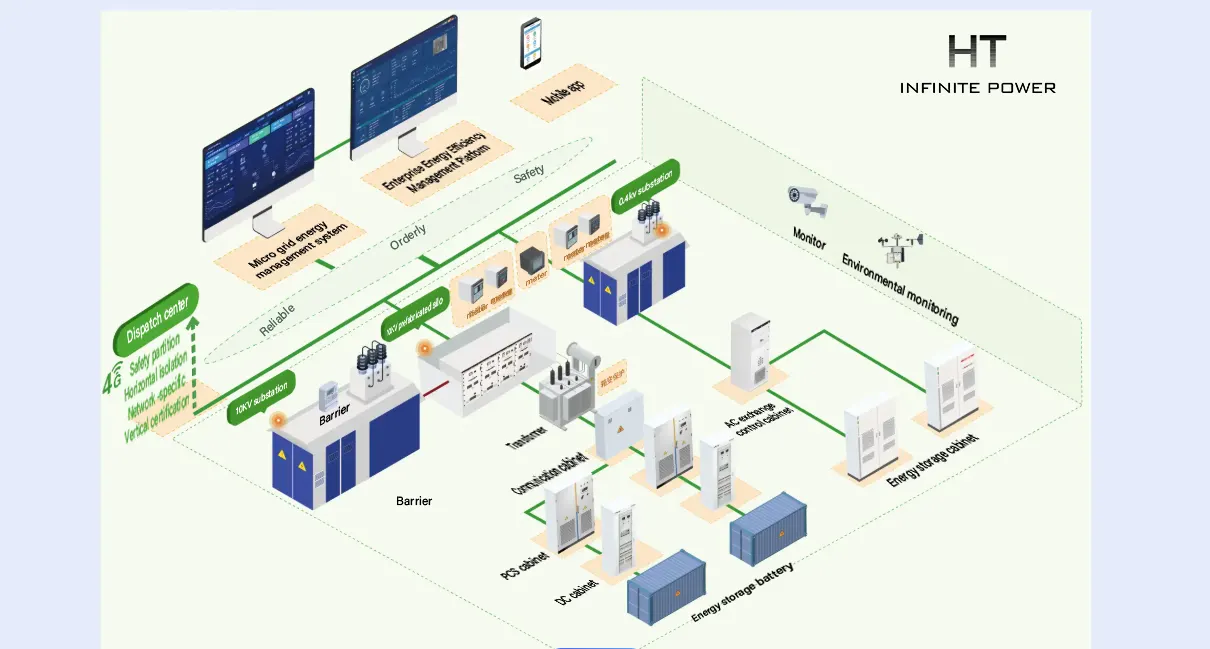
Energy Management System Battery storage, referred to as EMS, is a collection of software and hardware used to monitor, control, analyze and optimize energy systems.
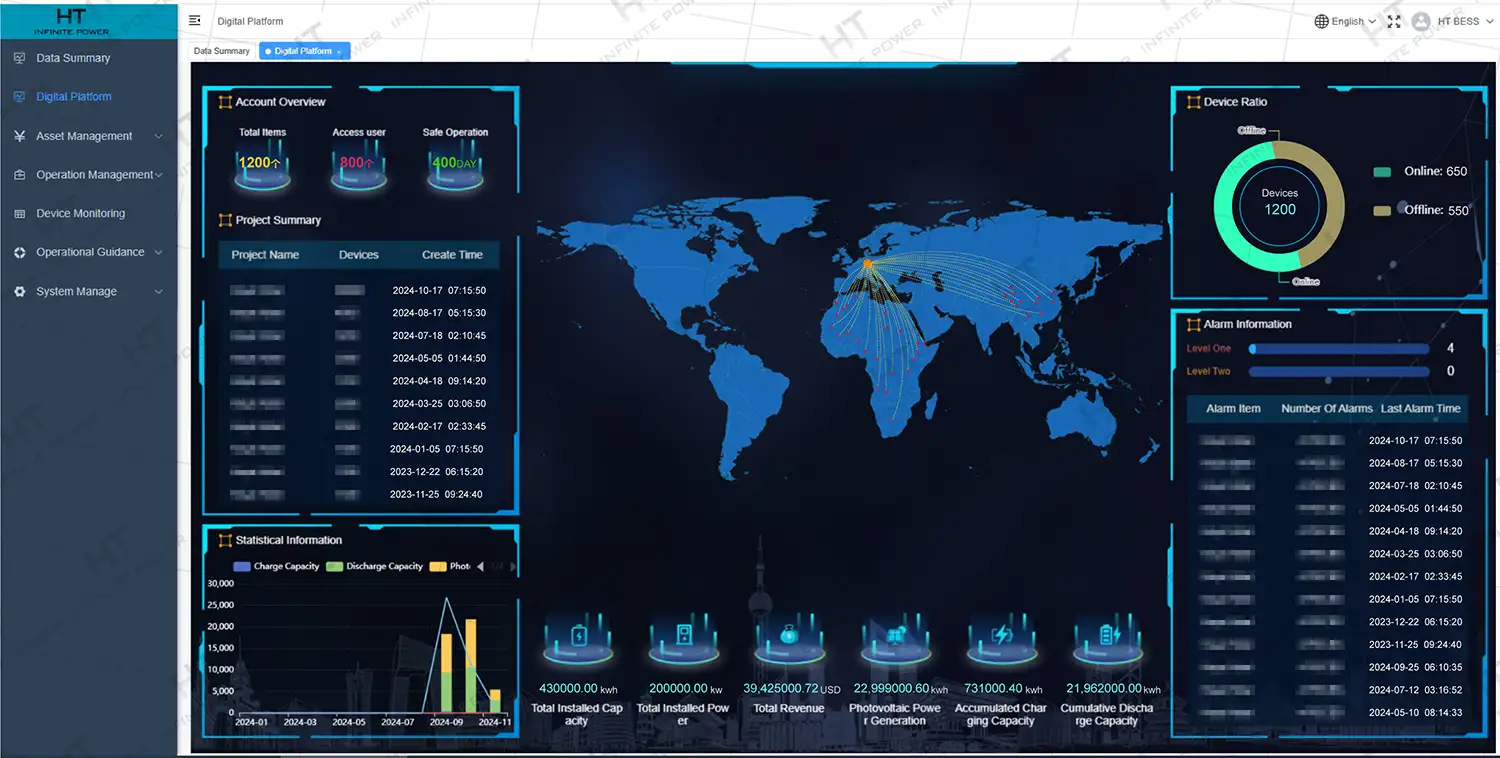
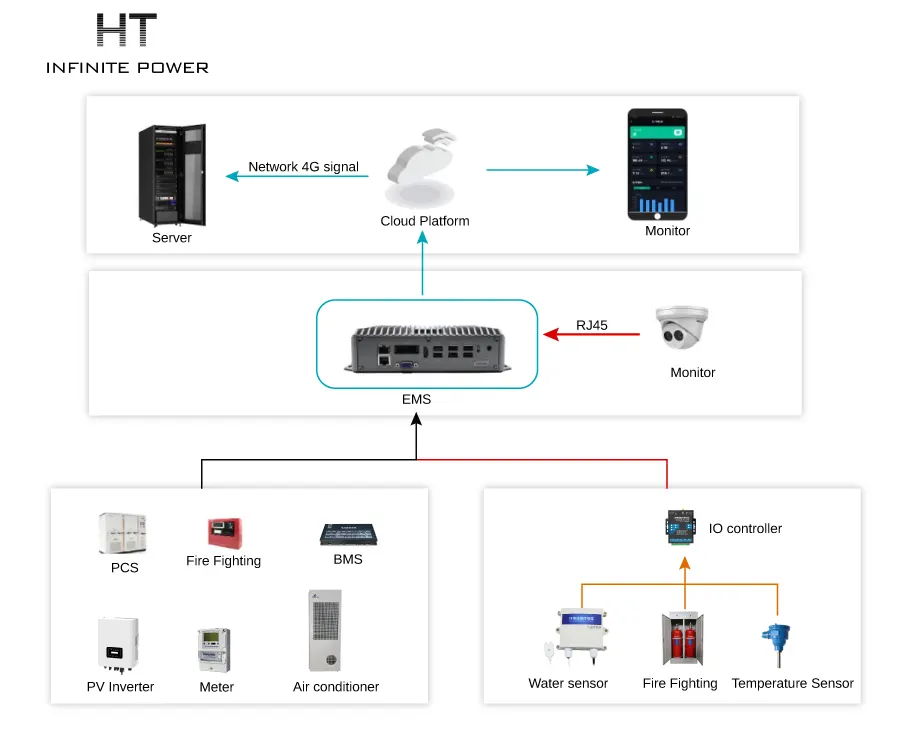
It achieves efficient management and optimal configuration of energy through real-time monitoring and intelligent control of all aspects of energy production, distribution and consumption. In energy storage systems, EMS specifically refers to the system used to manage energy storage equipment, which includes battery management system (BMS), energy storage converter (PCS), and other subsystems that communicate with energy storage equipment. The core function of EMS is to optimize the scheduling strategy of energy storage equipment to ensure its safe, stable and efficient operation. This includes battery charge and discharge control, status monitoring, fault diagnosis, performance evaluation, etc.
Note: For the functional introduction of BMS and PCS, please click the link to refer to the relevant product introduction
Functions of the Energy Management System Battery Storage?
The energy management system (EMS) in the energy storage system has multiple functions, mainly including the following aspects:
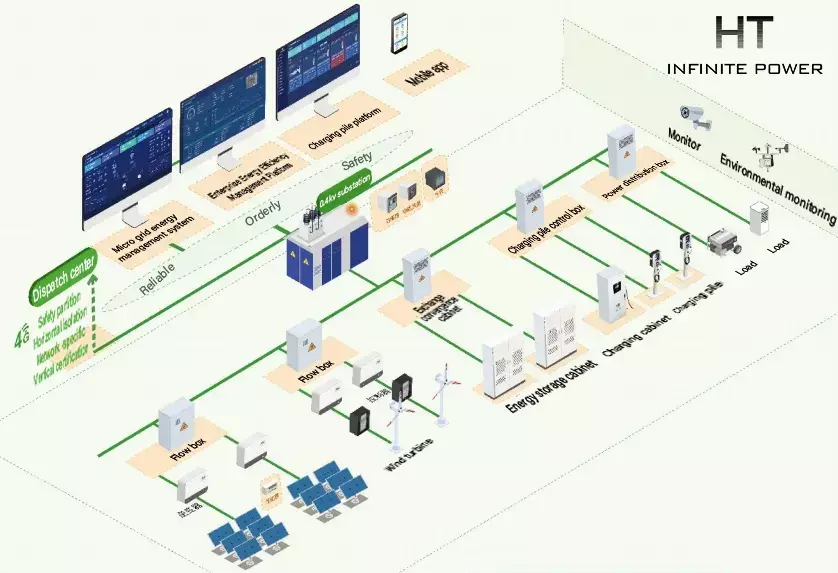
1. Monitoring and control:
EMS can monitor the operating status of the energy storage system in real time, including key parameters such as battery charge and discharge status, temperature, voltage, current, etc., and control the energy storage converter (PCS) to perform charge and discharge operations to keep the battery in the best working condition.
2. Optimized scheduling:
EMS optimizes the charging and discharging strategies of the energy storage system based on factors such as grid demand, battery status and cost, thereby improving energy utilization efficiency and reducing operating costs.
3. State estimation and performance evaluation:
EMS estimates the state of the battery through advanced algorithms, including the remaining capacity and health of the battery, and evaluates the performance of the battery to provide a basis for optimizing the charging and discharging strategy.
4. Safety management:
EMS includes a series of safety protection measures, such as over-temperature protection, over-charge protection, over-discharge protection, battery balancing management, etc., to prevent battery damage or safety accidents.
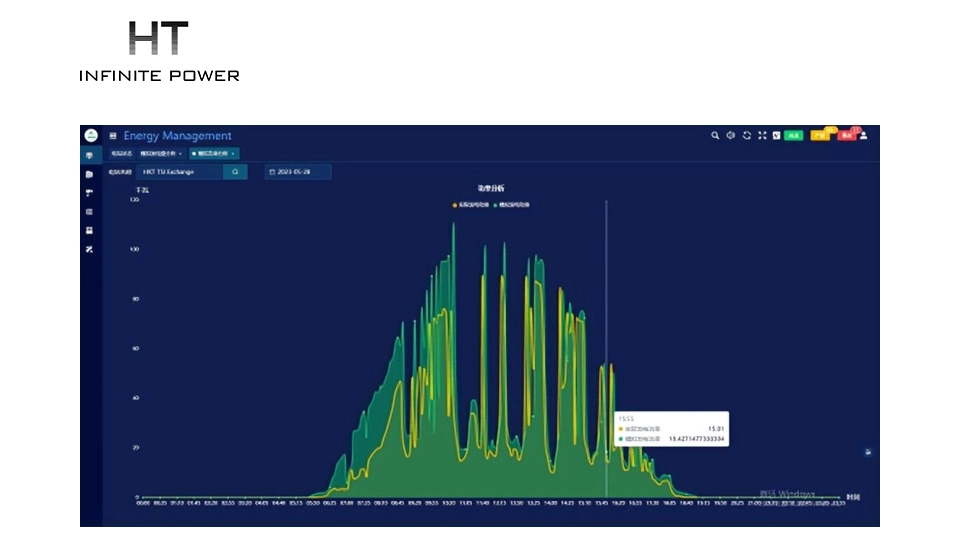
5. Data collection and analysis:
EMS collects the operating data of the energy storage system, analyzes and processes it to identify system performance trends and provide data support for system optimization and maintenance
6. Communication and interface:
EMS communicates with other systems (such as power grid dispatching system, distributed energy management system, etc.), executes remote control instructions, and realizes the interaction between the energy storage system and external systems.
7. Energy forecasting and planning:
EMS can predict grid load and renewable energy generation based on historical data and weather forecasts, thereby planning the operation strategy of the energy storage system.
8. Ancillary services:
EMS can coordinate the energy storage system to provide ancillary services, such as frequency regulation and voltage control, to support the stable operation of the grid.
9. Economic operation:
EMS optimizes the operation mode of the energy storage system by analyzing market prices and grid demand to maximize economic benefits.
10. Fault diagnosis and maintenance:
EMS can monitor abnormal conditions of batteries and systems, provide fault diagnosis reports, assist maintenance personnel to solve problems in a timely manner, and predict maintenance time.
In summary, the energy management system battery storage plays a vital role in the energy storage system. It can not only improve energy utilization efficiency and reduce operating costs, but also ensure the safety and reliability of the system.
With the development of renewable energy and smart grid technology, the application of EMS is becoming more and more extensive, becoming an important technical support for energy transformation and sustainable development.
What is the role of energy storage EMS in different application scenarios?
The energy management system (EMS) in the energy storage system has a variety of application scenarios, which usually involve one or more aspects of the power system, including but not limited to:
1. Grid ancillary services:
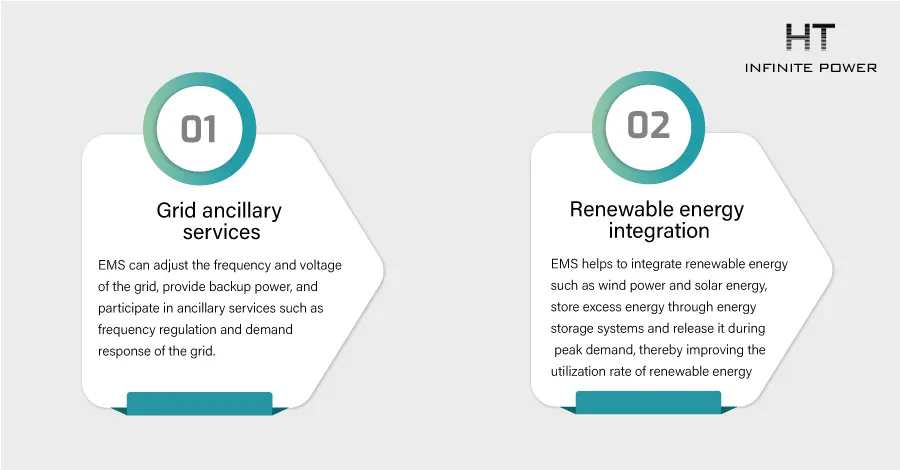
EMS can adjust the frequency and voltage of the grid, provide backup power, and participate in ancillary services such as frequency regulation and demand response of the grid.
2. Renewable energy integration:
EMS helps to integrate renewable energy such as wind power and solar energy, store excess energy through energy storage systems and release it during peak demand, thereby improving the utilization rate of renewable energy.
3. Peak shaving and valley filling:
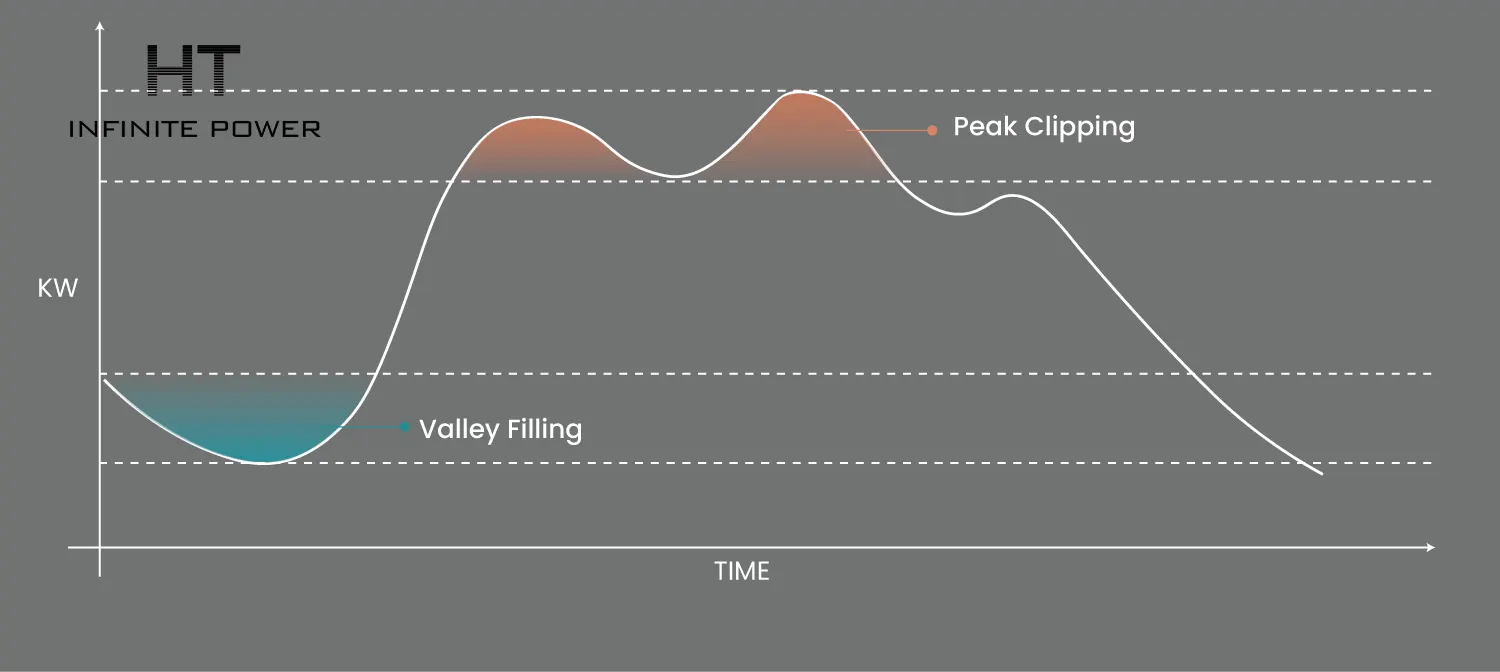
In the electricity market, EMS can help grid operators balance the grid load, reduce peak load, and reduce energy waste by storing electricity during off-peak hours and releasing it during peak hours.
4. Demand response:
EMS can respond to the grid's demand reduction signal and help reduce the grid load by reducing the charging of the energy storage system or increasing the discharge, thereby participating in the demand response program and reducing electricity bills.
5. Microgrid management:
In microgrid applications, EMS can manage a variety of energy resources, including battery energy storage, fuel cells, thermal energy storage, etc., to achieve optimal configuration and autonomous management of energy.
6. Electric vehicle charging control:
EMS can manage electric vehicle charging stations, optimize grid load by scheduling charging periods and power, and ensure the charging needs of electric vehicles.
7. Industrial and commercial energy storage:
In industrial and commercial buildings, EMS can optimize the use of stored electricity, reduce electricity bills, improve power quality, and improve the stability of the grid through demand-side management.
8. Off-grid energy systems:
In off-grid renewable energy systems, EMS can optimize the charging and discharging strategies of energy storage systems, improve energy self-sufficiency, and extend the time that the grid can operate independently.
9. Battery performance management:
EMS can monitor the health and performance of batteries, extend battery life and reduce maintenance costs through intelligent algorithms.
10. Energy trading:
EMS can provide grid operation data and market information to help energy traders make smarter buying and selling decisions and participate in energy market transactions.
EMS Quality Evaluation Standards
EMS is the brain of energy storage. When we purchase energy storage, we should not only pay attention to battery parameters, but also EMS functions and parameters. How should we purchase and judge the pros and cons of EMS?
Here is an EMS evaluation pyramid model for reference:
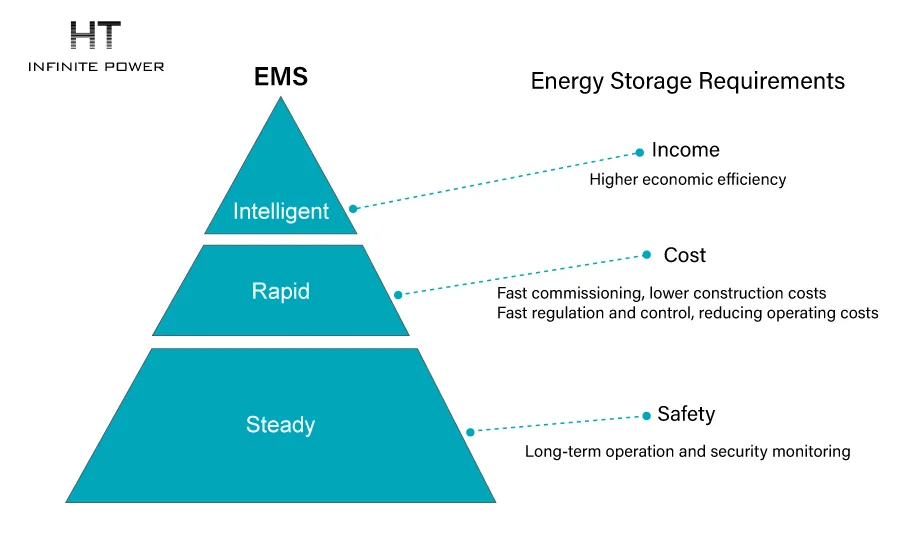
Stability
The base of the pyramid is the foundation: EMS is a product that integrates hardware and software. Without stable and high-quality hardware and software, everything else is just empty talk.
In terms of hardware, we focus on quality, including high and low temperature operation, electromagnetic compatibility, MTBF (trouble-free operation time), etc.
In terms of software, we focus on the stability and self-healing of cloud-edge communication, MTBF of software, etc.
It is recommended to purchase hardware that has been verified by multiple projects and supplied by large manufacturers to obtain stable products and after-sales services.
Quick response
The middle layer of the pyramid is connection: During the debugging and delivery phase, EMS needs to provide efficient southbound access functions, support fast device management and docking, display page definition configuration, and efficient debugging and error checking.
During the daily operation and maintenance phase, EMS needs to provide secure and real-time remote control functions to support daily strategy adjustments, equipment start and stop, problem troubleshooting and correction, and reduce high-cost on-site maintenance. At the same time, EMS can also easily access northbound equipment such as ground dispatching, realize the local hosting mode of energy storage, and integrate it into more diverse application scenarios.
Intelligence
The upper layer of the pyramid is utility: intelligent strategies are the core of energy management, and AI and algorithms are the core competitiveness of EMS. In addition to the current strategies that cover comprehensive industrial and commercial energy storage scenarios, EMS should pay more attention to the implementation of intelligent strategies, so as to better connect wind, light, storage, charging, diesel and other assets at the power consumption end, so as to welcome the arrival of the green electricity era.
Intelligent strategies should also have the function of self-iteration and upgrading. With the operation of energy storage for many years, the algorithm can continue to evolve according to the latest battery parameters and energy demand, and provide analysis reports to assist power station operation and maintenance decision-making.
Furthermore, intelligence is also reflected in the early warning of energy storage risks. Combined with the powerful computing power of the cloud platform, it can realize the identification and alarm of early battery failures and equipment hidden dangers. Thereby improving the life of the power station and ensuring the safety of the power station.
Energy management system (EMS) plays a vital role in energy storage system. Through real-time monitoring, intelligent control and optimized scheduling, it improves energy utilization efficiency, reduces operating costs, and ensures the safety and reliability of the system.
EMS has a wide range of application scenarios, including grid auxiliary services, renewable energy integration, peak load shifting, demand response, microgrid management, electric vehicle charging control, industrial and commercial energy storage, etc. With the advancement of technology, the application scope of EMS will continue to expand.
What is Power conversion system(PCS)?
The main functions of lifepo4 battery management system