What is AC and DC Power?
2025-07-18
When talking about solar energy systems or battery storage containers—whether for homes, businesses, or utilities—two terms come up again and again: AC (Alternating Current) and DC (Direct Current). These two forms of electricity flow are the foundation of how power is generated, transmitted, stored, and used.
But what's the difference between them? Why do batteries store DC but homes run on AC? And how does this impact solar energy storage, commercial battery containers, and off-grid backup systems?
This guide breaks it all down in plain English, with real examples, technical details, and practical applications.
But what's the difference between them? Why do batteries store DC but homes run on AC? And how does this impact solar energy storage, commercial battery containers, and off-grid backup systems?
This guide breaks it all down in plain English, with real examples, technical details, and practical applications.
1. AC and DC Power Calculator
If you're working with battery systems or planning a solar installation, you’ll need to make some quick conversions. Here’s how:
- DC Formula:
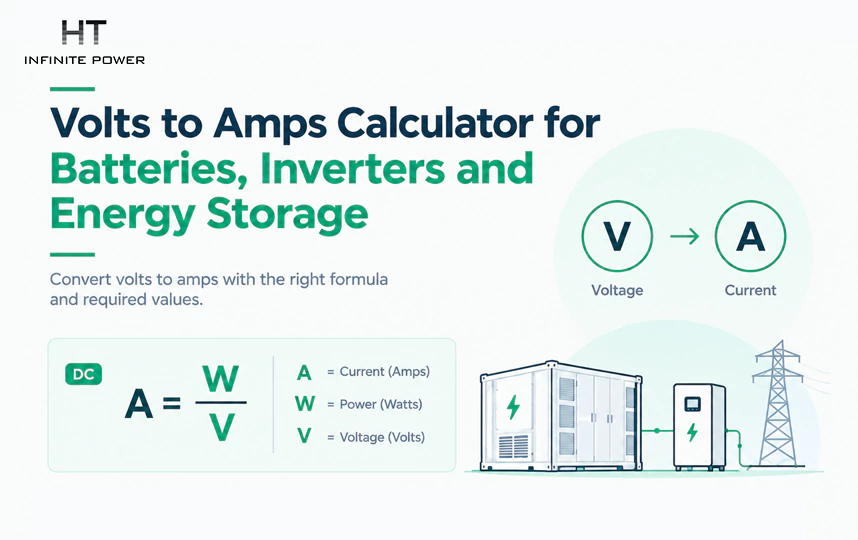
Power (W) = Voltage (V) × Current (A)
- A 51.2V lithium battery with 200A current gives 10.24kW output.
- Three Phase AC Formula:
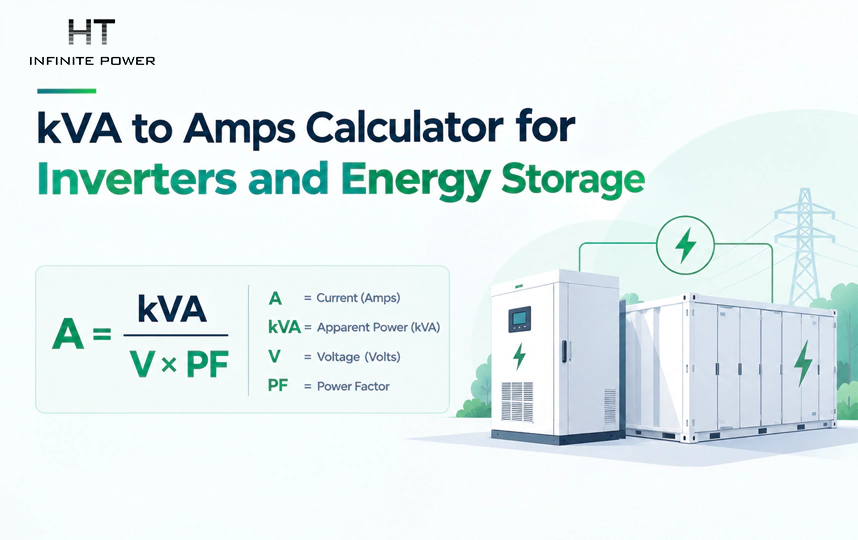
Power (W) = √3 × Voltage (V) × Current (A) × Power Factor
- For commercial systems, this formula helps size 50kW or 100kW inverters.
Many system integrators rely on these equations when matching solar inverters, battery banks, or Power Conversion Systems (PCS) in a storage setup.

2.Introduction
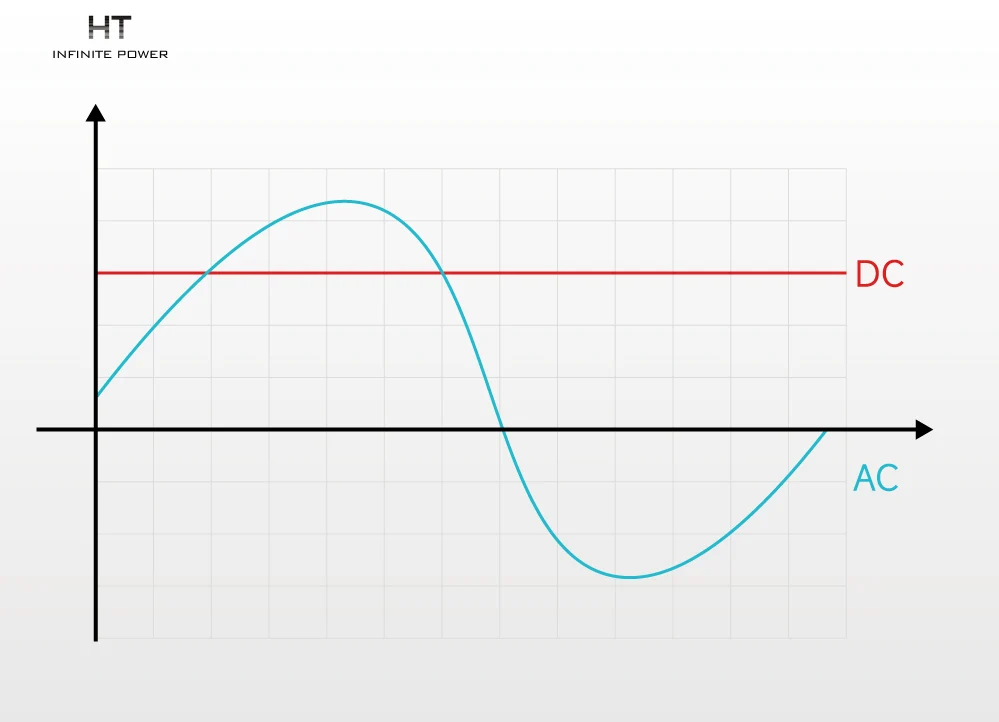
Electricity flows in two basic ways: AC and DC. Think of DC as water flowing in a pipe in one direction, and AC as the tide—rising and falling, switching direction.
In modern power systems, both types play essential roles:
- Solar panels and batteries deal in DC.
- The electrical grid delivers AC.
- Inverters and converters bridge the two.
For energy storage systems—especially hybrid systems that pair batteries with solar and grid power—understanding AC and DC is crucial to ensuring high efficiency, proper sizing, and safety.
3. What is Alternating Current (AC)?
Definition: AC stands for Alternating Current, which reverses direction periodically—60 times per second (60Hz) in the U.S., and 50Hz in most of the world.
Where It’s Used:
- Grid transmission lines
- Wall outlets
- Large electric motors
- HVAC systems
Why It’s Important in Storage:
- AC power is compatible with most household appliances and industrial machinery.
- Battery inverters must convert DC into AC so stored energy can be used or exported to the grid.
In grid-tied commercial energy storage systems, AC power is usually managed through a PCS or inverter with grid synchronization features (per IEEE 1547™ standard).
4. What is Direct Current (DC)?
Definition: DC stands for Direct Current, electricity that flows in one direction with constant voltage.
Where It Comes From:
- Solar panels
- Batteries (lead-acid, lithium-ion, LFP)
- Fuel cells
- USB ports and electronics
Why It’s Critical in Storage:
- All battery storage systems store and output DC power.
- Solar panels generate DC power directly.
In high-voltage commercial battery systems (e.g., 768V LFP packs), DC allows efficient transmission from modules to the PCS.
5. Key Differences Between AC and DC
| Feature | AC (Alternating Current) | DC (Direct Current) |
| Direction | Alternates 50–60 times per second | Flows one way only |
| Used By | Grid, appliances, motors | Solar panels, batteries, EVs |
| Transmission | Easy to step up/down via transformers | Efficient over very long distances at HV |
| Compatibility | Most homes and grid systems | Most storage and solar tech |
| Voltage Levels | 110–480V (residential to industrial) | 12V–1500V (battery systems) |
Understanding these differences is vital for selecting the right energy storage topology.
6. How AC and DC Work in Solar + Storage Systems
Solar panels generate DC. Homes and businesses use AC. So how do we connect them?
With inverters, charge controllers, and power conversion systems (PCS). These devices convert between AC and DC in both directions:
With inverters, charge controllers, and power conversion systems (PCS). These devices convert between AC and DC in both directions:
- DC → AC (Discharging from battery to grid or load)
- AC → DC (Charging battery from grid or solar inverter)
In hybrid systems, this back-and-forth flow is constant. For example, in a 100kWh commercial storage container, DC from the battery is inverted to 400VAC three-phase to support motors and machinery.
7. DC-Coupled vs. AC-Coupled Architectures

DC-Coupled Systems
- PV → Charge Controller → Battery → Inverter → Load/Grid
- Advantage: Higher efficiency, fewer conversion losses
- Application: Best for new builds or when maximizing solar yield is a priority
AC-Coupled Systems
- PV → Inverter → Load/Grid → Battery Charger → Battery
- Advantage: Simple retrofitting, modular upgrades
- Application: Ideal for adding storage to existing solar systems
In commercial settings, DC-coupled 100kW/215kWh racks are often paired with high-voltage PCS systems to manage efficiency and scalability.
8.Commercial Applications of AC and DC in Battery Storage
Three Phase AC in Industry
- Powers motors, chillers, elevators, pumps
- Standard voltage: 400V or 480V (Europe/U.S.)
- Requires inverter output with perfect grid sync
High-Voltage DC Battery Packs
- 512V, 768V, or higher voltages
- Lower current = thinner cables and less heat
- More efficient charging/discharging
- Can deliver 100kW–1MW to PCS units
PCS and Grid Codes
-
Must comply with IEEE 1547 for interconnection
- Synchronize voltage, frequency, and phase
- Allow active/reactive power control for grid support
9. AC and DC in Home Battery Systems
Home batteries are smaller, but the principles are the same:
- Most lithium-ion home batteries output DC (48V–400V)
- An integrated inverter turns DC → 230V/120V AC for your appliances
- Some newer models are hybrid inverters, able to handle both AC and DC input
When solar panels and batteries are installed together, a DC-coupled system is usually more efficient. But if you're adding a battery to an existing AC solar inverter, AC-coupling may be more cost-effective.

10. Choosing the Right Architecture
| Scenario | Best Option | Why |
| New solar + storage system | DC-Coupled | Fewer conversions, higher efficiency |
| Retrofitting battery to solar | AC-Coupled | Simpler wiring, faster install |
| Industrial process loads | Three-Phase AC | Direct power to heavy machinery |
| Long backup runtime needed | High-Voltage DC | Lower cable loss, higher energy density |
11. Conclusion
Whether you’re building a solar microgrid for your home or deploying a 1MW battery container for a factory, understanding AC vs. DC is more than just electrical theory—it’s the basis of your system design.
- AC is what your devices and the grid use.
- DC is what your solar panels and batteries produce.
- Your system’s components must safely and efficiently bridge the two.
The right setup—AC-coupled, DC-coupled, or hybrid—depends on your goals: cost, efficiency, grid interaction, or backup capacity.
12. Frequently Asked Questions (FAQs)
Q1. What is the main difference between AC and DC?
AC changes direction periodically; DC flows in one direction. AC is used in grids; DC is used in batteries.
Q2. Can batteries supply AC power directly?
No, batteries output DC. An inverter is needed to convert it into usable AC power.
Q3. What is a bidirectional inverter?
It’s an inverter that can both charge batteries from AC and discharge DC back into AC for loads or the grid.
Q4. Which system is more efficient: AC or DC-coupled?
DC-coupled systems are typically more efficient due to fewer conversions.
Q5. What standards apply to AC/DC battery systems?
Grid-tied systems should follow IEEE 1547. Inverters and PCS must match local voltage and frequency codes.
What is the Difference Between kW and kWh?
What Is Battery State of Charge (SoC)?