Fast-Ramp Battery Packs: Design for High C-Rate Industrial Use
2025-11-13
Commercial energy storage systems have evolved rapidly over the past decade, with industrial operators and energy integrators increasingly emphasizing flexibility, reliability, and grid compliance. At the heart of these systems lies the power conversion system (PCS), whose architecture dictates not only energy conversion efficiency but also operational resilience and expandability. Modular PCS architecture represents a paradigm shift from conventional monolithic designs, enabling scalable deployment, adaptive dispatch, and enhanced maintainability.
Modular PCS: Principles and Architectural Rationale
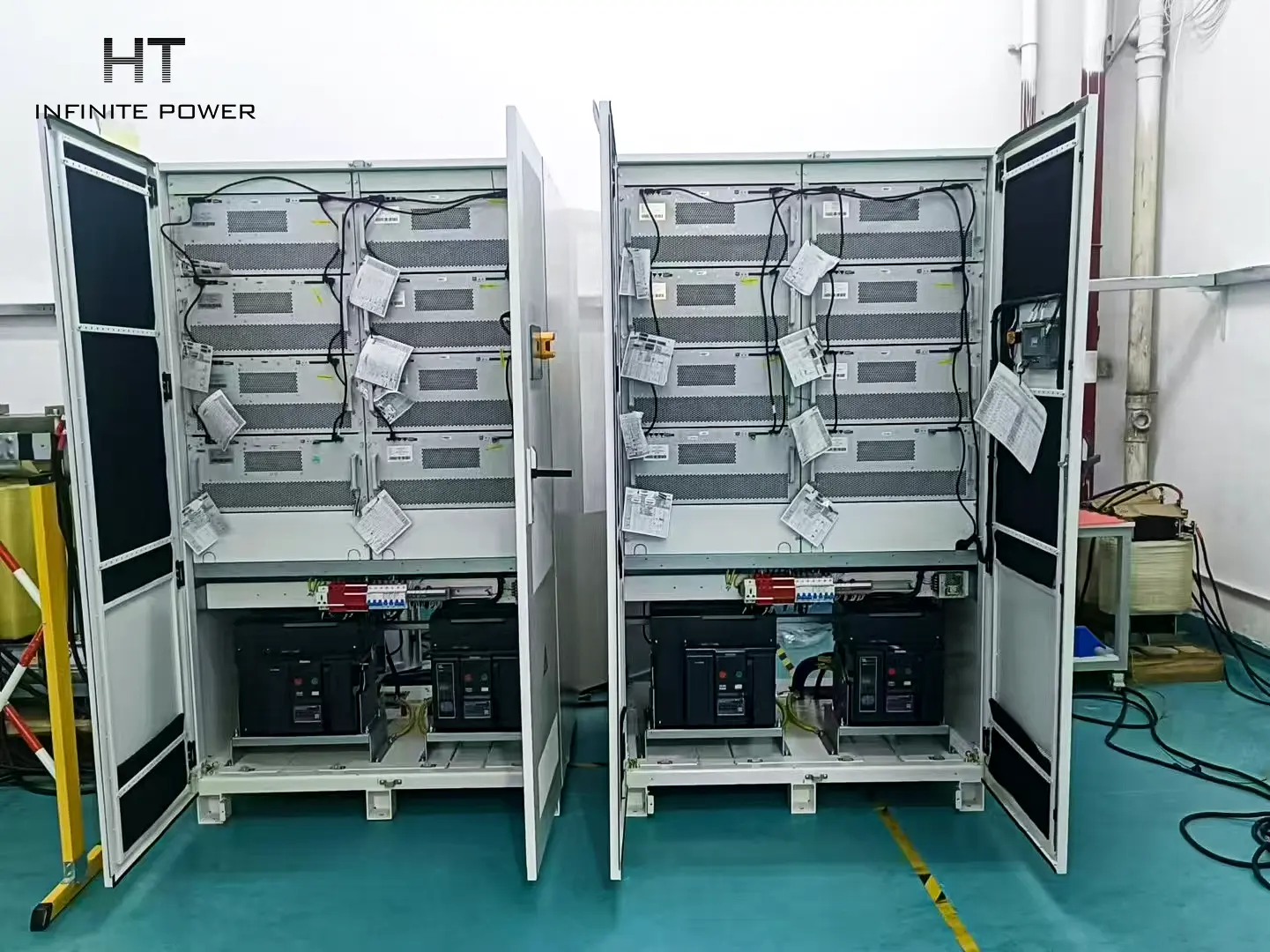
A modular PCS consists of multiple discrete units, each performing conversion and control tasks independently yet coordinated through a centralized energy management system (EMS). The modular approach offers several distinct advantages:
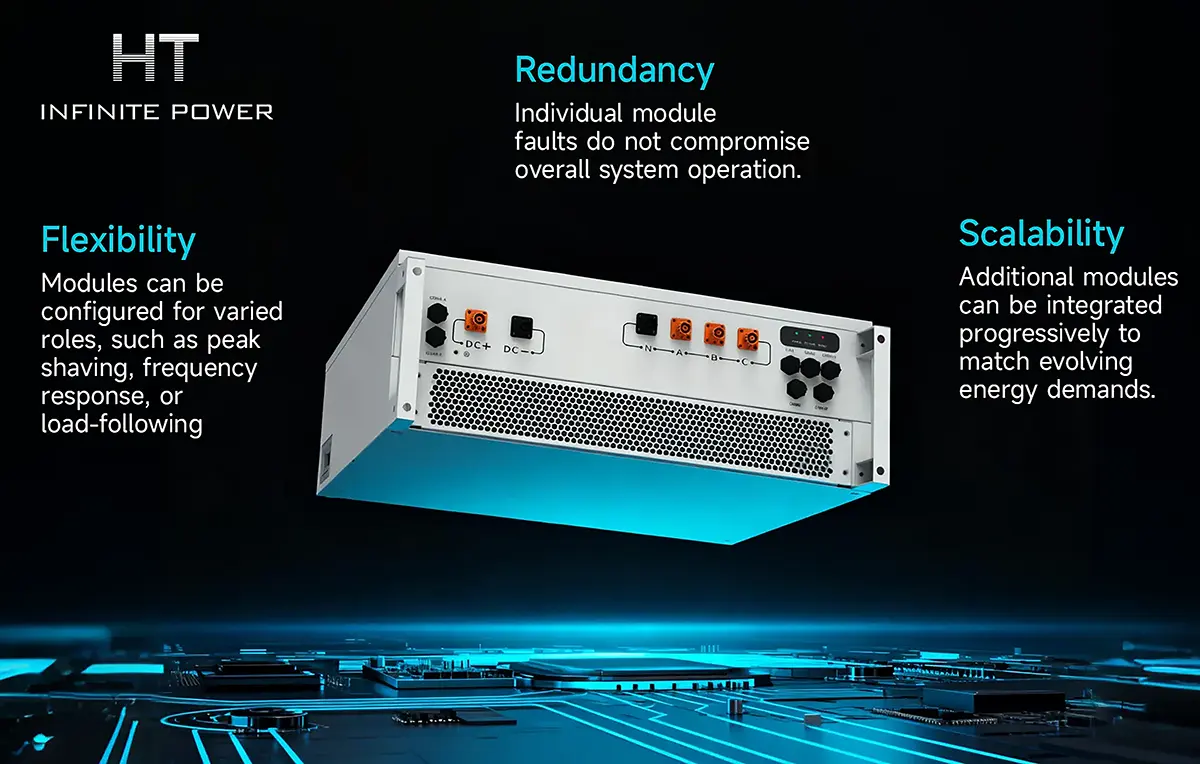
- Scalability: Additional modules can be integrated progressively to match evolving energy demands.
- Redundancy: Individual module faults do not compromise overall system operation.
- Flexibility: Modules can be configured for varied roles, such as peak shaving, frequency response, or load-following.
Comparing Modular and Monolithic Designs
Traditional monolithic PCS units consolidate all conversion capacity in a single device. While simpler in control, these systems face inherent limitations:
1.Single Point of Failure: Any fault can halt system operation.
2.Limited Expandability: Increasing capacity typically requires complete system replacement.
3.Thermal Stress Concentration: Heat dissipation is constrained, impacting reliability.
Modular designs distribute power, control, and thermal loads across multiple smaller units. The decentralization reduces stress per module, enables hot-swapping, and allows incremental scaling—key for industrial and commercial sites where operational continuity is critical.
Design Considerations for Module Size
Selecting module size involves balancing redundancy, control complexity, and fault tolerance. Larger modules reduce control overhead but increase system-wide risk in case of failure. Conversely, smaller modules enhance redundancy and allow finer control but require sophisticated EMS algorithms to manage load sharing, SOC tracking, and thermal distribution.
Hot-Swappable Modules and Operational Flexibility
Hot-swappable modules allow maintenance or replacement without halting system operation, which is vital for sites where downtime translates directly into financial loss or production interruption.
Technical Requirements
For hot-swappability, the design must address:
- Electrical Isolation: Safe disconnection under live operation.
- Mechnical Interfaces: Quick and secure insertion/removal.
- EMS Coordination: Real-time redistribution of power to maintain output and thermal equilibrium.
Impact on System Operation
When a module is temporarily offline, the EMS recalculates load distribution among remaining units. This ensures power continuity and prevents thermal overloads. Such flexibility allows predictive maintenance schedules and reduces operational risk, making modular PCS particularly suited for industrial applications with critical uptime requirements.
Scaling Strategies and Dynamic Capacity Management
Energy demand in commercial and industrial sites is rarely static. Modular PCS allows incremental capacity expansion aligned with actual load growth or renewable generation.
SOC Management Across Modules
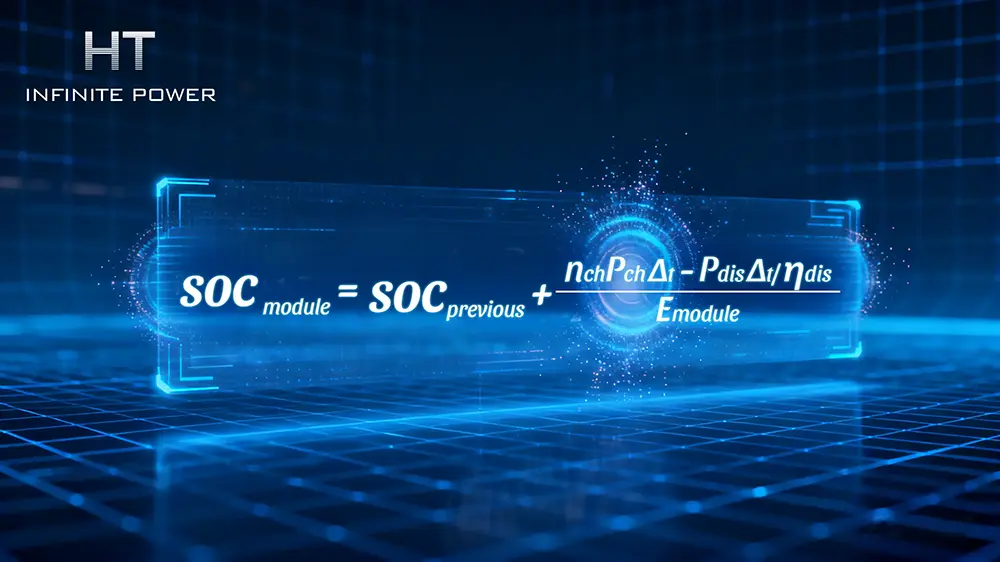
Each module maintains independent state-of-charge (SOC) tracking. The EMS aggregates these measurements for coordinated dispatch. A simplified SOC update for a single module can be expressed as:
SOCmodule = SOCprevious + ηchPchΔt − Pdis,tΔt/ηdis Emodule
This enables:
- Smooth integration of new modules.
- Dynamic adjustment of charge/discharge rates.
- Load balancing to prevent over-utilization of specific modules.
Expansion Planning
Incremental deployment also allows operators to align capital expenditure (CAPEX) with actual energy needs. Rather than overinvesting in oversized monolithic systems, operators can adopt a “pay-as-you-grow” strategy, optimizing both CAPEX and operational efficiency.
Thermal Management and Redundancy Design
Thermal performance is one of the primary factors affecting PCS reliability and longevity. Distributed modules allow targeted thermal management strategies:
- Localized Cooling: Modules under higher duty can receive more cooling, while lightly loaded units consume less energy.
- Predictive Thermal Management: Temperature monitoring enables dynamic derating or scheduled maintenance.
- Redundancy Integration: N+1 or 2N designs ensure system resilience; even if one module fails, the system maintains partial capacity.
Thermal Modeling and Optimization
Finite-element simulations and heat-flow modeling inform cooling system design, whether air, liquid, or hybrid systems. Thermal load balancing across modules reduces hotspots, extends service life, and prevents premature degradation.
Grid Integration and Multi-Objective Dispatch
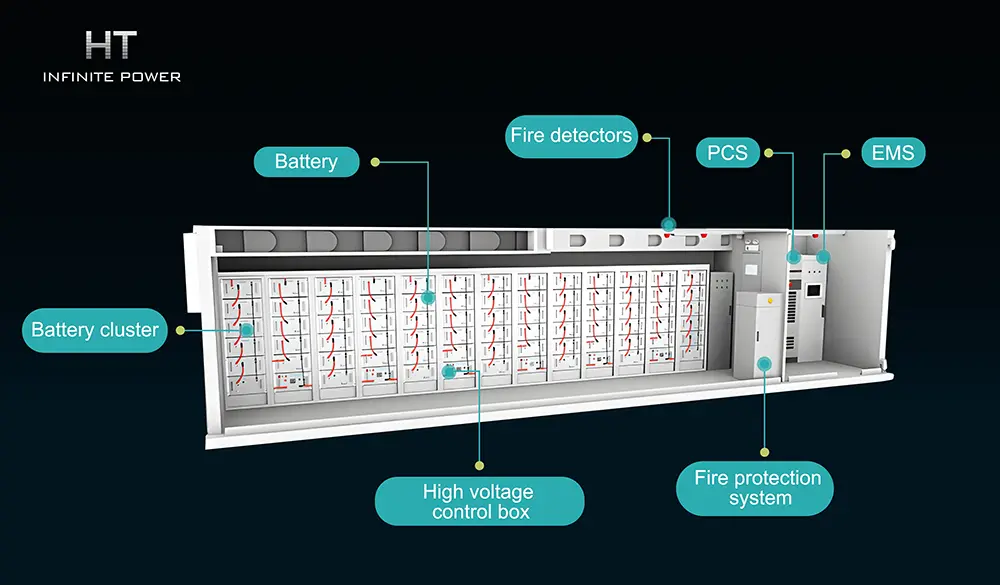
Industrial energy storage often participates in multiple grid services simultaneously. Modular PCS supports multi-objective dispatch:
- Frequency Regulation: Rapid ramping of selected modules.
- Peak Shaving: Base-load modules handle predictable site demand.
- Voltage Support and Demand Response: EMS assigns modules based on real-time grid requirements.
Dynamic Role Assignment
Modules can assume dynamic roles based on SOC, thermal status, and grid signals. Independent control allows staggered ramp rates, improving overall system stability. By monitoring module-level performance, operators can optimize response time, efficiency, and equipment longevity.
Industry Insights and Case Observations
Analysis of multiple industrial projects reveals patterns consistent across regions:
- Hot-swappable modules reduce maintenance downtime and operational risk.
- Distributed thermal management improves module reliability.
- Incremental expansion aligns capital investment with evolving site needs.
- Individual module control enables simultaneous participation in site optimization and grid services.
These insights highlight the practical benefits of modular PCS beyond theoretical advantages.
Future Trends and Emerging Technologies
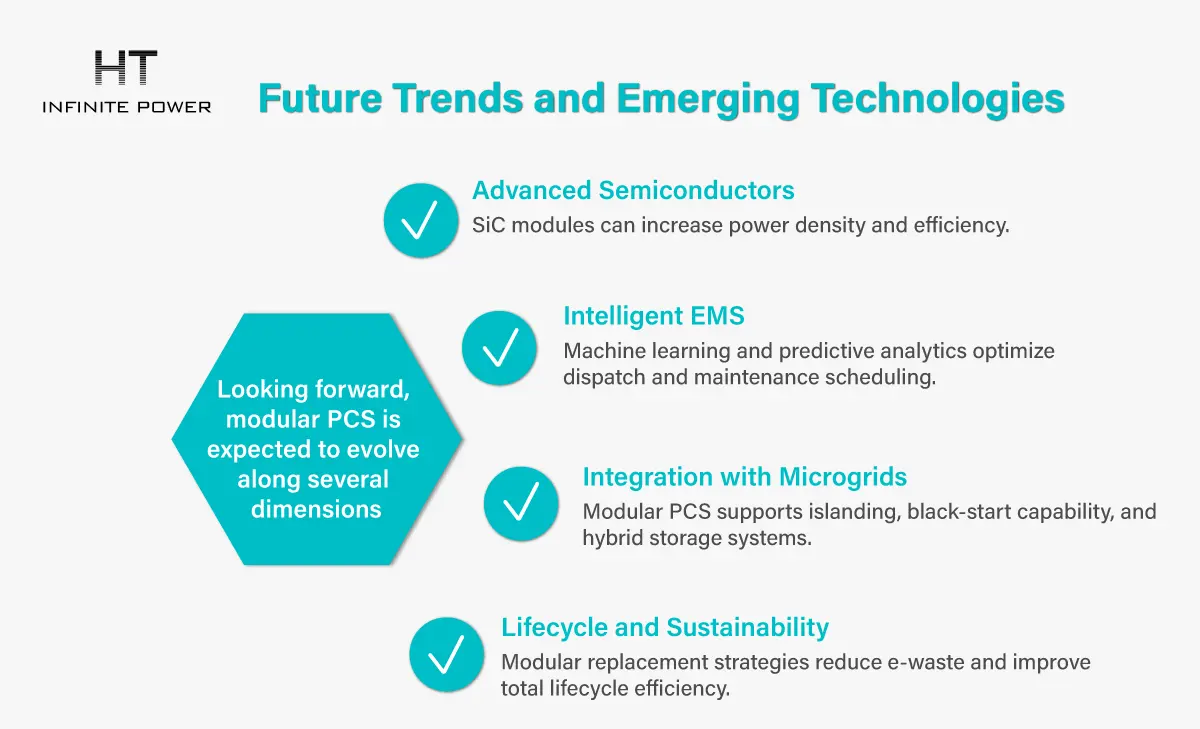
Looking forward, modular PCS is expected to evolve along several dimensions:
1.Advanced Semiconductors: SiC modules can increase power density and efficiency.
2.Intelligent EMS: Machine learning and predictive analytics optimize dispatch and maintenance scheduling.
3.Integration with Microgrids: Modular PCS supports islanding, black-start capability, and hybrid storage systems.
4.Lifecycle and Sustainability: Modular replacement strategies reduce e-waste and improve total lifecycle efficiency.
2.Intelligent EMS: Machine learning and predictive analytics optimize dispatch and maintenance scheduling.
3.Integration with Microgrids: Modular PCS supports islanding, black-start capability, and hybrid storage systems.
4.Lifecycle and Sustainability: Modular replacement strategies reduce e-waste and improve total lifecycle efficiency.
Conclusion
Modular PCS architecture represents a technically robust solution for scalable commercial energy storage. Its combination of hot-swappable modules, incremental capacity expansion, distributed thermal management, redundancy, and adaptive dispatch enables industrial sites to maintain operational continuity, optimize performance, and integrate effectively with evolving grid requirements. By approaching system design with modularity as a central principle, operators can achieve resilience, flexibility, and long-term economic efficiency.
FAQ
Q1: How does modular PCS enhance system reliability?
A1: Distributed modules reduce single-point failure risk, and redundancy allows continuous operation during faults or maintenance.
Q2: Can modules be added after initial deployment?
A2: Yes, incremental expansion is feasible, and EMS ensures proper load sharing and SOC balance.
Q3: What thermal strategies are used in modular PCS?
A3: Localized cooling, predictive derating, and load redistribution across modules optimize thermal performance.
Q4: How does modular PCS support grid services?
A4: Individual module control enables frequency regulation, demand response, voltage support, and peak shaving.
Q5: Is managing multiple modules more complex than monolithic PCS?
A5: EMS complexity increases, but modern controllers efficiently manage load, thermal, and grid coordination across modules.
A1: Distributed modules reduce single-point failure risk, and redundancy allows continuous operation during faults or maintenance.
Q2: Can modules be added after initial deployment?
A2: Yes, incremental expansion is feasible, and EMS ensures proper load sharing and SOC balance.
Q3: What thermal strategies are used in modular PCS?
A3: Localized cooling, predictive derating, and load redistribution across modules optimize thermal performance.
Q4: How does modular PCS support grid services?
A4: Individual module control enables frequency regulation, demand response, voltage support, and peak shaving.
Q5: Is managing multiple modules more complex than monolithic PCS?
A5: EMS complexity increases, but modern controllers efficiently manage load, thermal, and grid coordination across modules.
Liquid Cooling: $100B Market for Data Centers & Storage
Hybrid Storage (Li-ion + H₂ / Flow): System Integration & Dispatch Logic for Industrial Sites