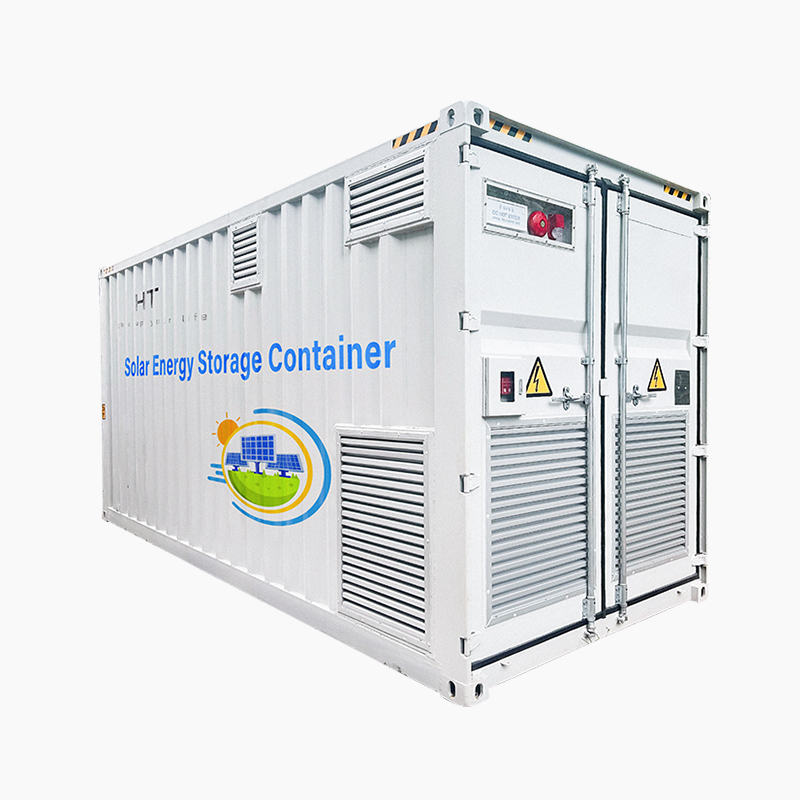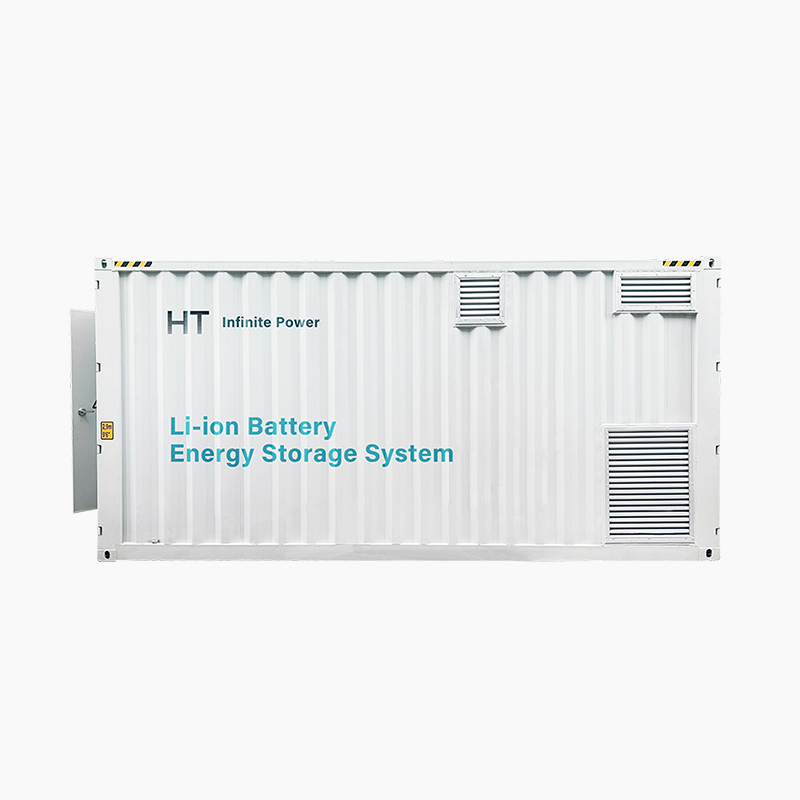


IP65

Support VSG mode

Space-saving

Remote control and upgrade

Cost effective
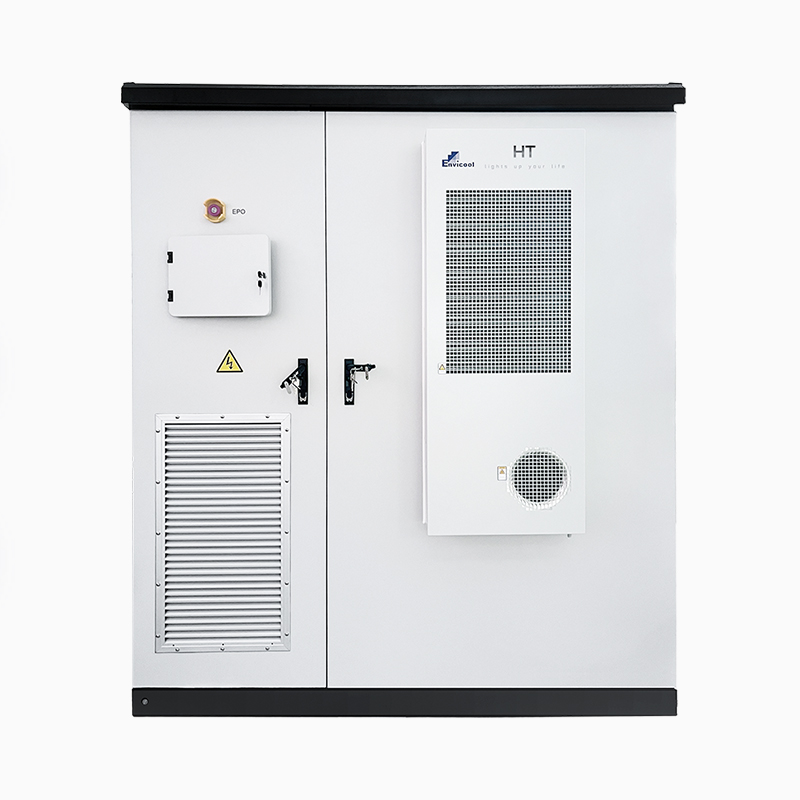
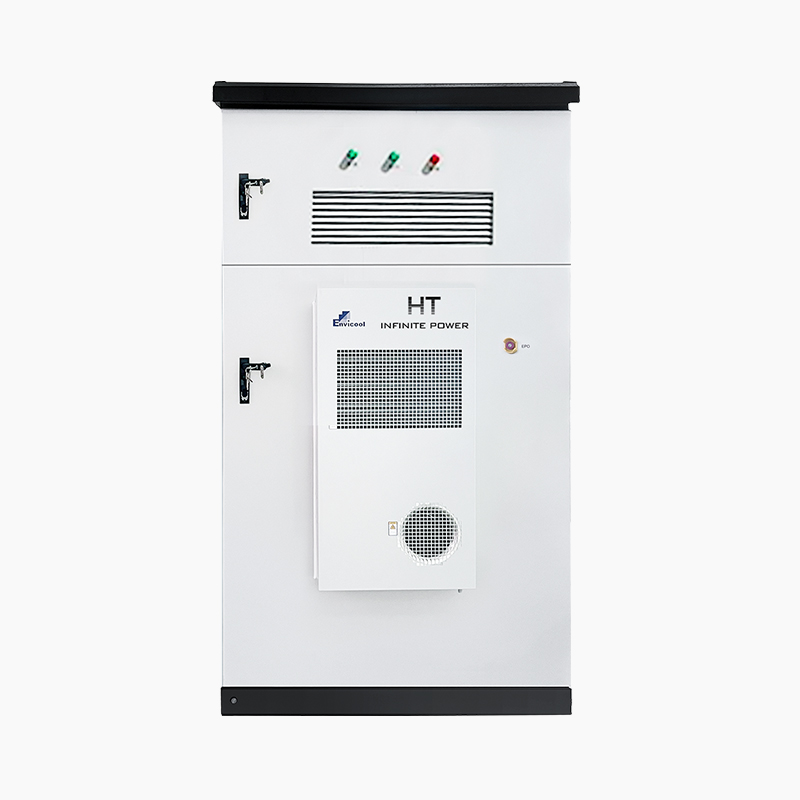
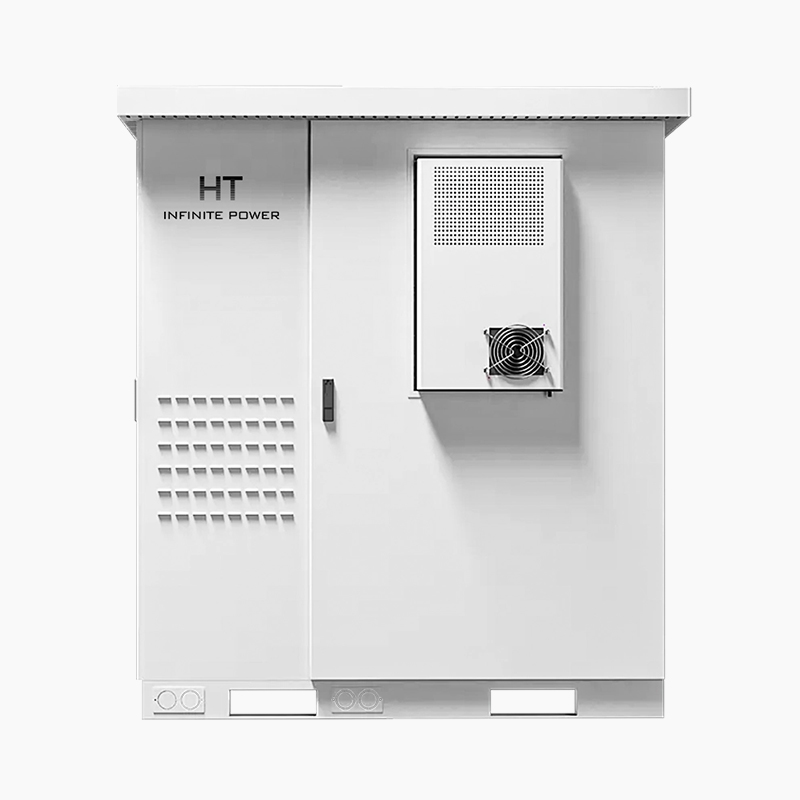
Advantages of 135kW/261kWh VSG Mode Integrated BESS Cabinet
● Supports VSG operation mode, enabling grid-connected, off-grid, or seamless grid-connected/off-grid switching. Works seamlessly with solar, wind, and diesel generators to build microgrid systems.
● Supports both air and liquid cooling methods, meeting maintenance needs in various application scenarios.
● Features primary frequency regulation, requiring no external communication response, quickly responding to frequency fluctuations and improving frequency stability.
● Possesses grid-building capabilities, supporting parallel expansion to meet greater power and capacity demands.
● The PCS adopts a third-generation semiconductor, silicon carbide modular design, easy to install and maintain. Four-quadrant active and reactive regulation supports constant power, constant current, and constant voltage control.
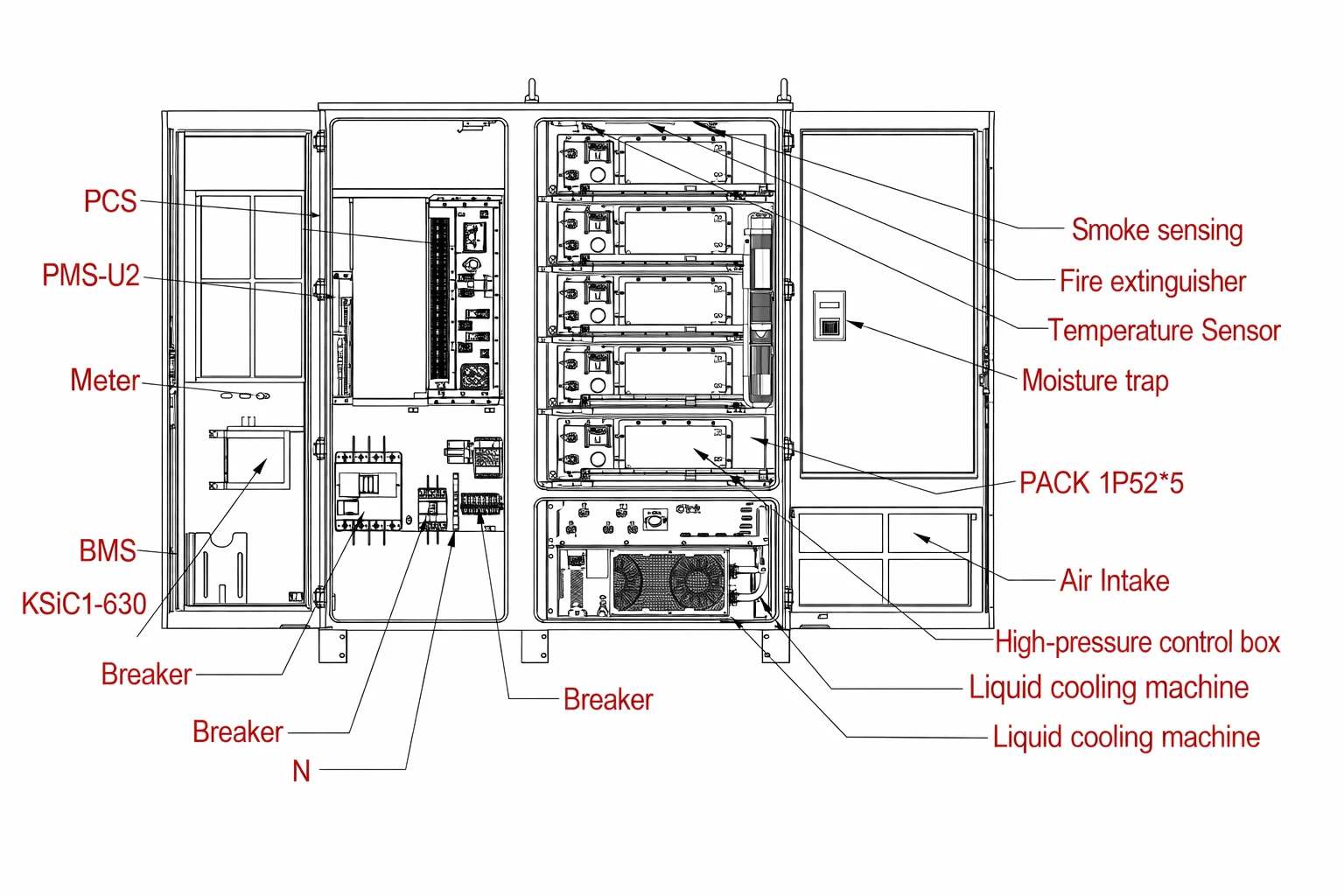
135kW 261kWh VSG Mode Integrated BESS Cabinet Structure Diagram
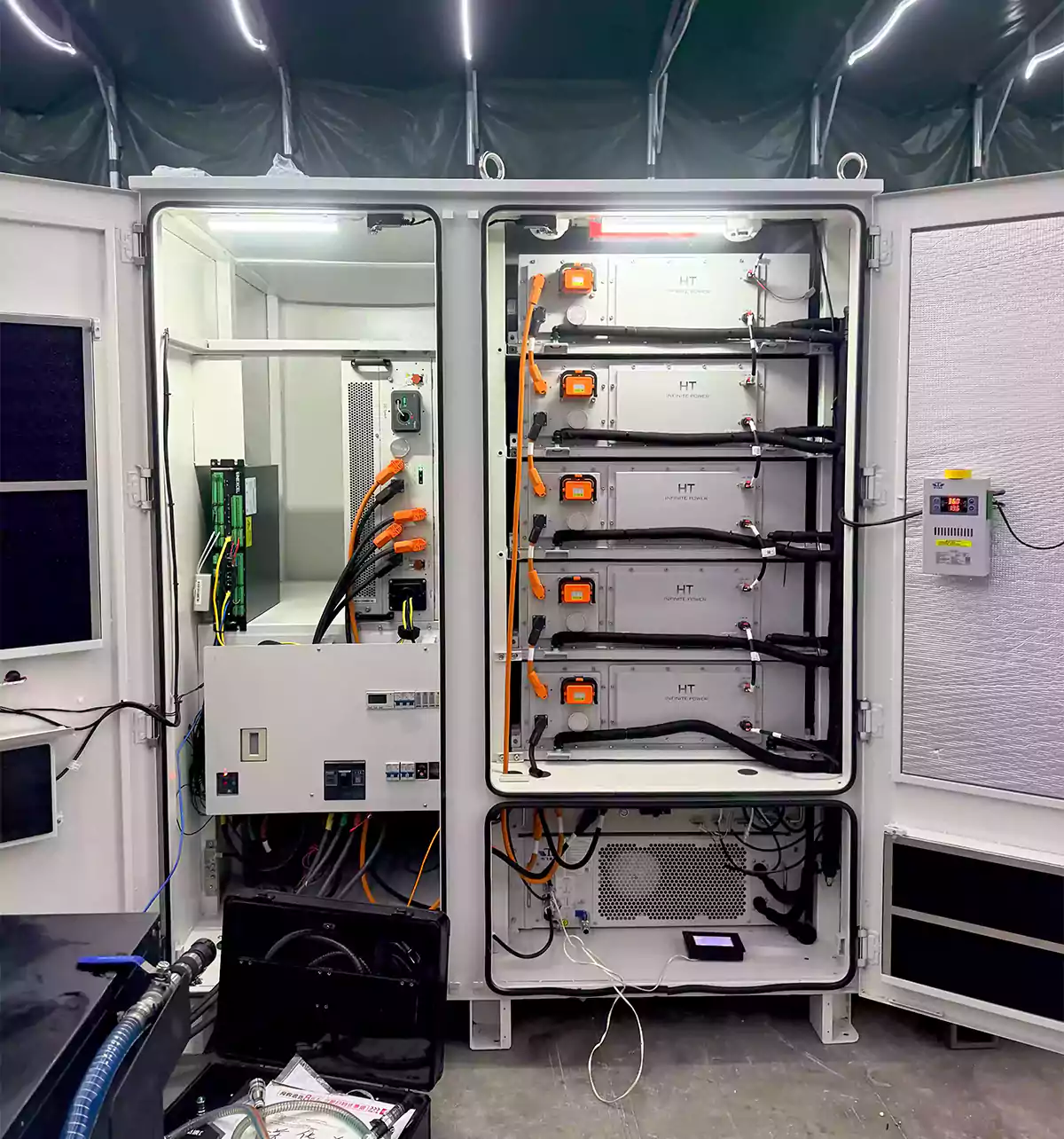
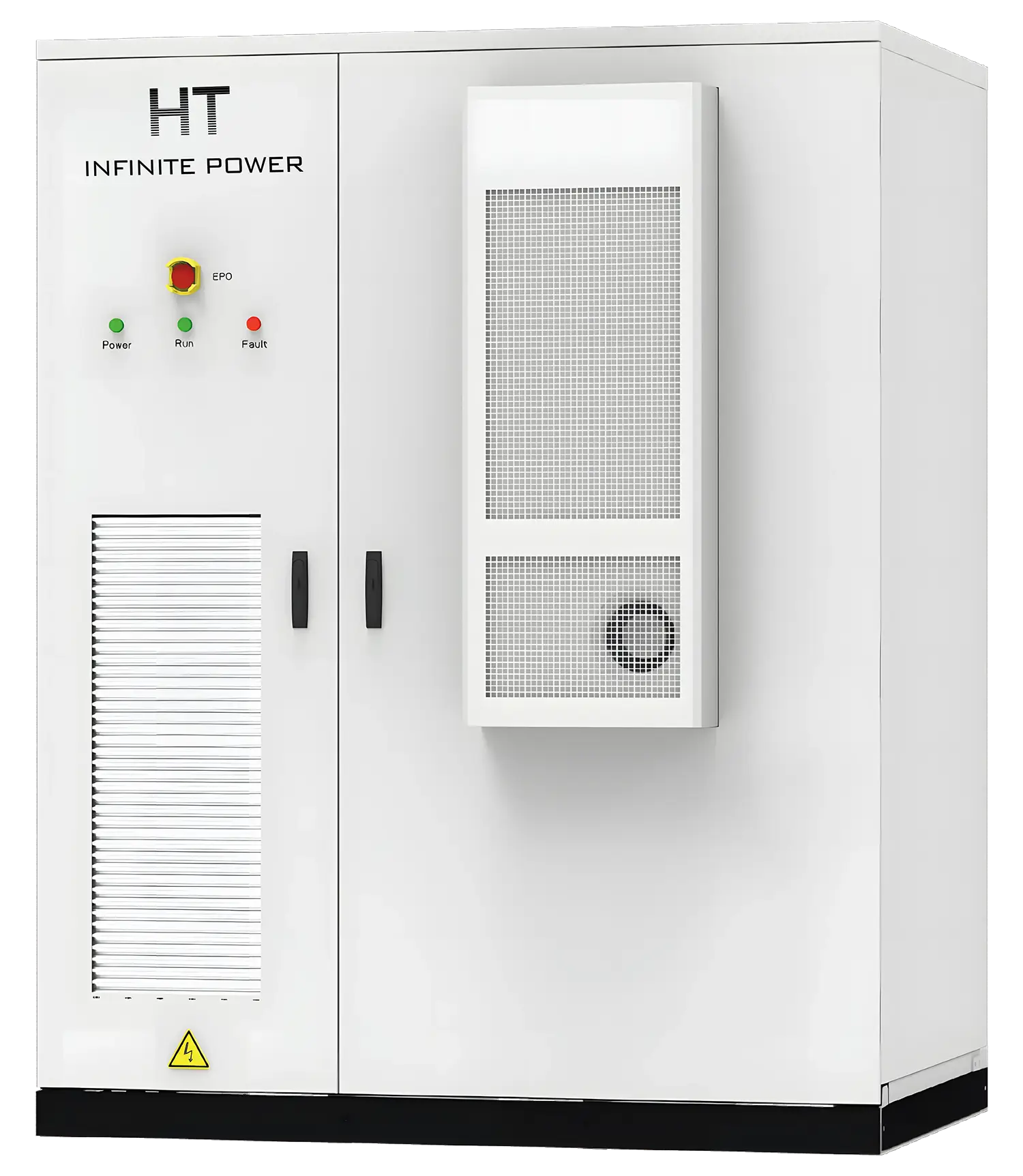
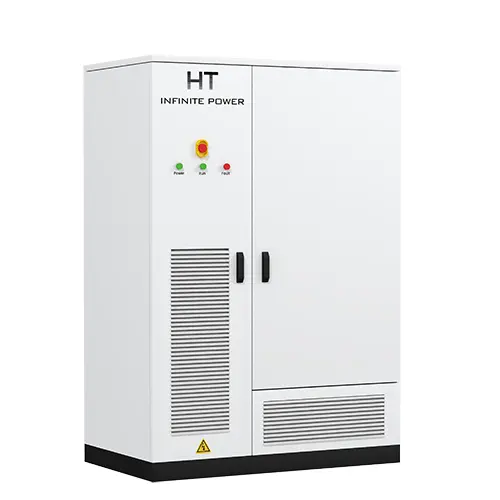

135kW/261kWh VSG Mode Integrated BESS Cabinet Parameters
Model
Battery rated capacity
Battery rated voltage
Battery voltage range
Battery type
Cell Capacity
PCS power
Turn the switch on/off
Noise
Ambient temperature
Fire Protection System
Placement environment
Dimension (W* D* H)
Weight (approx.)
HT -135(261kWh)
261kWh
832V
650V~949V
LFP
314Ah
135kW
630A
< 70dB
-25℃-60℃ (>45℃ reduction)
Available
Outdoor
1700*1355*2051mm
2460±100kg
Key Advantages of VSG Mode
Supports islanded operation
In islanded mode, VSG can proactively establish and maintain voltage and frequency references, providing stable power to local loads and ensuring power continuity for critical facilities.

Improves power quality
VSG has reactive power-voltage droop control capabilities, providing reactive power support when grid voltage drops, shortening voltage recovery time, and helping to maintain bus voltage within ±1%. Within the network:
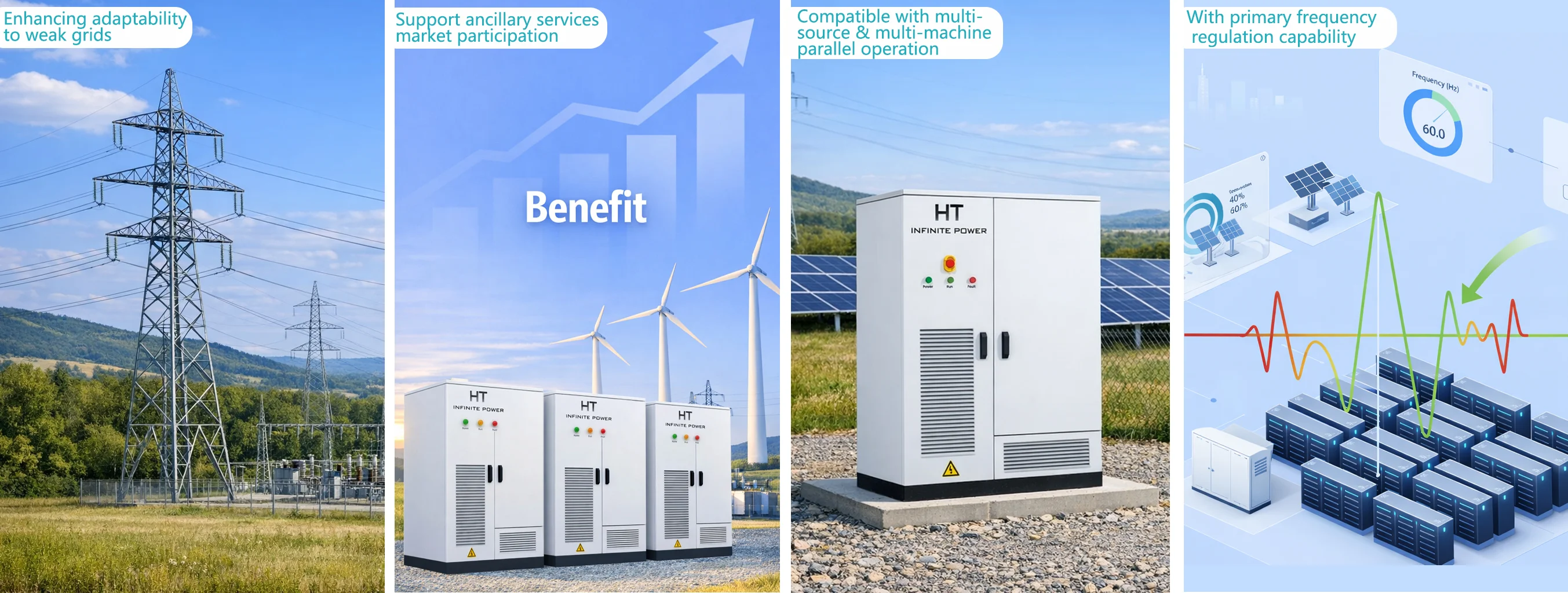
▶ Enhancing adaptability to weak grids: In long-distance transmission or remote weak grid areas, VSG reduces reliance on phase-locked loops (PLLs) through virtual synchronization characteristics, enhancing system robustness to impedance changes and reducing the risk of grid disconnection.
▶ Supporting participation in the power ancillary services market: VSG devices can flexibly provide ancillary services such as frequency regulation, voltage regulation, and black start, improving the economic benefits and market competitiveness of energy storage or new energy projects.
▶ Compatible with multi-source collaboration and multi-machine parallel operation: Multiple VSG devices can achieve parallel operation similar to traditional power plant units through coordinated control (such as sharing virtual frequency and reactive power sharing strategies), supporting efficient collaboration of various distributed power sources such as photovoltaic, wind power, and energy storage in microgrids
▶ Possessing primary frequency regulation capability: VSG automatically adjusts active power output according to system frequency deviation, achieving primary frequency regulation function similar to traditional units. It can quickly respond to frequency fluctuations without external communication, improving system frequency stability.
135kW/261kWh VSG Mode Application Case Sharing
CE Certification
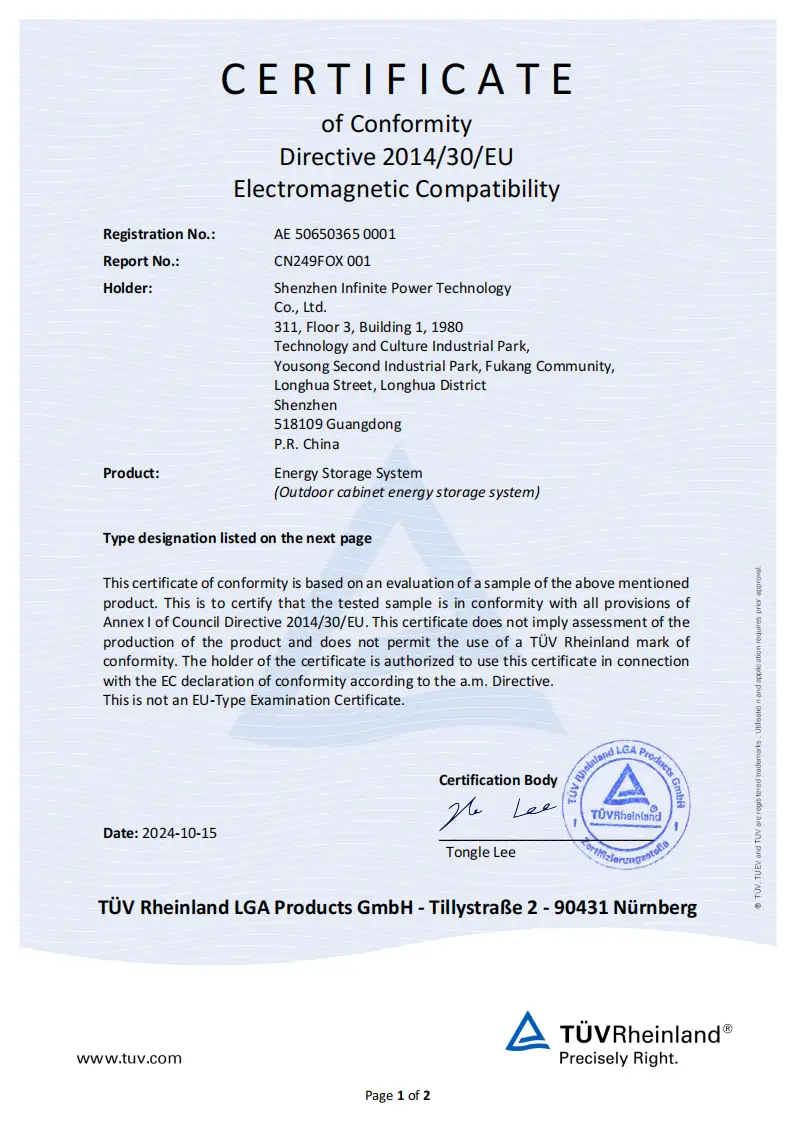
Energy Storage System-EMC
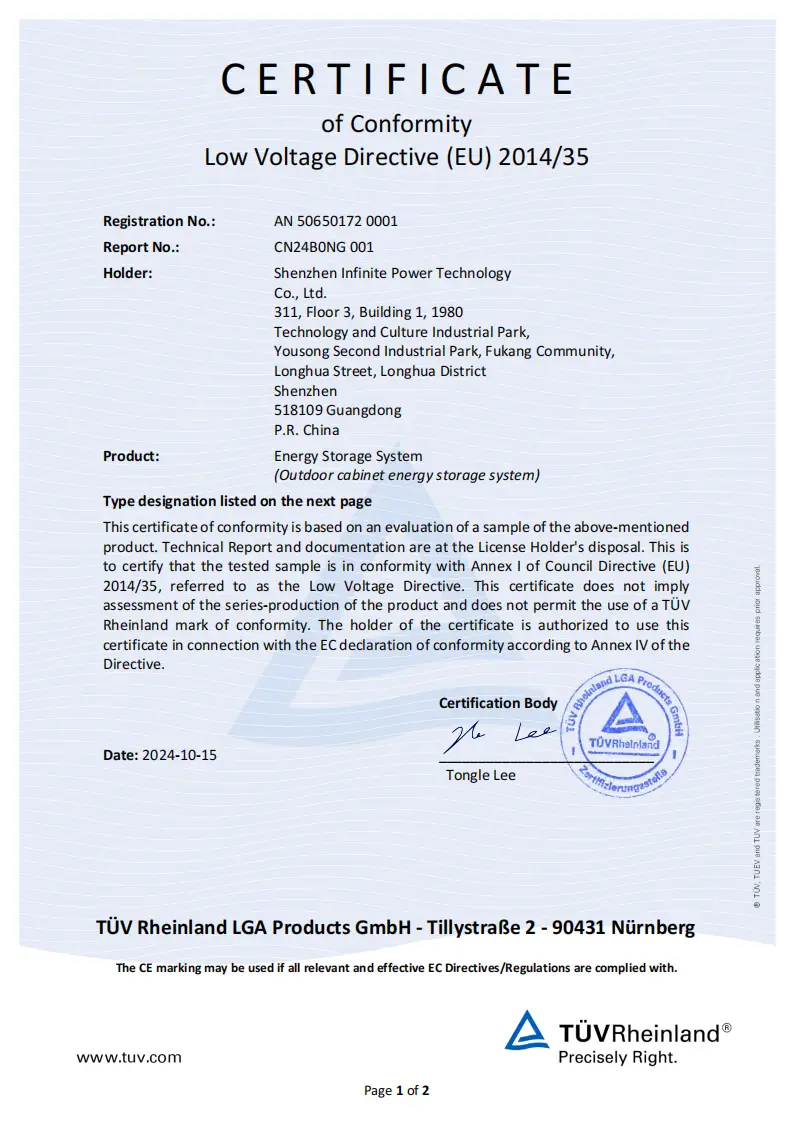
Energy Storage System-LVD
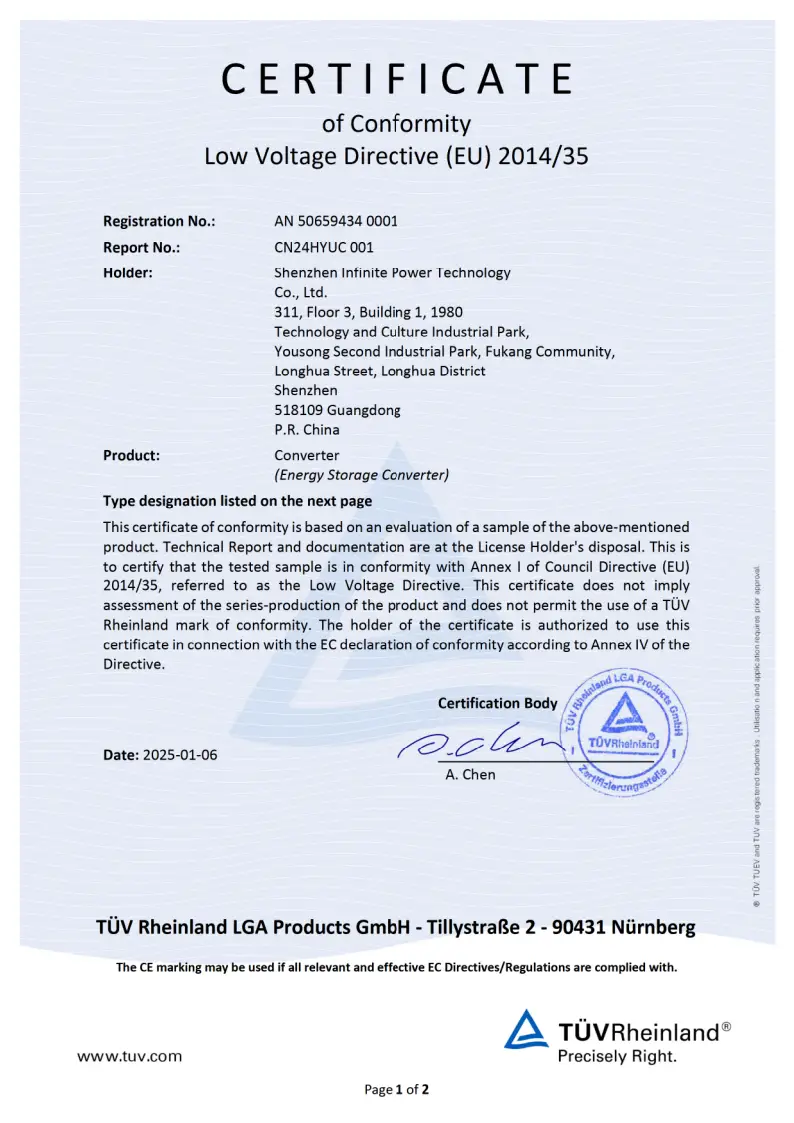
Energy Storage Converter-LVD
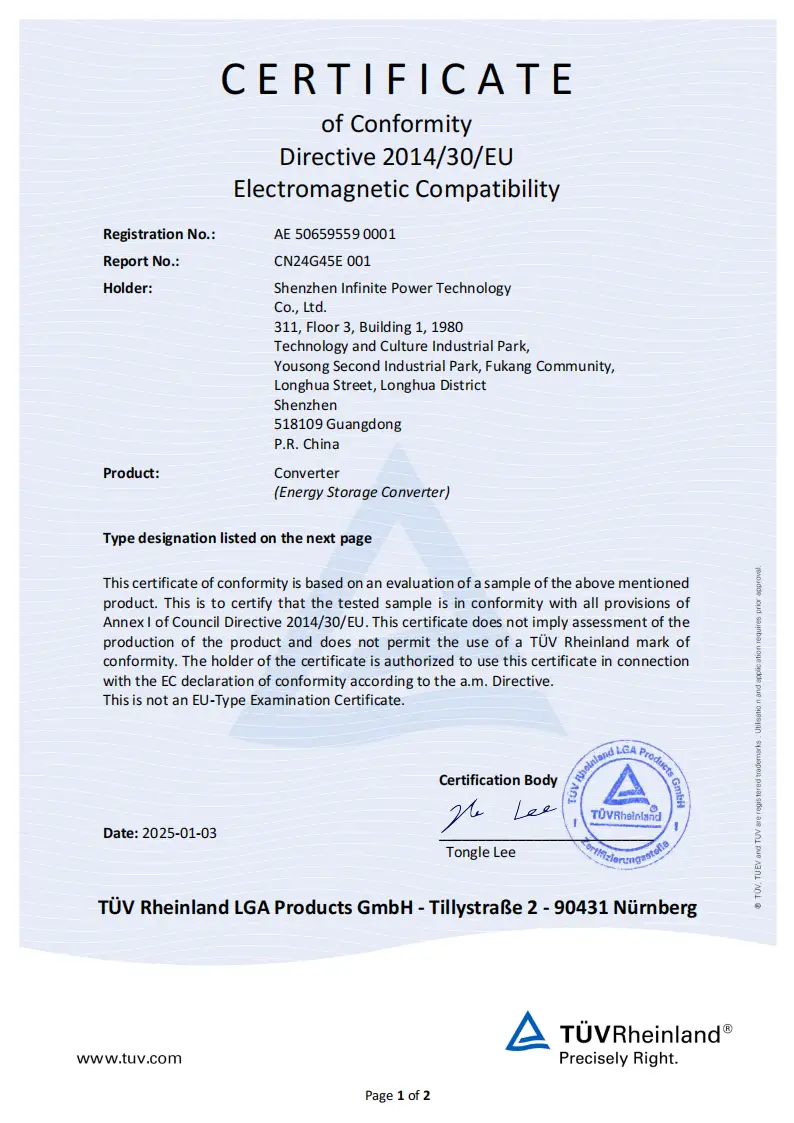
Energy Storage Converter-EMC
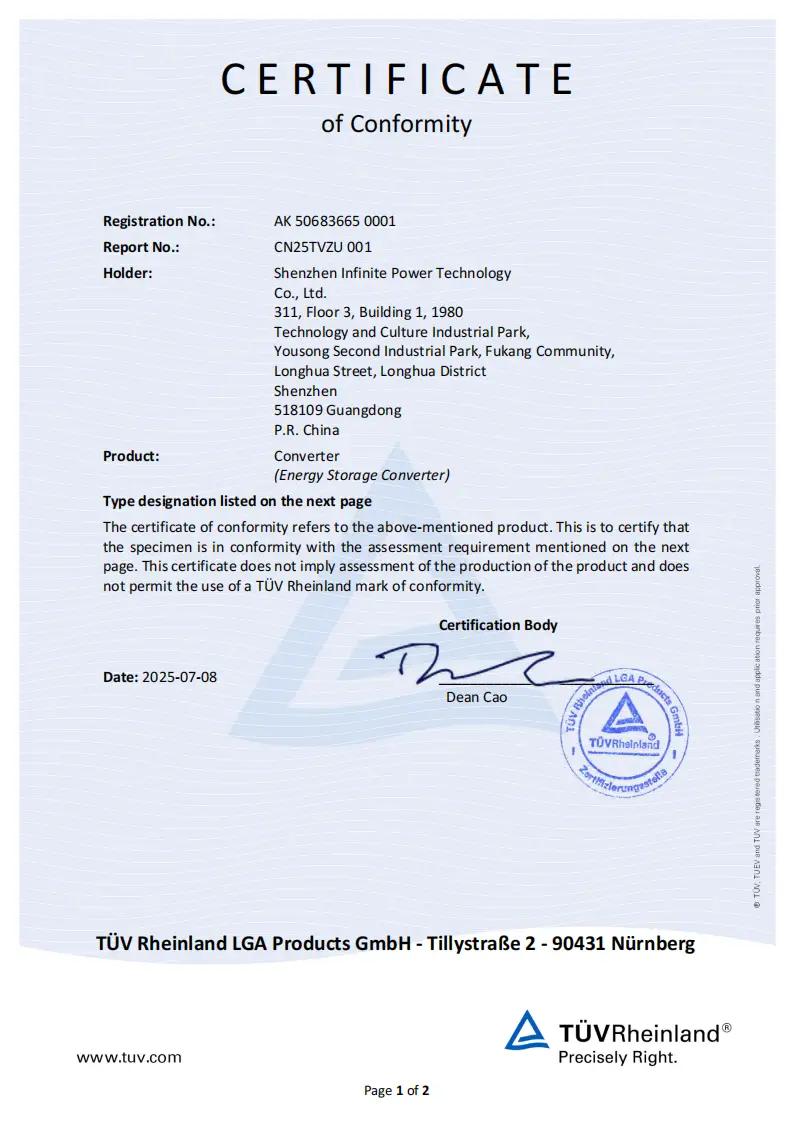
EN 50549-1:2019+A1
EN 50549-10:2022
How To Get A Suitable BESS Project ?

Collect Projets Information

Contact Us

Our Engineers Make Solutions And Quotation For You

Install

Use
For More Questions Please Contact Us

+86 18722386248


Building 1, 1980 technology and Culture Industrial Park , Longhua, Shenzhen ,China
Related Products