Why Modular Energy Storage Systems Are the Future of Scalable Power Solutions
2025-10-21
Introduction: The Growing Need for Scalable Energy Storage
As the world accelerates toward renewable energy adoption, electricity grids face unprecedented challenges. Solar and wind power are inherently intermittent, causing fluctuations that traditional infrastructure struggles to manage. Utilities, businesses, and even residential users increasingly require flexible, reliable, and scalable energy storage. This is where modular energy storage systems step in. Unlike conventional monolithic batteries, modular systems provide the flexibility to grow with energy demand, making them ideal for a wide range of applications—from small commercial setups to large grid-scale deployments.
What Are Modular Energy Storage Systems?
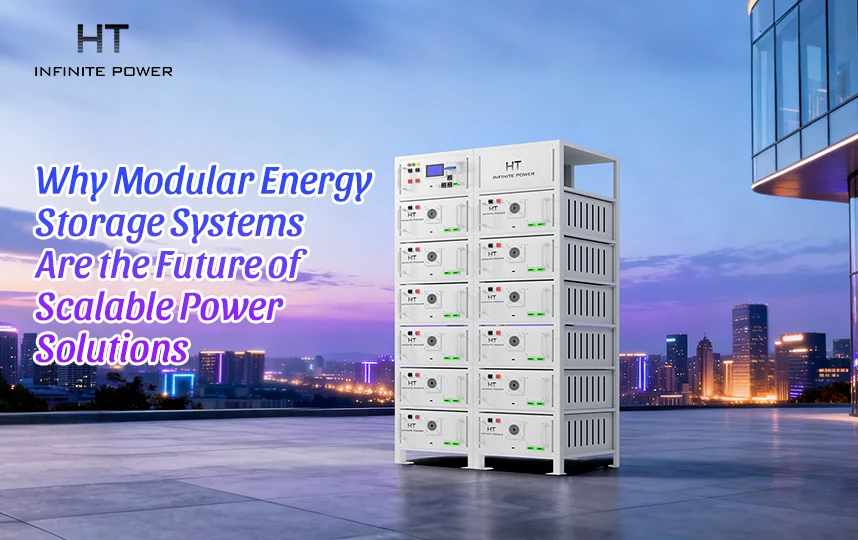
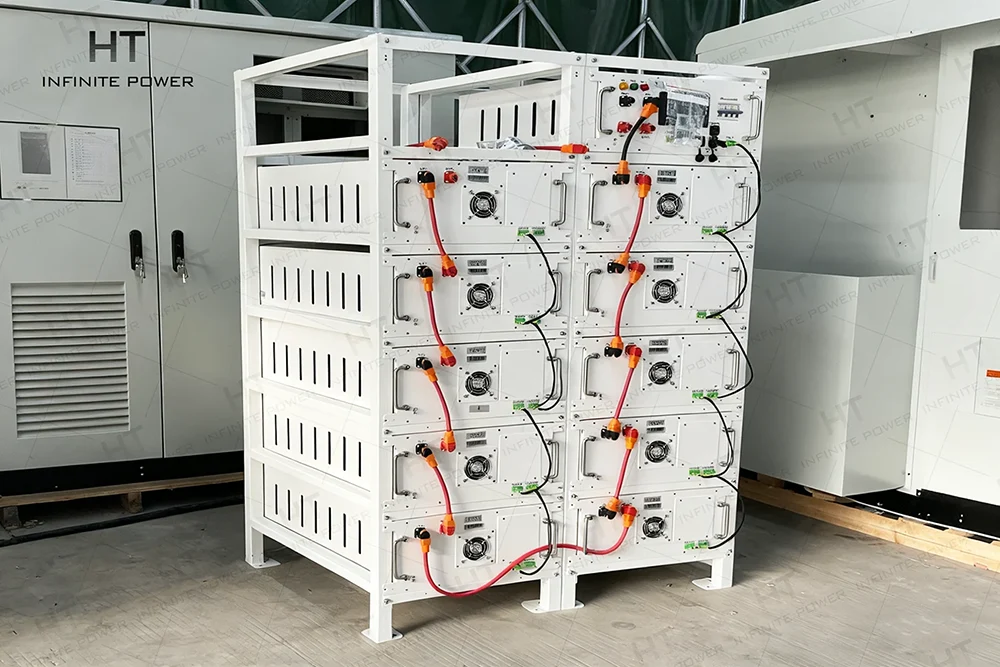
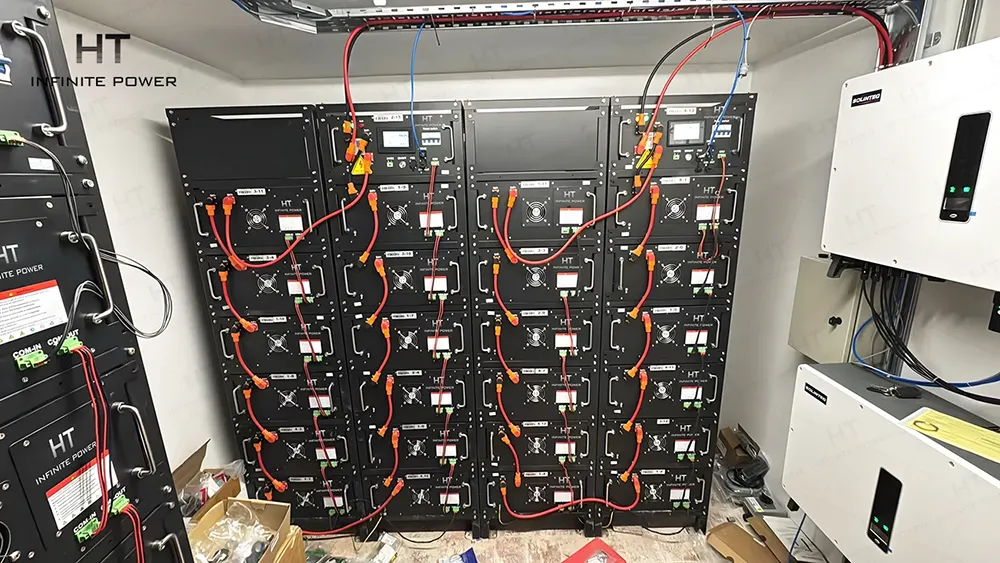
Modular energy storage systems (MESS) are composed of multiple battery modules, each a self-contained unit with its own control electronics. These units work together under a central Battery Management System (BMS), balancing loads, monitoring performance, and ensuring safety. Imagine an orchestra: each module is an instrument playing independently but harmonizing to create a coherent system. This modular design allows incremental expansion, making it simple to increase capacity without overhauling the entire system.
Core Components of a Modular System
At the heart of MESS are the battery modules themselves. Each module contains cells, thermal management, and control electronics. Power electronics, such as inverters and converters, link the modules to the load or grid. Together, the modules communicate with a smart BMS that coordinates charging and discharging, monitors health, and prevents overloading. Optional cooling or heating systems ensure optimal performance under diverse environmental conditions.
How Modular Units Work Together
The magic of modular systems lies in their coordination. When one module reaches peak capacity or requires maintenance, other modules seamlessly compensate. This redundancy ensures continuous operation and reduces downtime—a crucial feature for industrial applications or utility-scale storage.
Key Advantages of Modular Energy Storage Systems
Flexibility and Scalability
One of the biggest advantages of modular systems is their flexibility. Users can start with a small installation and scale up as demand grows. For example, a commercial building might begin with a 500 kWh system and expand to 2 MWh over several years. This “pay-as-you-grow” approach prevents over-investment and allows precise alignment with energy needs.
Lower Investment Risk
Traditional storage often requires large upfront capital. Modular systems allow phased investment, spreading costs over time. Startups, emerging markets, or projects with uncertain demand benefit particularly from this approach, as it mitigates financial risk while maintaining scalability.
Enhanced Reliability and Maintenance
Since each module operates independently, faults can be addressed without shutting down the entire system. Redundancy built into the design improves uptime, while modularity simplifies upgrades and maintenance. Operators can replace or service individual modules like swapping batteries in a hybrid electric car, minimizing disruption.
Seamless Integration with Renewable Energy
Modular energy storage systems excel at integrating renewable sources. By balancing fluctuations in solar or wind output, they stabilize the grid, provide peak shaving, and enhance energy predictability. A notable example is the Hornsdale Power Reserve in Australia, where modular lithium-ion systems helped stabilize grid operations and prevent blackouts. Tesla Hornsdale Project
Comparing Modular vs Traditional Storage Systems
Cost Efficiency Over Time
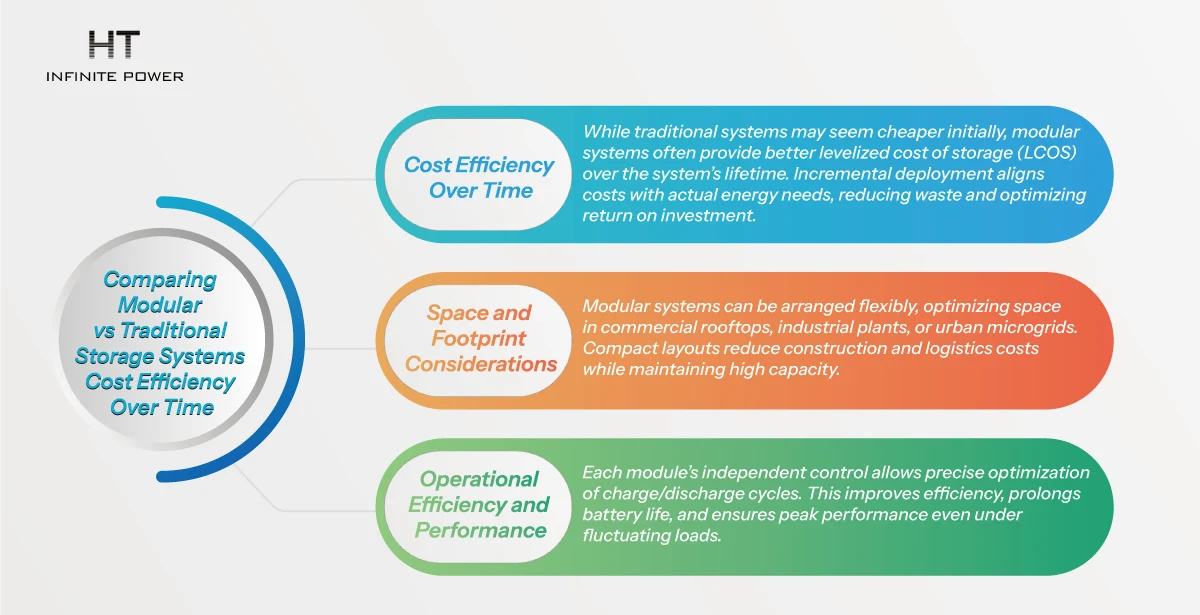
While traditional systems may seem cheaper initially, modular systems often provide better levelized cost of storage (LCOS) over the system’s lifetime. Incremental deployment aligns costs with actual energy needs, reducing waste and optimizing return on investment.
Space and Footprint Considerations
Modular systems can be arranged flexibly, optimizing space in commercial rooftops, industrial plants, or urban microgrids. Compact layouts reduce construction and logistics costs while maintaining high capacity.
Operational Efficiency and Performance
Each module’s independent control allows precise optimization of charge/discharge cycles. This improves efficiency, prolongs battery life, and ensures peak performance even under fluctuating loads.
Applications Across Industries
Residential and Commercial Energy Storage
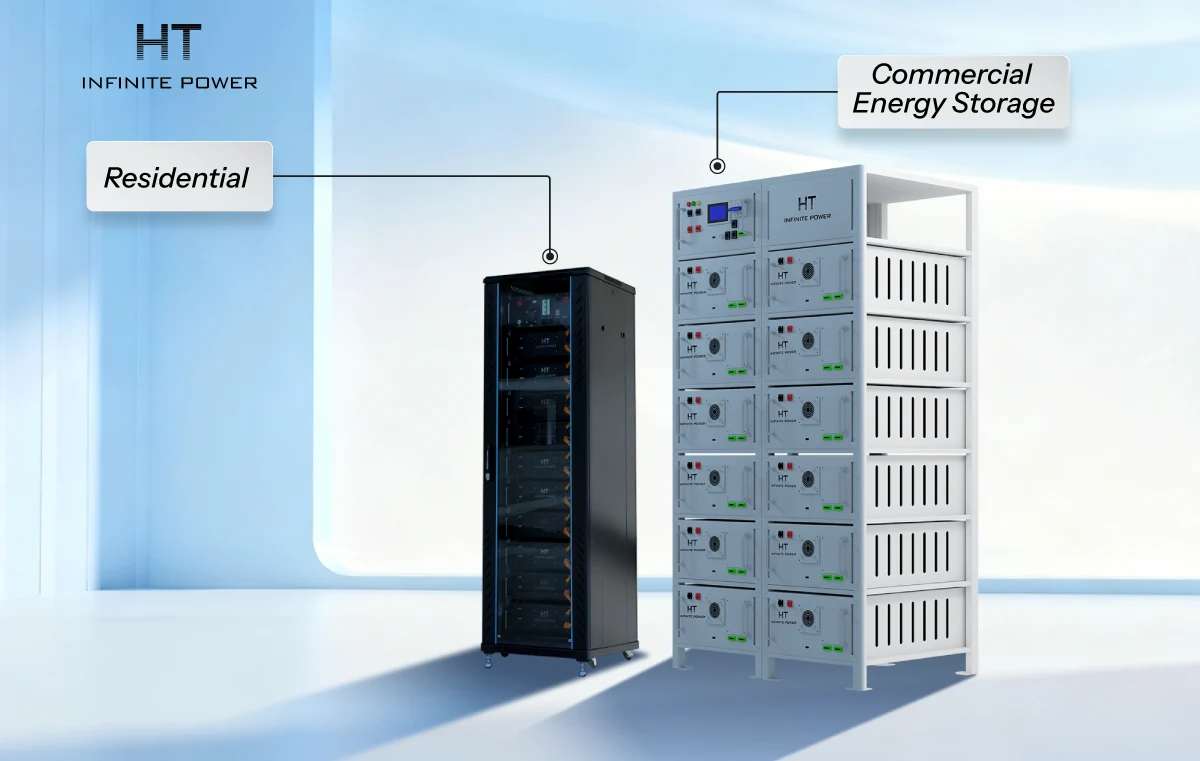
Homes, apartment complexes, and commercial facilities benefit from modular systems’ scalability. Users can start small and expand as energy requirements grow or solar capacity increases.
Utility-Scale Grid Management
For utility operators, modular systems provide frequency regulation, demand response, and peak load management. Additional modules can be deployed during high-demand periods, creating a responsive and resilient grid.
Industrial and Microgrid Deployments
Factories, industrial campuses, and remote microgrids rely on modular storage for flexibility, redundancy, and easy maintenance. Modules can be swapped during routine service without interrupting operations, ensuring continuous productivity.
Emerging Trends in Modular Energy Storage
Advances in Battery Chemistry
Innovations like lithium iron phosphate (LFP) and solid-state batteries are being integrated into modular systems, offering higher safety, longer lifespan, and better thermal management.
Smart Control and Energy Management Systems
AI-powered BMS and IoT integration enable predictive maintenance, real-time monitoring, and automated energy optimization—crucial for large-scale installations.
Hybrid and Multi-Technology Approaches
Modular design allows combining different storage technologies, such as batteries with supercapacitors or flow batteries, to achieve enhanced performance, efficiency, and reliability.
Challenges and Considerations
Initial Capital Costs vs Long-Term Value
Despite scalability, upfront costs can be significant. Careful Total Cost of Ownership (TCO) analysis ensures that long-term benefits outweigh initial investments.
Regulatory and Safety Compliance
Compliance with electrical codes, fire safety standards, and environmental regulations is essential. Working with experienced vendors ensures systems meet all requirements.
Standardization and Interoperability Issues
Modules from different manufacturers may face interoperability challenges. Selecting standardized, compatible systems is crucial for seamless integration and future expansion.
Future Outlook
Global Market Growth Projections
Global deployment of modular energy storage is expected to grow at a 35% CAGR from 2025 to 2030, driven by renewable integration and grid modernization efforts. Wood Mackenzie Energy Storage Report
Policy Support and Incentives
Governments worldwide are offering tax credits, grants, and low-interest financing, accelerating adoption of modular energy storage solutions.
The Role of Modular Systems in the Energy Transition
Modular energy storage enables grids to become resilient, sustainable, and adaptable, supporting the global shift to low-carbon energy.
Conclusion
Modular energy storage systems are more than a technological trend—they are the backbone of scalable, reliable, and flexible power solutions. With incremental scalability, enhanced reliability, and seamless renewable integration, these systems are redefining how energy is stored and managed across residential, commercial, and industrial applications.
FAQ
1. What makes modular energy storage systems more scalable than traditional systems?
Each module can be added or removed independently, allowing the system to grow with demand and reducing over-investment risk.
Each module can be added or removed independently, allowing the system to grow with demand and reducing over-investment risk.
2. How does modular design improve maintenance and reliability?
Faulty modules can be serviced or replaced without shutting down the entire system, ensuring continuous operation.
3. Can modular systems integrate with both solar and wind energy?
Yes, modular storage is highly flexible and balances multiple renewable inputs, stabilizing energy supply.
4. What are the typical costs associated with modular energy storage?
Costs vary by capacity, chemistry, and configuration, but modular deployment allows phased investment, improving ROI over time.
5. Are modular energy storage systems suitable for small businesses or just utilities?
They are suitable for both, from small commercial setups to utility-scale grids, thanks to their scalability and modular design.
AI-Powered EMS: Smarter Control for Industrial Energy Storage Systems
Europe's Energy Storage Boom: What It Means for Global Manufacturers