Comparative Analysis of Primary and Secondary Frequency Regulation in Energy Storage Power Stations
2025-12-04
Frequency control, also known as frequency regulation, is an automatic control method that ensures the output signal frequency maintains a defined relationship with a given reference frequency. In power systems, frequency control is the primary means of maintaining the balance between active power supply and demand, with the fundamental goal of ensuring system frequency stability. The main methods for frequency regulation involve adjusting generation output and managing load. Depending on the adjustment range and capability, frequency regulation can be classified into primary, secondary, and tertiary frequency regulation. Frequency regulation is also an important component of the electricity market.
Frequency regulation in electric power systems involves adjusting the active power output of generators to keep system frequency deviations within allowable limits. It is a key measure for ensuring power supply quality, including both instantaneous deviation adjustments and integral deviation adjustments. Under normal operation, grid operators arrange adequate reserve capacity and manage its allocation. Methods for controlling grid frequency include primary frequency regulation, secondary frequency regulation, high-frequency load shedding, automatic low-frequency load reduction, low-frequency generator self-start, load control, and DC modulation. The grid must maintain sufficient high-frequency load-shedding capacity, low-frequency self-starting unit capacity, and automatic low-frequency load reduction capacity, all managed by the grid operator.
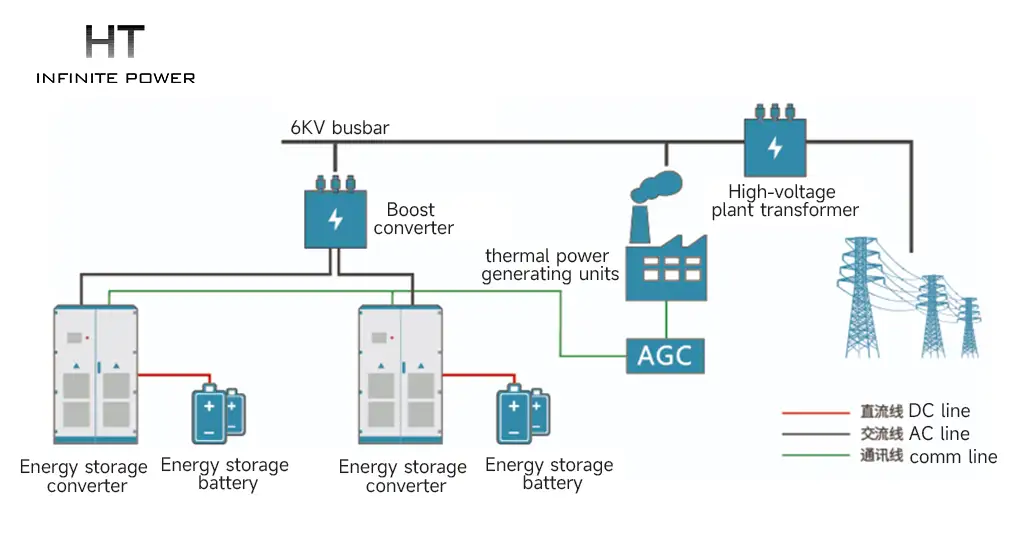
Automatic Generation Control (AGC) is the automatic system for controlling power system frequency and active power. While ensuring high-quality power production, AGC maintains real-time balance between supply and demand and responds to load changes over a timescale of several minutes to tens of minutes, making it a form of secondary frequency regulation. Its core tasks include maintaining system frequency within allowable error margins, controlling net power flows in interconnected grids according to planned values, and keeping energy exchanges within set limits.
Primary and secondary frequency regulation are both crucial for maintaining grid frequency stability, but they differ significantly in response speed, regulation accuracy, and implementation methods. Electrochemical energy storage power stations participating in frequency regulation can not only compensate for the limitations of traditional regulation methods but also offer unique advantages due to their inherent characteristics.
Differences Between Primary and Secondary Frequency Regulation
Primary frequency regulation refers to the automatic response of generator units through their governor systems when the power system frequency deviates from the target value. Generators adjust their active power output to help maintain frequency stability. The main feature of primary frequency regulation is its fast response, although it only achieves droop control rather than precise frequency restoration.
Primary regulation is primarily designed to address short-term, rapid load fluctuations. When system frequency exceeds allowable limits, generators autonomously provide or absorb active power to support the grid. The performance requirements for primary frequency regulation vary depending on the type of generator:
Thermal power units: frequency deadband of 50 ± 0.033 Hz
Hydropower units: 50 ± 0.05 Hz
Photovoltaic plants: 50 ± 0.06 Hz
Wind farms: 50 ± 0.10 Hz
Primary Frequency Regulation:
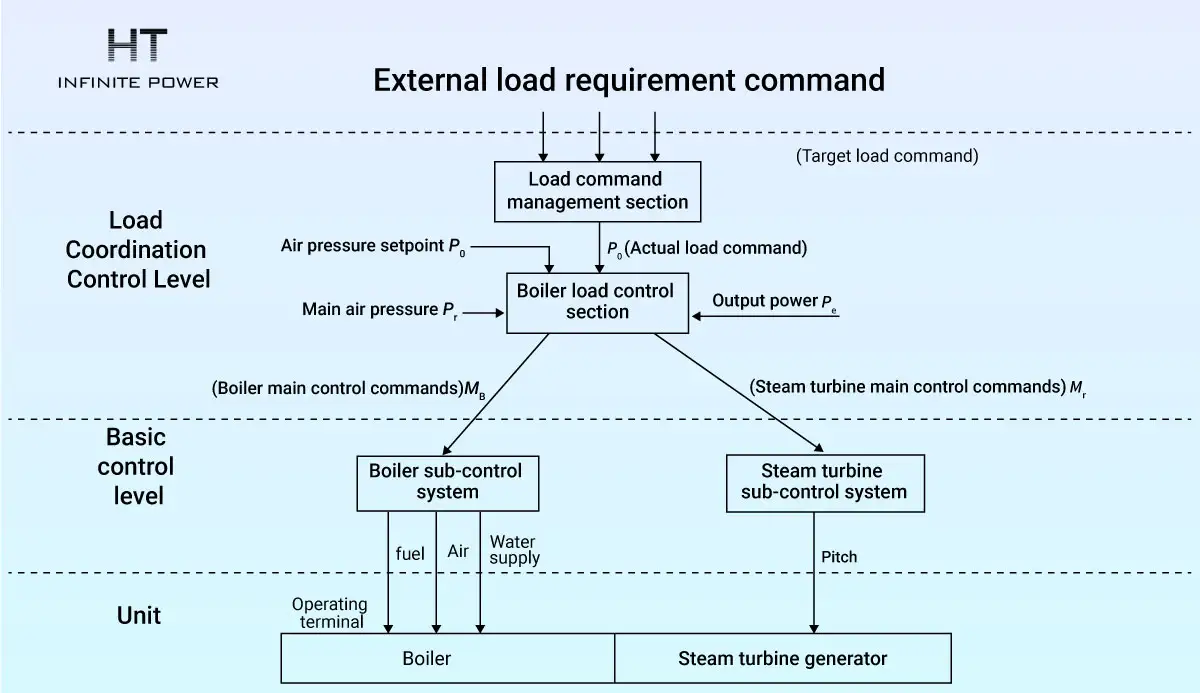
Primary Frequency Regulation is a fast-response mechanism performed automatically by generators. When the grid frequency deviates from the set value, each operating generator quickly adjusts its output through its governor system to reduce the magnitude of frequency fluctuations. This type of regulation uses droop control, meaning it cannot completely eliminate the frequency deviation but can mitigate its variation. The key features of primary frequency regulation are its immediacy and high level of automation, typically acting within a few seconds. It is suitable for responding to short-term (generally within 10 seconds) and small-amplitude frequency fluctuations.
Secondary Frequency Regulation
Secondary Frequency Regulation, also known as Automatic Generation Control (AGC), involves generators providing sufficient adjustable capacity and a specified regulation rate to track frequency in real time within allowable deviation limits, ensuring system frequency stability. Secondary regulation can achieve zero-error frequency control and also monitors and adjusts tie-line power flows. It is implemented on top of primary regulation through manual or automated measures, aiming to restore the grid frequency to its nominal value. This is usually coordinated by the power dispatch center, which issues instructions to specific power plants to increase or decrease output based on real-time frequency monitoring, or is achieved automatically via the AGC system.
Compared to primary regulation, secondary frequency regulation offers higher control accuracy but a slower response time, as it involves communication, decision-making, and execution processes. It is primarily used to address larger (0.5%–1.5%) and longer-period (10 seconds to 30 minutes) frequency deviations.
Advantages of Electrochemical Energy Storage Power Stations in Frequency Regulation
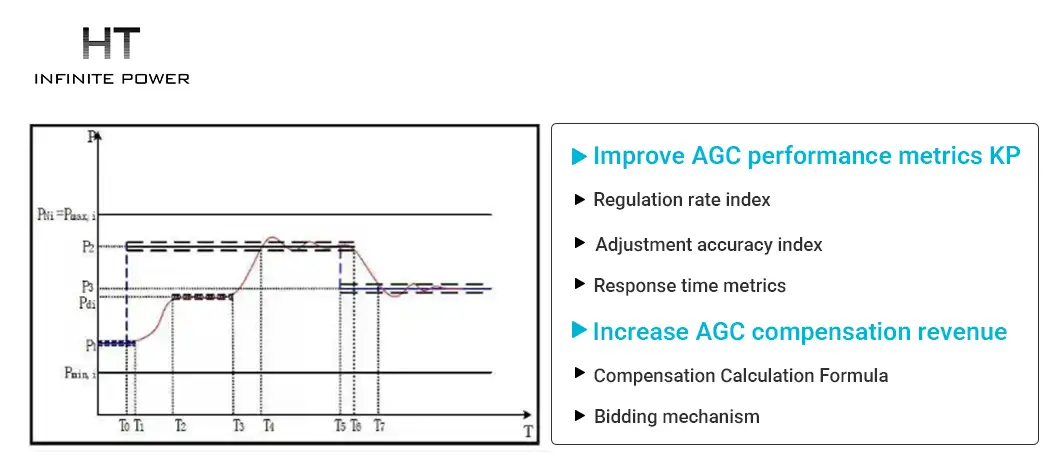
Energy storage frequency regulation leverages the fast and precise response capabilities of battery energy storage systems to participate in the grid’s AGC (Automatic Generation Control) frequency regulation support services. This not only enhances the performance metrics of thermal power units in AGC regulation but also helps eliminate AGC penalties and enables the operator to earn grid ancillary service incentives.
The comprehensive frequency regulation index is calculated as:
K = 0.25 \times (2K_1 + K_2 + K_3)
Where:
* (K_1 = ) actual regulation rate of the unit ÷ average regulation rate of all AGC units in the control area
* (K_2 = 1 - ) generator response delay ÷ 5 minutes
* (K_3 = 1 - ) regulation error ÷ allowed regulation error of the generator
* (K_1 = ) actual regulation rate of the unit ÷ average regulation rate of all AGC units in the control area
* (K_2 = 1 - ) generator response delay ÷ 5 minutes
* (K_3 = 1 - ) regulation error ÷ allowed regulation error of the generator
According to the Southern Power Grid rules, the maximum values are (K_1 = 5), (K_2 = 1), and (K_3 = 1), so the maximum possible comprehensive index (K) is 3.
As a new type of flexible resource, electrochemical energy storage power stations demonstrate outstanding performance in frequency regulation, mainly in the following aspects:
Fast Response:
Electrochemical energy storage systems can switch between charging and discharging within milliseconds, far faster than conventional thermal power units. This enables them to respond more quickly to grid frequency changes, providing timely support.
Precise Control:
Energy storage systems can achieve highly accurate control of output power, which helps improve overall frequency stability of the power system. This is particularly important when integrating intermittent and variable renewable energy sources.
Environmentally Friendly:
Unlike traditional fossil fuel generation, electrochemical energy storage does not produce greenhouse gas emissions or other pollutants, aligning with global clean energy goals. Additionally, due to their high energy conversion efficiency, storage systems can also reduce operational costs to some extent.
In summary, primary and secondary frequency regulation play distinct but complementary roles in ensuring safe and stable grid frequency operation. Electrochemical energy storage power stations, with their fast response, precise control, and operational flexibility, are becoming an indispensable part of modern power systems. They are increasingly important for facilitating renewable energy integration and supporting the development of smart grids.
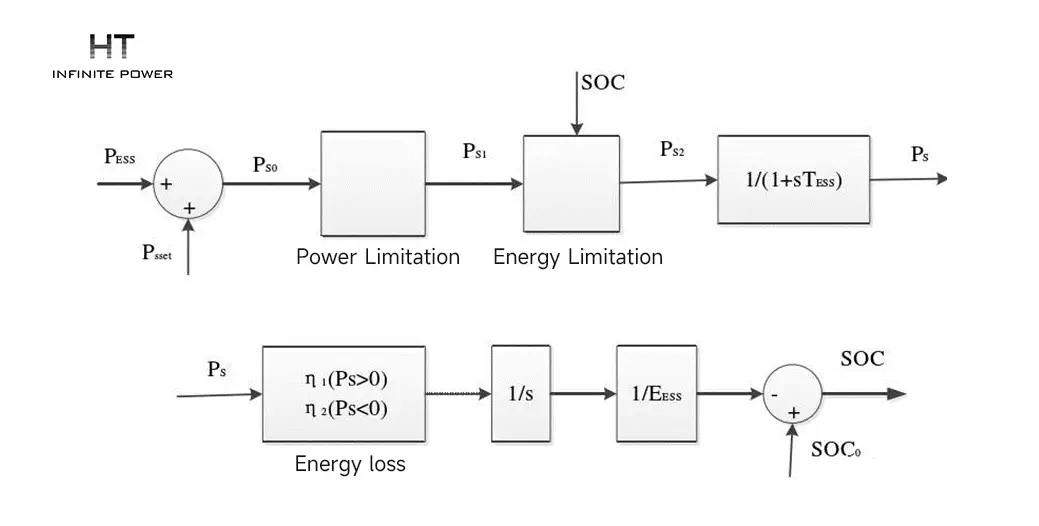
The energy–power characteristics describe the charging and discharging behavior and energy changes of the storage battery from the grid’s perspective. The dynamic model is illustrated as follows:
The energy–power characteristics describe the charging and discharging behavior and energy changes of the storage battery from the grid’s perspective. The dynamic model is illustrated as follows:
The energy–power characteristics describe the charging and discharging behavior and energy changes of the storage battery from the grid perspective. The dynamic model is as follows: PESS is the active power output of the storage system, Psset is the initial set power of the storage system, EESS is the rated capacity, η1 is the discharge efficiency coefficient (η1 > 1), η2 is the charge efficiency coefficient (η2 < 1), SOC0 is the initial state of charge, and SOC is the current state of charge, defined as the ratio of current energy to total energy.
In summary
Primary and secondary frequency regulation each play distinct roles, working together to ensure the safe and stable operation of grid frequency. Electrochemical energy storage power stations, with their fast response, precise control, and operational flexibility, are becoming an indispensable part of modern power systems, playing an increasingly important role in facilitating renewable energy integration and supporting the development of smart grids.
Principle of Reactive Power Compensation in Energy Storage Systems
Latest Trends in Large-Capacity Energy Storage Cells
Related Article