Rebuilding Data Center Power Architecture for the AI Era: From Medium-Voltage AC to 800V DC
2026-04-01
The electrical architecture of a data center used to be fairly easy to describe. Power came in from the grid, moved through medium-voltage AC distribution, stepped down through transformers, and eventually reached the server through a chain of increasingly local conversion stages. That model still exists, but it is no longer enough on its own.
AI training and inference have changed the load profile so much that the old “AC all the way down, then convert at the edge” logic now feels slow, heavy, and in some cases simply misaligned with what the site actually needs. When a single facility starts operating at hundreds of megawatts or even approaching a gigawatt, the power system becomes part of the compute problem itself. Voltage stability, transient response, peak support, and renewable integration stop being side topics. They become design drivers.
That is why the conversation is moving toward low-voltage DC, medium-voltage conversion with storage, and eventually toward 800V DC or ±400V DC architectures. The shift is not just about efficiency, although efficiency matters. It is also about controllability, resilience, and building an electrical backbone that behaves more like a living system than a static utility feed.
Why the traditional data center architecture is starting to look dated
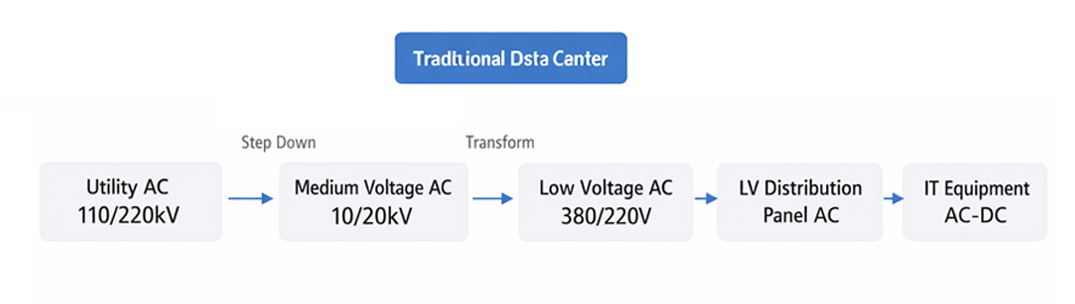
The classic data center power path was built for a world in which compute demand was important but comparatively predictable. Power entered through a medium-voltage AC connection, was transformed down to low-voltage AC, and finally converted again near the server to the DC rails the electronics actually needed. That made sense for a long time because the power levels were manageable and the infrastructure was already mature.
What has changed is not just the amount of power, but the shape of the demand. AI workloads create fast swings, dense rack loads, and a much higher sensitivity to interruptions. The problem is no longer only whether the building has enough energy. It is whether the electrical system can deliver that energy without hesitation, distortion, or unnecessary conversion losses.
Once that becomes the priority, the weaknesses of the old structure are easier to see. Every extra conversion stage adds complexity. Every long AC path adds more loss and more opportunity for disturbance. Every conventional buffering layer sits farther away from the actual point where the load becomes sensitive. In a modern AI data center, that distance matters.
Why the old model struggles with AI-scale loads
At lower load densities, a data center can tolerate some inefficiency in the path between the utility and the server. At high density, the penalty rises quickly. If the bus sags, compute does not just slow down; it can trip, restart, or reschedule. That is not the same as a power outage in the old sense. It is more subtle, and in some ways more expensive.
This is why AI data centers are pushing operators to think more like power engineers and less like facility managers. The question is no longer simply, “How do we keep the lights on?” It is, “How do we keep a highly sensitive digital load continuously stable under rapidly changing conditions?”
The AIDC architecture changes the role of storage
AIDC, or AI data center, introduces a different electrical logic. Instead of treating storage as an isolated backup asset, the architecture begins to use BESS as part of the power system’s daily behavior. In this model, the battery storage layer is not only there for outages. It becomes part of the supply, the monitoring logic, and the transient repair strategy.
A practical way to picture this is to start with the upstream grid connection. External utility power enters at high voltage, often stepping down from 110kV or 220kV to 10kV or 20kV. From there, the system no longer simply hands power off to the racks in the old way. A medium-voltage conversion stage plus BESS can convert the incoming AC into a lower-voltage DC bus, such as 380V DC, which becomes the internal supply backbone for the site.

That DC bus is important because it gives the system a cleaner way to move energy around. Instead of constantly moving back and forth between AC and DC, the architecture can stay on a more consistent internal electrical language. The PCS and BESS then work together to schedule charging, discharging, and disturbance absorption so the bus behaves like a unified platform rather than a collection of independent devices.
Why low-voltage DC matters inside the site
Low-voltage DC supply changes the behavior of the whole facility. It simplifies some of the internal conversion path, reduces the number of times power has to be transformed, and gives the energy storage system a more direct role in supporting the rack. That matters because the closer the storage sits to the point of load, the faster it can respond when the load changes.
In a high-density environment, that response time is not a luxury. It is what keeps the site from feeling every small electrical fluctuation. A strong DC backbone also makes it easier to think about modular expansion. If the site needs more board-level capacity or higher peak support, the architecture can grow without forcing the whole system back through a legacy AC-centric model.
BESS is becoming more than a battery
One of the most interesting parts of this shift is how storage is changing function. In the older model, BESS mostly meant backup energy. In the new model, BESS also becomes a kind of monitoring center and pulse correction layer. It watches the system, reacts in milliseconds, and repairs short disturbances before they become full interruptions.
That is a different job. It is not just about duration. It is about precision. A storage system that can handle a short disturbance cleanly is far more valuable than one that only has a large nameplate capacity. For AI data centers, the fastest disturbance is often the one that matters most.
Why low-voltage DC storage can improve both performance and economics
There are two reasons low-voltage DC storage is getting attention: one technical, one economic.
Technically, it supports the load more directly. It gives the rack a high peak-support capability and allows the site to hold full load longer without stressing the upstream grid. That becomes important when compute density keeps rising and board-level expansion has to happen without rewriting the whole power chain every time.
Economically, storage can reduce grid impact and smooth power fluctuations. That matters in a market where utility pricing, interconnection rules, and demand charges can all punish sudden load spikes. A millisecond-responsive BESS does more than protect the site. It also helps the operator negotiate a better power procurement structure.
For a large site, even a small change in electricity cost is meaningful. If a 1 GW data center is assumed to consume around 1 TWh per year in a simplified planning model, then electricity priced at $0.08 per kWh would imply an annual bill of roughly $80 million. That is already substantial. Once the real load climbs or the price rises, the economics get even more sensitive. A storage system that smooths demand and improves tariff strategy can materially change the operating picture.
Why the battery becomes part of the grid strategy
This is where the architecture starts to make sense as a financial system, not just an electrical one. If storage can absorb short-term swings, recharge during lower-cost periods, and reduce the visible load profile seen by the utility, then the facility gains more negotiating room. It can use off-peak power to replenish the battery and rely on the battery during high-demand moments, which is exactly the kind of behavior that improves long-term operating economics.
In practice, this turns storage into a smoothing mechanism for the entire facility. It helps the site behave less like a volatile industrial load and more like a controlled energy system.
The pulse-repair function is a quiet but important shift
One of the more overlooked advantages of low-voltage DC storage is its ability to support pulse repair, or more precisely, pulse-shaped power support. This is not a dramatic, headline-friendly feature, but it is the kind of function that matters a great deal in dense electronic systems.
Programmable pulses fit the board better than blunt backup
A storage system that can output a programmable pulse waveform is able to match the electrical characteristics of the board or device it supports. That is a much more refined form of intervention than simply switching on backup power. The support can be tuned to the load instead of forcing the load to adapt to a generic backup profile.
That matters because modern compute equipment is not just power-hungry; it is also sensitive. Precise pulse support can help maintain operation through fast disturbances or recurring electrical events without forcing the system into a hard interruption.
Monitoring and repair have to work together
The best pulse support does not happen in isolation. It is tied to monitoring logic that can detect when the system needs intervention and trigger the response in milliseconds. That coordination is what makes the feature useful. Without it, the storage might be fast but not smart. With it, the response becomes almost invisible to the computing layer.
This is especially valuable in environments where electrical disturbances occur repeatedly. If the system can support dense repair cycles without full shutdowns or service interruptions, it gains an operational advantage. The overall lifecycle cost falls because the site is not constantly paying for resets, downtime, or overbuilt passive protection.
High-frequency compatibility is a practical advantage
A storage layer that can support high-frequency intervention also fits better with the rhythm of AI computing. These systems do not operate like slow, static office loads. They move, fluctuate, and intensify in ways that are much more dynamic. A low-voltage DC storage architecture gives the facility a way to keep up without overreacting.
Why North America is moving toward ±400V and 800V DC
The U.S. market, especially among large self-built internet-scale data centers, is pushing strongly toward ±400V DC and 800V DC supply modes. That trend is not happening because the industry likes new labels. It is happening because the power chain has become too large to treat in the old way.
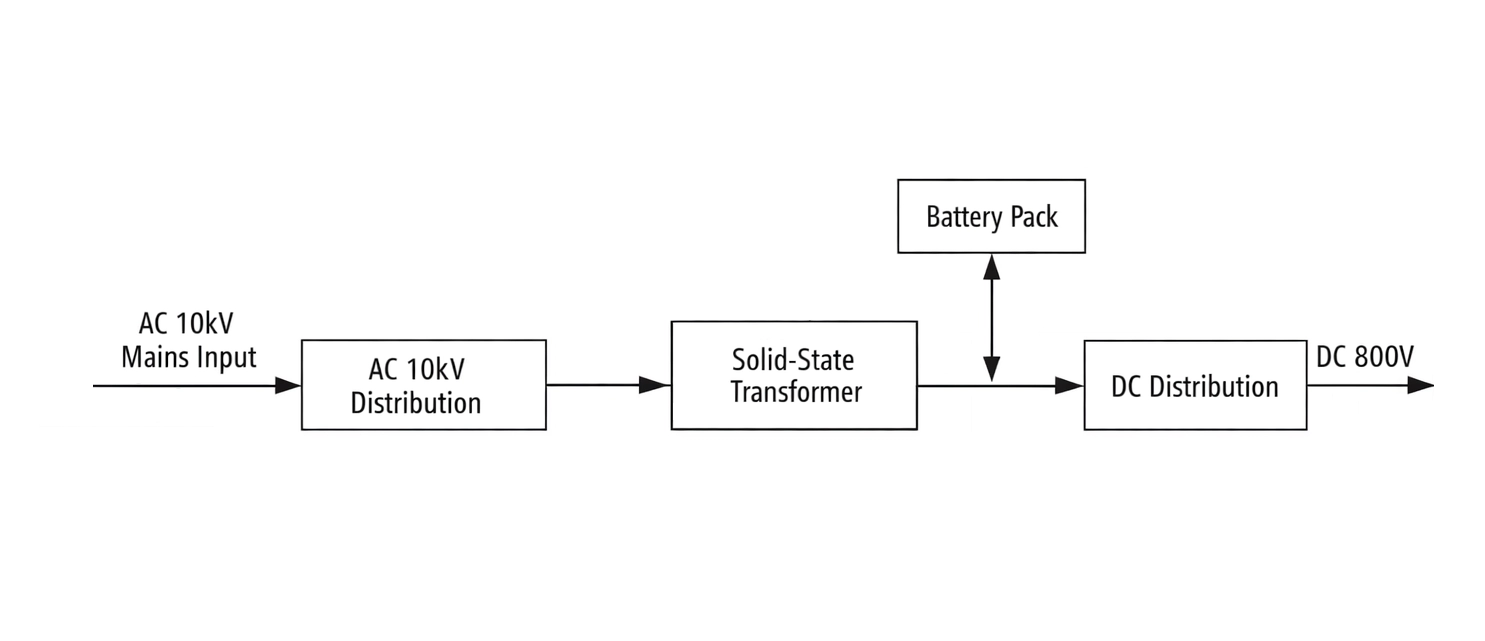
The most attractive technical route is increasingly seen as solid-state transformation from AC 10kV to DC 800V. The appeal is straightforward: fewer conversion stages, better efficiency, and a cleaner fit with modern distributed energy resources. In a large facility, each avoided conversion stage matters. Every stage removed reduces loss, complexity, and failure points.
Why SST is attractive
A solid-state transformer changes the game because it does more than just step voltage up or down. It also enables power conversion in a much more controllable electronic form. That gives operators a path from medium-voltage AC into a high-voltage DC backbone without passing through the old chain of heavy, multi-stage conversion equipment.
In engineering terms, the value is not just speed. It is architectural simplicity. The fewer times energy has to be transformed, the easier it becomes to preserve efficiency and maintain system stability. That is why SST-based 800V DC architectures are often viewed as a strong candidate for next-generation data centers.
800V DC fits renewable integration better
Another reason the higher-voltage DC model is drawing attention is that it fits distributed solar, storage, and other new energy resources more naturally. A DC backbone makes it easier to integrate photovoltaic generation and BESS into a more direct source-grid-load-storage framework. In other words, the facility becomes easier to think of as one electrical ecosystem rather than several disconnected subsystems.
That is especially important if the long-term goal is a true source-grid-load-storage direct-current architecture. Once the site can accept solar, storage, and grid supply into the same DC logic, the path to flexible, efficient operation becomes much cleaner.
The hybrid green power + utility model is probably the most realistic answer
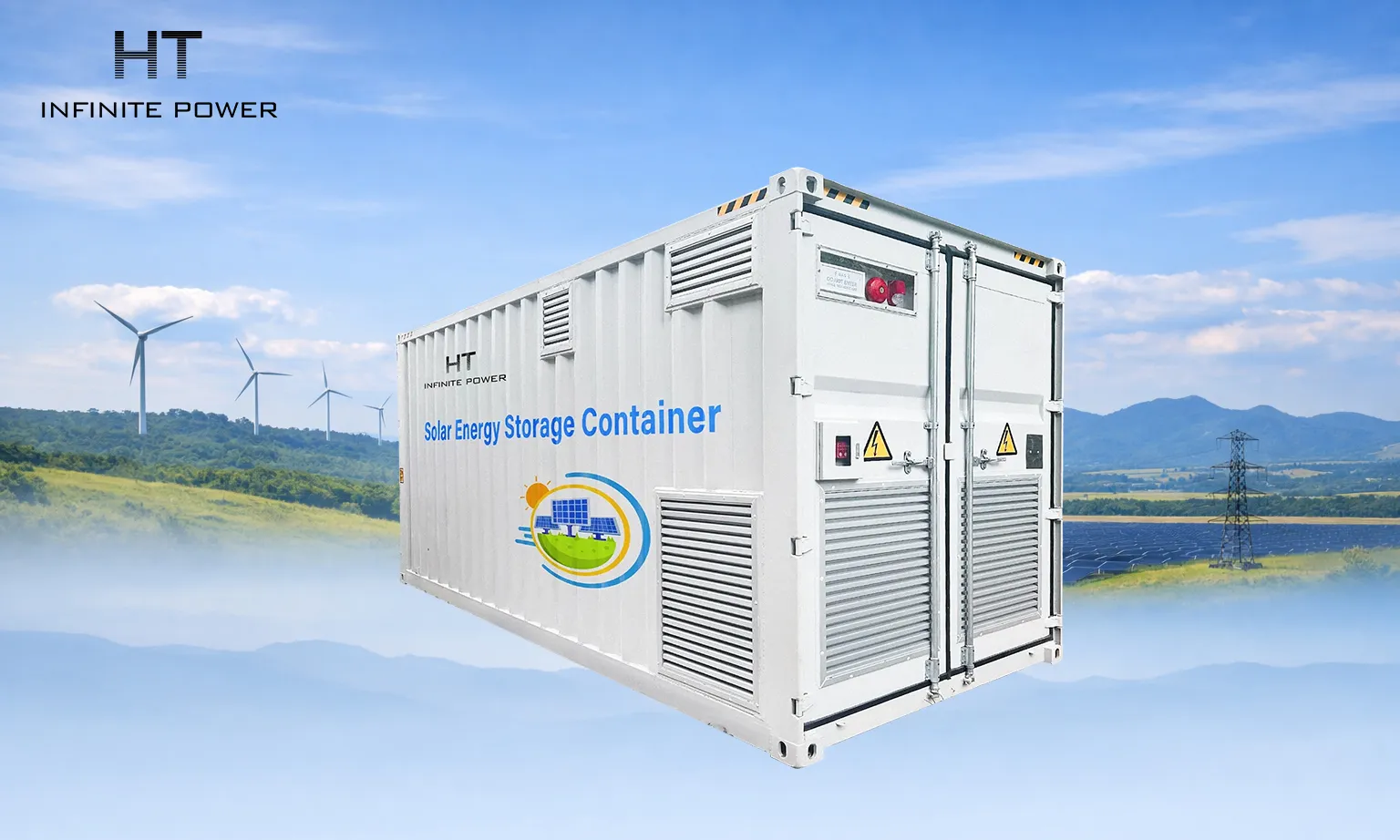
For U.S. data centers, the most practical supply model is probably not “all renewable” or “all utility” but a hybrid mix of green power and grid power supported by storage. That approach is better because it matches the actual shape of demand and the reality of utility interconnection.
Using your planning assumptions, the storage requirement grows quickly as the renewable share rises. If green power provides about 50% of the load and the system is designed around a four-hour storage duration, then a 1 GW compute site can imply roughly 6 GWh of storage. Push the green share toward 80%, and the storage requirement can rise toward 10 GWh. These are not small numbers. They are utility-scale numbers being pulled into data center planning.
That is the deeper point. Once the facility starts looking like a gigawatt-class energy consumer, its storage problem stops being a site detail and becomes part of regional infrastructure planning.
The 2030 scale changes the conversation
If the U.S. adds about 40 GW of compute capacity by 2030, then even a simplified 50% green-power plan could imply around 240 GWh of new storage demand. At a 30% green-power share, the storage demand still lands around 150 GWh. Either way, the numbers are too large to treat as incidental.
That tells you something important about where the market is heading. Data center energy planning is becoming a grid-level design problem. Storage is not just there to help one building. It is part of how the broader system absorbs AI growth without breaking under the pressure.
What this means for operators, designers, and developers
The practical takeaway is that data center electrical architecture is moving from a purely AC distribution mindset toward a layered DC-centric model with storage at the center. The role of BESS is expanding. The role of SST is rising. The importance of local DC buses is increasing. And the old assumption that a large UPS can handle everything is no longer enough.
For operators, this means the design conversation has to start earlier. For designers, it means the power chain has to be thought of as one system, not a set of isolated devices. For developers, it means storage and power architecture are now part of the business case, not just the technical appendix.
The data center of the future will not simply consume power. It will shape it, buffer it, and, in many cases, internally reorganize it before the compute layer ever sees a disturbance.
Conclusion
The shift from traditional medium-voltage AC architecture to low-voltage DC, 800V DC, and storage-enabled power systems is really a shift in how data centers think about electricity. The old model was built for stable, centralized power delivery. The new model has to survive AI-scale density, rapid transients, and the economic pressure of large-scale energy procurement.
What Is a Communication Protocol in an Energy Storage System?
Data Center BBU Deep Dive: From 48V to 800V HVDC and Millisecond-Scale Disturbance Immunity