Energy storage battery balancing technology: Active balancing vs. Passive balancing
2025-12-19
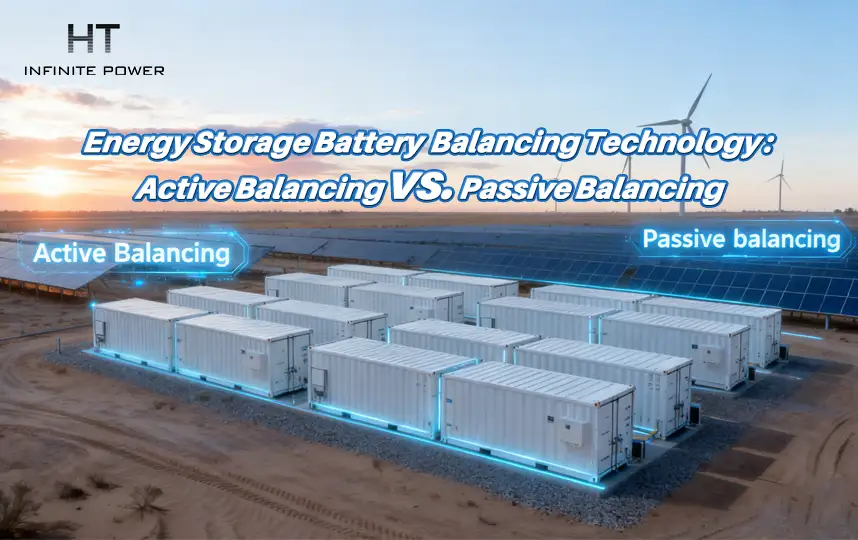
In energy storage systems, battery balancing technology is a core technology for ensuring safe system operation and extending lifespan. Its core function is to solve the problem of inconsistent voltage or capacity among individual cells in a series-connected battery pack.
Active balancing and passive balancing are two mainstream technical solutions, and the choice between them requires comprehensive consideration of multiple dimensions, including application scenarios, cost budgets, and performance requirements. The technical differences and compatibility logic between the two can be analyzed from three aspects: technical principles, core characteristics, and selection criteria.
I. Technical Principles: The Essential Difference Between Energy "Consumption" and "Transfer"
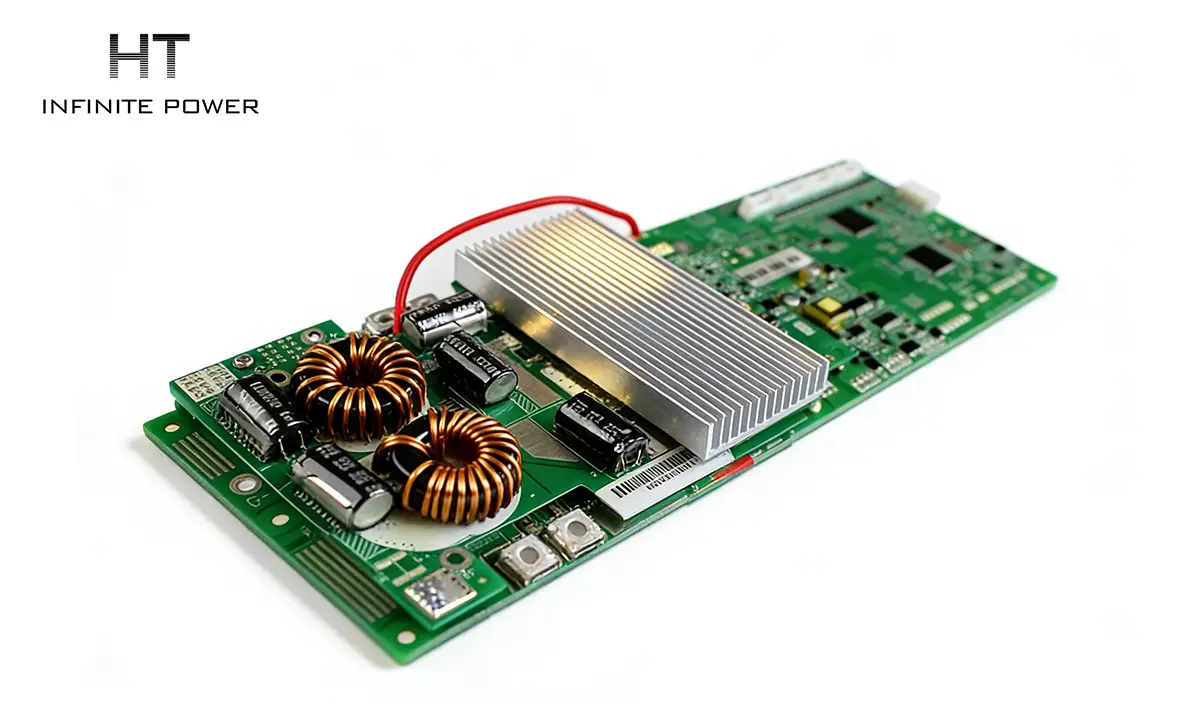
Passive equalization is based on the core logic of "energy consumption." When the voltage of a single cell is too high, the system releases the excess energy as heat through a resistor connected in parallel across its terminals (or a discharge circuit controlled by a switch), causing the voltage of that cell to drop to match that of the other cells. Its typical structure consists of a voltage detection circuit (such as an MCU paired with a voltage sampling chip), a switching transistor (MOSFET), and a discharge resistor. Equalization is triggered by monitoring the single-cell voltage threshold. The overall structure is simple and requires only basic electronic components.
Active balancing operates based on "energy transfer" logic. When voltage or capacity differences occur in individual cells, the system uses energy carriers such as capacitors, inductors, transformers, and DC/DC converters to transfer excess energy from cells with higher voltage to cells with lower voltage, or to transmit it back to the battery pack bus, achieving energy recycling rather than direct consumption. Its structure is relatively complex, requiring voltage detection modules, energy transfer circuits (such as inductive, capacitive, and transformer-based balancing topologies), and precise control logic to work together, placing higher demands on power electronic circuits and algorithm design.
II. Core Characteristics: The Art of Balancing Performance and Cost
The core differences between the two solutions lie in several dimensions, which directly determine their applicable boundaries. In terms of energy efficiency, passive equalization typically has an efficiency below 30% because excess energy is wasted as heat; active equalization, through energy recovery and utilization, can achieve an efficiency of 60%-95%, a significant advantage. Regarding equalization speed, passive equalization relies on resistor discharge, resulting in a slower response due to power limitations; active equalization, on the other hand, can regulate the energy transfer rate through power devices, leading to a faster response, especially suitable for scenarios requiring rapid equalization of large differences.
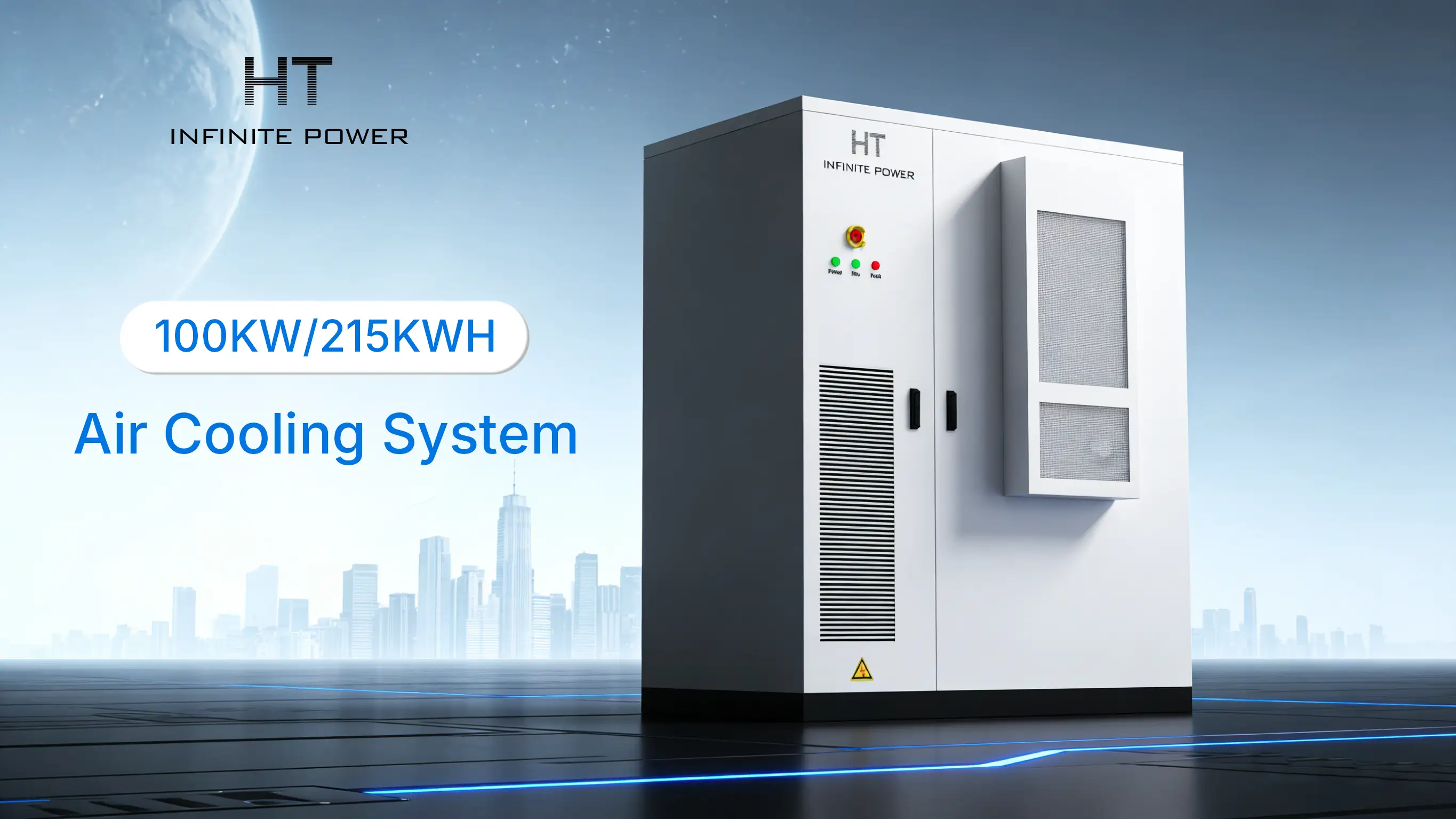
The distinction in applicable scenarios is closely related to this: passive balancing is more suitable for scenarios with small capacity, low series number, and low balancing requirements, such as home energy storage (12-24 series) or small portable power supplies; active balancing is suitable for scenarios with large capacity, high series number, and high balancing requirements, such as industrial and commercial energy storage (50 series or more) or power battery packs.
In terms of cost, passive balancing requires only simple components such as resistors and switching transistors, resulting in a simpler structure and a cost that is only 1/5 to 1/3 of active balancing; active balancing requires energy transfer components (such as inductors and transformers) and precision control chips, resulting in complex circuitry and relatively higher initial investment.
The heat dissipation pressure and its impact on the battery also differ significantly: passive balancing generates heat due to resistive energy consumption, resulting in greater heat dissipation pressure and requiring specially designed heat dissipation structures.
Active balancing primarily involves energy transfer, concentrating heat generation in power devices, thus reducing heat dissipation pressure. For the battery, long-term use of passive balancing may exacerbate cycle losses due to frequent discharge of high-voltage cells; active balancing, on the other hand, reduces energy waste, lowers the risk of overcharging and over-discharging of individual cells, and is more beneficial for battery protection.
III. Selection Logic: The Matching Principles of Scenarios, Needs, and Budgets
The core principle of selection can be summarized as: "For small scenarios, low costs, and low demands, choose passive balancing; for large scenarios, high requirements, and long cycles, choose active balancing." Specifically, this can be judged from the following dimensions:
From the perspective of system scale and battery quantity, passive balancing is preferred for small-capacity, low-series-number scenarios (such as 12-24 strings for home energy storage, small portable power supplies).
In these scenarios, the differences between individual cells are usually small. Passive balancing has advantages in low cost (cost per string is usually less than 1 yuan) and high reliability (simple structure), and energy waste has a controllable impact on overall efficiency (usually less than 5%).
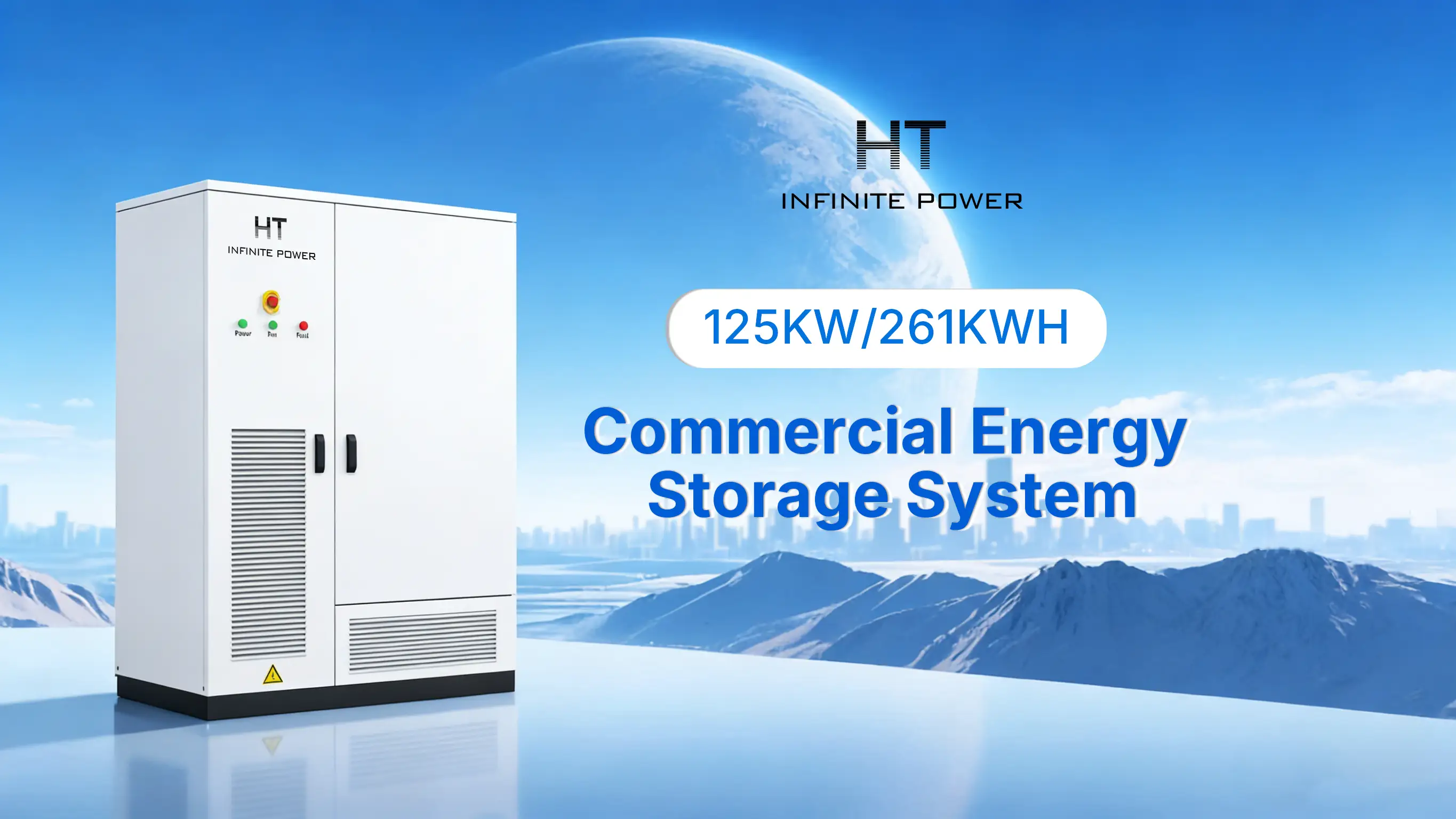
In high-capacity, high-series-number scenarios (such as industrial and commercial energy storage with more than 50 series connections, and power battery packs), active balancing must be adopted. Under high series connection numbers, the differences between individual cells will be amplified. The low efficiency of passive balancing (energy waste accumulates with the number of series connections) and slow response (inability to quickly balance large differences) may lead to premature battery aging, or even safety risks such as overcharging. The energy recovery characteristics of active balancing can also reduce system energy consumption. Especially in large-capacity systems, the long-term electricity savings are far greater than the initial investment.

From a cost-sensitivity and lifespan perspective, passive balancing is suitable for short-term use cases with limited budgets (such as temporary backup power). Its hardware costs are extremely low, and it requires no complex control algorithms, meeting basic needs.
However, for energy storage power stations designed for a long lifespan and low maintenance costs (such as those with a design life of over 10 years), active balancing is essential. It reduces the number of overcharges and over-discharges of individual battery cells, significantly extending battery pack lifespan (typically by 30%-50%). In the long run, the reduced battery replacement costs can cover the initial investment.
Considering battery type and characteristics, passive balancing can meet basic requirements for batteries with lower voltage consistency requirements (such as lead-acid batteries and some lithium iron phosphate batteries). However, for batteries sensitive to consistency (such as ternary lithium batteries and high-nickel batteries), active balancing is more advantageous—these batteries are more sensitive to overcharging (prone to thermal runaway), and the millisecond-level rapid response of active balancing can promptly suppress abnormal cell voltages, making them safer and more reliable.
In terms of efficiency and energy consumption requirements, for scenarios with low system efficiency requirements (such as offline energy storage and low cycle frequency scenarios), the energy loss from passive balancing is acceptable. However, for efficiency-sensitive scenarios (such as grid-connected energy storage and high cycle frequency scenarios), active balancing can reduce balancing energy consumption from 10%-20% of passive solutions to 1%-5%, significantly improving overall system efficiency. Especially in large-scale energy storage scenarios, the annual energy savings are considerable.
Summary: Optimal Fit is Key. No Absolute Superiority
In general, there's no absolute superiority or inferiority between passive and active balancing. The key lies in their suitability for the application scenario. Passive balancing is a "low-cost, sufficient" choice, suitable for scenarios with small capacity, low serial number, and less stringent requirements for lifespan and efficiency.
Active balancing, on the other hand, is a "high-performance, cost-effective long-term" choice, suitable for scenarios with large capacity, high serial number, and strict requirements for security, lifespan, and efficiency. In practical applications, some scenarios employ a "hybrid balancing" strategy (passive balancing for small differences, active balancing for large differences) to balance cost and performance, but the core logic always revolves around specific needs, finding the optimal balance between security and economy.
What is STS, and what is the difference between STS and PCS?
What is VSG technology and its applications in energy storage?