Why Round-Trip Efficiency Decides the Real Value of Battery Energy Storage
2026-03-23
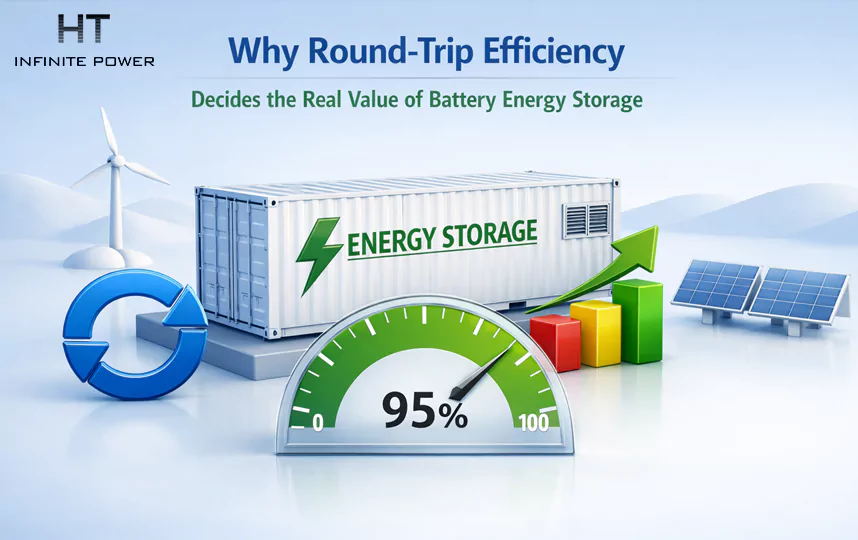
When people first look at a battery energy storage system, the instinct is almost always the same: how big is it, how long can it run, how much does it cost. Those are natural questions, and none of them are wrong. But they miss something quieter, something that only becomes obvious once the system starts operating day after day.
Not all the energy that goes into a battery comes back out.
That gap—small on paper, but persistent in reality—is where round-trip efficiency starts to matter. And over time, it matters more than most initial specifications.
Capacity is visible. Efficiency is experienced.
A storage system rated at 1 MWh sounds straightforward. Store one megawatt-hour, use one megawatt-hour later. But in practice, that assumption breaks almost immediately.
Energy storage is not passive. It is a process. Electricity flows in, is converted, stored, managed, and then converted again before being delivered. At every step, a portion is lost. Not dramatically, not all at once—but consistently.
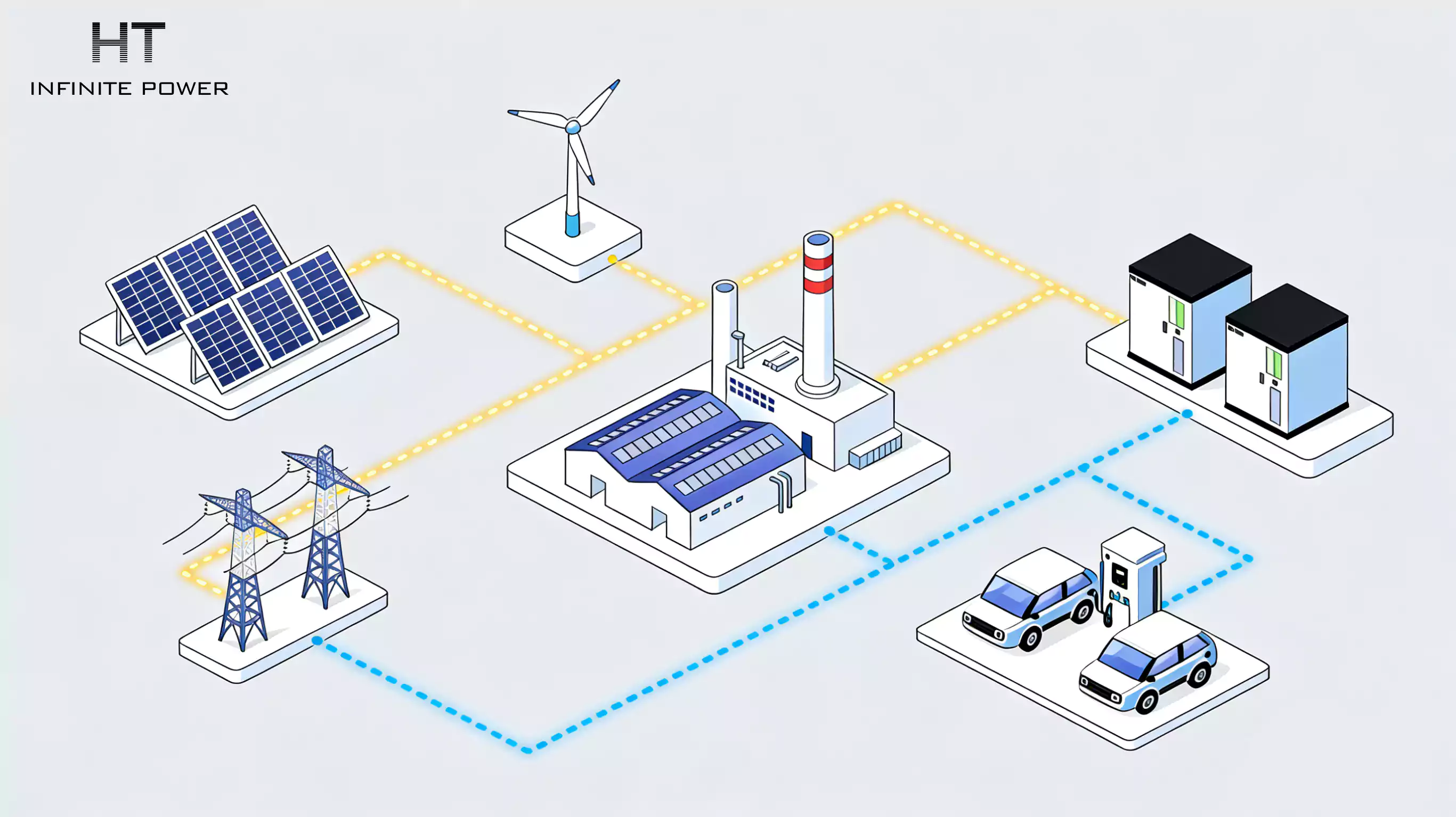
Round-trip efficiency simply describes how much survives that process.
What makes it important is not the definition itself, but the accumulation. A system that loses 8–10% per cycle behaves very differently from one that loses 3–5%, especially when it cycles daily. Over time, that difference stops being theoretical and starts showing up in operating data, energy bills, and project returns.
Losses don’t come from one place
One of the more common misunderstandings is to treat efficiency as a property of the battery alone. In reality, it’s a system-level outcome.
The battery is only part of the story
Inside the cells, resistance turns part of the energy into heat. That’s fundamental physics, not a design flaw. Improvements in materials and cell architecture can reduce these losses, but they can’t eliminate them.
What’s often overlooked is how quickly this becomes a system issue. Heat has to be managed. That means cooling. Cooling consumes energy. Now a loss inside the battery has extended into another subsystem.
What’s often overlooked is how quickly this becomes a system issue. Heat has to be managed. That means cooling. Cooling consumes energy. Now a loss inside the battery has extended into another subsystem.

Conversion quietly adds up
Electricity rarely stays in one form throughout the storage cycle. It moves between AC and DC, sometimes more than once depending on system design. Each conversion step is efficient, but never perfect.
Individually, these losses look small. Together, they shape the actual output of the system.
Individually, these losses look small. Together, they shape the actual output of the system.
The “invisible” loads
Then there are the systems that don’t directly move energy but make everything else possible: monitoring, control, safety systems, communication modules. They draw power continuously.
In small systems, this may be negligible. In large installations, it becomes part of the baseline consumption. And because it’s constant, it quietly lowers effective efficiency over time.
In small systems, this may be negligible. In large installations, it becomes part of the baseline consumption. And because it’s constant, it quietly lowers effective efficiency over time.
Not all batteries behave the same
Different storage technologies approach efficiency differently, and that difference often reflects their design priorities.
Lithium-ion systems are typically among the most efficient, which is one reason they dominate applications where frequent cycling and high throughput matter. Flow batteries, on the other hand, tend to prioritize duration and stability over peak efficiency. Lead-acid systems, while still used in some contexts, generally fall behind in efficiency but may remain relevant where cost or simplicity is the primary concern.
Lithium-ion systems are typically among the most efficient, which is one reason they dominate applications where frequent cycling and high throughput matter. Flow batteries, on the other hand, tend to prioritize duration and stability over peak efficiency. Lead-acid systems, while still used in some contexts, generally fall behind in efficiency but may remain relevant where cost or simplicity is the primary concern.
When efficiency is not the only priority
It’s easy to assume the highest efficiency option is always the best choice. In practice, that’s rarely true.
A system designed for long-duration backup might accept lower efficiency in exchange for extended discharge time. Another project might prioritize cycle life or safety over marginal efficiency gains.
What matters is alignment with the use case. Efficiency is one variable, but it only becomes meaningful when placed alongside how the system will actually be used.
Where efficiency starts to affect money
At some point, the technical discussion becomes financial.
Energy that doesn’t come back can’t be used, sold, or shifted. That sounds obvious, but the implications are often underestimated. In systems that cycle frequently, even a small efficiency difference translates into a measurable gap in delivered energy over time.

Small percentages, large consequences
The difference between 90% and 94% efficiency may not look dramatic at first glance. But across hundreds of cycles, that gap compounds.
More input energy is required to achieve the same output. Operating costs increase. In market-driven environments, missed opportunities accumulate.
This is where efficiency stops being a specification and becomes a performance driver.
More input energy is required to achieve the same output. Operating costs increase. In market-driven environments, missed opportunities accumulate.
This is where efficiency stops being a specification and becomes a performance driver.
Renewable systems make efficiency more visible
As more solar and wind enter the grid, storage is asked to do more balancing work. That means more frequent charging and discharging, often within the same day.
Under these conditions, efficiency is no longer a background parameter. It directly affects how effectively energy can be shifted across time.
Under these conditions, efficiency is no longer a background parameter. It directly affects how effectively energy can be shifted across time.
More cycling, more exposure to loss
In a lightly used system, inefficiency may go unnoticed. In a heavily cycled system, it becomes unavoidable.
Every cycle introduces loss. More cycles mean more accumulated loss. That’s why efficiency becomes increasingly important as storage shifts from backup use to active grid participation.
Every cycle introduces loss. More cycles mean more accumulated loss. That’s why efficiency becomes increasingly important as storage shifts from backup use to active grid participation.
Efficiency is increasingly a system design question
There’s a noticeable shift happening in how storage performance is evaluated.
It’s no longer enough to ask how efficient the battery cells are. The more relevant question is how efficient the entire system is under real operating conditions.
Power electronics, thermal management, control algorithms—all of these influence the final outcome. A well-integrated system can outperform a theoretically stronger battery placed in a less optimized configuration.
Power electronics, thermal management, control algorithms—all of these influence the final outcome. A well-integrated system can outperform a theoretically stronger battery placed in a less optimized configuration.
This is also why integrated approaches are gaining attention.
A more practical way to think about RTE

Instead of treating round-trip efficiency as a technical metric, it helps to frame it in operational terms.
A storage system exists to move energy from one moment to another. The real question is simple: how much of that energy is still there when you need it?
If most of it is preserved, the system is doing its job well. If too much is lost along the way, then everything else—capacity, speed, even cost—has to compensate.
That’s why efficiency quietly shapes how useful a storage system really is.
Conclusion
Round-trip efficiency doesn’t attract as much attention as capacity or price, but it has a deeper influence on how a battery energy storage system performs over time.
It reflects losses across the entire system, not just the battery. It influences how much usable energy is delivered, how often the system can operate effectively, and how the economics of a project unfold.
As storage becomes more active in supporting renewable energy and grid stability, efficiency will only become more visible. Not because the concept is new, but because the consequences of ignoring it become harder to overlook.
What Is Anti-Backflow in Energy Storage Systems?
High-Voltage Direct-Connected PCS in Battery Energy Storage Systems
Related Article