Which is best on-grid or off-grid or hybrid solar system?
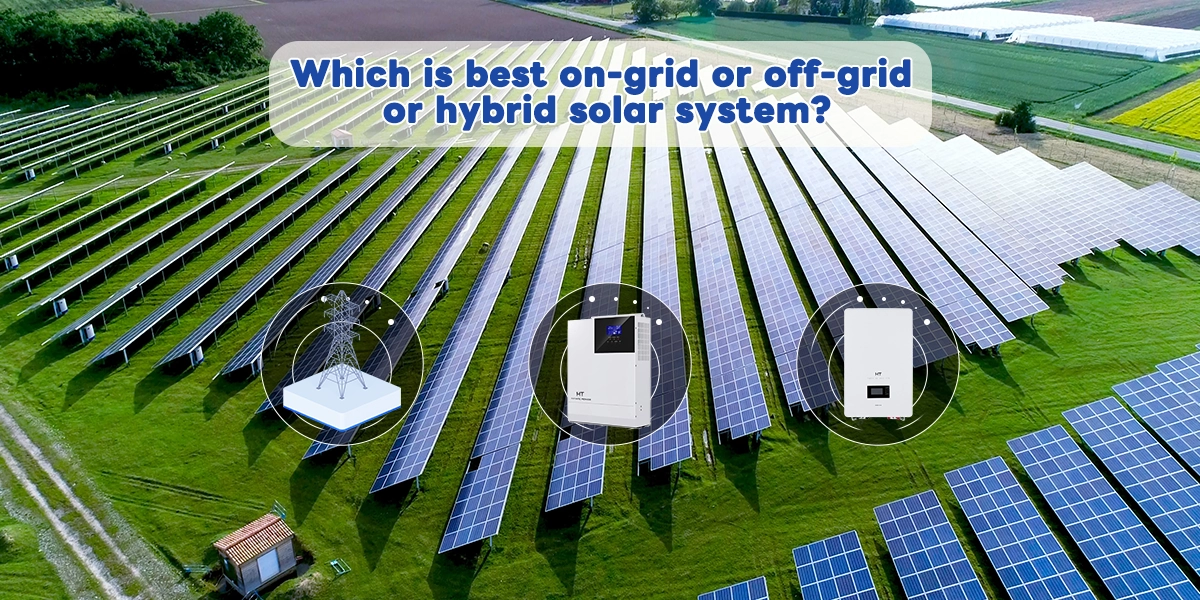
When you are ready to install a solar power system for your home or factory to reduce your electricity bill or maintain a stable power supply, you will face the choice of off-grid, on-grid, or hybrid solar power systems. Choosing the right system means a higher return on investment and a more stable power supply system.
There is no perfect system, and there is no one system that meets everyone's needs. You need to understand their working models, application field, advantages and disadvantages to make a right decision.
In this article, we will give you a detailed introduction of the advantages, disadvantages, and application fields of off-grid solar energy systems, hybrid solar energy systems, and on-grid solar energy systems.
First of all, no matter what kind of solar power generation system, the basic components are solar panels (converting solar energy into direct current), inverters (converting direct current produced by solar panels into alternating current) and energy storage batteries (on-grid systems can be unnecessary).
Next, we will introduce the working methods, application fields, advantages and disadvantages of each system individually.
1. On-grid solar power generation system
Working methods:
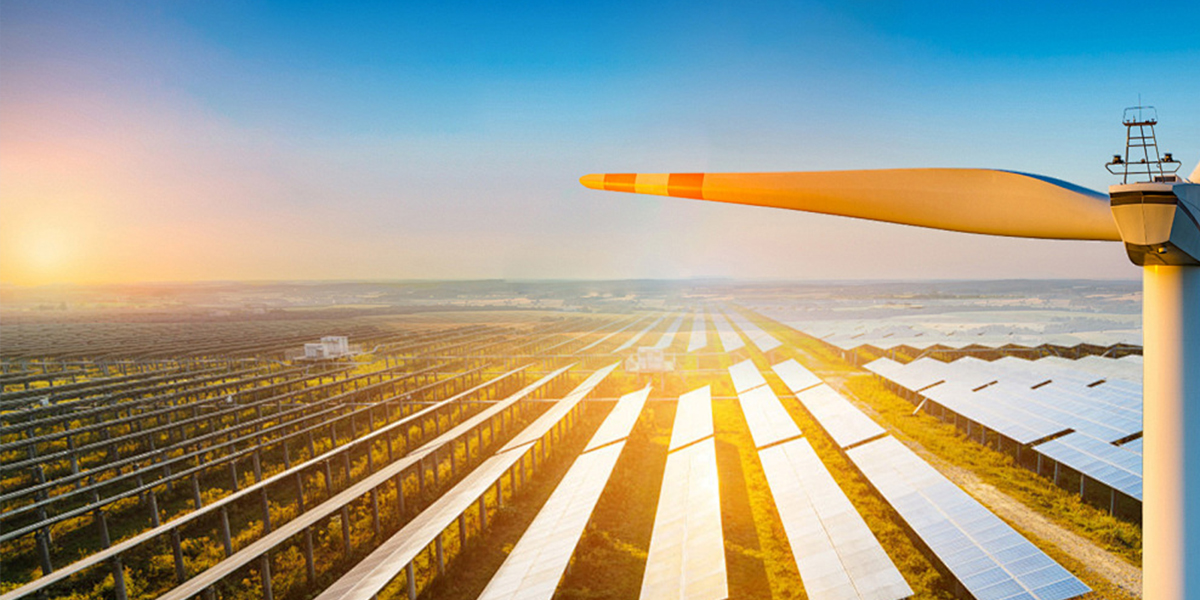
on-grid solar energy system is mainly composed of photovoltaic panels and photovoltaic inverters, and the electricity produced by photovoltaic panels is converted into the utility grid after the transformer by inverter.
Advantages:
The on-grid system is suitable for large-scale power generation projects, which can increase the stability of the utility grid and reduce the pressure of the grid during peak consumption. By configuring energy storage batteries, the power grid efficiency can be better adjusted.
Disadvantages:
Generally belong to large-scale investment projects, occupy a large area, the initial investment is high, the approval time is long, and the security requirements are strictly. Suitable for power company, energy company or government investment. Not suitable for personal household use.
2. Off-grid solar power system
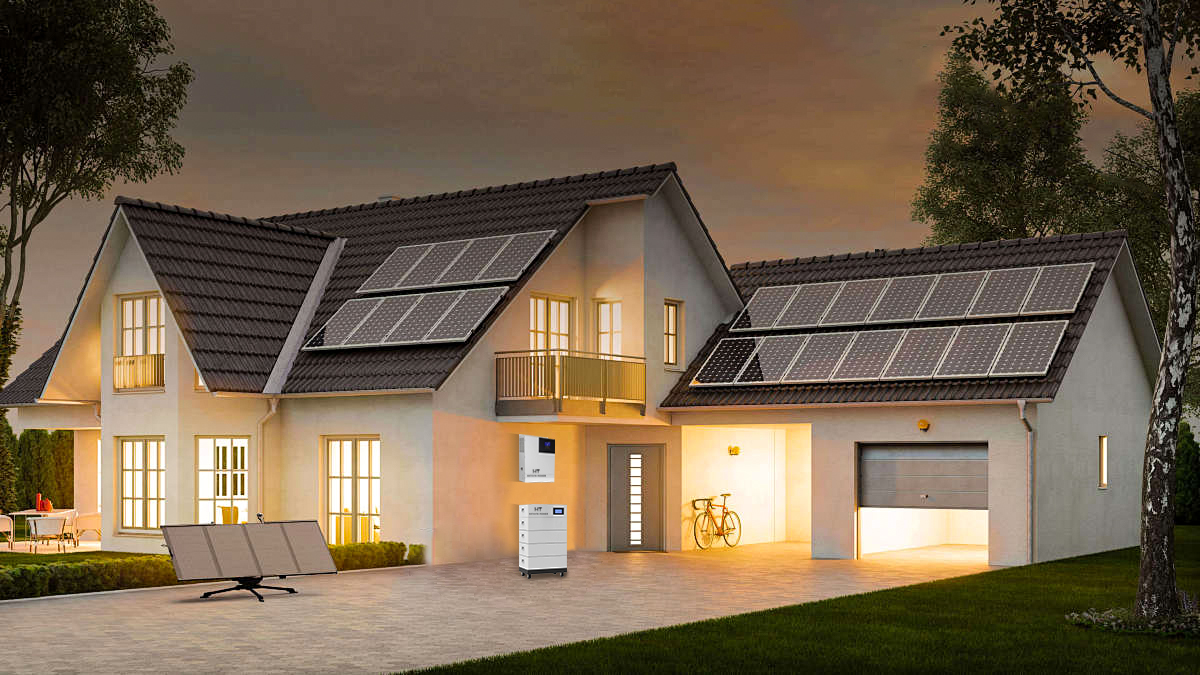
Mainly composed of photovoltaic panels, inverters, energy storage batteries. Able to operate independently off the utility grid.
Advantages:
When your local utility grid is unstable, or in an isolated environment, such as remote farms, islands, etc., off-grid systems can provide you with power. And the off-grid system does not need to be connected to the utility grid, there are no strict policy restrictions, and there is no need for on-grid certification, easy installation and low cost. The system capacity can be expanded according to demand in the future.
Disadvantages:
Because the whole system is off the utility grid, when the system power generation is not enough to meet your needs, you have to reduce your electricity consumption, which will bring you some trouble.
How to solve the disadvantage of off-grid system:
In order to ensure that the off-grid system can provide enough electricity to your home, you can appropriately increase the number of photovoltaic panels and the storage capacity of energy storage batteries. For example: in theory, your family needs 6KW photovoltaic panels and 15KWH energy storage batteries, you can choose 7KW photovoltaic panels and 20KWH energy storage batteries. Of course, this will add some cost to you.
3. Hybrid solar power system

Hybrid solar systems are mainly composed of photovoltaic panels, inverters, and energy storage batteries. It can be used off-grid or connected to the utility grid.
Advantages:
Unlike off-grid solar power generation systems, hybrid solar power generation systems can both operate independently and can be connected to the ultility grid. This means that a hybrid solar system can either sell excess power to the grid for additional revenue when there is enough power, or take electricity from the grid when the system is not enough, ensuring that your home can have enough electricity supply in real time.
Disadvantages:
Because of the high quality requirements of public ultility grid electricity, hybrid inverters need to obtain more certification requirements. Hybrid systems are generally more expensive than off-grid systems. At the same time, hybrid solar power generation systems will face the same problems as off-grid systems in areas with grid shortage or no grid.
Summary:
The type of inverter determines the type of solar power generation system. On-grid inverters and hybrid inverters, because they need to meet the requirements of different countries for the quality of the grid, need to pass more stringent quality management and certification requirements, so the price will be more expensive than off-grid inverters. You need to choose your solar power system according to your needs and application fields
If you have any needs for solar power system, you can also contact us, our professional engineering team will help you design the most suitable solar power system for you.

What is commercial battery storage system ?
How much will a 10kW solar system save me?