What is the life expectancy of a BESS battery?

As carbon reaches its peak, carbon neutral policies continue to advance. The application of new energy is becoming more and more widespread. Due to the instability of new energy power generation, it has a huge impact on the frequency of the power grid. To balance the grid, energy storage batteries have become the cornerstone of ensuring sustainable power supply.
This article will introduce in detail the service life of HT INFINITEPOWER battery energy storage system and how the charge and discharge cycles affect its long-term performance. Let you better understand the application technology of BESS battery.
Four main factors affecting the life expectancy of a BESS battery
1.Selection of Bess battery cell type

Currently, there are three main types of BESS battery cells used in energy storage batteries: NMC, LFP, and lead-acid batteries.
No material is perfect. For example, the shortage of lithium ore resources has led to rising lithium battery prices in recent years, NMC batteries are unstable at high temperatures and can easily cause fire safety hazards, and lead-acid batteries are destructive to the environment.
Sodium-ion batteries may become the mainstream of BESS battery in the future. Sodium-ion batteries have a wide range of raw materials, which is cheap, do not contain heavy metals, environmentally friendly, and have strong temperature adaptability.
- Lead-acid batteries: cheap, low cycle life, environmental pollution.
- NMC battery: high price, high cycle life, unstable at high temperatures.
- LFP battery: cheap, high cycle life, stable at high temperatures, not suitable for environments below zero degrees Celsius.
| Cell type | NCM | Lead-acid | LiFePo4 (LFP) | Sodium-ion |
|---|---|---|---|---|
| Nominal Voltage | 3.7V | 2.0V | 3.2V | 3.1V |
| Working Voltage | 2.7-4.2V | 1.5V-2.5V | 2.5-3.8V | 1.5-4.0V |
| Cycle Times | ≥500 | ≥300 | ≥4000 | ≥2000 |
| Energy Density | ≈ 170WH/KG | ≈ 40WH/KG | ≈ 150WH/KG | ≈ 110WH/KG |
| Safty | Low | High | High | High |
| Material Cost | High | Low | Medium | Low |
| Environmental Friendly | No | No | Yes | Yes |
2.The impact of charge and discharge speed and discharge depth on the life expectancy of a BESS battery

Batteries of different capacities and brands have different optimal charge and discharge rates.
For example: 100AH LFP battery has a standard charge and discharge rate of 0.5C and supports a maximum charge and discharge rate of 1C.
280AH LFP battery cell, standard charge and discharge rate is 0.2C, maximum support 0.5C charge and discharge rate.
3.Frequency of use of a BESS battery
The the life expectancy of a BESS battery is generally expressed in terms of the number of cycles. HT INFINITEPOWER energy storage systems generally use LFP batteries with a capacity of 280AH or above. In an environment of 25 degrees Celsius, the cycle life ends at 70% of EOL up to 4,000 times.
According to the frequency of charging and discharging once a day, it can be used for 4000/365=10.9 years.
EOL: (END OF LIFE OR END OF LINE.) The moment when the battery capacity drops below the preset threshold
Battery EOL is caused by a variety of factors, including:
-
Cycle life limit:
-
Capacity fading:
-
Battery Aging:
When the battery reaches EOL, its capacity and performance will be significantly reduced and it will not be able to meet the requirements of the device. In practical applications, you can determine whether the battery is approaching or reaching EOL by monitoring the battery's SOC (State of Charge), SOH (State of Health) and other parameters, and perform maintenance or replacement.
4.Temperature management system:
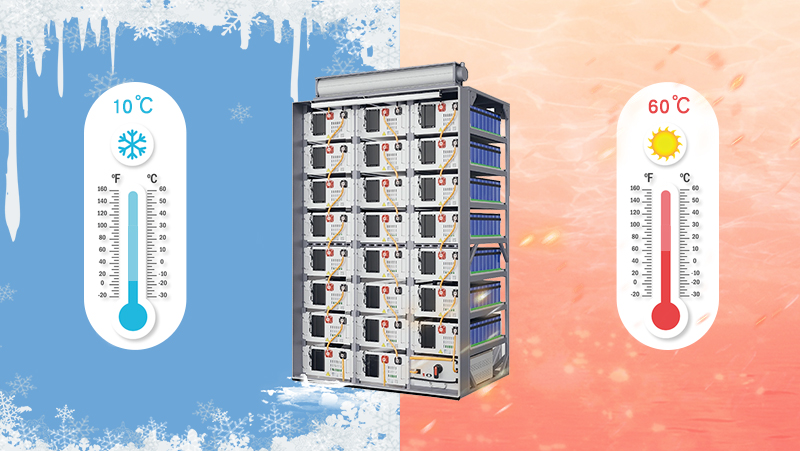
The life expectancy of a BESS battery is related to maintenance and use environment, of which temperature is one of the most important factors. The higher the ambient temperature, the greater the internal resistance of the lithium battery, the smaller the capacity, and the shorter the service life. When the ambient temperature exceeds 60°C, the life of the lithium battery will be reduced by more than half. Too low temperature will also affect the performance of lithium batteries. Below minus 10°C, the battery output will drop sharply.
Therefore, when protecting and maintaining lithium batteries, you need to pay attention to changes in ambient temperature. Avoid using or placing lithium batteries in high temperature environments for long periods of time, especially avoid exposing the batteries to sunlight.
At the same time, high temperatures can also cause thermal runaway, which is the most important factor causing safety hazards in energy storage battery systems.
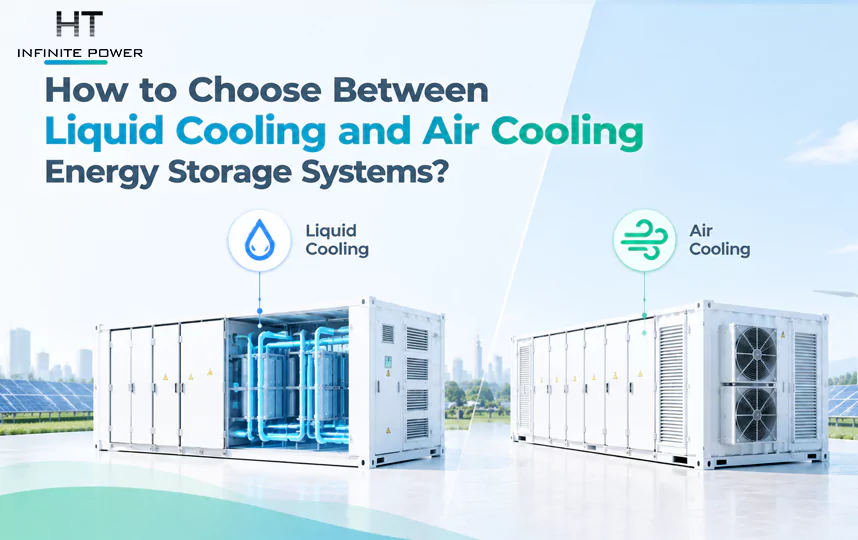
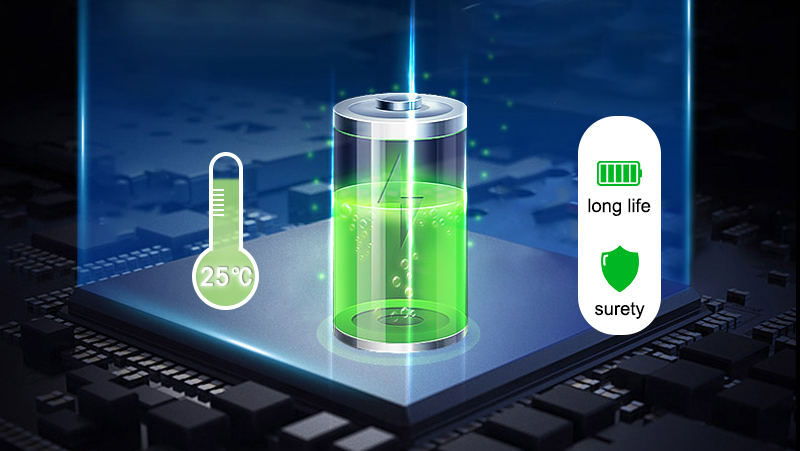
HT INFINITEPOWER , commercial energy storage system equipped with industrial air conditioners and temperature sensors, always ensures that the temperature of the battery compartment is stable at 25 degrees Celsius no matter how the external ambient temperature changes. This is also the optimal operating temperature for lithium batteries, which greatly improves the service life and safety of commercial energy storage batteries.
Summary:
Understanding the life expectancy of a BESS battery and how charging cycles affect its performance is critical to ensuring efficient and cost-effective operation of energy storage systems. By choosing the right cells, keeping the depth of discharge within a healthy range, limiting charge and discharge current, and controlling temperature, we can significantly extend the life of the battery.
Industrial energy storage batteries and BESS (such as the HT INFINITEPOWER OUTDOOR ENERGY STORAGE CABINET ) allow advanced load management, allowing us to maximize service life and ideally maintain them.
Battery energy storage expert
HT INFINITEPOWER is an expert in industrial energy storage, with highly efficient and scalable smart solutions that can adapt to any situation and guarantee excellent performance.
To learn more about commercial energy storage battery life and safety, please feel free to contact us
How industrial and Commercial Energy Storage System to reduce Business Energy Costs?
What is commercial battery storage system ?