What Is Energy Arbitrage in Battery Storage?
2025-06-26
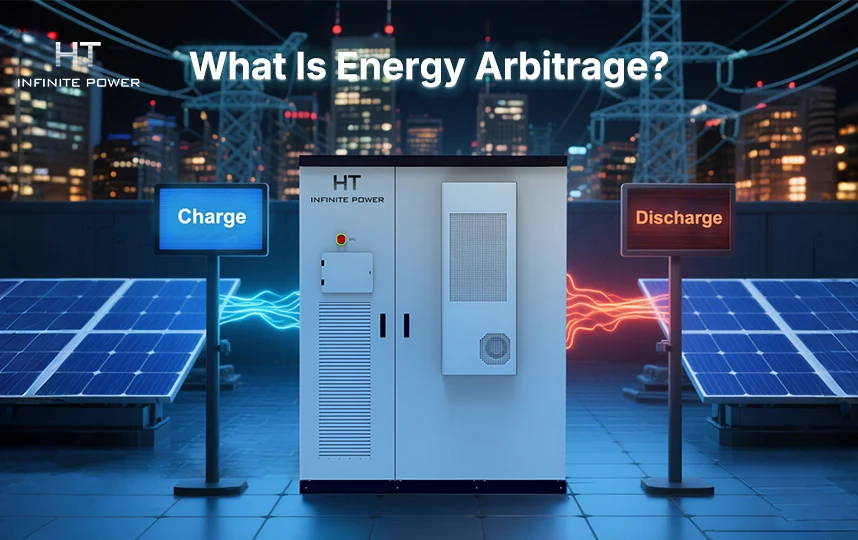
Prices can spike to $300+/MWh in summer and dip below $0/MWh at night. Market analyses in California microgrids have demonstrated energy bill reductions of up to 25% through strategic arbitrage. Energy arbitrage battery storage turns volatility into value by charging when rates are low and discharging at their peak, optimizing both operational reliability and financial returns.
What Is Energy Arbitrage?
At its core, energy arbitrage involves purchasing electricity at low wholesale prices—often during periods of oversupply or off-peak demand—and storing it for later use or sale when prices are higher. This model relies on granular market pricing, with many ISOs updating rates every 5–15 minutes. Arbitrage captures the spread between low and high-price intervals, converting grid fluctuations into tangible savings or revenue streams.
Why Price Swings Create Opportunity
Wholesale power markets exhibit significant volatility driven by renewable generation variability, weather events, and demand patterns. For example:
• ERCOT experiences over 200 hours/year with spikes above $150/MWh, offering prime arbitrage slots (source: ERCOT).
• Negative pricing events occur when renewable output exceeds demand, effectively paying customers to consume electricity.
These swings underpin arbitrage strategies—more pronounced fluctuations yield higher profit potential.
A Brief History: From Water to Watt-Hours
Pumped hydro storage dominated for decades—accounting for 95% of global storage capacity by 2020. However, its reliance on geography and lengthy construction timelines limits flexibility. The lithium-ion revolution (89% cost reduction from 2010–2020) paved the way for distributed, modular storage systems that can be deployed rapidly and controlled dynamically (source: BloombergNEF).
How Arbitrage Works with Batteries
Operationalizing arbitrage requires sophisticated energy management systems (EMS) that interface with grid markets. The process entails:

1. Forecasting price curves using historical market data, weather models, and demand projections.
2. Automated bidding into day-ahead or real-time markets based on optimized dispatch schedules.
3. Real-time control of battery charge/discharge cycles to adhere to bid commitments and maximize spread capture while mitigating degradation.
2. Automated bidding into day-ahead or real-time markets based on optimized dispatch schedules.
3. Real-time control of battery charge/discharge cycles to adhere to bid commitments and maximize spread capture while mitigating degradation.
Step 1: Charge During Cheap Periods
When prices sink (e.g., $10–$20/MWh), batteries absorb energy—often telemetered via SCADA to ensure seamless grid communication. Overcharging safeguards and state-of-charge thresholds prevent inefficiencies.
Step 2: Discharge at Peak Rates
During peak hours (e.g., $120–$200/MWh), batteries feed stored energy back to the grid or site load. Revenue equals the price differential minus round-trip efficiency losses (typically 10–15%).
Automation & Software Platforms
AutoBidder autonomously bids into CAISO and ERCOT; Fluence Dispatch integrates NREL price forecasts. Such tools boost arbitrage value by approximately 15% compared to static schedules.
Battery Technologies for Arbitrage
Key selection criteria: round-trip efficiency, response speed, cycle life, capital cost, and safety standards (UL 9540A, IEC 62619).
Lithium-Ion: The Go-To
Efficiency: 90–95%
Cycle Life: ~5,000 cycles at 80% depth-of-discharge
Installed Cost: $150–200/kWh (2025 avg)
Ideal for 1–4 hour arbitrage; requires robust thermal management.
Cycle Life: ~5,000 cycles at 80% depth-of-discharge
Installed Cost: $150–200/kWh (2025 avg)
Ideal for 1–4 hour arbitrage; requires robust thermal management.

Flow Batteries: Deep Waters
Efficiency: 65–75%
Cycle Life: >10,000 cycles
Scalability: Energy capacity decoupled from power rating.
Preferred for multi-hour or daily cycling; higher capex offset by lower long-term degradation.
Cycle Life: >10,000 cycles
Scalability: Energy capacity decoupled from power rating.
Preferred for multi-hour or daily cycling; higher capex offset by lower long-term degradation.
Emerging Chemistries
Sodium-ion, zinc-bromine, and solid-state prototypes demonstrate alternate performance–cost profiles. DOE-backed pilots are underway to validate commercial viability.
Major Advantages
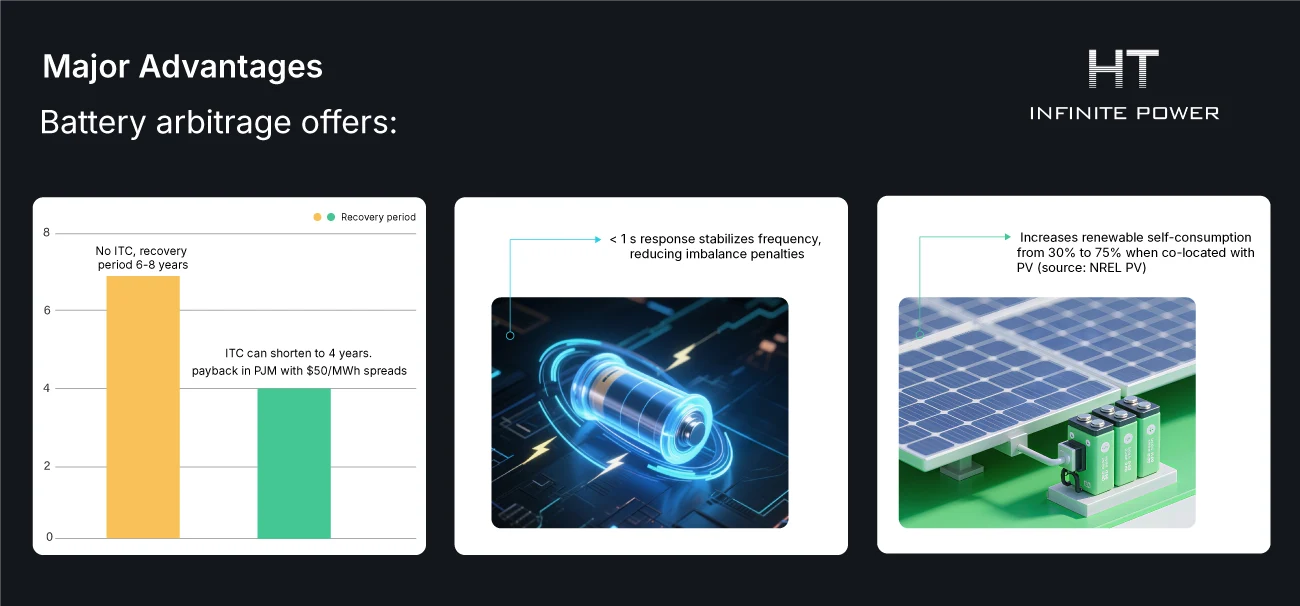
Battery arbitrage offers:
• Financial: 6–8 year payback in PJM with $50/MWh spreads; ITC can shorten to 4 years.
• Operational: < 1 s response stabilizes frequency, reducing imbalance penalties
• Environmental: Increases renewable self-consumption from 30% to 75% when co-located with PV (source: NREL PV).
• Financial: 6–8 year payback in PJM with $50/MWh spreads; ITC can shorten to 4 years.
• Operational: < 1 s response stabilizes frequency, reducing imbalance penalties
• Environmental: Increases renewable self-consumption from 30% to 75% when co-located with PV (source: NREL PV).
Challenges & Precautions
Due diligence essential: technical, financial, regulatory.
Capital & Financing
Capex $150–200/kWh; leases and power purchase agreements mitigate upfront. Leverage Inflation Reduction Act credits.
Regulatory Landscape
ERCOT, PJM, and CAISO have different participation rules and fees. Early regulatory scoping avoids delays.
Cycle Life & Degradation
Depth-of-discharge and operating temperature affect lifespan. Advanced BMS strategies can extend usable life by around 20%.
Real-World Use Cases
From rooftops to multi-MW farms:
Residential Time-of-Use
EV charger + battery: nightly charging at $0.10/kWh, discharge at $0.30/kWh. $200 annual savings per household.
C&I Peak Shaving

Utility-Scale Farms
100 MW installations arbitrate across multiple markets, earning $15 M/year in combined energy and ancillary revenue.
Tesla Autobidder in Action
Hornsdale’s AutoBidder captured $30 M in year one by combining arbitrage with frequency regulation.
Hornsdale Power Reserve
This 150 MW/193.5 MWh project demonstrated < 1 s response, saving $27 M in grid service costs.
Future Trends
AI-Driven Forecasting: Machine learning models now predict prices with < 5% error, improving dispatch revenue by ~ 10%.
Virtual Power Plants: Aggregating hundreds of distributed batteries into a single dispatchable asset, VPPs bid larger volumes into markets.
Second-Life Batteries: Retired EV batteries still hold ~ 70–80% capacity; second-life projects reduce costs by 20–30% and extend the sustainability story.
Virtual Power Plants: Aggregating hundreds of distributed batteries into a single dispatchable asset, VPPs bid larger volumes into markets.
Second-Life Batteries: Retired EV batteries still hold ~ 70–80% capacity; second-life projects reduce costs by 20–30% and extend the sustainability story.
Conclusion
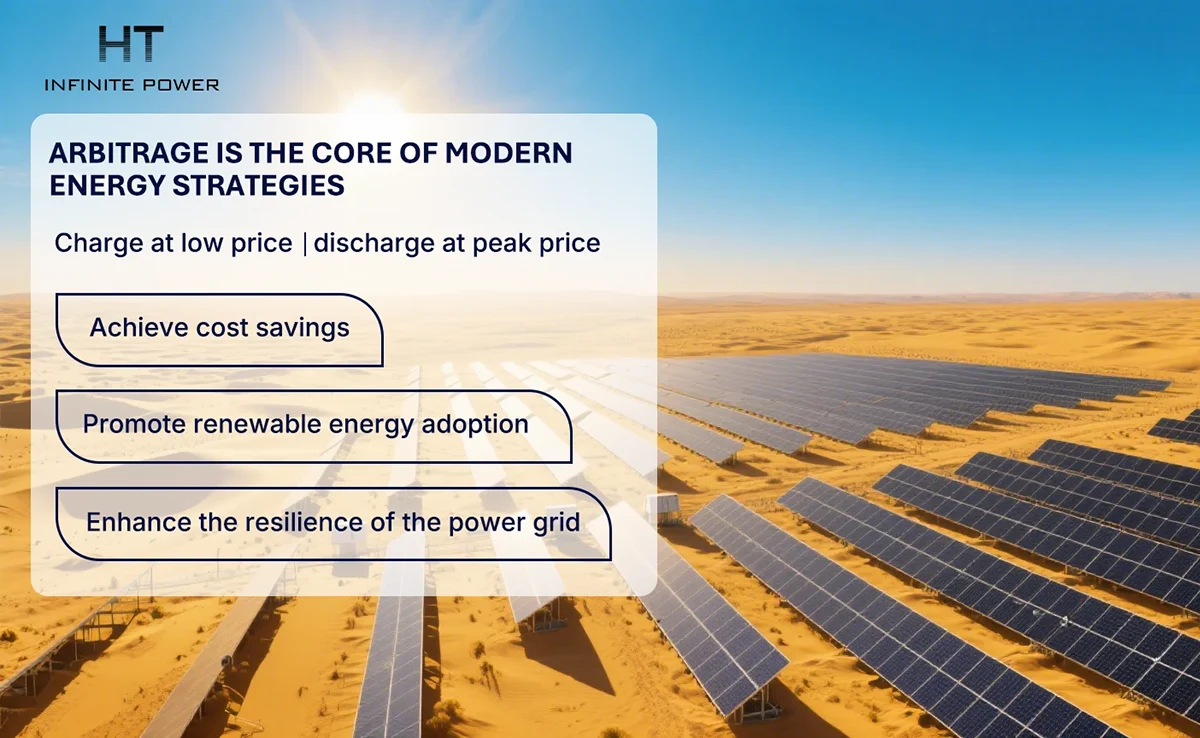
Energy arbitrage battery storage turns price volatility from a headache into opportunity. By charging when power is cheap and discharging when it’s expensive, participants—from homeowners to utilities—unlock savings, bolster grid resilience, and accelerate renewable adoption. While challenges like capital costs, regulations, and degradation persist, falling battery prices, smarter software, and innovative business models are tilting the scales in favor of arbitrage.
What Is Second Life Battery Storage?
Selection and application analysis of high-voltage and low-voltage lithium battery energy storage systems