What Is Curtailment and How Can Energy Storage Solve It?
2026-04-17

Curtailment is one of those terms that appears simple at first, yet becomes increasingly important as renewable energy penetration rises.
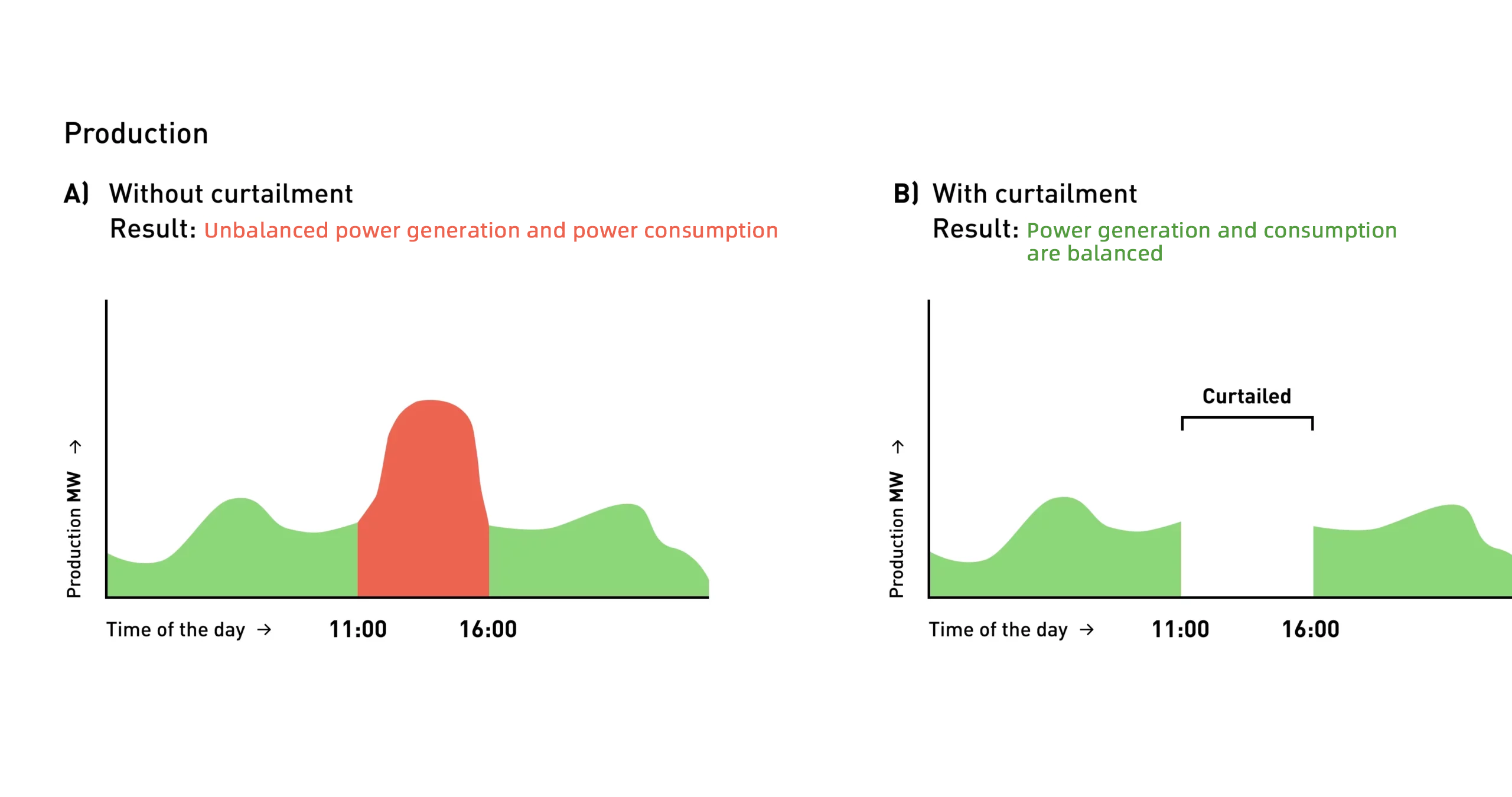
In the context of modern power systems, curtailment refers to a situation where available electricity—typically from renewable sources such as solar or wind—is deliberately reduced or not injected into the grid. This does not happen because the energy lacks value, but because the system cannot effectively accommodate it at that moment.
As more renewable capacity is installed worldwide, curtailment is no longer an occasional issue. In many regions, it has become a structural challenge that directly affects both grid operations and project economics.
Why Curtailment Happens (And Why It’s Becoming More Common)
Curtailment doesn’t come from a single cause. It tends to emerge from a combination of constraints that build up across the system.
The mismatch is often about timing, not capacity
Solar power peaks in the middle of the day. Wind can surge at night. Demand, however, follows its own rhythm—often rising in the morning, dipping midday, and climbing again in the evening.
That misalignment means that even if total daily generation looks balanced on paper, there are specific hours when supply simply exceeds what the grid needs. During those windows, excess generation has nowhere to go.
Physical grid limits still matter more than people expect
Even when demand exists somewhere else, electricity cannot always get there. Transmission lines have limits. Substations have constraints. Some regions with excellent renewable resources are geographically distant from load centers.
So what looks like “wasted energy” is often just energy that cannot be moved fast enough or far enough.
Stability requirements force conservative decisions.
Power systems are not just about energy—they are about stability. Frequency, voltage, and fault tolerance all have to stay within tight bounds.
When renewable penetration rises quickly, operators sometimes curtail generation simply to maintain system balance. It is a precaution, but a necessary one.
What Curtailment Actually Costs
Curtailment is often described as inefficiency, but that undersells the impact.
From a project developer’s perspective, curtailed energy is lost revenue. The asset is capable of producing electricity, but cannot monetize it.
From a system perspective, it is a sign that infrastructure is not keeping pace with generation. Investments have been made—but not fully utilized.
And at a broader level, curtailment slows down the transition to cleaner energy. Every megawatt-hour that gets curtailed is a megawatt-hour that could have displaced fossil generation somewhere else.
Where Energy Storage Starts to Change the Picture
Energy storage does not eliminate curtailment entirely, but it fundamentally changes how the system responds to it.
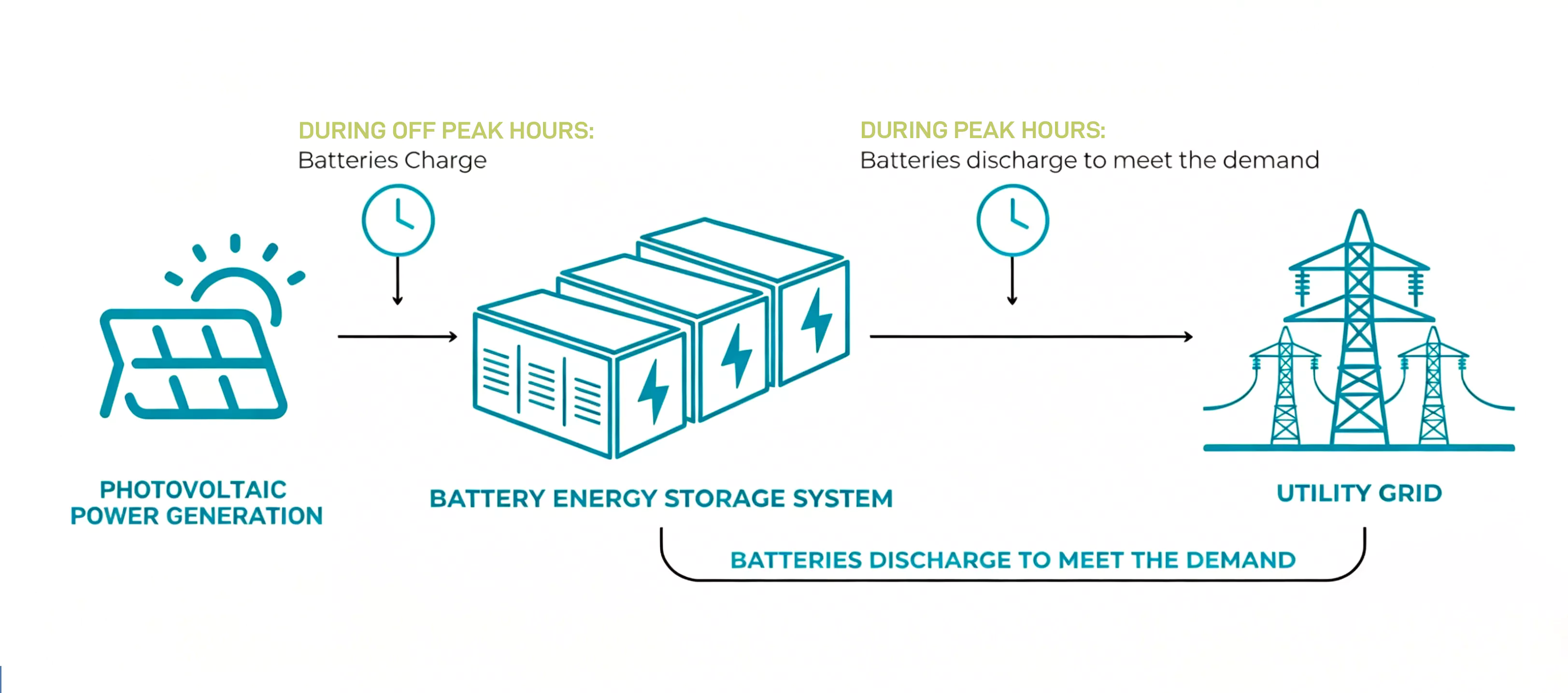
Instead of forcing generation to shut down, storage creates a buffer—absorbing excess energy when supply is high, and releasing it when demand catches up.
It turns surplus into something usable later
This is the most intuitive role. When solar output exceeds demand at noon, a battery system can store that energy and shift it into the evening peak.
What would have been curtailed becomes dispatched energy.
It reduces pressure on the grid, not just on generation
Storage placed strategically—especially near congested nodes—can relieve local bottlenecks. Instead of pushing all energy through limited transmission capacity, part of it is temporarily held and released later.
This does not replace grid expansion, but it buys time and flexibility.
It gives operators more control in real time
Unlike traditional generation, battery systems respond almost instantly. That speed matters when dealing with fluctuations that could otherwise trigger curtailment decisions.
In some cases, storage is not just absorbing excess energy—it is actively helping maintain frequency and voltage stability, which reduces the need for conservative curtailment.
A Subtle Shift: From Avoiding Curtailment to Using It
Interestingly, as storage becomes more common, curtailment itself starts to look different.
In some markets, a certain level of curtailment is no longer seen as purely negative. Instead, it becomes part of an optimized system where:
- renewable generation runs at high output
- excess energy is selectively curtailed or stored
- storage captures the most valuable portion
In other words, the goal is not always zero curtailment. The goal is economically efficient curtailment.
That is a more nuanced way of thinking about it—and one that reflects how real systems actually operate.
Why Storage Alone Isn’t the Full Answer
It would be tempting to frame energy storage as the complete solution, but that would be an oversimplification.
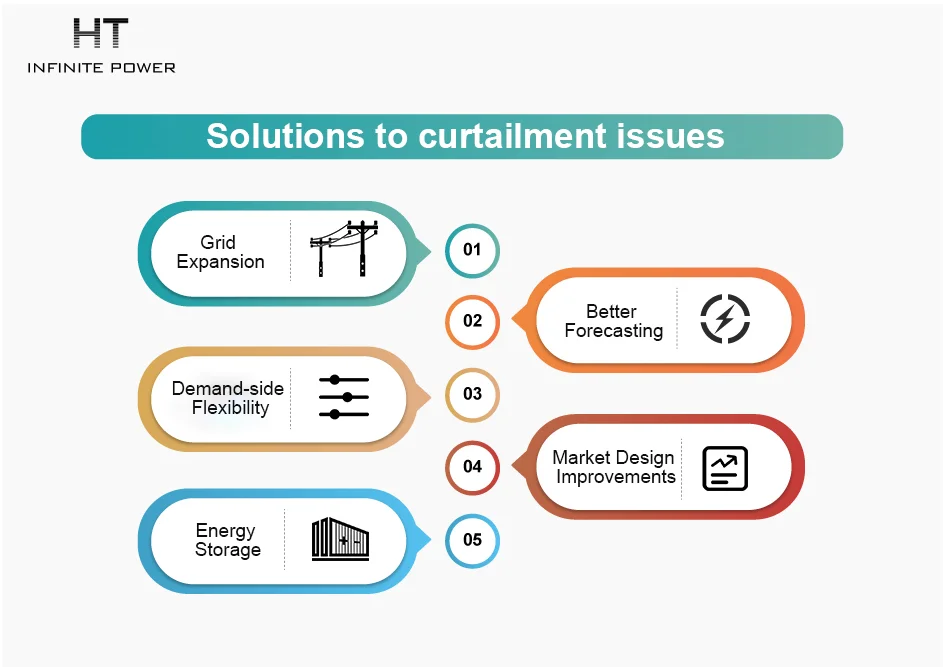
Curtailment is a system-level issue, and solving it fully usually involves a combination of:
- grid expansion
- better forecasting
- demand-side flexibility
- market design improvements
- energy storage
Storage plays a central role, but it works best when integrated into a broader strategy.
The Direction Things Are Moving
If you look across different energy markets, a pattern is emerging.
Regions with high renewable penetration are increasingly pairing new solar and wind projects with storage from the outset. Not as an add-on, but as part of the core design.
At the same time, grid operators are becoming more comfortable relying on fast-response assets, which further reduces the need for blunt curtailment measures.
Curtailment is not disappearing—but it is becoming more manageable, more predictable, and in some cases, more economically integrated.
Final Thought
Curtailment is often framed as waste, but it is more accurate to see it as a signal.
It tells you where the system is out of balance—where generation, demand, and infrastructure are no longer aligned.
Energy storage does not silence that signal. What it does is give the system a way to respond more intelligently.
And as the share of renewable energy continues to grow, that ability—to absorb, shift, and stabilize—becomes less of an optimization, and more of a necessity.
Solid-State Battery Electrolytes: Types and In-Situ Curing Technology Explained
What Is Dual Power Supply and Dual Circuit Supply in Energy Storage Systems?