What is a Solid-State Transformer (SST)?
2026-01-14

In traditional power systems, transformers have long been an almost invisible component. They operate quietly, reliably, and with a long lifespan, performing a single function—stepping voltage up or down. It is precisely this “stable but silent” characteristic that has allowed conventional grids to run efficiently for decades.
However, as the grid begins integrating more photovoltaic systems, energy storage, electric vehicles, and DC loads, new challenges emerge. The power system is no longer just about transmitting energy—it now requires scheduling, optimization, and active management of that energy. In this context, Solid-State Transformers (SSTs) have increasingly come into focus.
However, as the grid begins integrating more photovoltaic systems, energy storage, electric vehicles, and DC loads, new challenges emerge. The power system is no longer just about transmitting energy—it now requires scheduling, optimization, and active management of that energy. In this context, Solid-State Transformers (SSTs) have increasingly come into focus.
Traditional Power Transformers Are Becoming “Passive” in Today’s Grid
By design, traditional transformers are essentially passive electromagnetic devices. They transfer energy through the variation of power-frequency magnetic flux, with virtually no “control logic” between the input and output sides.
In a grid with stable loads and unidirectional power flow, this approach works perfectly. However, in modern distribution systems, loads fluctuate more rapidly, power can flow in both directions, and power quality requirements are significantly higher. Under these conditions, traditional transformers cannot actively participate in voltage regulation, harmonic suppression, or power factor control. As a result, additional power electronics devices are often required to “fill the gaps.”
As these auxiliary devices accumulate, the system’s complexity and losses begin to increase noticeably.

Solid-State Transformers Are Not “Just a More Advanced Transformer”—They Are a Power Electronics System
The core concept of a Solid-State Transformer (SST) is not to optimize a traditional transformer to its limits, but rather to perform voltage conversion in a completely different way.
In an SST, voltage conversion no longer relies on a power-frequency iron core. Instead, it is broken down into multiple controllable power electronic processes: AC-to-DC conversion, DC-to-high-frequency AC, high-frequency isolation, and finally conversion to the desired AC or DC output. Each stage is carefully managed by a control system.
From an engineering perspective, an SST is better understood as a highly integrated energy conversion platform rather than a single device. This is why in many technical references, it is also called a “power electronic transformer” or an “intelligent transformer.”
High Frequency and Power Electronics Break the “Size and Weight” Limitation of Transformers
The large size of traditional transformers is not primarily a matter of material choice; it stems from the fact that operating at power frequency requires magnetic components to be physically large in order to safely transfer energy.
Solid-State Transformers (SSTs) overcome this limitation by operating at high frequencies. High-frequency isolation transformers can be made much smaller, significantly increasing overall power density. This improvement is particularly valuable in space-constrained applications, such as urban distribution substations, rail transit equipment compartments, or containerized energy systems.
At the same time, the advantages of power electronics go beyond mere miniaturization—they enable precise control over energy flow. In many cases, this controllability is even more important than size reduction itself.

From “Voltage Conversion Only” to “Controllable Energy”: What SST Truly Changes
If one thinks of an SST merely as a “more efficient transformer,” its true value is being underestimated.
At the system level, a Solid-State Transformer can actively regulate its output voltage to respond to rapidly changing loads. It can improve power factor and suppress harmonics through advanced control strategies, and it can flexibly allocate energy between different ports, enabling simultaneous AC and DC power delivery.
This transforms the SST from being just a “pass-through” element in the grid into an intelligent energy node capable of decision-making. In systems with multiple coexisting energy sources, this capability often reduces the number of auxiliary devices required and simplifies the overall architecture.
Why Renewable Energy, Storage, and DC Loads Give SST Real-World Relevance
In the era of traditional AC grids, the transformer’s functions were simple and sufficient. However, with the rapid growth of renewable energy and energy storage, power systems increasingly feature a mix of AC and DC.
For example, in data centers or commercial and industrial parks that integrate photovoltaics, energy storage, and DC loads, conventional solutions often require multiple stages of voltage transformation, rectification, and inversion. An SST, on the other hand, can perform in a single device what would otherwise require several separate systems for energy conversion and control.
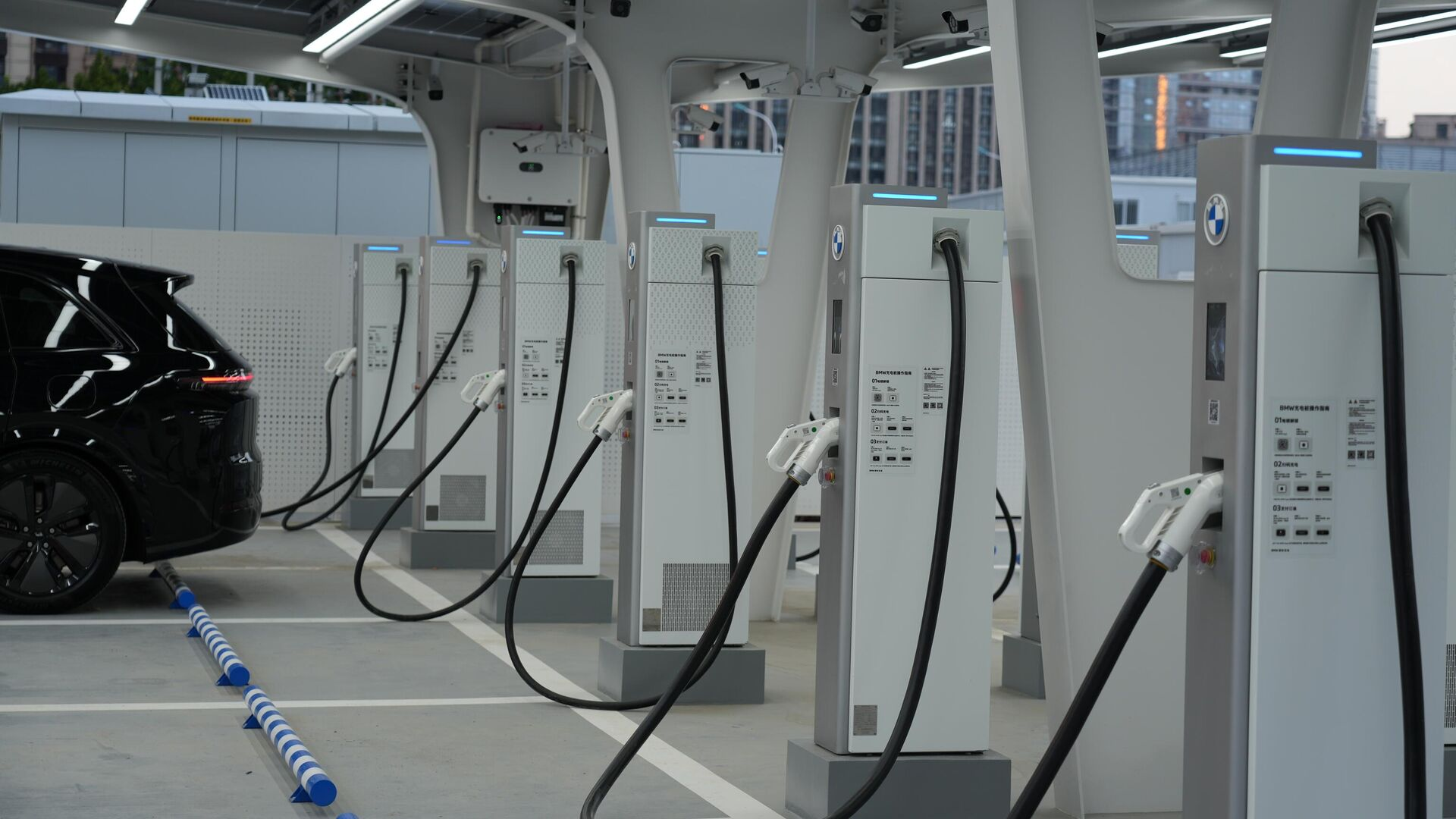
It is precisely this system-level integration capability that is moving Solid-State Transformers from “proof-of-concept” into practical engineering applications in data centers, EV charging stations, rail transit, and next-generation distribution networks.
Why Solid-State Transformers Are Unlikely to Fully Replace Traditional Solutions in the Short Term
Despite their promising prospects, SSTs do not come without costs.
Higher power density brings stricter thermal management requirements. The large number of power electronic components poses greater challenges for reliability and electromagnetic compatibility, and the control system is far more complex than that of a traditional transformer. These factors mean that SSTs still require time to catch up in terms of cost, maintenance, and accumulated engineering experience.
As a result, in the foreseeable future, SSTs are more likely to serve as a “complement” rather than a “replacement,” being prioritized for applications where energy efficiency, control, and system integration are critical.
Conclusion: What SST Truly Redefines Is the Concept of “Transformation” Itself
If traditional transformers represent an era of “stable, passive, and unidirectional” grids, Solid-State Transformers embody a future of “flexible, controllable, and multi-directional energy flow.”
SSTs are not a universal solution, but they are changing the way we perceive the role of transformers. From this perspective, their value may not lie in how many traditional devices they can replace, but in the new design possibilities they offer for the next generation of power systems.
Calcium-Based Batteries: The Next Generation of Low-Cost, High-Energy-Density Storage Technology
Lithium Battery Electrolytes: A Breakthrough to −110 °C in Extreme Cold