What is a solid-state battery?
2025-02-20

Solid-state batteries are a type of battery technology. Unlike the lithium-ion batteries and lithium-ion polymer batteries commonly used today, solid-state batteries are batteries that use solid electrodes and solid electrolytes.
In this article, we will introduce in detail the definition, working principle, advantages, and future development challenges of solid-state batteries.
Definition: Solid-state batteries refer to batteries that use solid electrodes and solid electrolytes instead of traditional liquid electrolytes. This battery technology has received widespread attention and research in recent years and is seen as an important technology that may replace the current mainstream lithium-ion batteries.
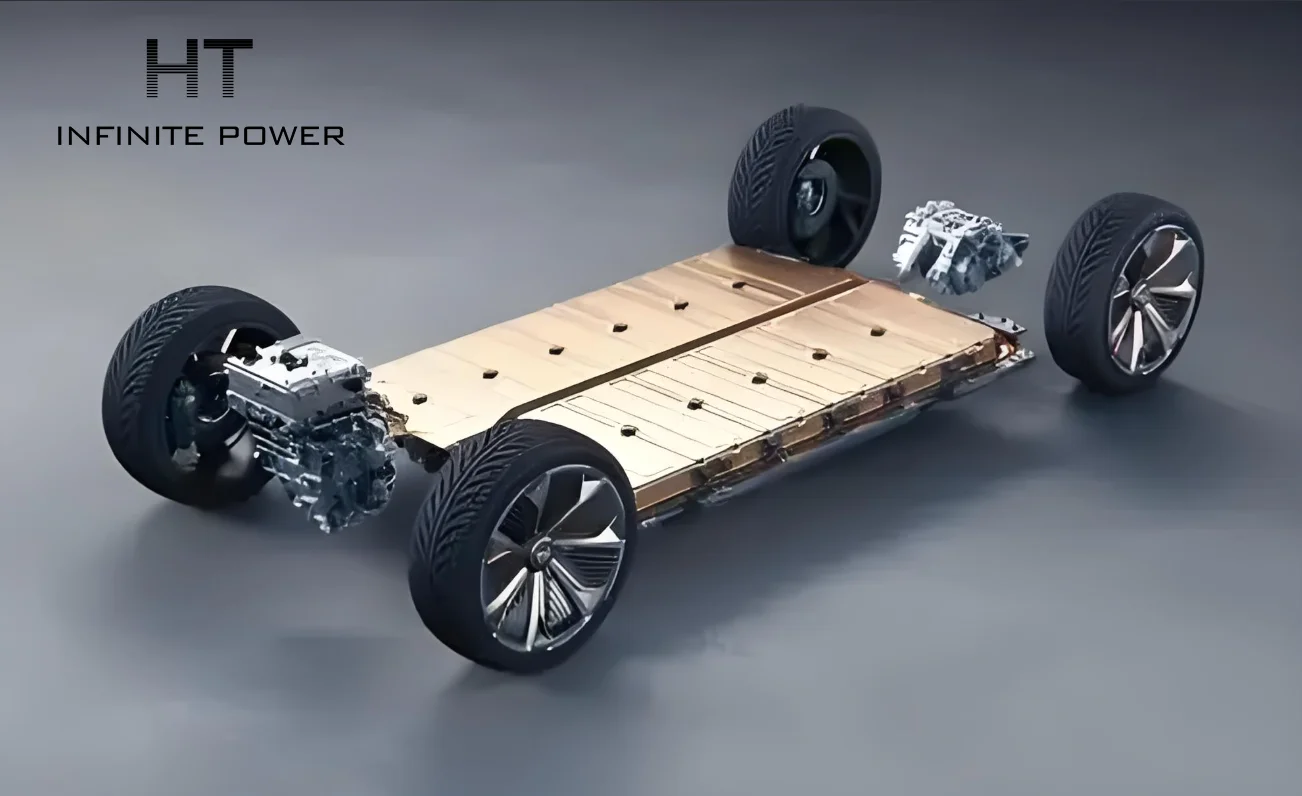
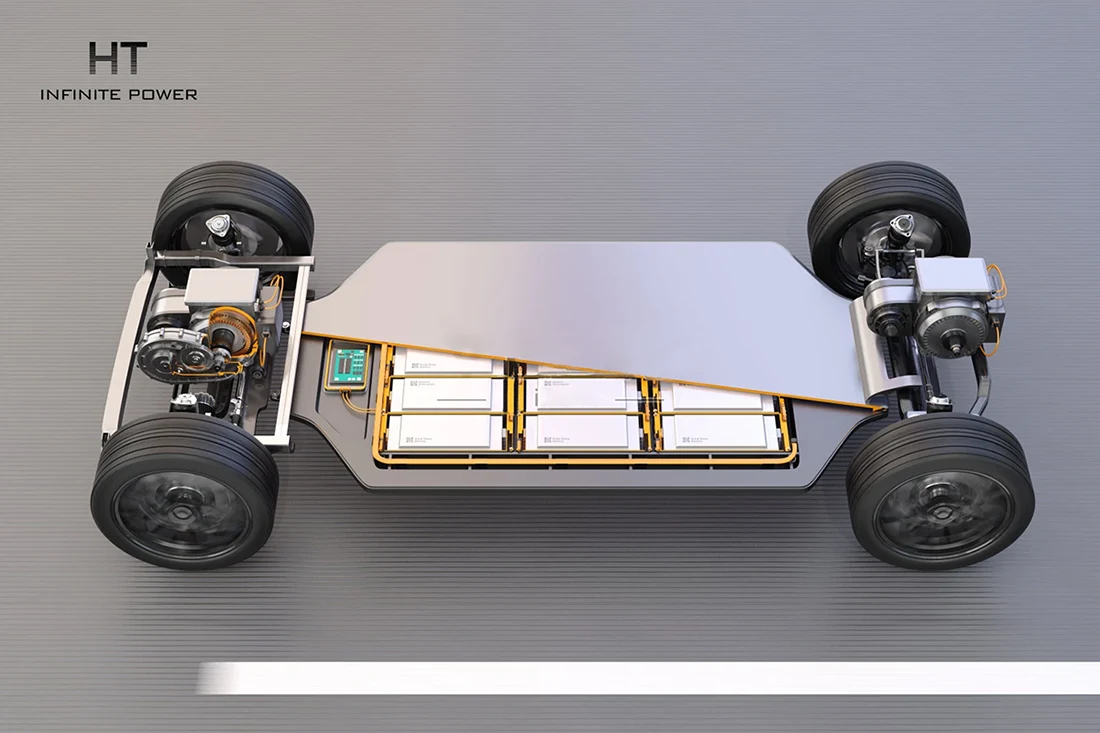
Solid-state batteries are batteries that use solid electrodes and solid electrolytes. Solid-state batteries generally have lower power density and higher energy density. Since solid-state batteries have a relatively high power-to-weight ratio, they are ideal batteries for electric vehicles.

Working principle of solid-state battery
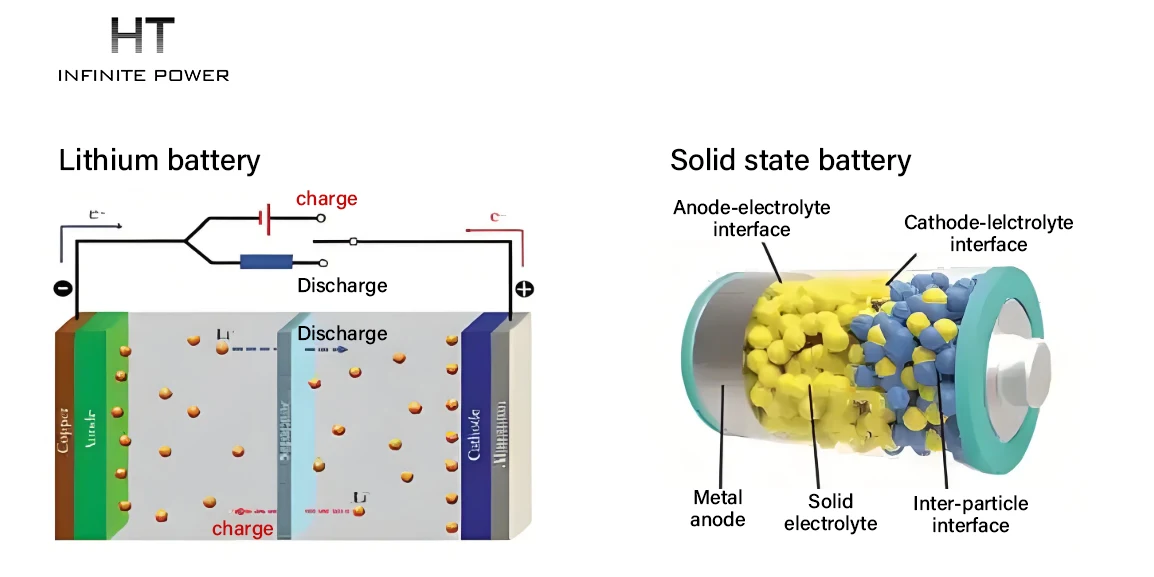
The traditional liquid lithium battery is also vividly called "rocking chair battery" by scientists. The two ends of the rocking chair are the positive and negative poles of the battery, and the electrolyte (liquid) is in the middle. Lithium ions are like excellent athletes, running back and forth at both ends of the rocking chair. In the process of lithium ions moving from the positive electrode to the negative electrode and then to the positive electrode, the battery charging and discharging process is completed.
The principle of solid-state battery is the same, except that its electrolyte is solid, and its density and structure can allow more charged ions to gather at one end, conduct greater current, and thus increase the battery capacity. Therefore, for the same amount of electricity, the volume of solid-state battery will become smaller. Not only that, since there is no electrolyte in solid-state battery, sealing will become easier. When used on large equipment such as automobiles, there is no need to add additional cooling pipes, electronic controls, etc., which not only saves costs, but also effectively reduces weight.
Advantages of solid-state batteries

Advantage 1
Light-high energy density. After using all-solid-state electrolytes, the applicable material system of lithium-ion batteries will also change. The core point is that it is not necessary to use lithium-embedded graphite negative electrodes, but directly use metallic lithium as negative electrodes, which can significantly reduce the amount of negative electrode materials used, making the energy density of the entire battery significantly improved.
Advantage 2
Thin-small volume. In traditional lithium-ion batteries, diaphragms and electrolytes are required, which together occupy nearly 40% of the volume and 25% of the mass of the battery. If they are replaced with solid electrolytes (mainly organic and inorganic ceramic materials), the distance between the positive and negative electrodes (traditionally filled with diaphragm electrolytes, now filled with solid electrolytes) can be shortened to even only a few to a dozen microns, so that the thickness of the battery can be greatly reduced-therefore, all-solid-state battery technology is the only way to miniaturize and thin-film batteries.
Advantage 3
The prospect of flexibility. Even brittle ceramic materials can often be bent after the thickness is reduced to less than millimeters, and the material will become flexible. Correspondingly, the flexibility of all-solid-state batteries will be significantly improved after being made thinner and lighter. By using appropriate packaging materials (not rigid shells), the manufactured batteries can withstand hundreds to thousands of bends without sacrificing performance.
Advantage 4
Safer.
Traditional lithium batteries may have the following dangers:
(1) Lithium dendrites may appear when working under high current, which may pierce the diaphragm and cause short circuit damage
(2) The electrolyte is an organic liquid, which has a tendency to produce side reactions, oxidative decomposition, gas generation, and combustion at high temperatures. The above two problems can be directly solved by using all-solid-state battery technology.
Reasons for developing solid-state batteries
The biggest limiting factor in the batteries we currently use is the liquid electrolyte, which is composed of organic solvents, lithium salts and some additives. It plays the role of transporting ions and conducting current. However, these organic solvents have poor solubility, corrosion and oxidation resistance. Its existence cannot solve the problem of lithium dendrites. Once crystallization occurs, it may pierce the diaphragm, and the positive and negative electrodes will come into direct contact, thus causing thermal runaway.

(a Whisker-like lithium dendrites b Mossy lithium dendrites c Dendrites of lithium d Spherical lithium dendrites)
In addition, the presence of electrolyte also limits the use of positive and negative electrode materials. The batteries we are currently using generally use graphite negative electrodes. You can understand it as a container. When lithium ions enter it, it is like a house that houses it. Because of the graphite as a framework constraint, the SEI (solid electrolyte interface) on the surface of the house becomes controllable. The theoretical limit of the energy density of the ternary battery we currently see is about 250-300wh/kg.
If all-solid-state medium is used instead of liquid, the separator can be completely eliminated, and there is no need to worry about the positive and negative electrodes directly contacting and short-circuiting, because the solid-state medium can completely physically block the positive and negative electrode materials, and the problem of lithium dendrites piercing the barrier can be basically solved, and the safety is more guaranteed. Therefore, solid-state batteries are safer and have a lower probability of thermal runaway.
In addition, the choice of positive and negative electrode materials is more diverse, and it can be compatible with high specific capacity positive and negative electrodes, greatly improving the battery capacity. For example, the negative electrode material can even be made of all-lithium: the "container" can be completely eliminated, because the solid medium will not react with metallic lithium, and more lithium can be held. In addition, it can inhibit the growth of lithium dendrites. Because it is a hard-to-hard interface, the negative electrode surface can be forcibly leveled, which is one of the reasons for its high energy density. In theory, the energy density of all-solid-state batteries can reach 500wh/kg, with smaller batteries and longer battery life.
Disadvantages and challenges of solid-state batteries

● Low technological maturity:
Solid-state battery technology as a whole is still in the research and development stage and has not yet fully matured.
● High manufacturing cost:
The current manufacturing cost of solid-state batteries is relatively high, which is mainly due to factors such as high technical difficulty and low production efficiency.
● Interface impedance problem:
The solid-solid contact between the solid electrolyte and the electrode material may lead to higher interface impedance, affecting the battery's charge and discharge performance.
● Electrolyte conductivity:
The conductivity of solid electrolytes is usually lower than that of liquid electrolytes, which limits the power density and fast charging capabilities of solid-state batteries.
Development of solid-state batteries
Since Sony introduced lithium-ion batteries containing liquid electrolytes into electronic devices in 1991, liquid lithium batteries have become one of the most mature and widely used technology routes.
In 2010, Toyota launched a solid-state battery with a range of more than 1,000 km. The efforts made by QuantumScape and Sakti3 are also trying to replace traditional liquid lithium batteries with solid-state batteries.
Canadian Avestor also tried to develop solid-state lithium batteries, and finally filed for bankruptcy in 2006. Avestor uses a polymer separator to replace the liquid electrolyte in the battery, but has not solved the safety problem. Several battery combustion or explosion incidents have occurred in North America.
In mid-March 2015, James Dyson, the inventor of the vacuum cleaner and founder of the British Dyson Company (Dyson), invested his first $15 million in the solid-state battery company Sakti3, a battery startup founded in 2007.
In January 2018, a breakthrough new battery technology seemed to be finally approaching reality. If it lives up to expectations, the new technology can meet the needs of mobile phone addicts for several days and can increase the driving range of electric vehicles to more than 500 miles (about 804 kilometers). This new technology is called solid-state battery technology, which replaces the liquid electrolyte in today's batteries with ceramic materials.
In January 2018, it formed an alliance with BMW, which has promised to provide some form of battery components for every product it produces in the next 10 years, whether it is a traditional hybrid, plug-in electric vehicle or pure electric vehicle (BEV).
On January 9, 2021, NIO released a new 150kWh solid-state battery pack. NIO electric vehicles equipped with this technology are expected to be delivered in the fourth quarter of 2022, and the range is expected to exceed 1,000 kilometers.
In June 2024, Japanese electronic components company TDK claimed that it had made a breakthrough in the materials of small solid-state batteries, which is expected to significantly improve the performance of small electronic devices such as wireless headphones and smart watches. The new battery offers an energy density (i.e. the amount of energy that can be compressed into a given space) of 1,000 watt-hours per liter (Wh/l), which is about 100 times higher than TDK's mass-produced batteries.
What Are Semi-Solid State Batteries and Their Difference from Solid-State?
How to use old batteries?