What Is a Battery Microgrid and What Are Its Key Benefits?
2024-11-04

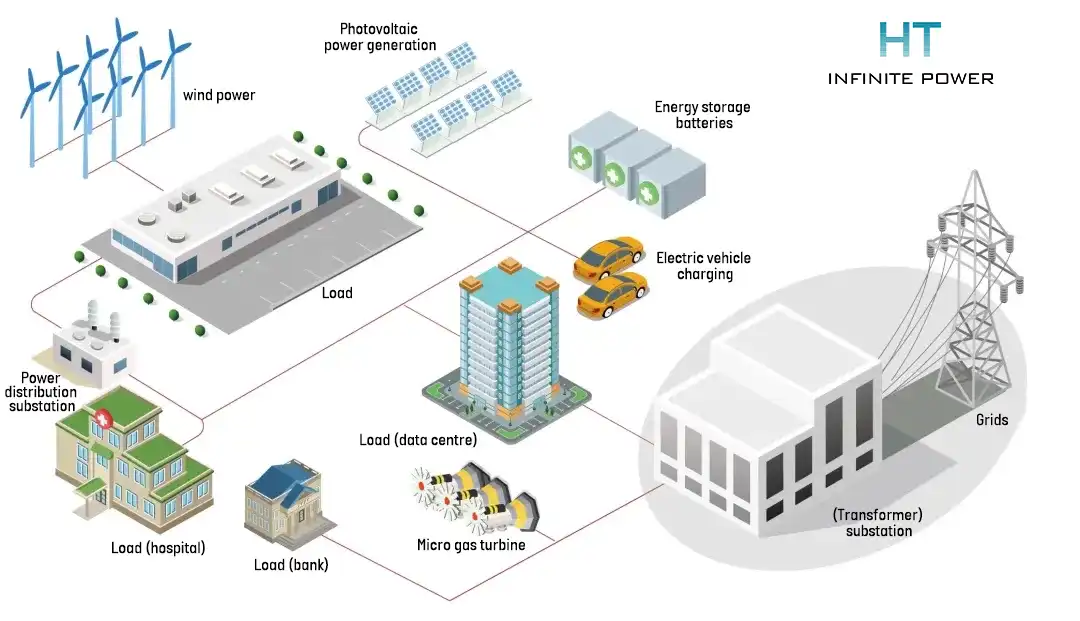
A battery microgrid refers to a small power system consisting of distributed power sources, such as photovoltaic power generation, wind power generation, power loads, energy storage (battery energy storage),substations, distribution stations and control systems.
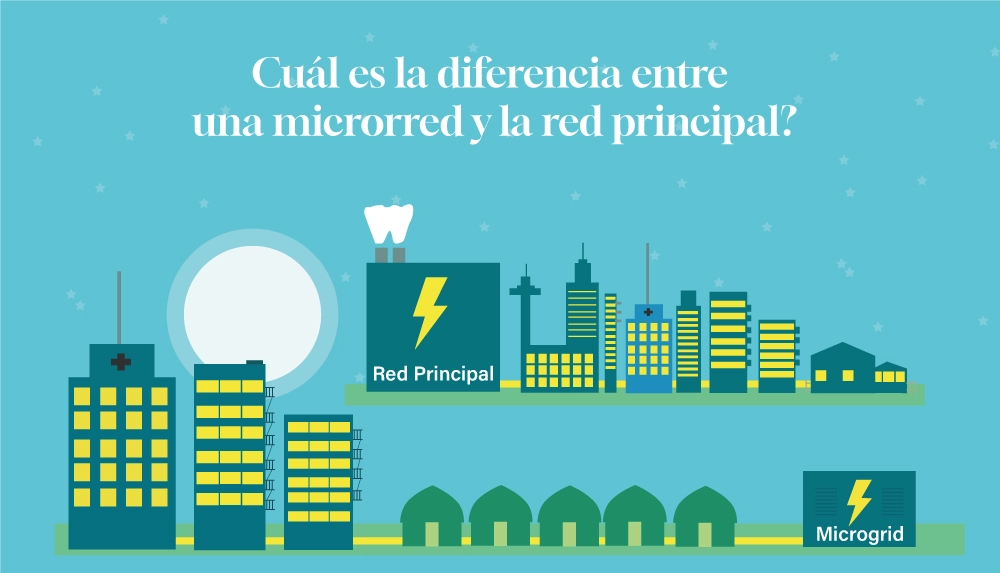
What is the difference between a battery microgrid and a large power grid?
A battery microgrid is not a "mini version of a large power grid"!
A battery microgrid is a concept relative to a traditional large power grid. Traditional large power grids are mainly one-way interactions, with electricity reaching users layer by layer from power plants through transmission lines. Battery microgrids are two-way interactive models that can generate electricity and balance on-site to maximize energy efficiency.

Battery microgrids are quite different from traditional large power grids in terms of function, structure and operation mode:
● Battery microgrids are mainly based on distributed power sources, and use energy storage systems and control devices to adjust to meet load demand.
● Battery microgrids support independent networking and operation. When a large power grid fails, they can quickly cut off the electrical connection with the large power grid and continue to supply power to important loads on their own.
● The planning and design of battery microgrids is mainly based on comprehensive energy consumption, resource distribution and existing network conditions to determine the optimal system construction plan to meet the economic, reliability and environmental protection requirements of electricity consumption.
Therefore, whether from the perspective of energy saving and environmental protection or cost reduction and efficiency improvement, battery microgrids provide new solutions.
What does a battery microgrid consist of and how does it work?
A battery microgrid consists of several key components that work together to produce, distribute, and regulate electricity. These components include:

(1). Power sources:
These are the generators or power plants that produce electricity. They can include renewable energy sources such as solar panels, wind turbines, and hydroelectric generators, as well as non-renewable energy sources such as diesel or natural gas generators.
(2). Energy storage systems:
These systems store excess electricity to meet the needs when demand exceeds supply. Common types of energy storage include batteries, flywheels, and thermal storage.
(3). Loads:
These are the entities that consume the electricity generated by the battery microgrid. They can include residences, commercial buildings, and industrial facilities.
(4). Infrastructure:
This is the network of power lines, substations, and transformers that deliver electricity from the power source pipeline to the load.
(5). Control systems:
These systems monitor and control the operation of the battery microgrid, including power generation and consumption. They maintain demand balance, manage interconnection with the main grid, and ensure the reliable operation of the battery microgrid.
Each component plays a vital role in the operation of a battery microgrid, and their optimization can significantly improve the efficiency, reliability, and sustainability of the battery microgrid.
Why build a battery microgrid when the traditional large-scale power grid construction technology is very mature?
Building a battery microgrid can effectively absorb new energy and solve the main problems of various distributed power sources when they are connected to the grid.
(1).Challenges of Renewable Energy for Grid Stability
Renewable energy generation such as solar energy and wind energy is highly intermittent and random, and is greatly affected by the environment. Voltage and frequency instability often occur, which can easily cause serious impacts on the large power grid. Existing research shows that connecting distributed power sources to the grid in the form of battery microgrids and supporting the large power grid is an effective way to give full play to the efficiency of distributed power sources.
(2).Benefits of Battery Microgrid Optimization
Battery microgrid optimization has many benefits. It can improve energy efficiency and save costs, because optimizing the operation of battery microgrids helps to minimize energy waste and reduce costs. It also enhances resilience and energy security, because optimized battery microgrids are more capable of withstanding grid disturbances and power outages and recovering. In addition, battery microgrid optimization supports environmental sustainability because it can increase the penetration of renewable energy, thereby reducing dependence on fossil fuels and reducing greenhouse gas emissions.
Battery microgrids and large power grids complement each other, especially in areas where large power grids are not covered, they can play a greater role to make up for the shortcomings of large power grids.
What are the functions of battery microgrids
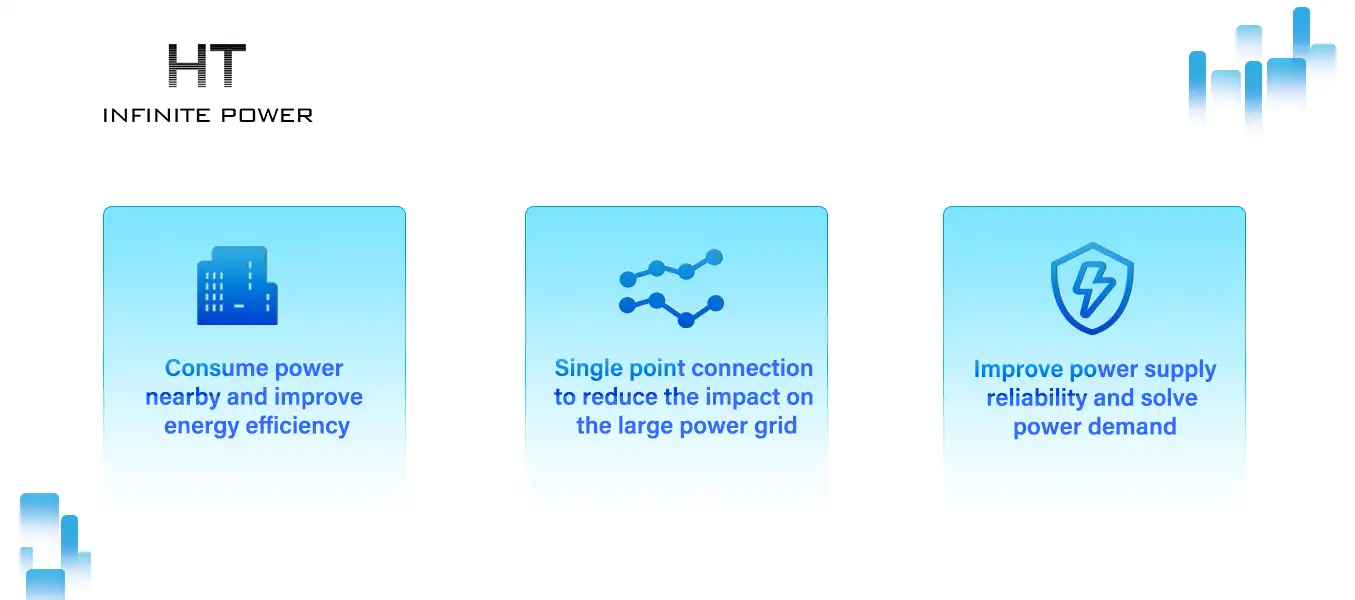
●Consume power nearby and improve energy efficiency.
The electricity inside the battery microgrid comes from distributed energy sources such as natural gas, photovoltaics and wind power. In general, the capacity of the battery microgrid is small, the power source is relatively dispersed and close to the load, which can realize the local consumption and local balance of distributed energy. At the same time, it can also exchange energy with the large power grid and assist each other.
●Single point connection to reduce the impact on the large power grid.
The power exchange between the battery microgrid and the power grid system is connected through the public connection point of the battery microgrid and the power grid system, avoiding the direct connection of multiple distributed power sources with the power grid system. The battery microgrid is mainly used for power supply within the region, and does not transmit or transmits very little power to the outside, and the impact on the power grid system can be ignored.
●Improve power supply reliability and solve power demand.
The battery microgrid adopts advanced control methods and a large number of power electronic devices to connect distributed power sources, energy storage devices, and controllable loads together, making it a controllable load for the power grid system, and can implement two operation modes: grid connection and independent operation, which fully maintains the safe and stable operation of the battery microgrid and the large power grid.
What are the categories of battery microgrids?
Macro classification: There are roughly two types of battery microgrids, namely independent and grid-connected.
1.Independent Battery Microgrid: A Self-Sustaining Power Supply Solution
Independent battery microgrid is a power supply method that can be built and operated independently, and has nothing to do with the external power grid. Independent battery microgrid can ensure the balance of power generation and power supply within the battery microgrid and achieve the stability of power supply within the grid.
2.Grid-Connected Battery Microgrid: Ensuring Power Stability During External Grid Failures
Grid-connected battery microgrid is connected to the external grid and operated together. When the external grid fails, it must be disconnected from the external grid at this time, so that the power supply and energy storage system in the grid can be controlled, so that the power supply of important power loads can be normal.
Micro-classification: There are five types of battery microgrids.
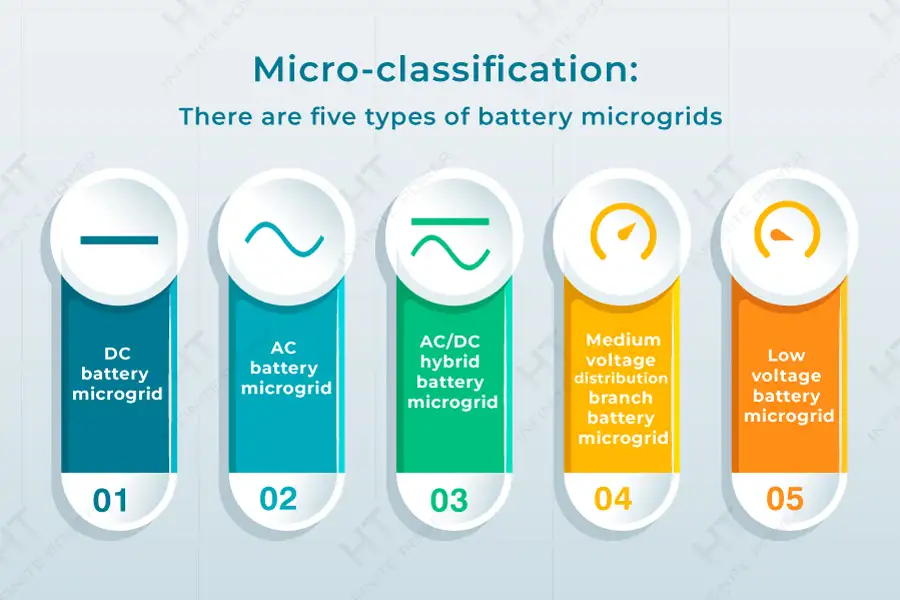
1. DC battery microgrid:
Distributed power sources, energy storage devices, loads, etc. are all connected to the DC bus, and the DC network is then connected to the external AC grid through a power electronic inverter. The DC battery microgrid can provide power to AC and DC loads of different voltage levels through power electronic conversion devices, and the fluctuations of distributed power sources and loads can be adjusted by the energy storage device on the DC side.
2. AC battery microgrid:
Distributed power sources, energy storage devices, etc. are all connected to the AC bus through power electronic devices. At present, AC battery microgrids are still the main form of battery microgrids. By controlling the switch at the PCC, the conversion between grid-connected operation and island mode of battery microgrids can be realized.
3. AC/DC hybrid battery microgrid:
Contains both AC bus and DC bus, and can directly supply power to AC loads and DC loads.
4. Medium-voltage distribution branch battery microgrid:
A battery microgrid that effectively integrates distributed power sources and loads based on medium-voltage distribution branches. It is suitable for supplying power to medium-capacity, high power supply reliability requirements, and relatively concentrated user areas.
5. Low-voltage battery microgrid:
A battery microgrid formed by appropriately integrating the user's distributed power sources and loads at a low voltage level. This type of battery microgrid is mostly owned by electricity or energy users and is relatively small in scale.
In what scenarios can battery microgrids be applied?
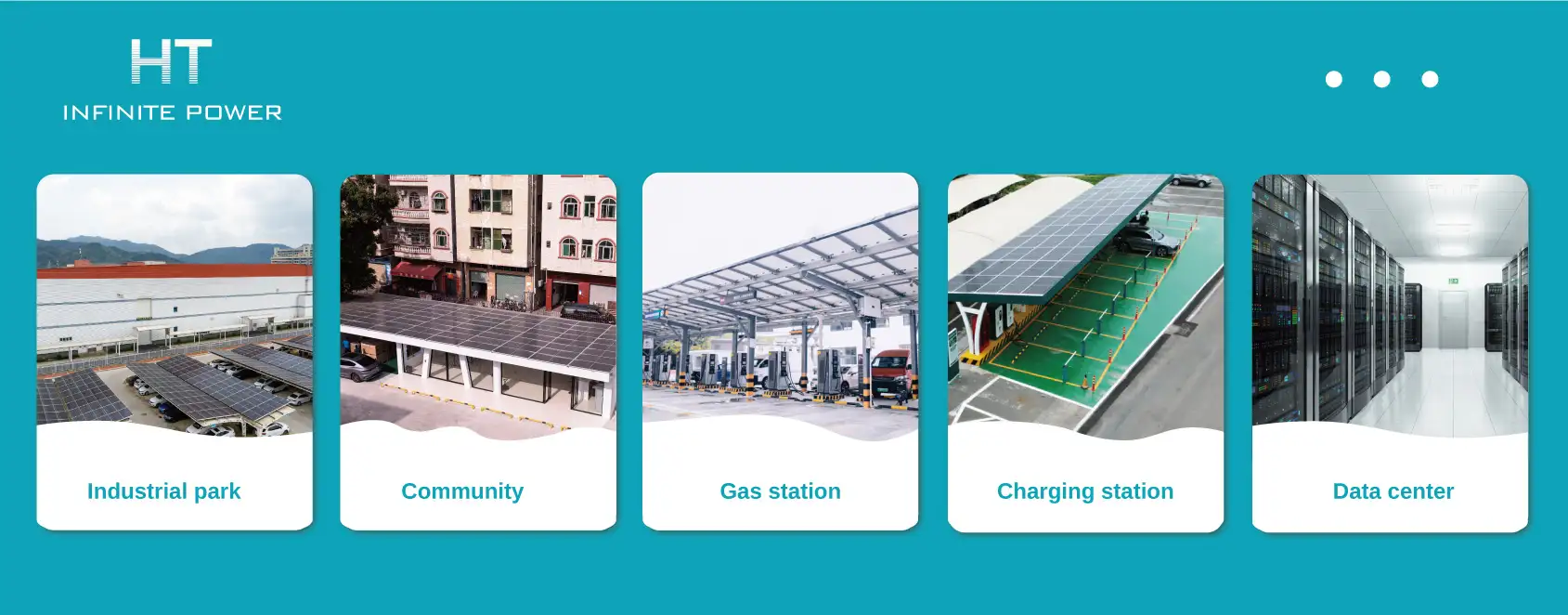
At present, battery microgrids are mainly grid-connected and have a variety of expressions. Each expression name actually corresponds to an operating scenario, such as "source-grid-load-storage integration", "photovoltaic storage-charging (discharge/inspection)", "photovoltaic storage-number", "zero-carbon industrial park", etc.; but the essence remains the same. In essence, they are all based on a relatively closed park/community/compound/gas station/charging station/data center, combined with the power load level of the scenario, the surrounding new energy development conditions and the power grid conditions, through the construction of new distributed new energy, new energy storage, power electronic equipment and other devices, a stable and reliable regional comprehensive smart energy management system is formed.
Conclusion:
Recently, the demand for clean and sustainable energy has been increasing, and battery microgrids have emerged as a promising solution. A battery microgrid is a small power system that can operate independently or in conjunction with the main power source, enabling local production of energy. Battery microgrids can be optimized to maximize efficiency and reduce costs, while also providing greater energy security and resilience.
How to size a pv energy storage system?
What is a commercial solar energy system and its advantages?