Types of solar panels and power generation efficiency analysis
2025-01-11
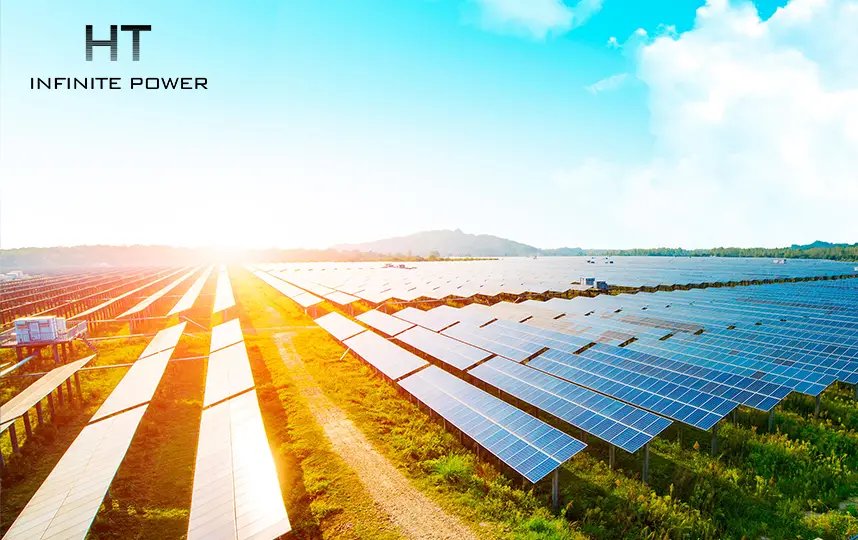
There are several different types of solar panels due to the different materials and manufacturing processes that make up the panels.
Photovoltaic modules, also known as solar panels, are the most important components in solar power generation systems. A complete photovoltaic module is composed of dozens of solar cells, junction boxes and frames. Since single solar cells cannot be used directly as power sources, if you want to use them as power sources, you must connect several single cells in series or parallel and tightly package them into modules.
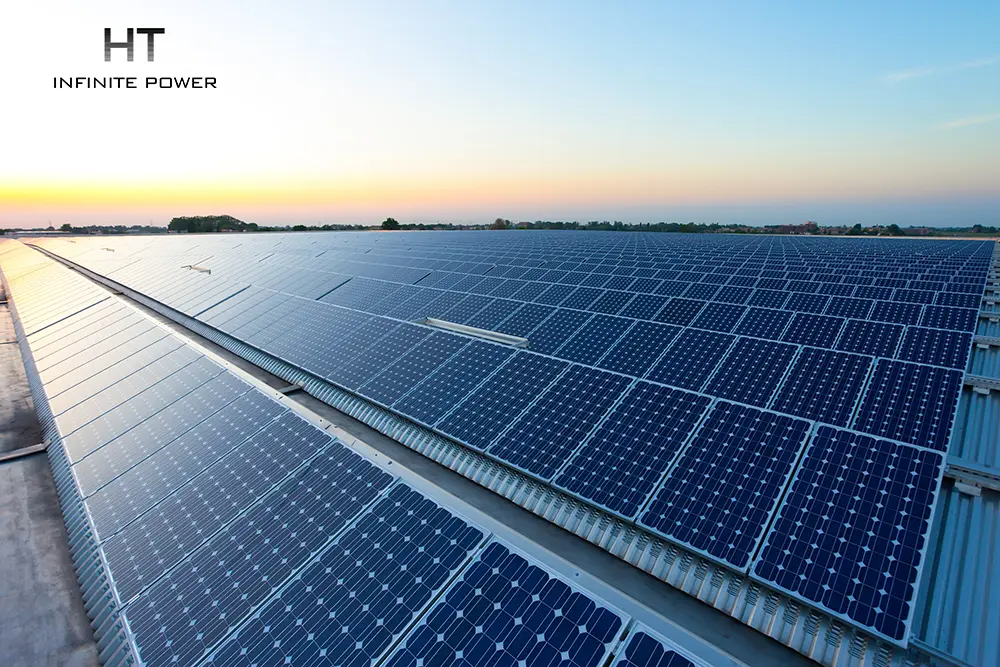
In this article, we will introduce the working principles and power generation efficiency comparison of several different types of solar panels.
The principle of solar power generation is that sunlight shines on the semiconductor p-n junction of the photovoltaic cell, forming new hole-electron pairs. Under the action of the p-n junction electric field, holes flow from the p region to the n region, and electrons flow from the n region to the p region. When the circuit is connected, current is formed. Its function is to convert solar energy into electrical energy and send it to the battery for storage, or to drive the load to work.
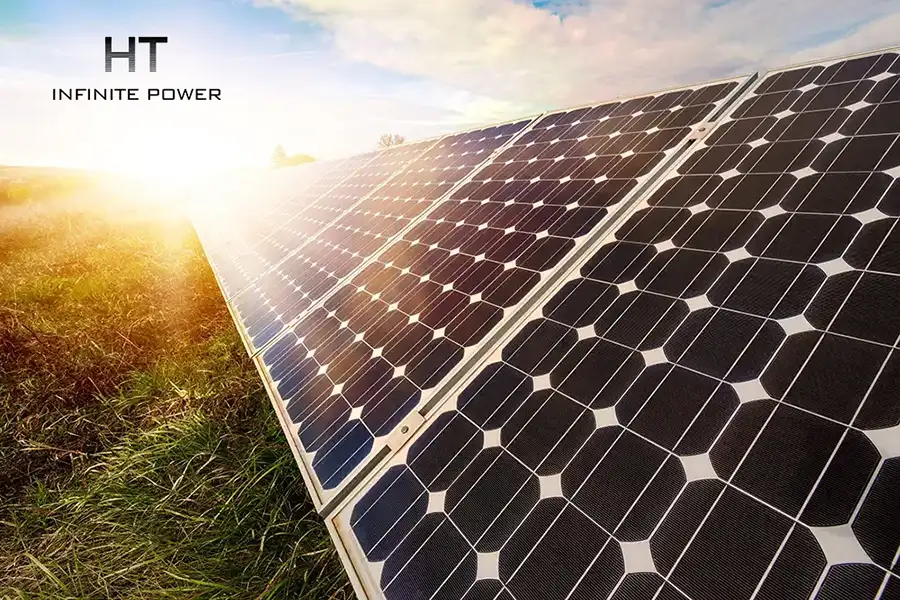
Three different types of solar panel technology
1.Crystalline silicon solar cell technology
There are differences between single crystal silicon and polycrystalline silicon. The advantage is that the photoelectric conversion rate is higher, the conversion rate can reach more than 21%, and the disadvantage is that the price is relatively expensive. Crystalline silicon solar cell technology is the mainstream technology in the current market.
2.Thin-film solar cell technology
The advantages of thin-film solar cell technology are low material usage and low selling price. However, its major disadvantage is that its photoelectric conversion rate is only half of that of crystalline silicon, and its conversion efficiency is only 6%-10%, so its market share has always been very low.
3.New solar cell technology
New solar cell technology has the advantages of high conversion rate and low cost. Perovskite photovoltaic cells are a new type of solar cell product that is expected to be mass-produced the fastest. The theoretical efficiency limit of single-junction perovskite cells can reach 33%, which is higher than crystalline silicon cells and thin-film cells. However, the biggest disadvantage of perovskite photovoltaic cells is that the efficiency decay is relatively serious. Before the efficiency decay technology is solved, it will not be used on a large scale.
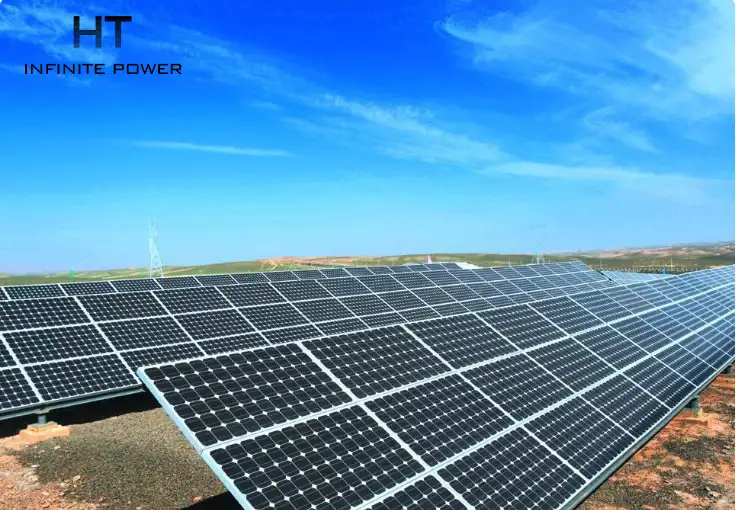
Solar Panels: Polycrystalline and Monocrystalline Silicon
According to the different materials, solar panels can be divided into two different types of solar panels: polycrystalline silicon and monocrystalline silicon.
1. Polycrystalline silicon photovoltaic modules
Photovoltaic modules made from polycrystalline silicon wafers. Polycrystalline silicon is manufactured using polycrystalline silicon block materials using an ingot casting process (square silicon ingots).
2. Monocrystalline silicon photovoltaic modules
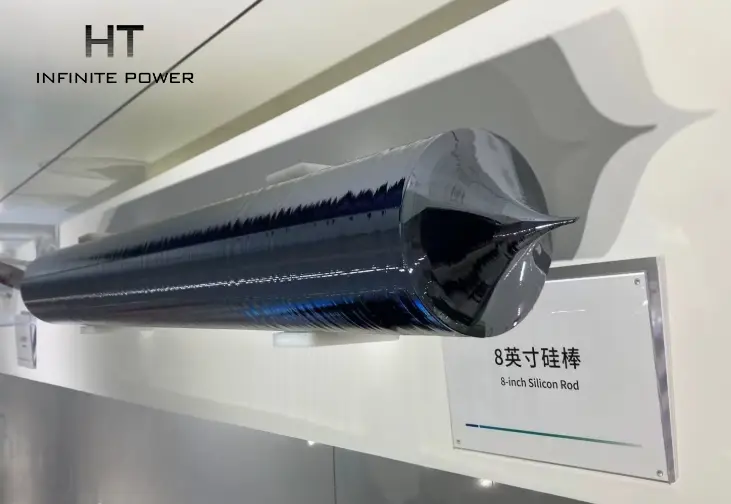
Photovoltaic modules made from monocrystalline silicon wafers. Monocrystalline silicon is manufactured using polycrystalline silicon block materials using the rod drawing process (round silicon rods).
There are two types of solar panels: P-type and N-type
1.P-type photovoltaic modules
Photovoltaic modules assembled with P-type solar cells. P-type solar cells are silicon wafers that have been infiltrated with the trivalent element "boron" during the cell doping process, and the element "gallium" can also be added. The conversion rate of P-type photovoltaic modules that have been mass-produced in 2023 is about 21.1% to 21.5%.
2. N-type photovoltaic modules
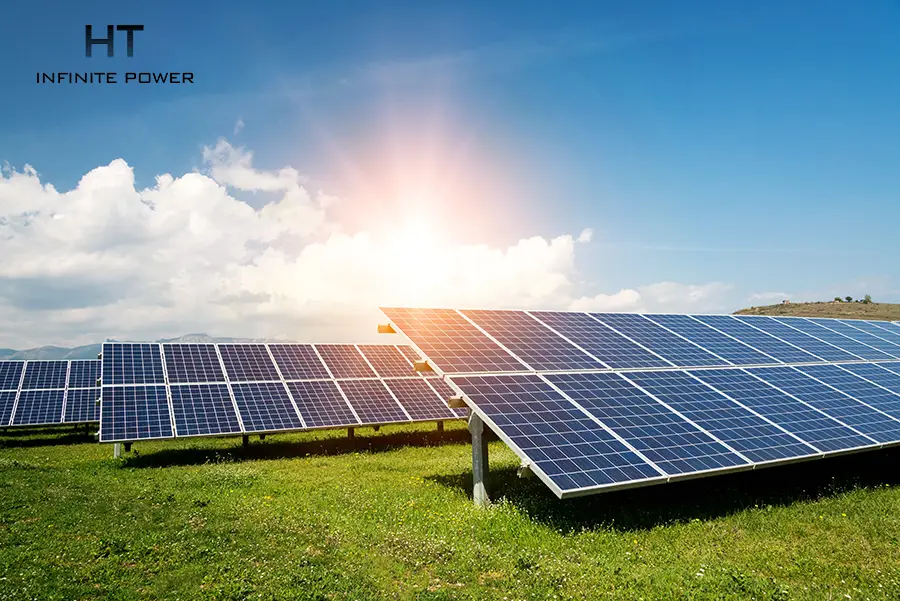
Photovoltaic modules assembled with N-type solar cells. N-type solar cells are silicon wafers that have been infiltrated with the pentavalent element "phosphorus" during the cell doping process, and the element "arsenic" can also be added. N-type cells have been mass-produced in 2023, and the conversion rate of photovoltaic modules is about 22.1% to 22.5%.
Types of solar panels with different structural processes
1. Half-cell structure process
A cell is cut into two pieces and then assembled into a photovoltaic module.
2. Shingled structure process
Cut a solar cell into five to six long strips, and then use conductive glue to overlap the edges of multiple small solar cells to assemble into a photovoltaic module.
3. Flexible module technology
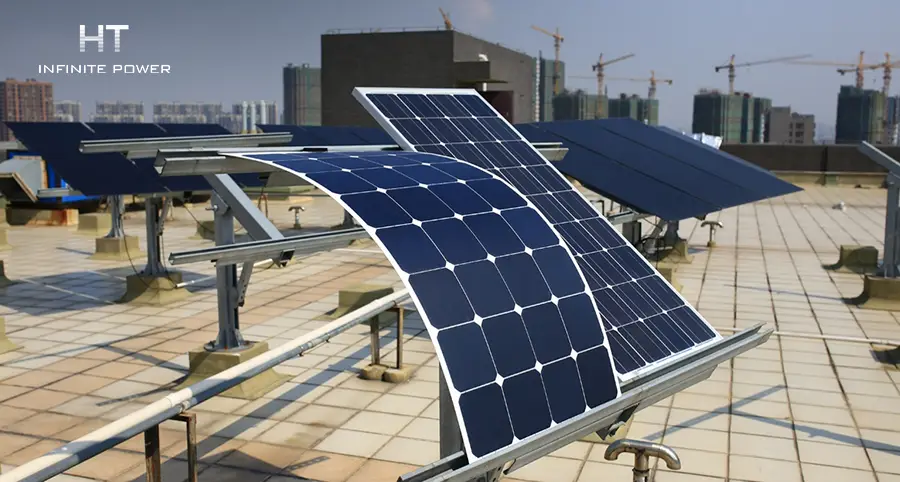
Flexible modules are also called lightweight modules. Photovoltaic modules can be folded, which is particularly suitable for installation on curved roofs. One solution is to use flexible panels instead of glass panels based on the shingled photovoltaic module technology. Another solution is to use thin-film batteries to make flexible photovoltaic modules.
Different types of solar panel cell size classification
(I) Introduction to 182-size and 210-size cells
1.182 photovoltaic module lineup manufacturers:
Photovoltaic modules with a single cell size of 182 (182mm*182mm).
2. 210 PV module lineup manufacturers:
That is, PV modules with a single cell size of 210 (210mm*210mm).
(II) Rectangular photovoltaic module size and cell introduction
1. Rectangular photovoltaic module size:
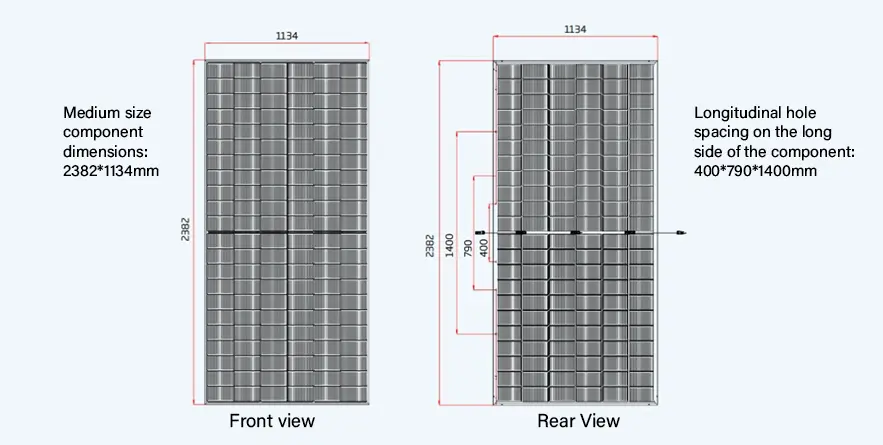
On July 7, 2023, 9 photovoltaic module manufacturers reached a consensus to unify the rectangular photovoltaic module size to 2382mm*1134mm.
2. Rectangular solar cell size:
On August 8, 2023, 6 photovoltaic module manufacturers reached a consensus to unify the rectangular solar cell size to 182.2mm*191.6mm.
Comparison of technical routes of P-type photovoltaic modules and N-type photovoltaic modules
(I) Technical route of P-type cell
1.BSF
BSF technology is aluminum back field battery, aluminum back field passivation technology, with a conversion efficiency of less than 20%. In 2015, it was the mainstream battery technology in the photovoltaic industry and occupied 90% of the market. Due to the low conversion rate, it is now basically eliminated.
2.PERC
PERC technology is emitter passivation and back contact technology. The conversion efficiency is about 23%. It is the mainstream technology now and has the highest market share. Basically, most P-type photovoltaic modules use PERC technology, with an actual conversion rate of more than 21%. In 2020, PERC cells accounted for more than 85% of the global market, and currently bifacial PERC is the main one.
(II) N-type cell technology route
1. IBC full back electrode contact cell
IBC cell conversion efficiency has been steadily increasing year by year, the average conversion efficiency of cell mass production is 24.5%, and the upper limit of theoretical conversion efficiency is 26.2%.
2.HJT heterojunction cell
HJT heterojunction cell, intrinsic thin film heterojunction cell technology, the basic principle is to use crystalline silicon solar cells as the base layer, and then superimpose thin film solar technology. The large classification still belongs to the N-type component technology route. There are two types of heterojunction cells, HJT and HIT. The average conversion efficiency of cell mass production is 24.73%, and the upper limit of theoretical conversion efficiency is 27.5%.
3. TNC passivated contact cell
TNC passivated contact cell the current mass production conversion efficiency of TNC cell has exceeded 25.1%
4.TOPCon oxide layer passivated contact cell technology
TOPCon oxide layer passivated contact cell technology, the highest mass production efficiency exceeds 25%, and the upper limit of theoretical conversion efficiency is 28.7%.
(III) Which one has better development prospects, P-type or N-type photovoltaic modules?
1.N-type Photovoltaic modules
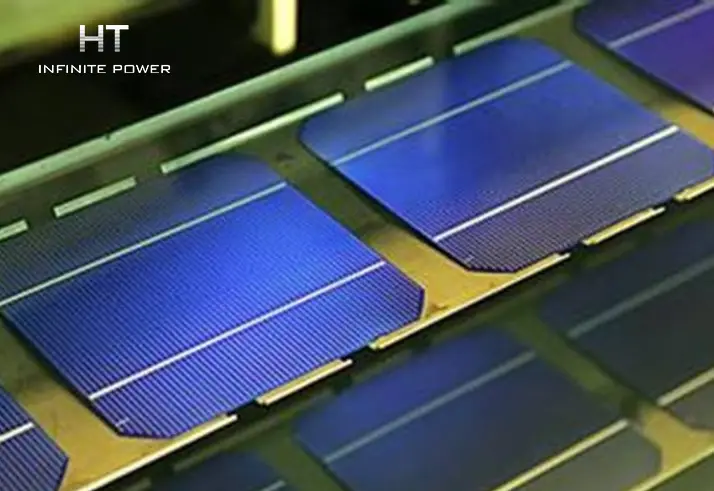
The theoretical limit efficiency of N-type TOPCon cells is 28.7%, and the conversion rate of mass-produced N-type photovoltaic modules in the market is about 22.1% to 22.5%. There is still a lot of room for improvement in subsequent technologies.
2.P-type Photovoltaic modules
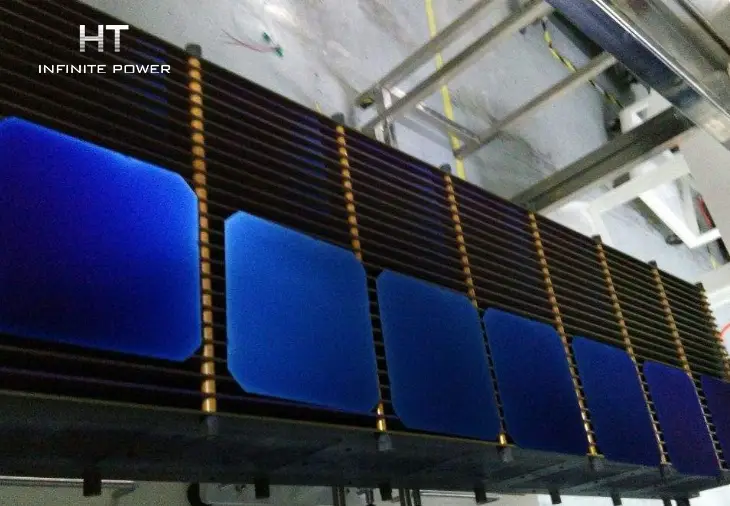
The theoretical limit efficiency of P-type PERC cells is 24.5%, and the conversion rate of mass-produced P-type photovoltaic modules is about 21.1% to 21.5%. The technical development space is close to the bottleneck, and there is very little room for subsequent technical improvement.
According to the latest investment and technology trends of various cell manufacturers, P-type basically only specializes in PERC technology, while N-type has four or five cell technologies in progress. Although the output of N-type photovoltaic modules is low and the price is high, in the long run, the market share of N-type will exceed that of P-type photovoltaic modules. It is expected that N-type photovoltaic modules will become the mainstream photovoltaic module products after 2025.
New direction: Modular industrial and commercial energy storage system
Introduction to the most comprehensive energy storage solutions