Solid-State Battery Electrolytes: Types and In-Situ Curing Technology Explained
2026-04-22
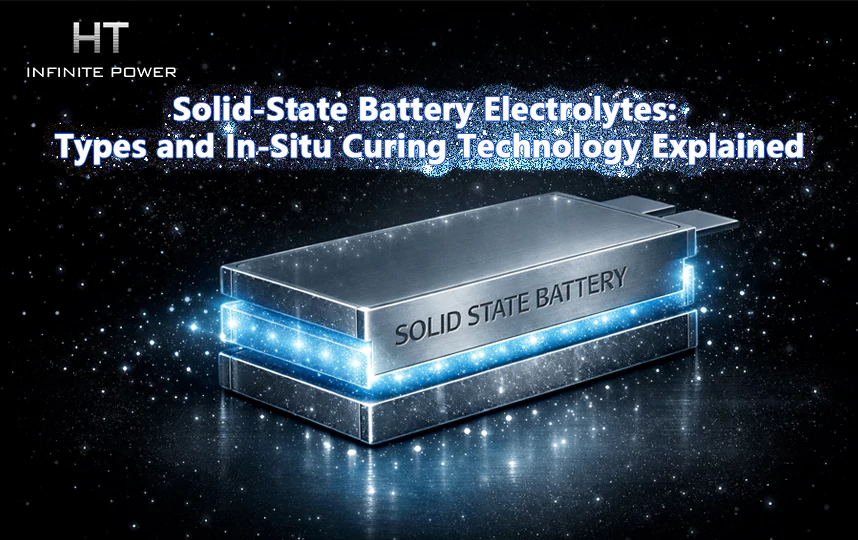
Solid-state batteries are often described as the next major step in battery technology, and that description is not just marketing language. The reason is straightforward: replacing the traditional liquid electrolyte with a solid one can improve safety, expand design possibilities, and potentially unlock higher energy density. For industries that depend on reliable energy storage, that combination is extremely attractive.
But solid-state batteries are not simply a better version of today’s lithium-ion cells. They introduce a different set of engineering challenges. The most important one is also the least visible: the interface. In a liquid battery, the electrolyte naturally wets the electrode surfaces and fills the internal space. In a solid-state battery, the electrolyte and electrodes must maintain stable solid-solid contact. That sounds like a small detail, but it changes everything about ion transport, mechanical stress, and long-term cycling stability.
This is why electrolyte selection matters so much. In solid-state battery design, the electrolyte is not just a medium for ion movement. It is a structural, electrochemical, and manufacturing decision all at once. The choice of electrolyte often determines whether a battery is merely promising in a lab or actually realistic for commercial production.
Why Solid-State Batteries Are Getting So Much Attention
The appeal of solid-state batteries comes from a few very practical advantages. First, they reduce the flammability risk associated with liquid electrolytes. Second, they offer a path toward higher energy density, especially when paired with lithium metal anodes. Third, they may deliver longer cycle life under the right conditions.
That combination has made them one of the most closely watched battery technologies in the world. Automakers, energy storage companies, and battery developers are all looking at them because current liquid-electrolyte systems have real limitations. Safety, thermal behavior, and energy density all eventually run into trade-offs. Solid-state batteries are trying to move beyond those trade-offs rather than simply balancing them differently.
At the same time, commercial progress has been slower than the headlines sometimes suggest. The main reason is that solid electrolytes do not behave like liquids. They do not naturally flow into every pore, they do not self-adjust to surface roughness, and they do not forgive poor manufacturing as easily. That is why the field is still defined by interface engineering, process control, and material selection rather than by one single “breakthrough” material.
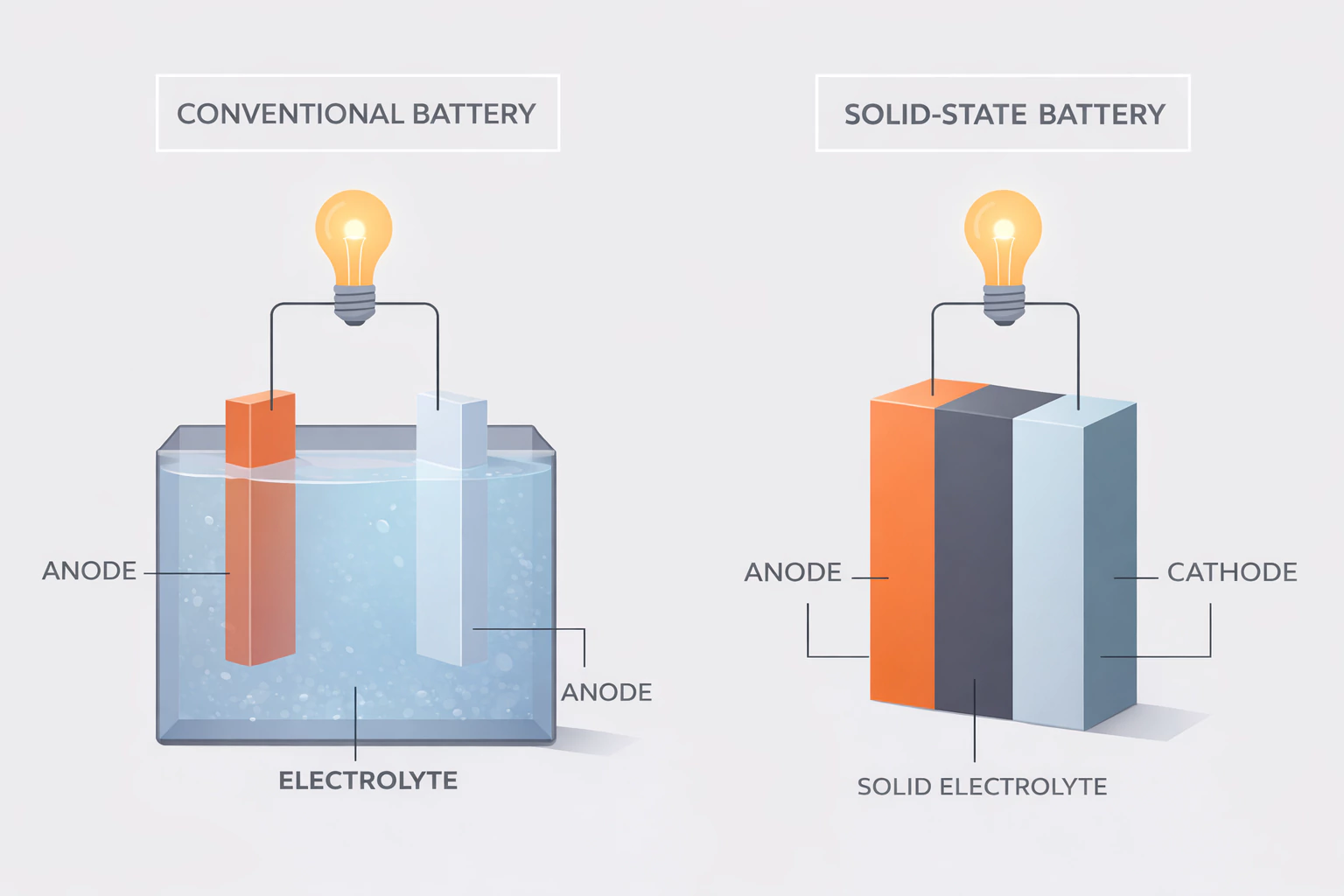
The Main Types of Solid-State Electrolytes
Solid-state electrolytes are usually grouped into three broad families: sulfide electrolytes, oxide electrolytes, and polymer electrolytes. Each family brings a different set of strengths and weaknesses, and in practice, each one points toward a different commercial path.
Sulfide electrolytes: high performance with real handling challenges

Sulfide electrolytes are among the most exciting candidates for high-performance solid-state batteries. Their ionic conductivity can be extremely high, in some cases approaching that of liquid electrolytes. That makes them very attractive for fast charging, high power delivery, and next-generation battery architectures that aim for high energy density.
They also have a mechanical advantage. Compared with some rigid ceramic systems, sulfide electrolytes can offer better contact with electrodes, which helps reduce interfacial resistance. That is important because even a highly conductive electrolyte is not very useful if the interface blocks the ions before they reach the electrode.
The downside is chemical sensitivity. Sulfide materials are often sensitive to moisture and oxygen, and in the presence of water they may generate hydrogen sulfide gas. That creates obvious safety concerns, but it also complicates production. Manufacturing often has to take place in highly controlled, dry environments, which raises cost and complexity. On top of that, sulfides can react with electrode materials and form resistive interfacial layers, which gradually erodes performance.
So sulfides are promising, but they come with a manufacturing discipline requirement that is much stricter than many conventional battery materials.
Oxide electrolytes: stable, safe, and mechanically demanding
Oxide electrolytes are almost the opposite of sulfides in some ways. They are generally more chemically stable, less reactive, and more resistant to heat. That makes them attractive from a safety perspective. They are also nonflammable, which is a major advantage in applications where thermal stability matters.
Their compatibility with many existing cathode materials is another reason they remain important. From a system design perspective, oxides feel more familiar and more robust. They often fit better into existing safety thinking and may align more naturally with certain manufacturing approaches.
The challenge is mechanical. Oxide electrolytes tend to be brittle, and brittleness creates contact problems. Solid-solid interfaces are already hard to manage, and when the electrolyte itself is rigid, maintaining intimate contact under cycling becomes even harder. Engineers often have to use high pressure, complex composite structures, or specialized processing steps to improve the interface.
That makes oxide systems attractive in theory but demanding in practice. They are stable, yes. They are also less forgiving than liquid systems when the electrode-electrolyte interface is not carefully designed.
Polymer electrolytes: easier to process, harder to push to high performance
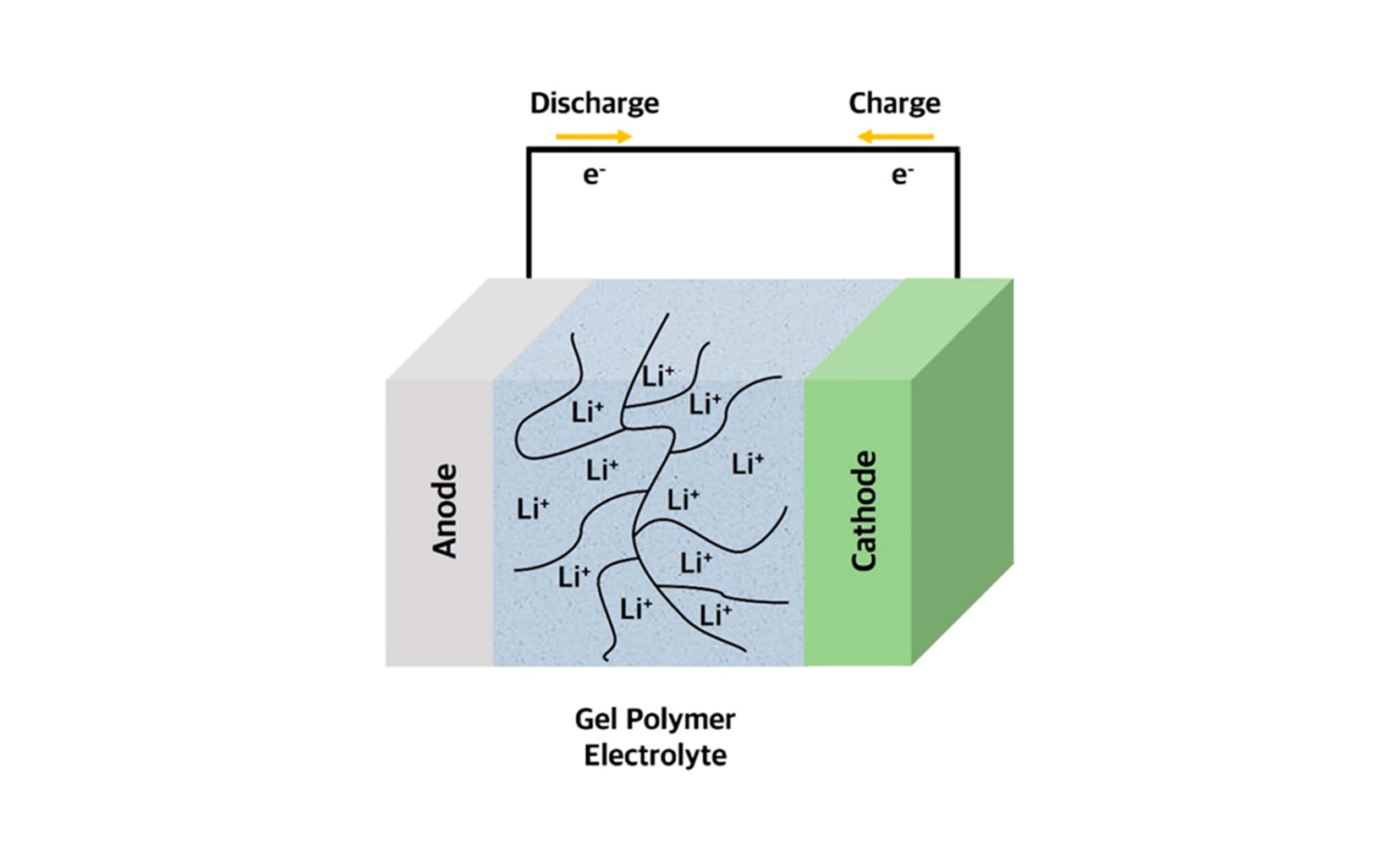
Polymer electrolytes occupy a more flexible and process-friendly space. They are easier to manufacture, can often be cast or coated using familiar methods, and may be better suited to complex geometries or flexible battery formats. In some cases, they can even help improve contact with the electrode because they can flow or infiltrate before solidifying.
That makes polymers especially interesting from a production standpoint. They can reduce some of the mechanical headaches associated with rigid solid electrolytes.
But polymers come with performance limits. Ionic conductivity at room temperature is usually lower than in the best sulfide systems, and many polymer electrolytes need elevated temperature to operate well. That makes them less suitable for demanding automotive or room-temperature high-performance applications unless they are combined with other materials in composite systems.
Their voltage window is also often narrower than that of other electrolyte families. That limits which cathode materials they can pair with effectively. As a result, polymer electrolytes are often discussed not as the final answer, but as part of a composite or hybrid approach.
Why the Interface Is Still the Real Battleground
The more time you spend looking at solid-state battery development, the more obvious one thing becomes: the real bottleneck is not just the electrolyte material itself. It is the interface between electrolyte and electrode.
In a liquid battery, the electrolyte naturally fills the available space and wets the active materials. In a solid-state battery, there is no such convenience. Any microscopic gap, surface roughness, or mismatch in expansion behavior becomes a resistance point. That resistance slows ion movement, reduces power performance, and can shorten cycle life.
This is why engineers spend so much time on interfacial engineering. A material can look excellent in bulk measurements and still underperform badly once assembled into a full cell. That is not because the material is bad. It is because the battery is a system, and the system depends on contact quality as much as on material properties.
This interface problem is also what makes some electrolyte types more commercially viable than others in the near term. The best material on paper is not always the best material in a production line.
What Is In-Situ Curing Electrolyte Technology?
In-situ curing is one of the most practical ideas in the solid-state battery field because it tries to solve the interface problem at the moment the battery is assembled.
The basic idea is simple. Instead of inserting a pre-made rigid solid electrolyte into the battery, a liquid or semi-liquid precursor is introduced during assembly. Then, after the cell is assembled, the precursor is cured or polymerized inside the battery itself. That is why the method is called “in-situ” curing — the solid electrolyte is formed inside the cell rather than outside it.
This matters because the precursor can flow into small gaps, coat electrode surfaces, and create better contact before it solidifies. In practice, that means the battery has a much better chance of avoiding the voids and poor contact zones that often weaken conventional solid-state designs.
Why in-situ curing is different from simply “making a solid electrolyte”
The distinction sounds subtle, but it is important. A pre-made solid electrolyte has already taken its final shape before it enters the battery. That makes assembly harder because the battery has to fit the electrolyte, not the other way around.
In-situ curing flips that logic. The precursor conforms to the internal structure first, then hardens in place. That reduces mismatch and gives the electrolyte a much closer relationship with the electrodes.
In-situ curing flips that logic. The precursor conforms to the internal structure first, then hardens in place. That reduces mismatch and gives the electrolyte a much closer relationship with the electrodes.
For battery engineers, that is not just a convenience. It can be the difference between a high-resistance cell and a workable one.
How the process works
The process usually starts with a liquid precursor that contains monomers, lithium salts, and initiators or cross-linking agents. This precursor is injected into the cell during assembly, where it spreads through the electrode structure and fills the available space.
Then a trigger is applied. That trigger may be heat, ultraviolet light, or a chemical reaction. Under the right conditions, the precursor polymerizes or cross-links and becomes a solid electrolyte network inside the cell.
The end result is a battery that begins with the benefits of a liquid-like filling process and ends with a solid electrolyte structure. That is why the method is so appealing. It tries to capture the manufacturability of liquid systems while preserving some of the safety and interface advantages of solid systems.
Why In-Situ Curing Is So Important for Commercialization
The industrial value of in-situ curing goes beyond interface improvement. It also helps make solid-state battery manufacturing more realistic.
Traditional all-solid-state battery production can require very demanding process conditions. Pressing, sintering, and strict dry-room handling all add cost and complexity. In-situ curing can reduce some of that burden by allowing manufacturing steps that are closer to conventional liquid-battery processes, while still moving toward a solid-state architecture.
That does not mean the process is trivial. It still requires careful formulation, thermal control, and compatibility with electrode materials. But compared with some fully dry, high-pressure solid-state processes, it can be much easier to integrate into existing production logic.
This is especially relevant for companies trying to bridge the gap between laboratory development and mass production. A method that reduces process shock is often more valuable than a method that looks perfect on paper but is nearly impossible to scale.
Compatibility with more battery designs
Another advantage of in-situ curing is design flexibility. Because the electrolyte precursor is introduced in liquid form, it can adapt to more complicated internal geometries. That makes it attractive for advanced electrode structures, flexible battery formats, or composite battery designs that would be difficult to fill with rigid electrolyte sheets.
In that sense, in-situ curing is not only a materials innovation. It is also a manufacturing strategy.
Where the Technology Is Heading
The future of solid-state batteries is unlikely to be dominated by one single electrolyte type. A more realistic path is that different materials will serve different roles.
Sulfide systems may continue to lead in aggressive high-performance roadmaps. Oxide systems may remain attractive where safety and thermal stability are critical. Polymer-based and in-situ cured systems may serve as the more practical bridge toward commercial deployment, especially where manufacturability matters as much as absolute performance.
That layered evolution makes sense. Battery technology rarely advances by replacing one answer with a perfect new one. More often, it advances by finding a better compromise between performance, cost, and manufacturability.
That is exactly what is happening here. Solid-state batteries are not just about making a battery safer. They are about designing a battery that can actually be built, scaled, and used in the real world.
Conclusion
Solid-state batteries represent a major shift in battery thinking, but the shift is not just about replacing a liquid electrolyte with a solid one. It is about solving the interface problem, the processing problem, and the scale-up problem at the same time.
Sulfide electrolytes offer high conductivity but come with handling and stability challenges. Oxide electrolytes offer stability and safety but are mechanically difficult to integrate. Polymer electrolytes offer process flexibility but may not deliver the full performance needed for every application. In-situ curing electrolyte technology sits in the middle of those trade-offs and may be one of the most practical ways to improve interface contact and support scalable manufacturing.

In the end, the future of solid-state batteries will not depend only on material discovery. It will depend on whether those materials can be made to work together inside a battery that is safe, efficient, and manufacturable at scale.
FAQ
What are the main types of solid-state battery electrolytes?
The three main types are sulfide electrolytes, oxide electrolytes, and polymer electrolytes.
The three main types are sulfide electrolytes, oxide electrolytes, and polymer electrolytes.
Why are solid-state batteries considered safer?
They replace flammable liquid electrolytes with solid materials, reducing leakage and thermal runaway risk.
They replace flammable liquid electrolytes with solid materials, reducing leakage and thermal runaway risk.
What is the biggest challenge in solid-state batteries?
The solid-solid interface between the electrolyte and the electrode, which can create resistance and reduce performance.
The solid-solid interface between the electrolyte and the electrode, which can create resistance and reduce performance.
What is in-situ curing electrolyte technology?
It is a process in which a liquid precursor is introduced into the battery and then cured inside the cell to form a solid electrolyte.
It is a process in which a liquid precursor is introduced into the battery and then cured inside the cell to form a solid electrolyte.
Why is in-situ curing useful?
It improves contact between the electrolyte and electrodes, reduces interface resistance, and can make manufacturing more practical.
It improves contact between the electrolyte and electrodes, reduces interface resistance, and can make manufacturing more practical.
Sodium-Ion Batteries: Key Advantages, Limits, and Where They Fit Best
What Is Curtailment and How Can Energy Storage Solve It?