Sodium-Ion Batteries: Key Advantages, Limits, and Where They Fit Best
2026-04-24
As lithium prices fluctuated and supply risks became harder to ignore, sodium-ion batteries have moved from the margins to the center of industry attention.They are becoming a serious commercial option because they solve a problem that the battery industry has lived with for a long time: dependence on lithium. That dependence has never been only about chemistry. It has also been about cost, supply chain pressure, and the uneven distribution of resources. Sodium-ion batteries do not eliminate every limitation in battery technology, but they do change the equation in a meaningful way.
What makes sodium-ion technology worth paying attention to is not one single breakthrough. It is the combination of several practical advantages. Sodium is abundant. Sodium-based materials can be manufactured in ways that look familiar to the existing lithium-ion industry. The batteries perform unusually well in cold weather. And from a safety perspective, they have several natural advantages that make them easier to handle in certain applications.
At the same time, sodium-ion batteries are not a replacement for every lithium-ion battery on the market. Their lower energy density still matters, especially in applications where space and weight are critical. So the real story is not about one chemistry replacing another. It is about sodium-ion batteries finding the places where they make the most sense.
The strongest advantage is cost
If sodium-ion batteries are going to grow, cost is the first reason. Not “low cost” in a vague marketing sense, but a structural cost advantage that comes from the periodic table itself.
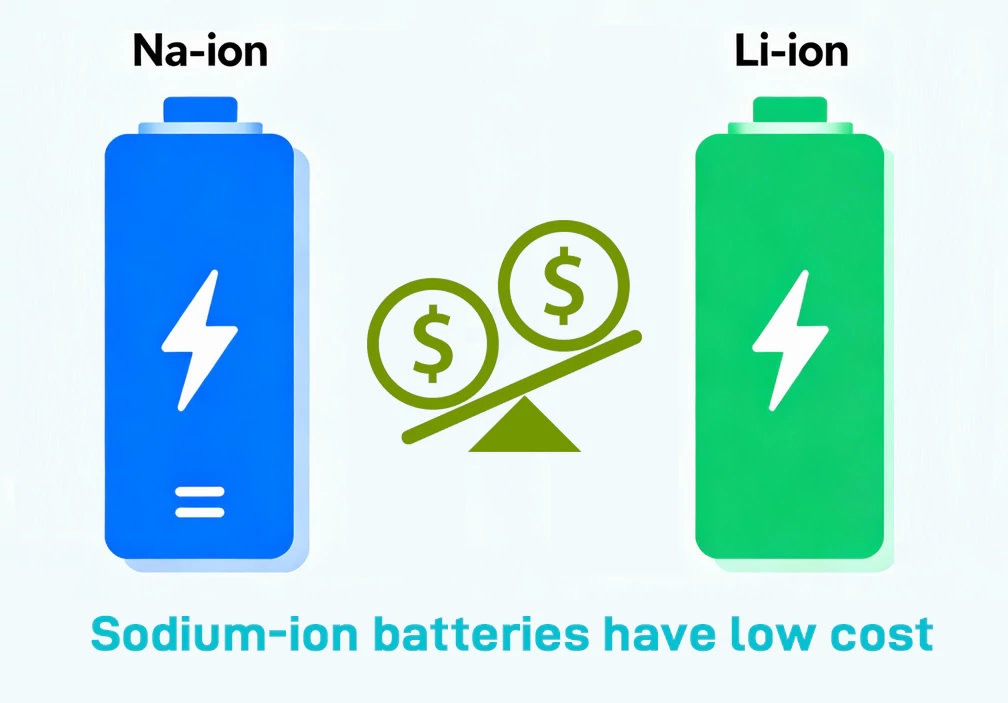
Sodium is far more abundant than lithium. In practical terms, that means it is easier to source, easier to distribute, and less exposed to the geopolitical pressure that often affects lithium pricing. Lithium supply is concentrated in a limited number of regions and is sensitive to mining output, refining capacity, and international trade conditions. Sodium does not face the same bottlenecks. It is widely available in salt lakes, seawater, and mineral deposits around the world. That makes its supply chain more stable and, in many cases, more predictable.
This matters more than people sometimes realize. Battery pricing is not determined only by factory efficiency. It is also shaped by raw material volatility. A chemistry that depends less on scarce materials has an immediate advantage in long-term planning.
There is also a more concrete manufacturing benefit. Sodium-ion batteries are structurally similar to lithium-ion batteries, which means existing production lines can often be adapted rather than rebuilt from scratch. That alone lowers the barrier to commercialization. But the bigger surprise lies in the current collector material.
In many sodium-ion battery designs, aluminum foil can be used for both the positive and negative current collectors. That is not possible in the same way for lithium-ion batteries, which typically require copper on the anode side because lithium can alloy with aluminum. Copper is more expensive than aluminum, so removing that requirement creates a direct manufacturing cost benefit. It also simplifies supply chain management, which is increasingly important in mass production.
Put those factors together, and the cost case becomes clear. As production scales and the supply chain matures, industry forecasts generally expect sodium-ion material costs to come in 30% to 40% below lithium iron phosphate in suitable applications. Some projections suggest sodium-ion cell prices may fall below USB 0.051 per Wh by the end of 2026. That kind of movement would not just make sodium-ion batteries cheaper; it would make them competitive in markets where cost is the deciding factor.
Cold weather is where sodium-ion batteries really stand out
For many battery chemistries, winter is the enemy. Performance drops, internal resistance rises, and the battery simply cannot deliver the same output it could in milder temperatures. This has been a well-known pain point for electric vehicles in northern regions, especially where users expect stable range and reliable charging behavior in freezing conditions.

Sodium-ion batteries are notably better in this environment.
The reason is not magic. It comes from the properties of sodium ions themselves. Their larger size and different solvation behavior help them move more easily in certain low-temperature conditions. That gives sodium-ion batteries a wider operating temperature range than many conventional lithium-ion systems. In practical terms, they tend to handle cold weather more gracefully.
Some industrial and automotive tests have shown strong retention of usable capacity even in extreme low temperatures, including conditions around -40°C and below. More importantly, the discharge power remains relatively strong when the temperature falls. That is critical, because a battery is not only judged by how much energy it stores, but by whether it can actually deliver that energy when needed.
This is where sodium-ion batteries become especially interesting for real-world users. A battery that still performs well in a cold climate is not just a technical curiosity. It can be the difference between a vehicle that feels reliable in winter and one that feels compromised. For northern markets, that is a serious commercial advantage.
Safety is another natural strength
Battery safety is not a side issue. It is one of the main reasons why battery chemistry matters in the first place. In this area, sodium-ion batteries also have a meaningful advantage.
Because sodium-ion cells often have relatively higher internal resistance than some lithium-ion systems, they may produce less instantaneous current during abnormal conditions such as short circuits. That does not make them immune to failure, of course, but it can reduce the intensity of thermal events and lower the risk of runaway behavior in certain scenarios.
Safety tests reported by several manufacturers have also shown encouraging results under abusive conditions such as nail penetration and compression. These are harsh tests, and they matter because they simulate the kind of damage that real batteries may face in transportation or misuse scenarios.
There is also a practical storage and logistics benefit that often gets overlooked. Because aluminum can be used more broadly in sodium-ion designs, batteries can sometimes be discharged to 0V more safely for storage and transport, which reduces risk in warehousing and shipping. That may not sound dramatic, but for a commercial supply chain, it matters a great deal.
In other words, sodium-ion batteries are not only cost-competitive and cold-weather friendly. They also offer a safety profile that fits well with large-scale deployment.
The trade-off is energy density
No battery technology gets to keep every advantage. Sodium-ion batteries are no exception.
The main limitation is energy density. Sodium is heavier than lithium, and sodium ions are larger. That means the theoretical energy density of sodium-ion chemistry is lower from the start. Even as the technology improves, it is still difficult to match the best lithium-ion systems in applications where compact size and long range are essential.
That is why sodium-ion batteries are not likely to displace high-performance lithium-ion chemistries in every segment. A battery chemistry with lower energy density simply cannot compete equally in all vehicle classes. If a customer needs maximum range in a premium EV, lithium-ion still has the advantage. If the project needs a compact battery pack with very high specific energy, lithium-ion remains hard to beat.
This also explains why early sodium-ion applications tend to be realistic rather than ambitious. The first vehicles using sodium-ion technology are not likely to chase 700- or 800-kilometer ranges. A range target around 400 to 500 kilometers is much more practical. That is enough for many users, especially when the battery cost and cold-weather performance are compelling.
So the energy-density limitation should not be seen as a flaw. It is better understood as a boundary that defines where sodium-ion batteries are most useful.
Where sodium-ion batteries are likely to succeed first
If you look at the actual strengths and weaknesses together, the application picture becomes fairly clear. Sodium-ion batteries are unlikely to replace lithium-ion everywhere. Instead, they are likely to win in two major markets where their advantages matter most.
Small electric vehicles and low-cost mobility
A00 and A0 class electric vehicles are a natural fit. These vehicles are highly sensitive to battery cost, and their users usually care more about affordability, winter reliability, and daily commuting than about ultra-long driving range. That makes them ideal for sodium-ion chemistry.
A battery that is cheaper, easier to source, and more stable in the cold can help automakers lower vehicle prices without creating a poor user experience in winter. For many city drivers, that is a far more meaningful benefit than chasing the highest possible energy density.
This is also the segment where sodium-ion batteries may gain real market traction first. Not because they are the most advanced chemistry on paper, but because they solve the right problem.
Large-scale energy storage systems
The second major market is stationary energy storage. In fact, this may be where sodium-ion batteries have the greatest long-term potential.
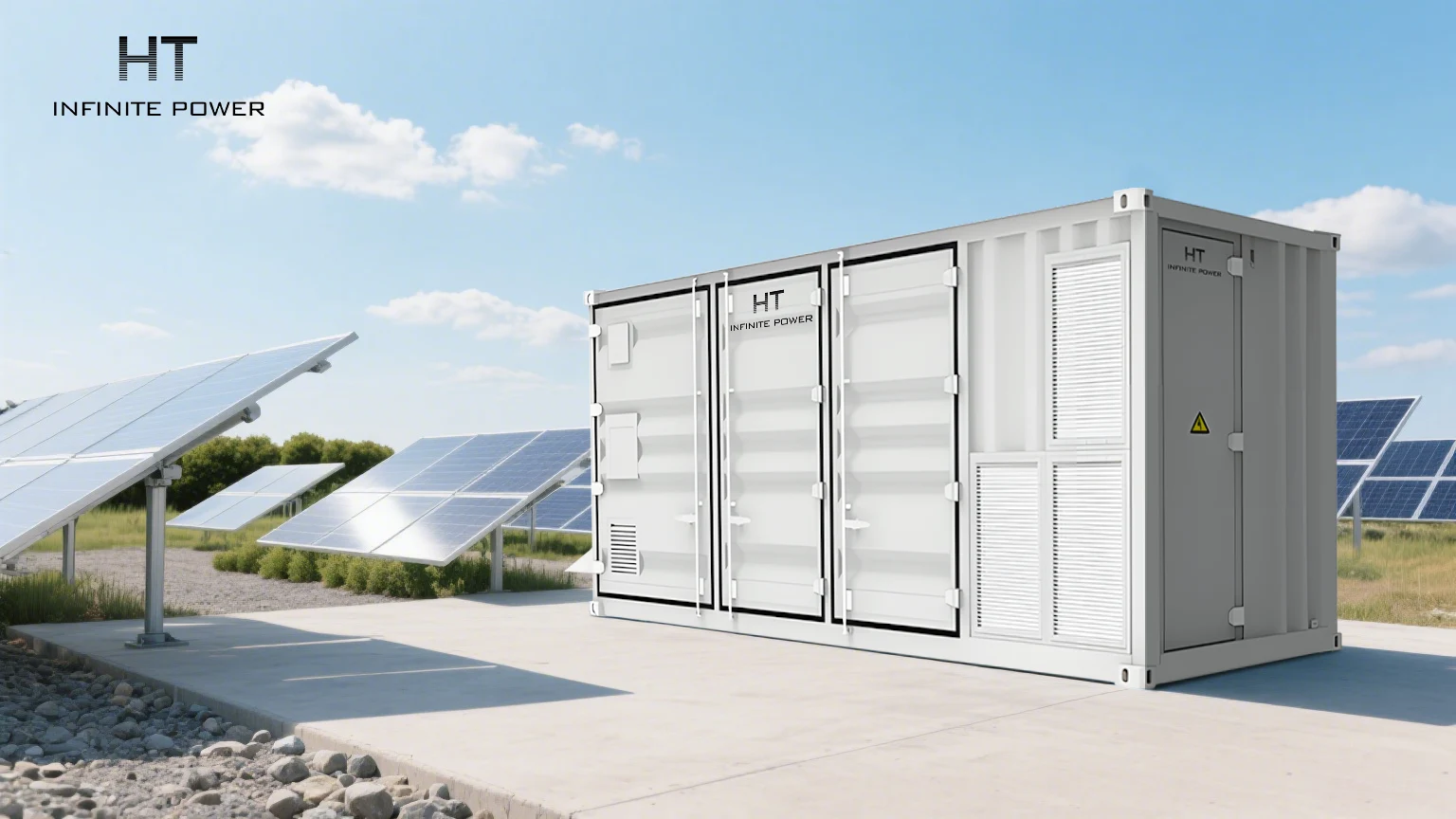
Energy storage systems do not face the same strict space and weight pressure as passenger vehicles. That changes the economics immediately. What matters more in stationary storage is cost, cycle life, safety, thermal stability, and operating temperature range. On those measures, sodium-ion batteries are highly competitive.
This is why many industry observers expect storage to become one of the largest sodium-ion application segments. For grid balancing, renewable integration, peak shaving, and backup support, the lower energy density is less of a problem. The chemistry’s cost profile and operational resilience become much more valuable.
As storage tender prices continue to fall, the cost gap between sodium-ion and lithium iron phosphate narrows in a way that is commercially meaningful. Once that gap becomes small enough, sodium-ion batteries can start replacing some lead-acid systems and even part of the lithium iron phosphate market in fixed installations.
That is where the technology becomes truly interesting. Not as a theoretical replacement for everything, but as a practical option in exactly the places where lithium is overqualified or too expensive.
What the bigger picture really looks like
So, can sodium-ion batteries change the battery market? Yes, but not in the simple sense of replacing lithium-ion outright.
The better way to think about it is that sodium-ion batteries are changing the structure of the market. They introduce a second major chemistry with its own advantages, its own supply chain, and its own application logic. That reduces dependence on lithium and makes the battery ecosystem more resilient overall.
This is important at both the commercial and strategic level. For manufacturers, sodium-ion creates a lower-cost pathway into storage and mobility. For users, it may mean cheaper products and better winter performance. For the broader energy system, it adds diversity to a supply chain that has become too concentrated in one resource.
That is why sodium-ion batteries should not be described as a dramatic replacement story. They are better understood as a balancing force. They make the battery market more flexible, more competitive, and less dependent on one material class.
Conclusion
Sodium-ion batteries are not here to erase lithium-ion batteries from the map. Their role is more specific than that, and in some ways more useful. They bring real cost advantages, strong low-temperature performance, and a safer operating profile in many practical scenarios. At the same time, they accept a trade-off in energy density that keeps them from being universal.
That combination points to a clear commercial future. Sodium-ion batteries are likely to become a strong choice in low-cost electric vehicles, where affordability and cold-weather reliability matter. They are also well positioned for large-scale energy storage, where weight and volume are less restrictive and cost matters much more.
In that sense, sodium-ion batteries are not a disruption in the dramatic sense. They are a restructuring force. They make the battery market healthier by giving it another serious option, and that may turn out to be more valuable than trying to force a single chemistry to solve every problem.
FAQ
What is the main advantage of sodium-ion batteries?
Their biggest advantage is cost, driven by abundant sodium resources and a manufacturing structure that is closer to lithium-ion than many people expect.
Their biggest advantage is cost, driven by abundant sodium resources and a manufacturing structure that is closer to lithium-ion than many people expect.
Are sodium-ion batteries better than lithium-ion batteries?
Not in every case. They are better in some cost-sensitive and cold-weather applications, but lithium-ion still has the advantage in high energy density use cases.
Not in every case. They are better in some cost-sensitive and cold-weather applications, but lithium-ion still has the advantage in high energy density use cases.
Why do sodium-ion batteries work better in cold weather?
Their chemistry allows ions to move more effectively at low temperatures, which helps maintain capacity and discharge power.
Their chemistry allows ions to move more effectively at low temperatures, which helps maintain capacity and discharge power.
Where will sodium-ion batteries be used first?
Most likely in low-cost electric vehicles and large-scale energy storage systems.
Most likely in low-cost electric vehicles and large-scale energy storage systems.
What is the biggest limitation of sodium-ion batteries?
Their lower energy density, which makes them less suitable for applications that require compact size and maximum range.
Their lower energy density, which makes them less suitable for applications that require compact size and maximum range.
What is the difference between power batteries and energy storage batteries?
Solid-State Battery Electrolytes: Types and In-Situ Curing Technology Explained