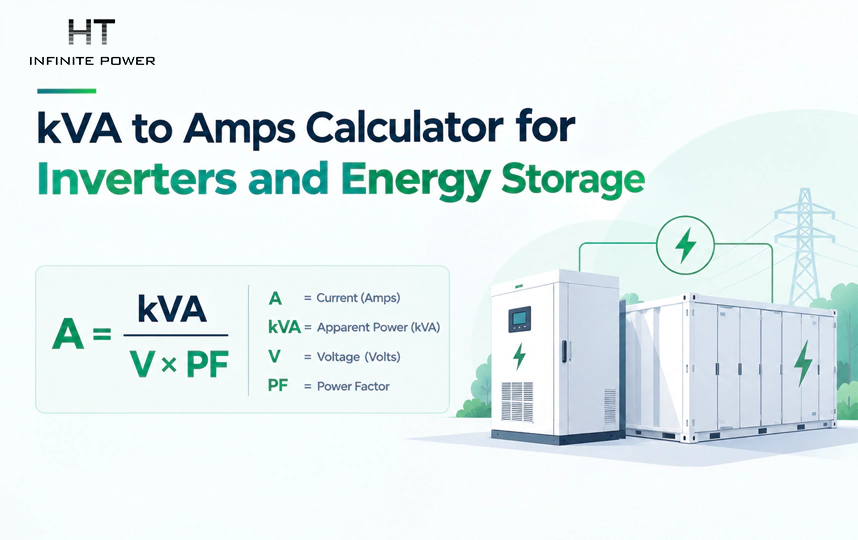
Power Quality Challenges in Grid-Connected BESS
2025-12-30

When storage was small and tucked behind meters, power quality felt like a downstream detail: check the datasheet, slap on a filter, ship it. Today, as batteries cluster on feeders, sit next to large solar farms or provide system-level services, power quality becomes a design axis—no less important than capacity or lifecycle cost. This piece walks through the messy, practical side of that statement. Expect observations, small leaps of reasoning, and a few pragmatic prescriptions—because theory alone rarely catches the surprises that show up on commissioning day.
Why power quality matters for modern BESS?
Aggregation effects and grid stress
A single inverter humming along is one thing. Ten in a neighborhood, and interactions begin. Harmonics add, control loops clash, and local voltage profiles shift. In weak grids—low short-circuit capacity, long radial feeders—these aggregated effects amplify rapidly. The lesson: power quality is often a network problem, not merely a converter one.
Harmonics from power electronics
What shapes converter harmonics (switching, PWM, filters)
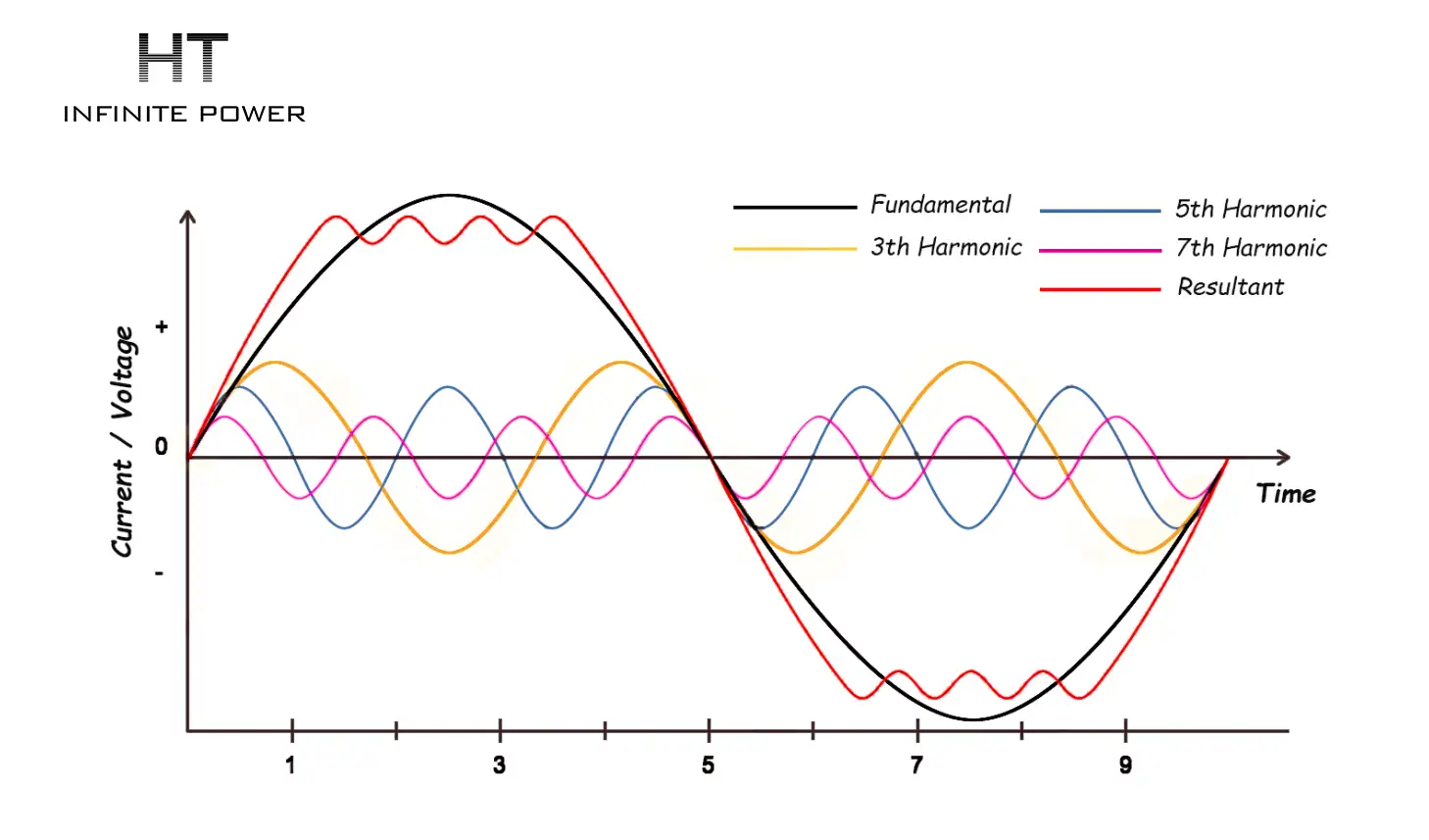
High-frequency switching creates the spectrum. But you don’t get to blame PWM alone; modulation strategy, passive/active filters, transformer impedance and the point of connection all shape which harmonics actually matter.
Site dependence: why the same PCS behaves differently
Take the same PCS model and move it from a stiff substation to a rural feeder. In the latter, voltage distortion climbs even if current harmonics are unchanged. Standards like IEEE 519 or IEC 61000 give limits—but meeting limits at the device level doesn’t guarantee acceptable network behavior.
Voltage fluctuations, flicker and ramping behavior
Applications that trigger flicker (renewable smoothing, V2G)
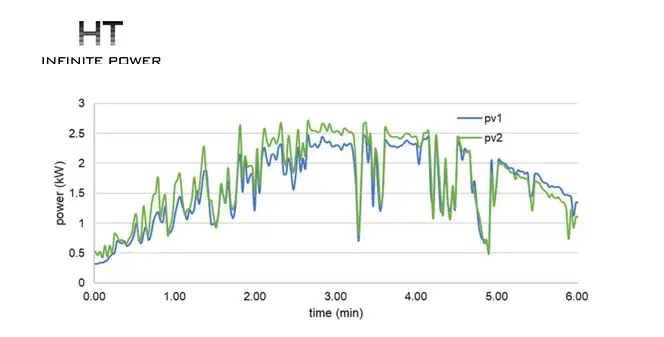
Fast smoothing of PV or aggressive V2G sessions can create frequent power ramps. Repetitive small transitions look harmless on paper; in practice they cause perceptible flicker for sensitive loads and shorten equipment lifetime.
Practical ramp-rate controls and trade-offs
Slow the ramp and you lose some grid service value; keep it fast and you risk flicker. A middle way: adaptive ramping—slower when local voltage volatility is high, faster when the feeder is stable. Simple in concept, harder in integration.
Reactive power, voltage control and coordination problems
Device-level vs feeder-level controls
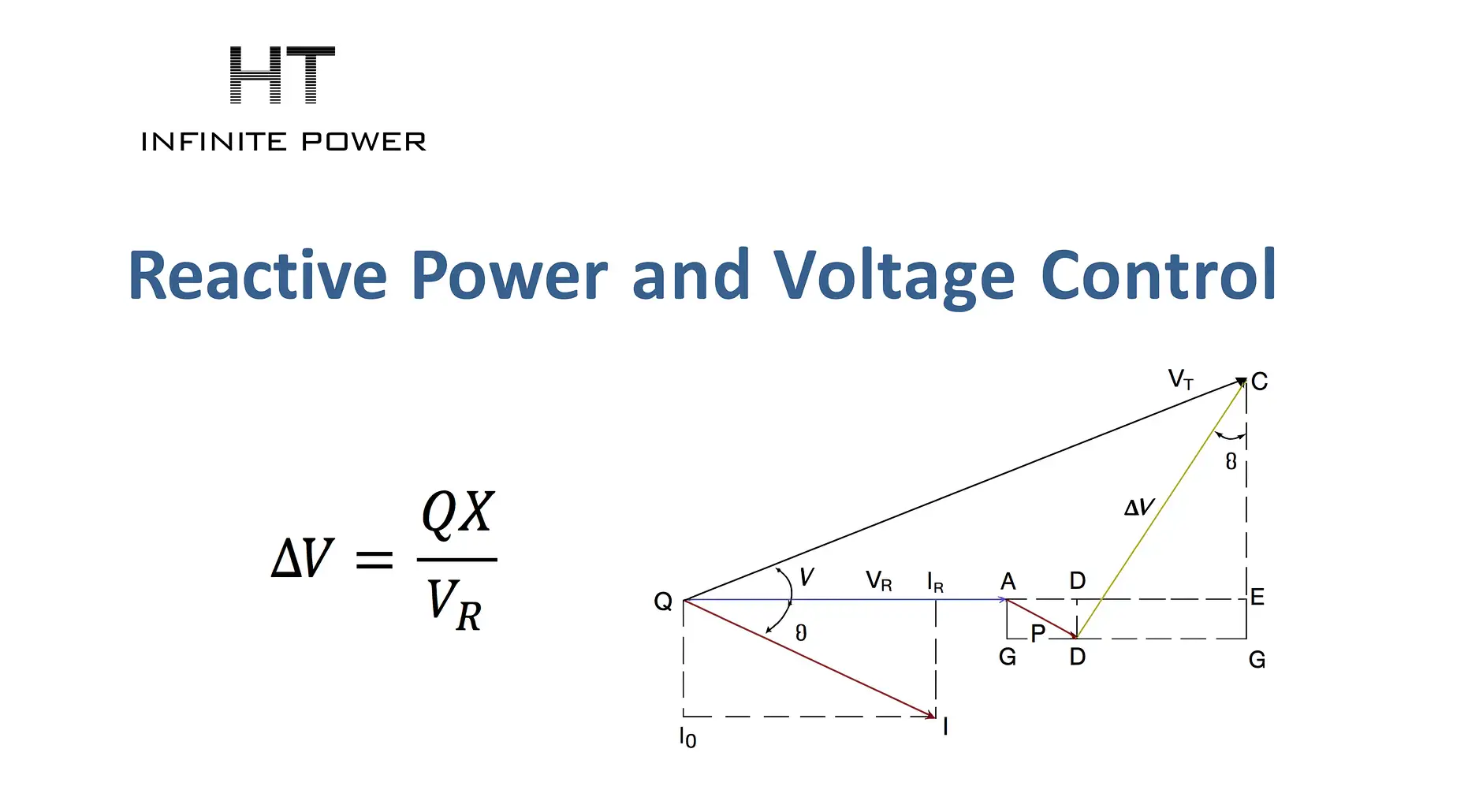
If every BESS follows its internal voltage setpoint, they’ll fight legacy devices. Feeder-level supervisory control that hands down objectives to each unit reduces oscillations and avoids “counter-action” with capacitor banks or OLTCs.
Case note: capacitor-bank interaction
A live project once saw a BESS repeatedly trigger capacitor switching. The cap bank and the BESS were each doing the “right” thing locally; together they made a looped oscillation. Fix: coordination and slight hysteresis in reactive setpoints.
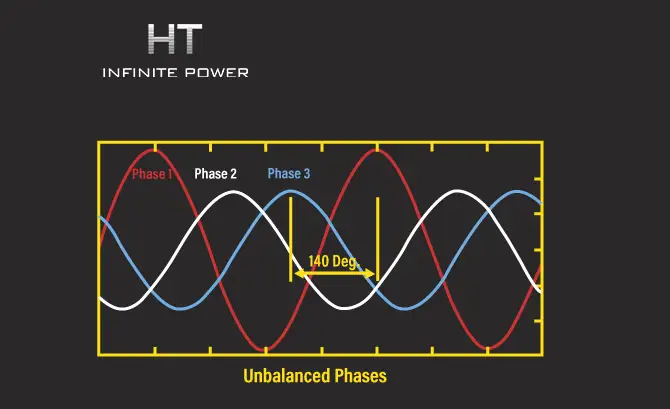
Phase unbalance at distribution level
Causes and detection
Single-phase loads, uneven PV penetration, and retrofit constraints all create unbalance. If a BESS injects asymmetrically—either by design or limitation—it can worsen voltage unbalance and heating in motors.
Phase-aware control options
Phase-by-phase current control, phase-shifting transformers, or simple scheduling rules (e.g., avoid certain injections during peak single-phase load) often reduce the problem without heavy hardware changes.
Frequency response: fast help, subtle side effects
Synthetic inertia, droop and damping
Fast frequency response is a headline capability: the battery answers almost instantly. But too many inverters with similar droop setpoints can create ringy behavior. Damping—deliberate, slightly slower corrective action—often improves net stability more than pure speed.
When many BESS respond together: emergent dynamics
Collective behavior isn’t always intuitive. Small parameter mismatches across units can produce amplified oscillations. That’s why simple lab tests don’t replace staged field trials.
Thermal and lifecycle consequences of poor power quality
Harmonics → losses → accelerated aging
Current harmonics mean extra I²R losses in filters, cables and transformers. The result: higher junction temperatures, faster degradation of capacitors and semiconductors. Power quality management is therefore a direct contributor to lifecycle economics.
Practical mitigation: a layered approach
Pre-procurement power quality studies
Start early. Site studies that include short-circuit current estimates, harmonic scans and worst-case ramp scenarios avoid costly hardware changes later.
Filters, control architecture and communication
Use a mix: tuned passive filters where appropriate, active harmonic compensation where needed, and a hierarchical control stack that gives the grid operator supervisory authority during critical events.
Designing for coexistence: from compliance to graceful integration
KPIs beyond capacity: PQ metrics and testing
Move beyond “meets IEC/IEEE.” Define local PQ KPIs—THD at PCC, flicker index, voltage unbalance—then validate in staged commissioning. Those numbers make procurement decisions more objective.
Conclusion
Power quality is not an add-on; it’s a co-design parameter. Harmonically clean waveforms, controlled ramping, coordinated reactive control and sensitivity to phase balance are part of what separates a resilient BESS project from a recurring maintenance headache. Invest in studies, demand clear PQ KPIs, and design control coordination into the architecture from day one.
FAQ
1. Will adding a filter always solve harmonics?
Not always. Filters work, but their tuning must match site impedance. In some cases an active filter or retuned control is more effective.
2. When should I run a power quality study?
Before equipment procurement and before grid connection approval—ideally during concept design.
3. Can BESS be used to actively improve power quality?
Yes. With proper control, BESS can inject compensating currents for harmonics, provide dynamic VAR support, and smooth ramps.
4. How does grid strength affect BESS behavior?
Weaker grids (lower short-circuit capacity) typically show larger voltage deviations for the same current disturbances. That impacts harmonic voltage, flicker, and control interactions.
5. What’s the quickest practical mitigation for observed flicker?
Introduce adaptive ramp-rate limits and coordinate with local voltage regulation devices; it’s often faster and cheaper than hardware retrofits.
Not always. Filters work, but their tuning must match site impedance. In some cases an active filter or retuned control is more effective.
2. When should I run a power quality study?
Before equipment procurement and before grid connection approval—ideally during concept design.
3. Can BESS be used to actively improve power quality?
Yes. With proper control, BESS can inject compensating currents for harmonics, provide dynamic VAR support, and smooth ramps.
4. How does grid strength affect BESS behavior?
Weaker grids (lower short-circuit capacity) typically show larger voltage deviations for the same current disturbances. That impacts harmonic voltage, flicker, and control interactions.
5. What’s the quickest practical mitigation for observed flicker?
Introduce adaptive ramp-rate limits and coordinate with local voltage regulation devices; it’s often faster and cheaper than hardware retrofits.
Power Quality Compensation vs Peak Shaving in BESS
Virtual Energy Storage vs. Physical Energy Storage: A Practical Comparison of PV-Storage Solutions in Europe