Percentage Efficiency of Energy Transfer: Formula, Calculation, and Energy Storage Examples
author: HT Infinite Power
2026-11-27
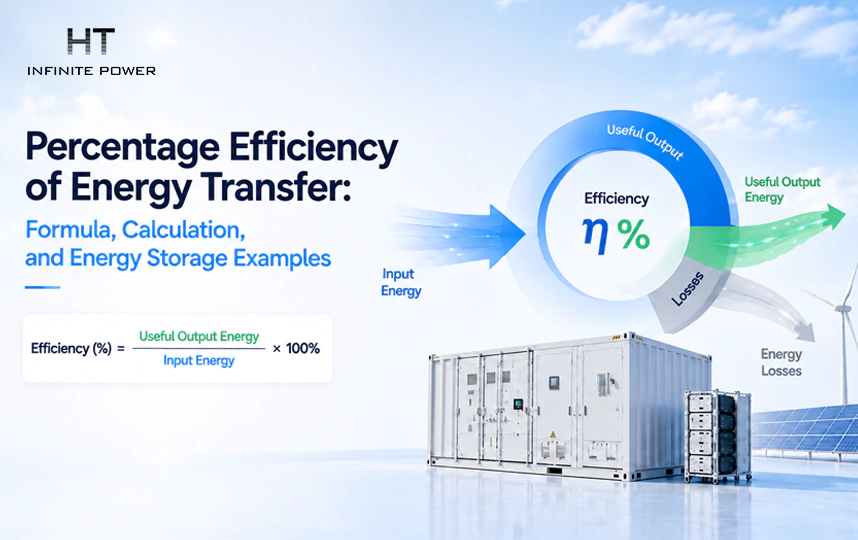
Energy is transferred and converted in almost every electrical and mechanical system. However, not all the energy supplied to a system becomes useful output. Some energy may be dissipated as heat, lost through electrical resistance, or consumed by auxiliary components during operation.
Percentage efficiency of energy transfer describes how much of the input energy is converted into useful output energy. It provides a simple way to understand energy losses and evaluate how effectively a system transfers or converts energy.
This article explains the meaning of energy transfer efficiency, the formula used to calculate it, and practical calculation examples. It also examines how efficiency applies to battery energy storage systems and the factors that influence energy losses.
1. What Is Percentage Efficiency of Energy Transfer?
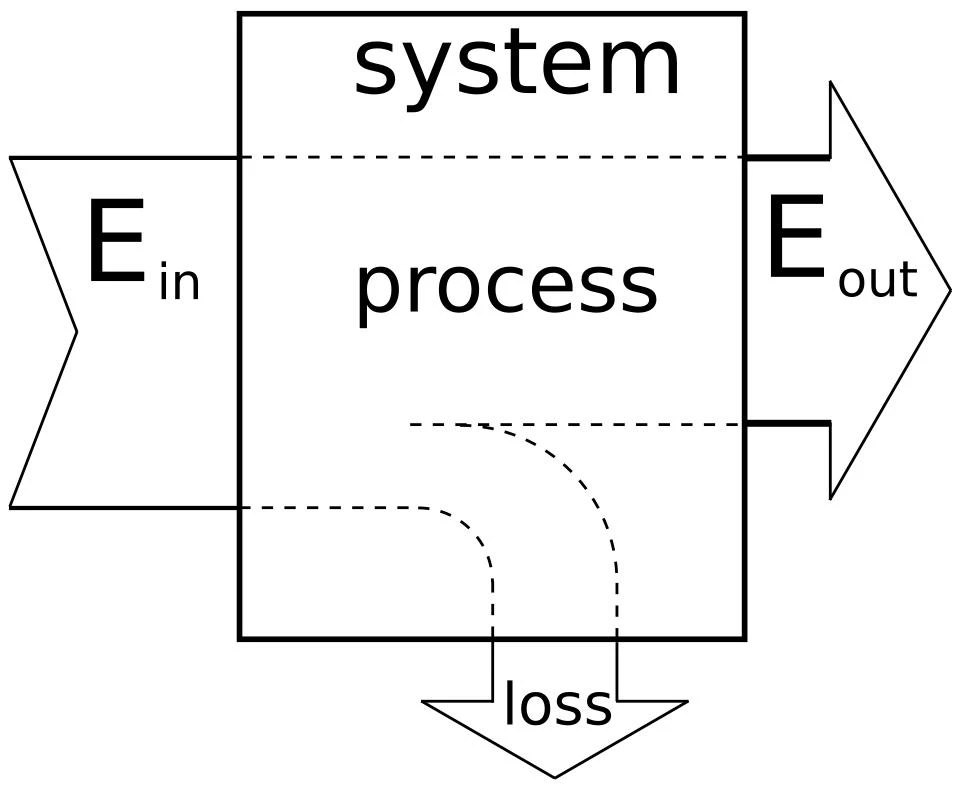
Percentage efficiency of energy transfer is the ratio of useful energy output to the total energy input, expressed as a percentage.
When energy passes through a device or system, some of the supplied energy may be converted into forms that are not useful for the intended purpose. For example, an electric motor converts electrical energy into mechanical energy, but part of the input energy is dissipated as heat and sound.
A system with higher energy transfer efficiency converts a larger proportion of its input energy into useful output. A lower efficiency indicates that a greater proportion of the input energy is not available as useful output.
1.1 Input Energy, Useful Output Energy, and Energy Loss
Three quantities are important when calculating energy transfer efficiency:
- Input Energy: The total amount of energy supplied to a device or system.
- Useful Output Energy: The portion of the input energy delivered in a form that serves the intended purpose.
- Energy Loss: The difference between input energy and useful output energy, provided that both are measured over the same period and within the same system boundary.
For example, if a device receives 100 kWh of electrical energy and delivers 85 kWh of useful output energy, the remaining 15 kWh represents energy that was not delivered as useful output within the defined measurement boundary.
These quantities are related, but the measurement boundary matters. In some systems, energy may remain temporarily stored rather than being lost. This is particularly important when evaluating batteries, where the initial and final state of charge can affect the calculation.
1.2 Why Is Energy Transfer Efficiency Important?
Energy transfer efficiency helps explain how effectively energy is used in different applications.
It is relevant to:
- Electrical appliances and industrial equipment
- Electric motors and power conversion devices
- Battery charging and discharging
- Renewable energy systems
- Battery energy storage systems
Understanding efficiency makes it easier to identify where energy losses occur and why the amount of useful energy delivered may be lower than the amount initially supplied.
2. Formula for Calculating Energy Transfer Efficiency
The percentage efficiency of energy transfer is calculated by dividing useful output energy by input energy and multiplying the result by 100%.
Energy Transfer Efficiency Formula:
Efficiency = Useful Output Energy Input Energy × 100%
The formula uses energy values measured in the same unit, such as joules (J), watt-hours (Wh), or kilowatt-hours (kWh).
2.1 How to Calculate Energy Loss
Energy loss can be calculated by subtracting useful output energy from input energy:
Energy Loss=Input Energy−Useful Output Energy
For example, if a system receives 200 kWh of energy and delivers 170 kWh as useful output:
Energy Loss=200−170=30kWh
The percentage of energy loss is:
Energy Loss Percentage = 30 200 × 100 = 15%
The corresponding energy transfer efficiency is 85%.
2.2 The Difference Between Energy and Power
Energy and power are related, but they are not interchangeable.
- Power (kW) describes the rate at which energy is transferred or converted.
- Energy (kWh) describes the total amount of energy transferred over a period of time.
When power remains constant, energy can be calculated using:
Energy=Power×Time
For example, a device operating at a constant power of 10 kW for 3 hours consumes:
10kW×3h=30kWh
If power changes during operation, the energy value must be calculated from the power measured over time rather than by multiplying one instantaneous power reading by the entire operating period.
This distinction is important when evaluating systems with variable charging and discharging power.
3. How to Calculate Energy Transfer Efficiency: Examples
The formula becomes easier to understand when applied to different situations. The following examples use hypothetical values to demonstrate the calculation method.
3.1 Example 1: Electrical Device
Suppose an electrical device receives 500 Wh of electrical energy and delivers 425 Wh as useful output energy.
The energy transfer efficiency is:
Efficiency = 425500 × 100
The energy not delivered as useful output is:
Energy Loss=500−425=75Wh
Therefore, the device has an energy transfer efficiency of 85% within the defined measurement boundary.
3.2 Example 2: Electric Motor
An electric motor consumes 2,000 kWh of electrical energy during a certain operating period. Over the same period, it delivers 1,700 kWh of useful mechanical energy.
Its efficiency is:
Efficiency = 17002000 × 100
The difference between the electrical input and mechanical output is 300 kWh.
In an actual motor, energy not converted into useful mechanical output may be dissipated through winding resistance, magnetic losses, friction, and other operating effects.
3.3 Example 3: Battery Charging and Discharging
Consider a battery that receives 100 kWh of energy during charging and later delivers 90 kWh during discharge.
If the measurement covers a complete charge-discharge cycle and the battery returns to the same state of charge at the beginning and end of the test, its round-trip energy efficiency is:
Round−Trip Efficiency = 90100 × 100
This means that 90% of the measured charging energy is returned as discharge energy under the specified test conditions.
The remaining 10% is not returned as electrical output within the measurement boundary. It may account for battery-related losses and, depending on the test boundary, other system energy consumption.
If the battery does not return to the same state of charge, the difference between input and output cannot automatically be treated as energy loss. Some energy may still be stored in the battery.
4. Energy Transfer Efficiency in Battery Energy Storage Systems
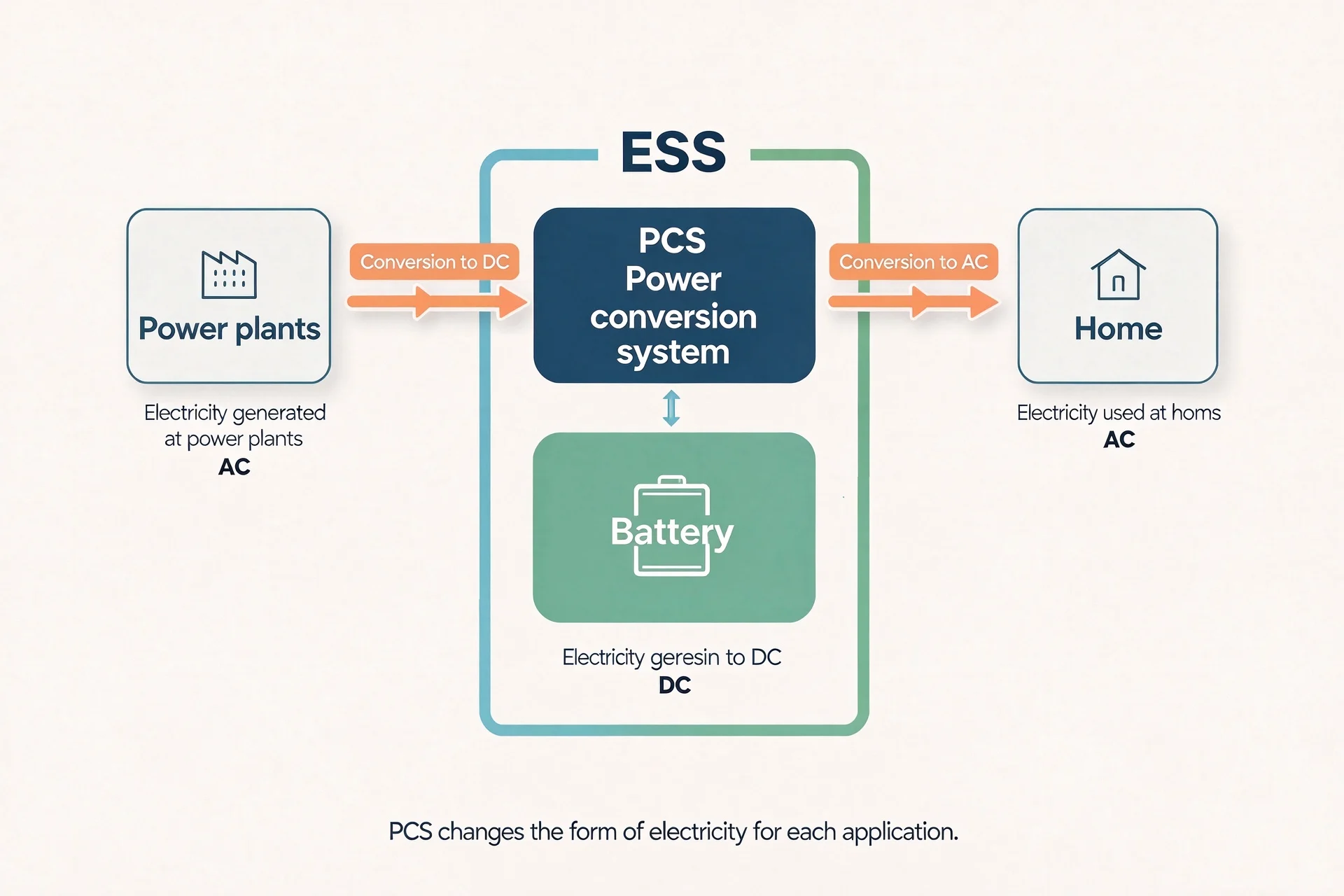
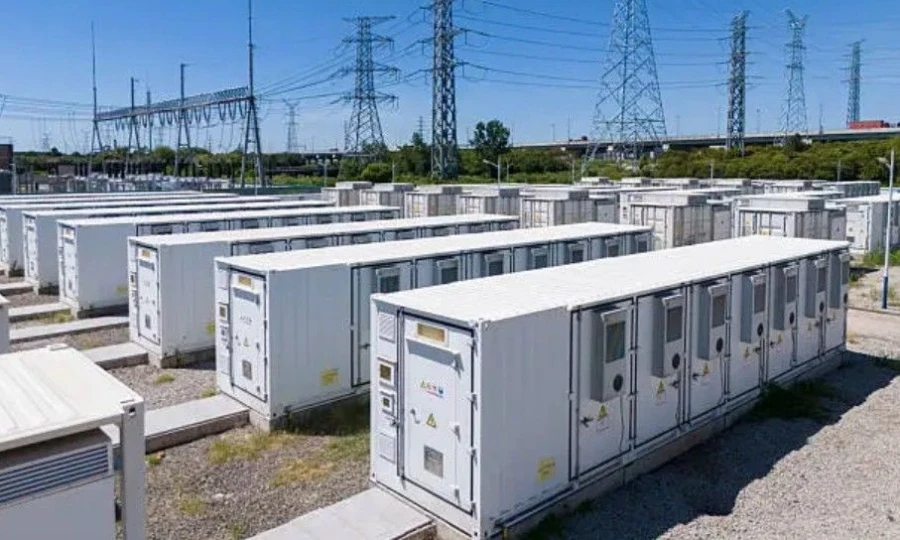
Battery energy storage systems (BESS) store electrical energy and deliver it when required. During this process, energy passes through several components, including the battery, power conversion system (PCS), and other auxiliary equipment.
Each component can contribute to energy losses. As a result, the efficiency of an individual component is not necessarily the same as the overall efficiency of the storage system.
4.1 Battery Charging and Discharging Efficiency
A battery stores electrical energy through electrochemical processes during charging and releases energy during discharging.
Not all the energy supplied during charging can be recovered as electrical output. Some energy is dissipated through internal resistance and other electrochemical processes.
Battery efficiency depends on factors such as battery chemistry, temperature, state of charge (SOC), and charge and discharge rates.
When evaluating a battery, it is important to distinguish between the efficiency of the battery itself and the efficiency of the complete energy storage system.
4.2 What Is Round-Trip Efficiency?
Round-trip efficiency (RTE) measures the ratio of energy discharged from a storage system to the energy previously supplied to charge it.
The general formula is:
RTE = Discharged EnergyCharged Energy × 100
For example, if a BESS receives 500 kWh of charging energy and delivers 435 kWh during discharge, its round-trip efficiency is:
RTE = 435500 × 100
This calculation assumes that the charging and discharging measurements cover a comparable cycle, with the initial and final stored-energy conditions properly accounted for.
The result also depends on where energy is measured. A DC-to-DC calculation focuses on the battery-side energy flow, while an AC-to-AC calculation measures energy at the system's AC connection points.
An AC-to-AC measurement may include losses from the PCS, transformer, and auxiliary equipment, depending on the test configuration and measurement boundary.
Therefore, efficiency figures should not be compared directly unless their measurement methods and system boundaries are comparable.
4.3 PCS Efficiency and Overall System Efficiency
The power conversion system converts electrical power between AC and DC.
During charging, the PCS converts AC power into DC power for the battery. During discharging, it converts DC power from the battery into AC power for the connected loads or grid.
PCS efficiency describes how effectively the converter performs this power conversion. It is commonly expressed as the ratio of output power to input power at a specified operating point.
Overall BESS energy efficiency is broader. It can include the combined effects of battery losses, PCS conversion losses, transformer losses, and auxiliary energy consumption over a defined operating period.
For this reason, a PCS efficiency figure should not be treated as the round-trip efficiency of the entire BESS.
5. Factors That Affect Energy Transfer Efficiency
Energy transfer efficiency is influenced by the characteristics of the equipment, operating conditions, and the way energy flows through a system.
The main factors vary by application, but several are particularly relevant to electrical and energy storage systems.
5.1 Temperature
Temperature can affect the performance of electrical components and batteries.
For batteries, operating outside the recommended temperature range can affect internal resistance, electrochemical reactions, and charging or discharging performance.
Temperature also influences cooling requirements. In a BESS, thermal management equipment may consume additional electricity to maintain suitable operating conditions.
The relationship between temperature and efficiency is not simply that higher or lower temperatures always produce better results. The effect depends on the battery chemistry, equipment design, and operating conditions.
5.2 Charge and Discharge Rate
The rate at which energy enters or leaves a battery can influence its efficiency.
Higher charge or discharge currents may increase resistive losses inside the battery and other electrical components. The extent of this effect depends on the battery design, operating temperature, and state of charge.
Operating conditions should therefore be considered when comparing efficiency measurements. Results obtained at different charge and discharge rates may not be directly comparable.
5.3 State of Charge (SOC)
State of charge indicates how much energy remains stored in a battery relative to its available capacity.
Battery performance can vary across different SOC ranges. Charging and discharging efficiency may therefore change depending on the battery's operating point.
The SOC range also affects how much energy can be delivered during a cycle. A test that uses only part of the battery's available capacity should not automatically be compared with a test that covers a wider SOC range.
5.4 Internal Resistance and Component Losses
Internal resistance causes some electrical energy to be dissipated as heat when current flows through a battery.
Other components also contribute to energy losses. These may include cables, busbars, connectors, transformers, and power conversion equipment.
The design and condition of these components influence how much energy reaches the intended output point.
5.5 Auxiliary Energy Consumption
A BESS may require additional electricity to operate its control systems, battery management system (BMS), energy management system (EMS), cooling equipment, and fire protection systems.
This electricity supports the operation and safety of the system, but it may reduce the amount of net energy available at the output.
Whether auxiliary consumption is included in an efficiency calculation depends on the measurement boundary. For example, an AC-to-AC system efficiency test may include auxiliary loads, while a battery-only DC measurement generally does not cover all system-level consumption.
Conclusion
Percentage efficiency of energy transfer shows how much of the input energy becomes useful output energy. It can be calculated by dividing useful output energy by input energy and multiplying the result by 100%.
Although the formula is straightforward, accurate calculations require consistent measurement units, clearly defined system boundaries, and comparable operating conditions.
In battery energy storage systems, it is particularly important to distinguish between battery efficiency, PCS conversion efficiency, and overall round-trip efficiency. Understanding these differences provides a clearer picture of how energy is stored, converted, and delivered.
Frequently Asked Questions
What Is a Good Percentage Efficiency of Energy Transfer?
There is no single efficiency value that applies to every device or system.
Efficiency depends on the technology, equipment design, operating conditions, and measurement boundary. A value that is considered normal for one type of equipment may not be appropriate for another.
For an accurate comparison, efficiency figures should be evaluated under similar operating conditions and using the same measurement method.
Can Energy Transfer Efficiency Be More Than 100%?
For a system that receives energy and delivers useful output without another energy source, efficiency cannot exceed 100%.
If a calculation produces a value above 100%, the measurement boundaries, units, time periods, or energy sources should be checked.
In some systems, additional energy may enter from an external source or energy stored before the measurement period may be released during it. In such cases, the calculation may not represent the efficiency of a complete process.
Is Energy Transfer Efficiency the Same as Energy Conversion Efficiency?
The terms are related, but they are not always identical.
Energy transfer efficiency generally describes the proportion of input energy delivered as useful output across a defined system boundary.
Energy conversion efficiency focuses on how effectively a device converts energy from one form into another, such as electrical energy into mechanical energy.
The appropriate term depends on the process being evaluated.
What Is the Difference Between Battery Efficiency and Round-Trip Efficiency?
Battery efficiency can refer to different measurements of energy or charge during battery operation. Its meaning depends on the test method.
Round-trip efficiency specifically measures the ratio of discharged energy to charging energy over a charge-discharge cycle.
The measurement boundary must be stated because battery-level efficiency and complete BESS efficiency can produce different results.
Why Is AC-to-AC Efficiency Different from DC-to-DC Efficiency?
The two measurements use different electrical reference points.
DC-to-DC efficiency generally measures energy entering and leaving the battery-side DC circuit.
AC-to-AC efficiency measures energy at the AC input and output points. Depending on the system configuration, it may include PCS conversion losses, transformer losses, and auxiliary consumption.
The difference is mainly related to which components and energy flows are included in the measurement.
How Can Energy Transfer Efficiency Be Improved?
Improving efficiency generally involves reducing unnecessary energy losses.
Depending on the application, this may include selecting suitable equipment, reducing electrical resistance, operating within recommended temperature and SOC ranges, optimizing charge and discharge rates, and improving power conversion.
For a battery energy storage system, the battery, PCS, thermal management equipment, and auxiliary loads should be considered together rather than evaluating one component in isolation.
Commercial Battery Energy Storage Cost in 2026: What Buyers Need to Know
Related Article