Commercial Battery Energy Storage Cost in 2026: What Buyers Need to Know
author: HT Infinite Power
2026-11-26
Commercial battery energy storage systems (BESS) are becoming an important part of energy management for factories, industrial facilities, commercial buildings, and renewable energy projects.
However, evaluating the cost of a commercial BESS involves more than comparing battery capacity or the price per kilowatt-hour (kWh). The final investment depends on system configuration, battery cell selection, power requirements, cooling technology, electrical infrastructure, and project-specific requirements.
Even two systems with the same nominal energy capacity may have different equipment configurations and performance guarantees. Their quotations may therefore vary considerably.
For project owners, EPC contractors, and system integrators, understanding these differences is essential when preparing project budgets and evaluating supplier proposals.
This guide explains the main cost components of commercial BESS, the technical factors that influence system cost, and how buyers can compare quotations more effectively without relying on headline prices alone.
1. Why Commercial BESS Cost Varies Between Projects
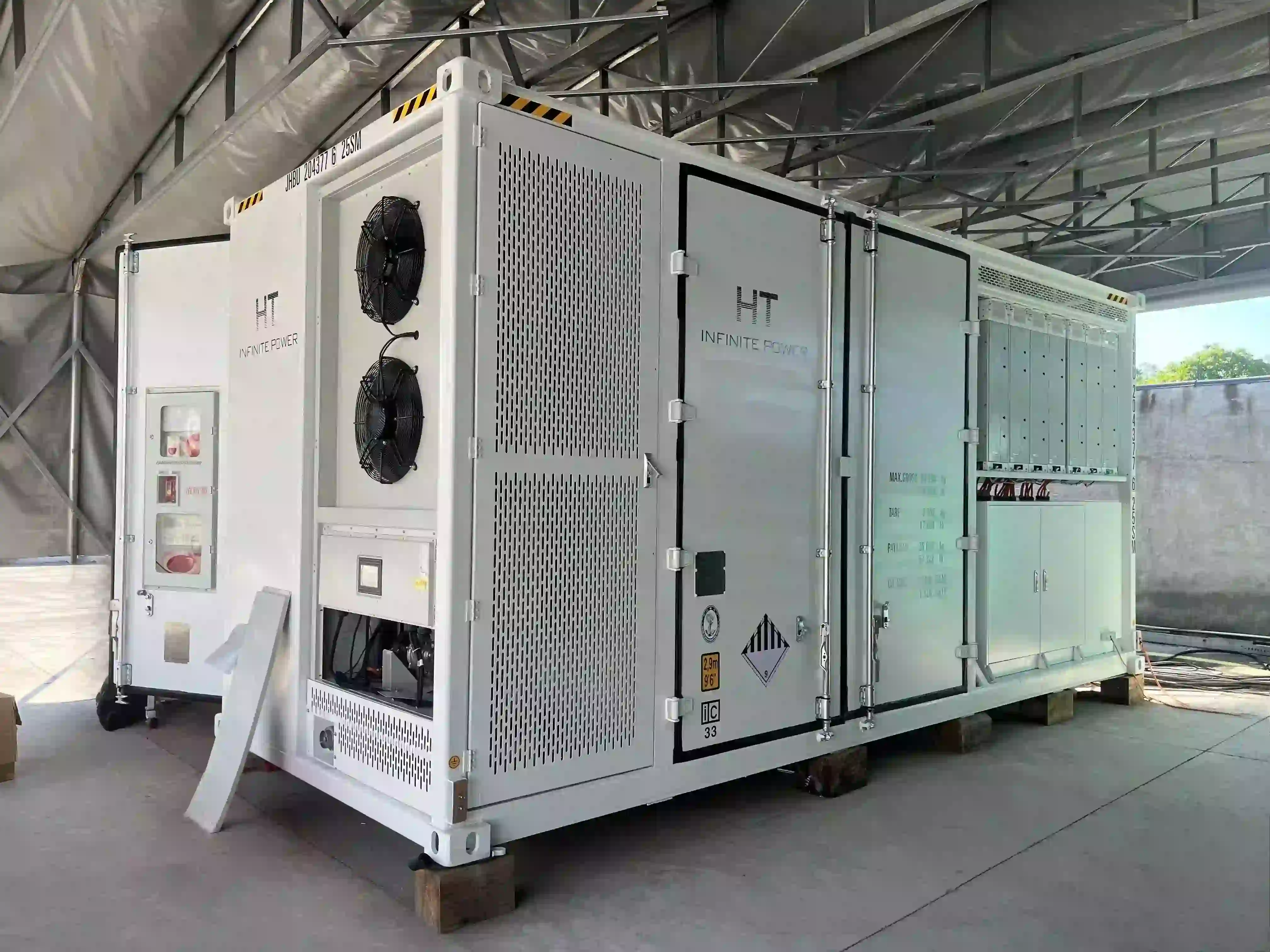 There is no single standard cost for a commercial battery energy storage system. The reason is that BESS projects are designed around different power requirements, energy capacities, operating profiles, and installation conditions.
Two projects with the same battery capacity may require different system configurations.
Consider three examples:
- 500kW / 1MWh
- 500kW / 2MWh
- 1MW / 2MWh
The first two systems have the same rated power but different energy capacities. The second and third systems have the same nominal energy capacity but different power ratings.
These differences affect battery quantity, PCS selection, electrical equipment, and system architecture.
The intended application also matters. A system designed for peak shaving may operate differently from one intended for backup power, solar self-consumption, or microgrid operation.
For example, a factory using BESS to reduce peak demand may prioritize discharge power during specific high-load periods. A solar-plus-storage project may place greater emphasis on energy capacity and daily charging and discharging schedules.
As a result, the cost of a commercial BESS should be evaluated against its actual operating requirements rather than capacity alone.
2. Main Cost Components of a Commercial BESS
A commercial BESS consists of several integrated subsystems. Their configuration and technical specifications determine the equipment scope and contribute to the overall project investment.
Battery System
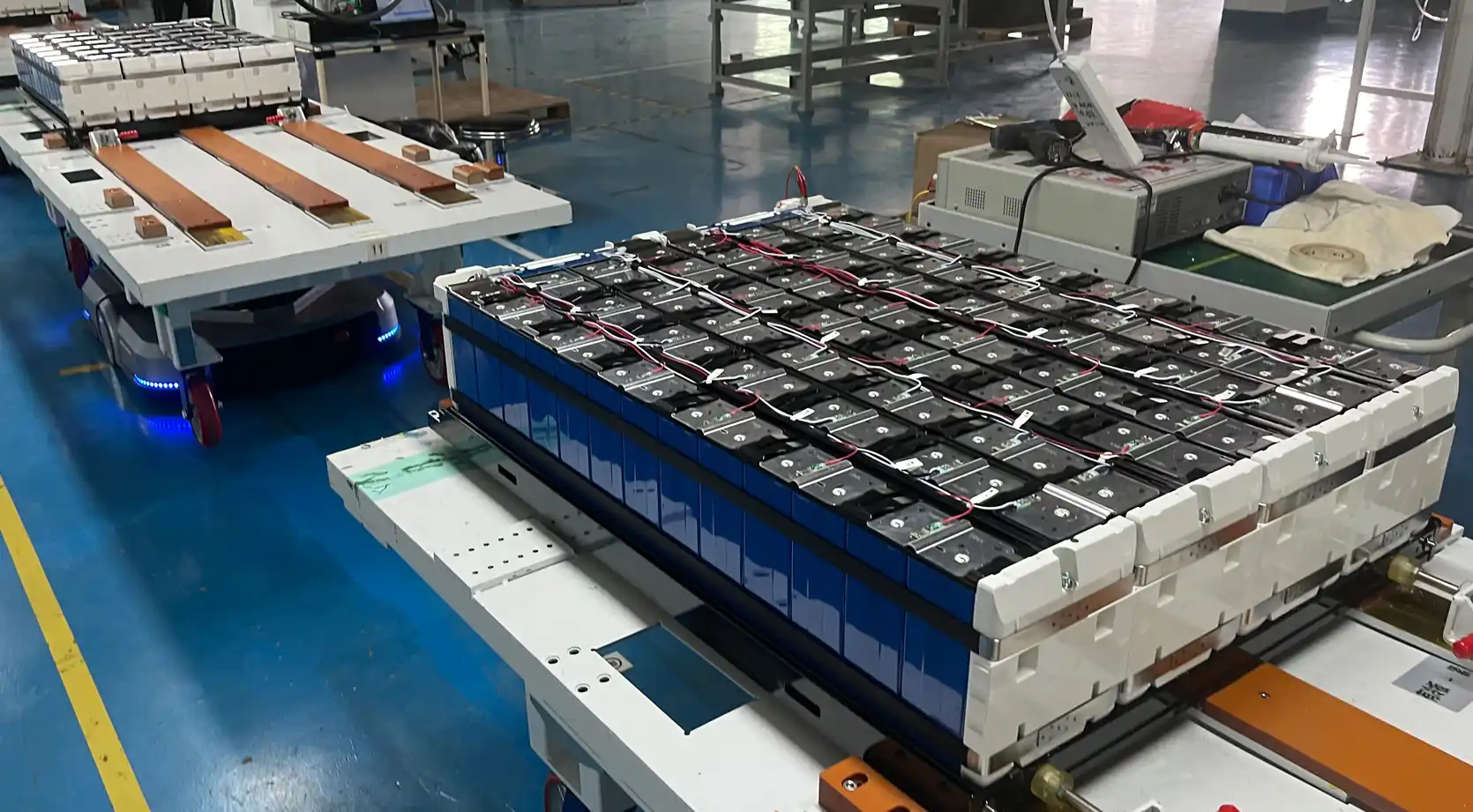 The battery system is the core energy storage component. It generally includes battery cells, modules or PACKs, racks or cabinets, and a Battery Management System (BMS).
Its cost is influenced by battery chemistry, cell specifications, energy capacity, operating limits, and performance requirements.
Lithium iron phosphate (LFP) batteries are widely used in stationary energy storage because of their established performance characteristics and suitability for repeated charge and discharge cycles.
However, battery capacity alone does not determine the value of the battery system. Buyers should also consider usable energy, cycle-life test conditions, operating temperature limits, cell consistency, and warranty coverage.
It is important to distinguish between nominal battery capacity and usable energy. The energy available for operation depends on the permitted state-of-charge range, system losses, operating conditions, and the specified measurement point.
Power Conversion and Control Systems
The Power Conversion System (PCS) controls the bidirectional conversion between the battery's DC power and the site's AC electrical system.
Its selection depends primarily on the required charge and discharge power, DC voltage range, AC voltage, and grid operating requirements.
The BMS and Energy Management System (EMS) also contribute to the overall system configuration.
The BMS monitors battery voltage, current, temperature, and operating limits. The EMS coordinates system operation, including charging and discharging schedules, power control, and communication with external systems.
A project with more complex control requirements may need additional integration and software functionality.
Thermal Management, Fire Protection, and Electrical Infrastructure
Thermal management and fire protection are essential parts of commercial BESS design.
Depending on the system architecture, thermal management may use air cooling or liquid cooling. Fire protection requirements depend on battery technology, enclosure design, installation conditions, and local regulations.
The electrical infrastructure may include DC and AC protection, distribution equipment, transformers, switchgear, cables, and grid connection interfaces.
These components should be evaluated as part of the complete system rather than treated as optional accessories.
Their required configuration depends on rated power, voltage level, site conditions, and the applicable electrical and safety requirements.
3. Key Factors That Influence Commercial BESS Cost
Several technical and commercial factors can change the cost of a BESS, even when the nominal capacity remains the same.
3.1 Battery Cell Brand, Manufacturer, and Quality
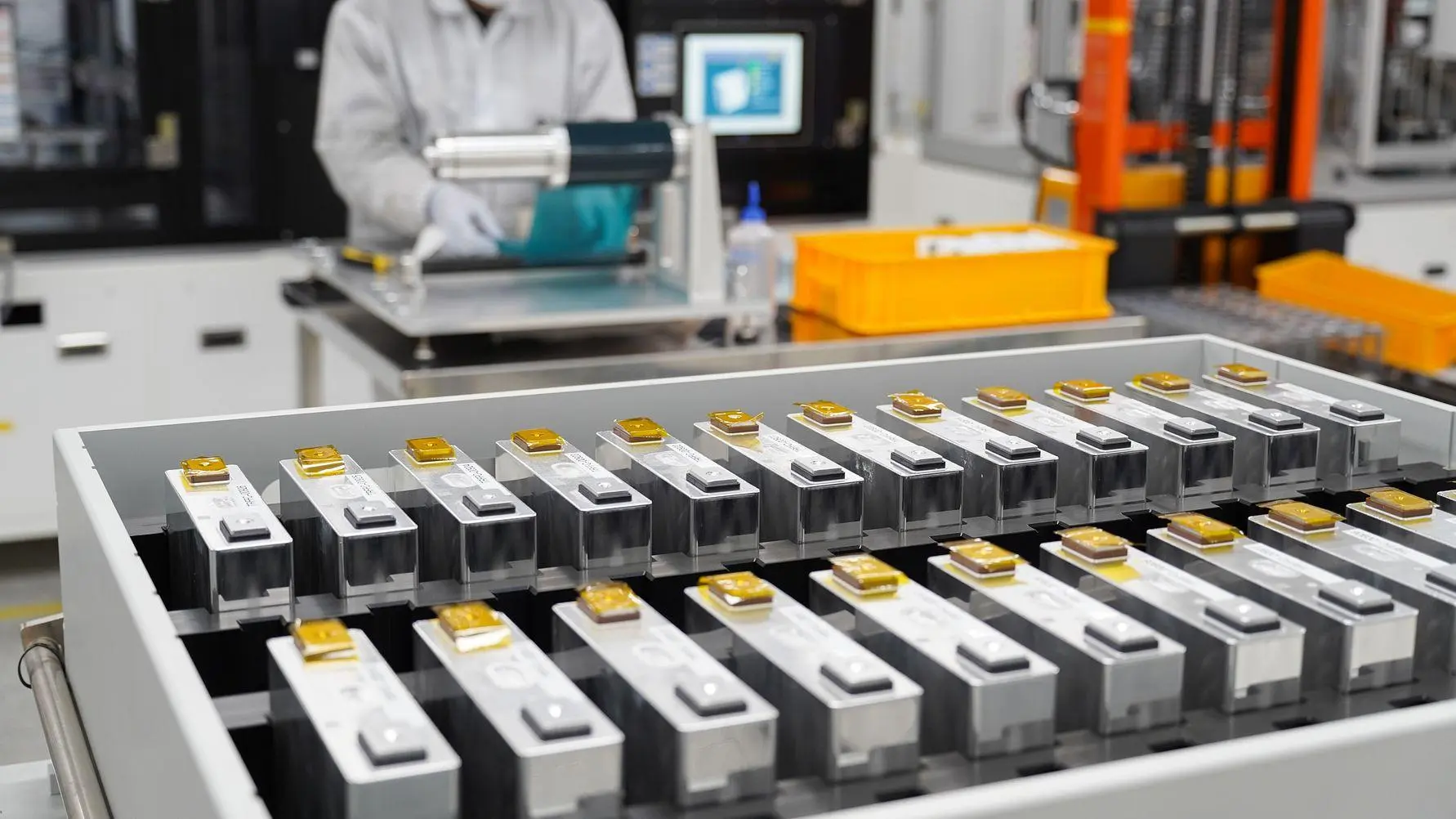 The battery cell manufacturer is an important factor when evaluating BESS quotations.
Different cell manufacturers may offer different product specifications, manufacturing processes, quality control systems, production capacity, and warranty arrangements. These differences can influence cell procurement costs and the overall battery system design.
However, a well-known brand does not automatically guarantee better performance in every application, nor does a less familiar brand necessarily indicate poor quality.
Buyers should evaluate the actual cell model and its supporting technical documentation.
Important considerations include:
- Cell manufacturer and model
- Battery chemistry and rated capacity
- Manufacturing consistency and quality control
- Cycle-life test conditions
- Capacity retention and degradation characteristics
- Product traceability and batch testing
- Production history and supply stability
- Warranty and technical support
Cell quality is particularly important because variations in cell capacity, internal resistance, and self-discharge behavior can affect battery consistency and long-term system performance.
A supplier offering a lower quotation may use a different cell model, procurement channel, or warranty arrangement. These differences should be clarified before comparing proposals.
It is also important to distinguish between the cell manufacturer and the BESS system integrator. The company supplying the complete energy storage system may not manufacture the battery cells itself.
A reliable procurement evaluation should therefore examine both the cell supplier and the system integrator's capabilities, including battery integration, BMS compatibility, quality inspection, and after-sales support.
3.2 Energy Capacity and Power Rating
Energy capacity and rated power are two separate parameters in BESS design.
Energy capacity, measured in kWh or MWh, determines how much energy the battery can store.
Power rating, measured in kW or MW, determines how quickly the system can charge or discharge.
A system with higher energy capacity generally requires more battery modules or cabinets. A system with higher power requirements may need a different PCS configuration and electrical infrastructure.
For example:
- 500kW / 1MWh: nominal two-hour system
- 500kW / 2MWh: nominal four-hour system
- 1MW / 2MWh: nominal two-hour system
These configurations illustrate why systems with the same energy capacity may have different equipment requirements.
The appropriate battery-to-PCS configuration should be determined by the project's operating profile, required discharge duration, and power demand.
3.3 Battery Chemistry and System Configuration
Battery chemistry influences energy density, thermal characteristics, operating limits, and cycle-life performance.
LFP is widely adopted in commercial and stationary storage applications. Other battery chemistries may be considered where specific energy density, operating, or application requirements justify their use.
The cell format and battery architecture also matter.
Different cell capacities and module arrangements affect the number of connections, rack configuration, DC voltage, and overall system integration.
Larger-format cells may simplify certain aspects of system architecture, but their suitability still depends on manufacturing maturity, thermal management, electrical design, and testing history.
The battery configuration must also be compatible with the PCS voltage range and BMS control strategy.
3.4 Cooling Technology and Operating Environment
Air-cooled and liquid-cooled BESS designs have different equipment architectures and maintenance requirements.
Air cooling generally uses fans and air-conditioning equipment to manage battery temperature. Liquid cooling uses coolant circulation and heat exchangers to transfer heat from battery components.
The appropriate solution depends on battery density, thermal load, ambient temperature, enclosure design, and operating conditions.
A project in a hot or demanding environment may require more careful thermal management than one operating under moderate conditions.
Buyers should consider not only the initial cooling equipment configuration but also auxiliary power consumption, maintenance requirements, and expected operating conditions.
Neither cooling method is automatically the lower-cost choice for every project.
3.5 Application and Site Requirements
The intended application and installation environment also influence system design.
A BESS used for peak shaving may have different operating requirements from one supporting backup power, renewable energy integration, or an islanded microgrid.
Site conditions such as ambient temperature, humidity, dust, salt exposure, available space, and grid connection voltage can also affect equipment selection.
In addition, local electrical standards, fire safety regulations, and certification requirements may require specific equipment or system-level testing.
These requirements should be identified during project planning rather than addressed after the system configuration has been finalized.
4. Equipment Cost vs. Total Project Cost
When comparing BESS quotations, buyers should distinguish between the cost of the supplied equipment and the cost of delivering a complete installed project.
An equipment quotation may include the battery system, PCS, EMS, cooling equipment, and integrated fire protection. However, it may exclude external electrical infrastructure, site preparation, installation, and grid connection work.
A complete project may also involve engineering, transportation, installation, commissioning, and local compliance requirements.
The exact scope depends on the contract and the responsibilities assigned to the supplier, EPC contractor, and local installation team.
This distinction is important because two quotations with similar battery capacities may cover very different project scopes.
For example, one supplier may provide an integrated battery and PCS solution, while another may include additional electrical equipment and commissioning services.
The second quotation may appear higher, but it may also cover more of the work required to make the system operational.
Before comparing quotations, buyers should establish whether each proposal covers:
- Battery system and PCS
- BMS and EMS
- Thermal management and fire protection
- Required electrical equipment
- Transportation and delivery responsibilities
- Installation and system integration
- Commissioning and acceptance testing
- Grid connection responsibilities
A clear scope of supply helps prevent missing equipment, duplicated responsibilities, and unexpected project work.
5. Long-Term Operating Costs of Commercial BESS
The initial equipment investment is only one part of the financial evaluation. A commercial BESS also requires ongoing operation, maintenance, and performance management.
Auxiliary Power Consumption
A BESS uses electricity to operate supporting equipment, including cooling systems, control equipment, communication devices, and other auxiliary components.
Auxiliary consumption depends on system design, ambient conditions, operating schedules, and thermal management requirements.
It should be considered when evaluating usable energy and overall system efficiency.
Maintenance and Spare Parts
Routine maintenance may include inspections of electrical connections, cooling equipment, protective devices, and communication systems.
Depending on the system architecture, maintenance may also involve fans, pumps, air-conditioning units, filters, or coolant circuits.
Buyers should review the manufacturer's maintenance recommendations, spare-parts availability, and service support arrangements.
Battery Degradation and Future Replacement
Lithium-ion batteries gradually lose capacity over time. The degradation rate depends on operating temperature, depth of discharge, charge and discharge rate, state-of-charge range, and calendar aging.
As battery capacity declines, the system may deliver less usable energy than it did when new.
Some projects may therefore require battery augmentation or replacement during their operating life.
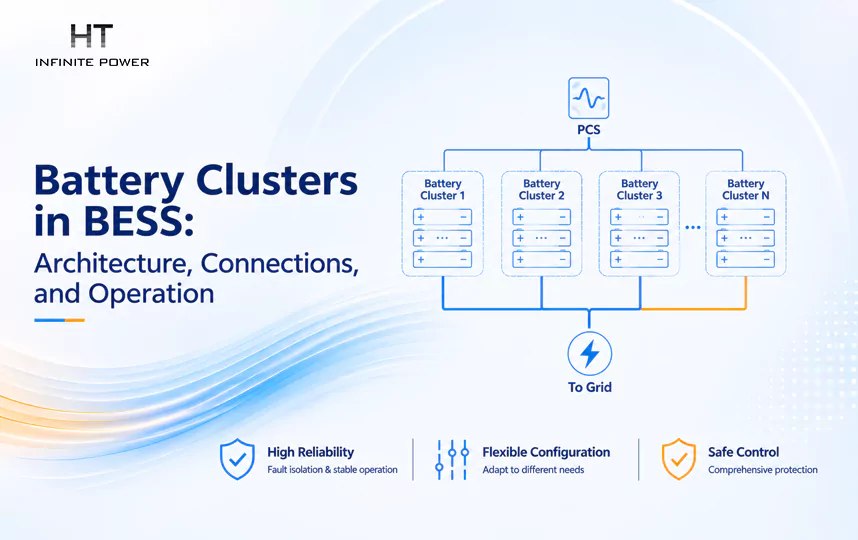
However, adding new battery clusters to an existing system requires careful evaluation of voltage compatibility, state of charge, internal resistance, current sharing, BMS communication, and protection coordination.
These factors should be considered during the initial system design, particularly when the project has long-term energy capacity requirements.
6. How to Evaluate and Compare Commercial BESS Quotations
Comparing supplier quotations requires more than checking the nominal battery capacity and total quotation value.
A meaningful comparison should start with consistent technical specifications and a clearly defined supply scope.
Check the Battery and System Configuration
Confirm that the suppliers are quoting comparable systems.
Review the battery cell manufacturer and model, chemistry, nominal capacity, usable energy, rated power, PCS configuration, DC voltage range, cooling technology, and system architecture.
A difference in cell specifications or system configuration may explain part of the quotation gap.
Review Performance Guarantees
Buyers should examine the conditions behind the supplier's performance claims.
Important parameters include:
- Guaranteed usable energy
- Continuous charge and discharge power
- Round-trip efficiency and measurement boundary
- Operating temperature range
- Capacity retention or degradation schedule
- Availability requirements
- Performance test conditions
The measurement point must be clearly defined. Battery-side DC energy, PCS-side AC energy, and energy delivered at the project connection point are not interchangeable.
Examine Warranty Conditions
Warranty terms should be assessed alongside the technical specifications.
Review the battery product warranty, capacity retention guarantee, cycle or energy throughput limits, operating restrictions, exclusions, and replacement responsibilities.
Also check the warranty coverage for PCS, EMS, and auxiliary equipment.
A longer warranty period does not necessarily mean better protection if its operating conditions and performance guarantees are unclear.
Evaluate the Supplier's Integration Capabilities
The quality of the battery cells is only one part of overall BESS performance.
System integration also affects thermal management, battery balancing, electrical protection, communication, and long-term operation.
Buyers should evaluate the supplier's experience with the proposed configuration, manufacturing and inspection processes, system testing, technical support, and after-sales service.
The supplier should also be able to explain how the battery, PCS, BMS, and EMS work together under the intended operating conditions.
Confirm the Delivery and Commissioning Scope
Finally, confirm which party is responsible for system delivery, installation, electrical integration, commissioning, acceptance testing, and handover documentation.
Clear responsibilities reduce uncertainty during project execution and help prevent unexpected changes to the original project scope.
Conclusion
The cost of a commercial battery energy storage system is influenced by more than its nominal energy capacity.
Battery cell selection, system configuration, power requirements, cooling technology, electrical infrastructure, installation conditions, and long-term operating requirements all contribute to the overall project investment.
For buyers and EPC contractors, the most effective approach is to define the required power and energy capacity first, evaluate the battery and system specifications, and compare supplier quotations against consistent technical and commercial requirements.
A lower quotation should not automatically be considered a better solution. Battery quality, integration capabilities, usable energy, performance guarantees, warranty conditions, and lifecycle requirements all need to be considered together.
A well-defined BESS specification makes supplier comparisons more meaningful and helps reduce uncertainty throughout procurement, installation, and long-term operation.
Frequently Asked Questions
What Determines the Cost of a Commercial Battery Energy Storage System?
The main factors include battery cell selection, energy capacity, rated power, PCS configuration, cooling technology, fire protection, electrical infrastructure, installation requirements, and grid connection conditions.
The intended application and long-term performance guarantees also influence system design.
Does the Battery Cell Brand Affect BESS Cost?
Yes. Different cell manufacturers and models may have different specifications, manufacturing capabilities, quality control processes, warranty arrangements, and supply conditions.
However, buyers should not compare cell brands based on reputation alone. The actual cell model, technical documentation, testing history, and warranty conditions should also be evaluated.
Is BESS Cost Determined by kWh or kW?
Both matter.
Battery-related equipment is closely associated with energy capacity, while PCS and some electrical infrastructure are more closely related to power requirements.
The operating duration and system configuration also influence the overall design.
Does a Complete BESS Quotation Include Installation?
Not necessarily.
Some suppliers provide equipment-only quotations, while others include delivery, integration, installation supervision, and commissioning.
Buyers should confirm the scope of supply and identify which project responsibilities remain outside the supplier's quotation.
Is Liquid Cooling Always Better Than Air Cooling?
No. The appropriate cooling method depends on battery configuration, thermal load, ambient conditions, operating profile, and maintenance requirements.
Both air-cooled and liquid-cooled systems can be suitable when properly designed for the application.
Why Can Two BESS Quotations With the Same Capacity Be Different?
The quotations may use different battery cell brands or models, PCS ratings, cooling systems, electrical configurations, performance guarantees, warranty conditions, and supply scopes.
A proper comparison should examine the complete technical and commercial proposal rather than relying only on nominal capacity.
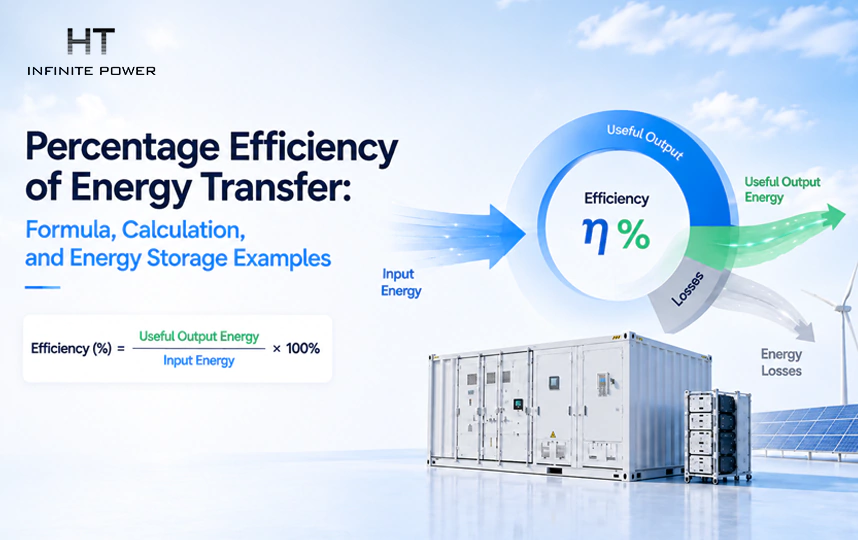
Percentage Efficiency of Energy Transfer: Formula, Calculation, and Energy Storage Examples
Lithium-Ion Battery Lifespan in BESS: Cycle Life, Degradation, and Replacement