The Rise of Long-Duration Energy Storage: Why 4-Hour+ Systems Are Reshaping the Grid
2025-10-09
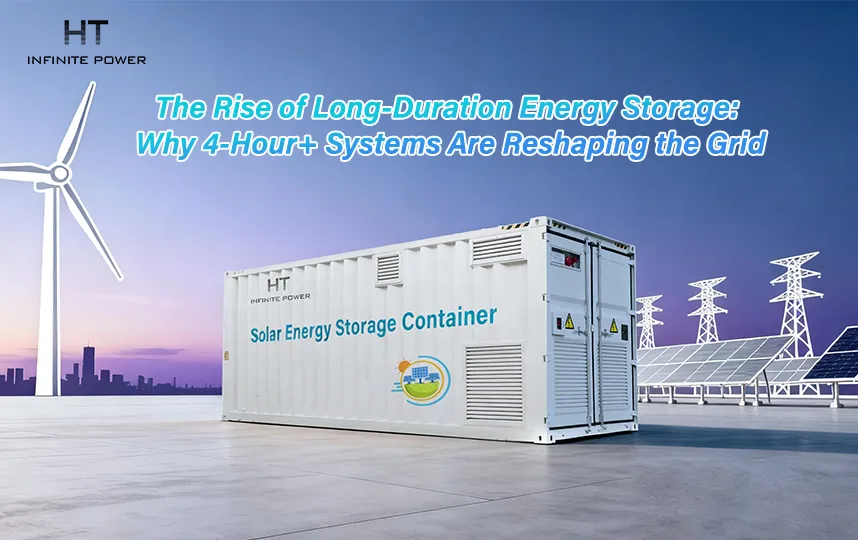
In recent years, energy storage has mostly meant “peak shaving” or buffering wind and solar over short intervals (1–2 hours). But with renewables pushing toward 50%, 60%, even 80% grid penetration, that model is showing its limits. Enter long-duration energy storage (LDES), especially systems that can deliver for 4 hours or longer. These systems are fast becoming a new grid backbone—balancing daily demand, enabling renewable smoothing, and acting as a bridge to future multi-day storage.
This article explores how 4-hour+ systems are moving from niche to mainstream, why the timing is right now, where some of the leading projects are, what challenges remain, and how these systems might reshape electricity markets in the coming decade.
Introduction: From Short Bursts to Longer Durations
Short-duration batteries (1–2 hours) have served well for smoothing short peaks, supporting frequency regulation, or handling fast ramping. But as solar and wind rides dominate daily patterns, grid operators increasingly need longer buffers—especially in evening hours when solar output falls but demand remains high. Systems that can store energy from midday solar peaks and discharge it over 4–8 hours or more are gaining strategic importance.
To illustrate, in New South Wales, Australia, the Limondale battery is being developed to deliver 8 hours of output, a clear signal that multi-hour systems are no longer fantasy but real projects.
As more grids adopt high renewable shares, the role of LDES shifts from optional resilience to essential infrastructure.
What Exactly Is Long-Duration Energy Storage?
There is no universal definition, but in practice, LDES refers to storage capable of 4 hours or more dispatch. Some jurisdictions use longer cutoffs—8, 10, or even 12 hours. For example, in U.S. states like New York, Massachusetts, and California, policymakers are defining LDES as systems that can dispatch for 8+ or even 10+ hours.
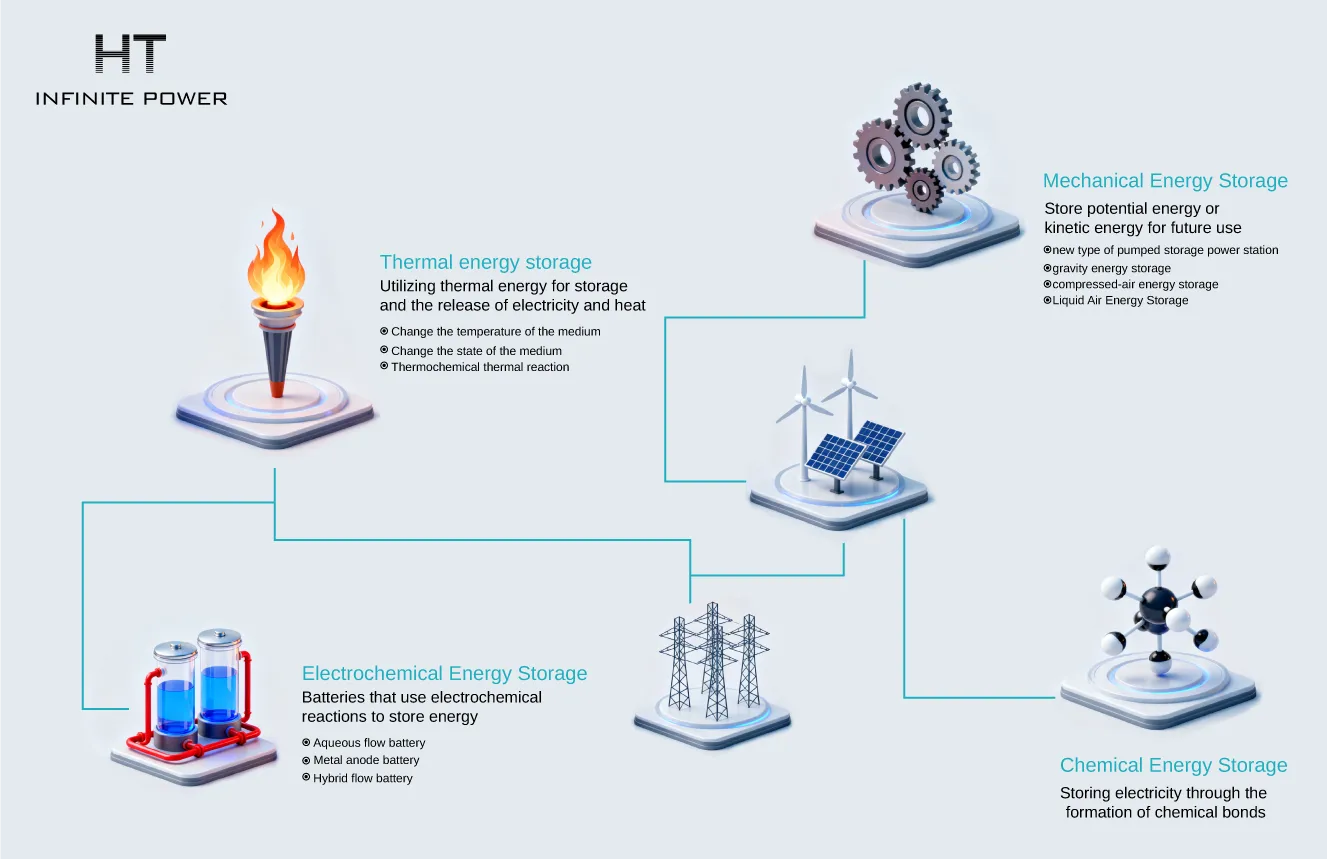
In recent industry analyses, lithium-ion is being positioned to compete even into the LDES domain: while newer chemistries (flow batteries, compressed air, thermal storage) remain under development, long-duration lithium-ion systems are increasingly common in the inter-day pipeline.
However, scaling beyond 4 hours often demands trade-offs—between energy capacity and power output, between cost per kWh and system efficiency, and in thermal or durability management.
4-Hour+ Storage: The New Standard
Because 4 hours hits a sweet spot: it bridges the gap between short-term smoothing and full-day storage without pushing into extreme technical or cost challenges. Many projects currently awarded or under development use 4-hour duration as the baseline. It represents a credible, deployable buffer for evening peaks, load shifts, and renewable smoothing.
Beyond 4 Hours: 8, 10, 12+ Hour Systems
Some grids are pushing further. The Limondale 8-hour system is one, demonstrating that moving beyond 4 hours is viable today. For more extended durations, hybrid systems combining batteries, thermal, hydrogen, or pumped hydro are emerging.
But for now, 4-hour systems offer a practical, lower-risk bridge to full LDES adoption.
But for now, 4-hour systems offer a practical, lower-risk bridge to full LDES adoption.
Key Drivers Behind the Surge
Renewables Penetration & Grid Stability Needs
As wind and solar become cheapest sources of electricity, they grow in share. But their variability causes evening “ramps down” when the sun sets or wind dies. To handle these dips, grids need storage that can ride through several hours of low generation. 4-hour+ storage is exactly suited to this daily gap.
In Europe, policy and grid operators increasingly plan storage not just for peak shaving but for energy shifting across the day. In the UK, AWS is exploring LDES to support data centers and grid flexibility.
In Europe, policy and grid operators increasingly plan storage not just for peak shaving but for energy shifting across the day. In the UK, AWS is exploring LDES to support data centers and grid flexibility.
Policy & Market Signals Favoring LDES
Governments and regulators are beginning to treat long-duration storage differently. For example, procurement programs now explicitly require multi-hour storage. Utilities are issuing tenders and RFPs for systems that deliver more than just short bursts. A recent example: Google is partnering with Salt River Project (SRP) to back LDES projects in Arizona—signaling interest from tech players beyond utilities.
Industry voices such as the LDES Council are calling this moment urgent: “We must scale long-duration storage now” is a common refrain.
Industry voices such as the LDES Council are calling this moment urgent: “We must scale long-duration storage now” is a common refrain.
Technology Advances & Cost Declines
Battery costs continue to fall, especially lithium-ion. Innovations in cell design, materials, thermal management, and stacked systems improve efficiency and durability. At the same time, emerging technologies—flow batteries, liquid-air storage, hydrogen-based storage—are maturing, expanding choices. For instance, researchers at MIT are revisiting liquid-air as a potentially low-cost grid-scale LDES option.
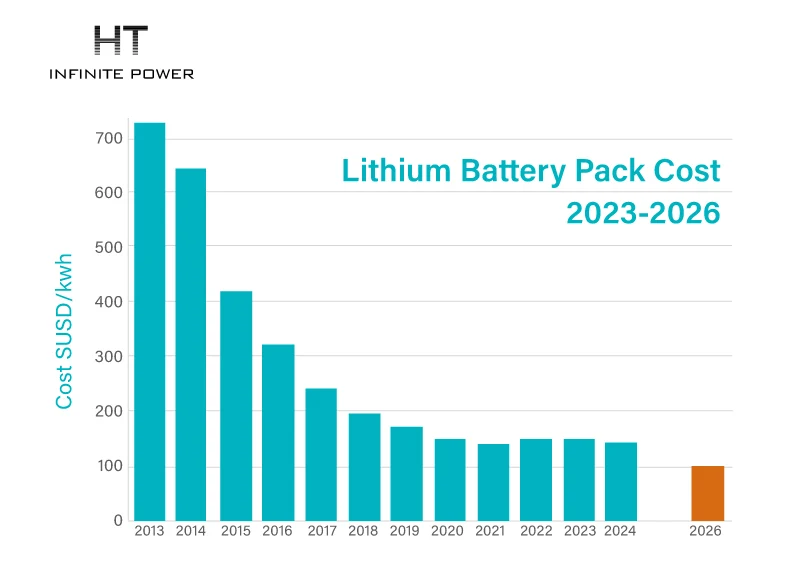
As cost curves shift and multi-hour systems achieve scale, the economics begin to favor 4-hour+ systems over shorter-duration ones in many markets.
Global Projects Pushing Boundaries
Australia’s Limondale 8-Hour Battery
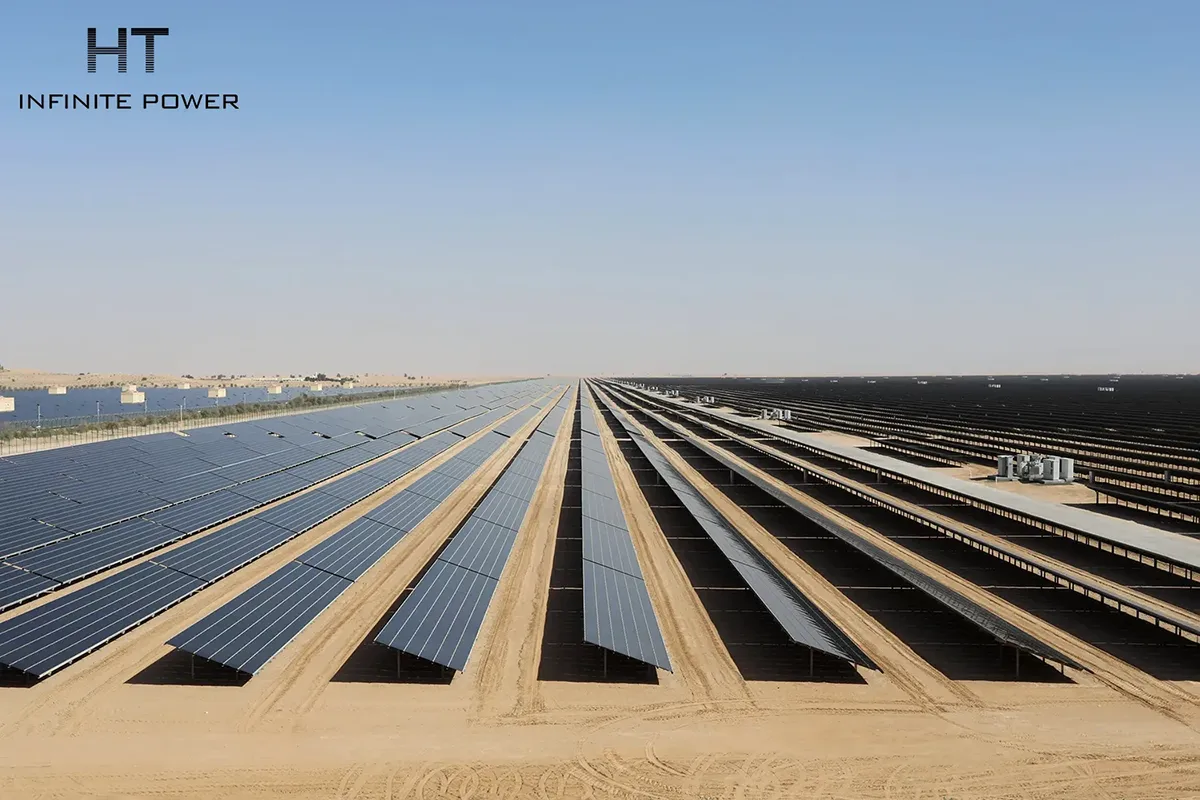
Limondale is set to deliver ~50 MW over 8 hours (i.e. ~400 MWh) paired with solar. Its purpose is to absorb midday solar peaks and discharge through evening hours, helping the grid manage what Germans call “dunkelflaute” — extended periods without sun or wind.
By going beyond 4 hours, this project is a proof point: long-duration storage is becoming operational and relevant.
By going beyond 4 hours, this project is a proof point: long-duration storage is becoming operational and relevant.
Energy Vault & Google’s LDES Partnership (SRP Project)
Google is taking a proactive role. It has joined with Salt River Project to accelerate LDES deployment, signaling confidence that the technology is emerging from pilot phase toward real grid-scale assets.
Other companies like Energy Dome, with CO₂-based battery technology, also attract strategic investment from giants like Google, as they aim to decouple dependence on lithium and offer alternatives.
Other companies like Energy Dome, with CO₂-based battery technology, also attract strategic investment from giants like Google, as they aim to decouple dependence on lithium and offer alternatives.
4-Hour Projects as Stepping Stones
While 8-hour and beyond systems make headlines, 4-hour systems remain the most common near-term step. Here are two illustrative mentions:
-
EDF Solar + 4-Hour BESS in New Mexico
EDF and El Paso Electric launched a 150 MW solar facility paired with a 75 MW / 4-hour battery to help stabilize the grid in New Mexico.
-
Michigan 4-h Projects by Energy Vault
Energy Vault signed contracts with Consumers Energy for two 4-hour BESS systems totaling 75 MW / 300 MWh, reflecting growing interest in mid-duration projects.
These are not full LDES projects but critical transitional infrastructure: they build confidence, refine economics, and help utilities and markets adapt to longer-duration storage.
Challenges & Risks in Scaling LDES
Technology Maturity & Durability
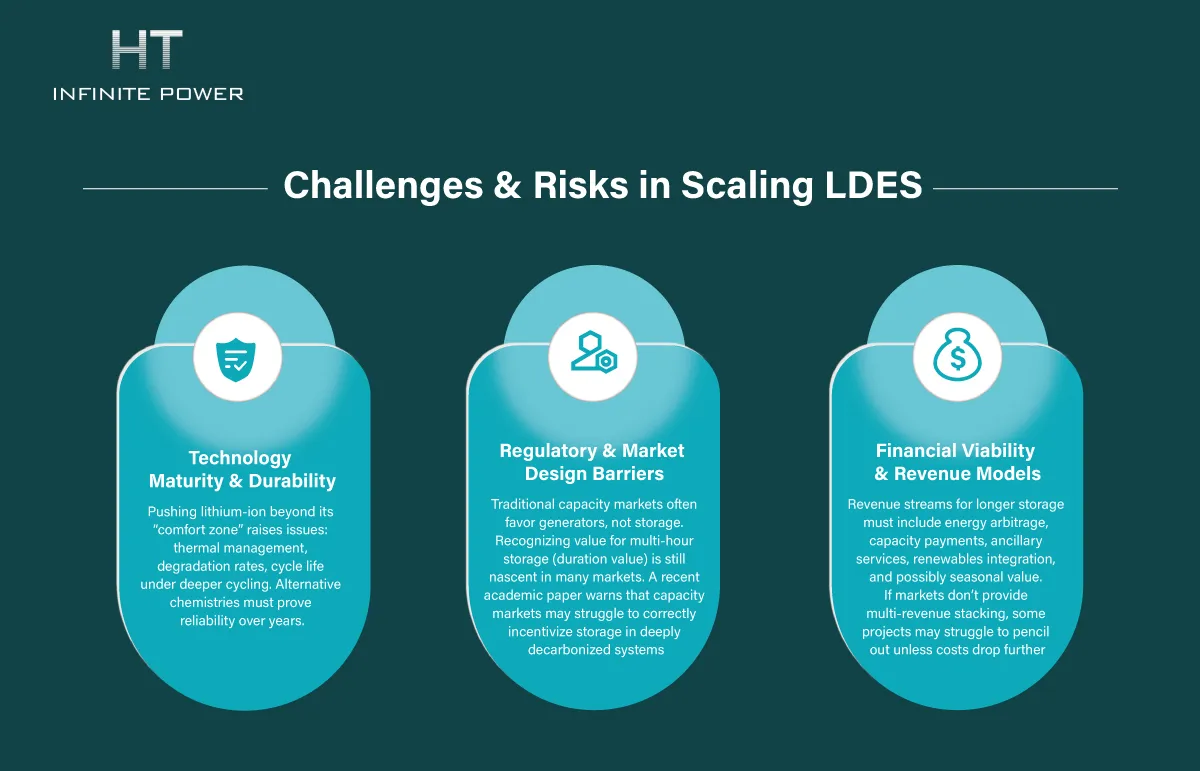
Pushing lithium-ion beyond its “comfort zone” raises issues: thermal management, degradation rates, cycle life under deeper cycling. Alternative chemistries must prove reliability over years.
Regulatory & Market Design Barriers
Traditional capacity markets often favor generators, not storage. Recognizing value for multi-hour storage (duration value) is still nascent in many markets. A recent academic paper warns that capacity markets may struggle to correctly incentivize storage in deeply decarbonized systems. arXiv
Permitting, interconnection queues, and grid codes may not yet accommodate LDES complexity, adding delays.
Financial Viability & Revenue Models
Revenue streams for longer storage must include energy arbitrage, capacity payments, ancillary services, renewables integration, and possibly seasonal value. If markets don’t provide multi-revenue stacking, some projects may struggle to pencil out unless costs drop further.
Future Outlook: Grid Stability & Market Redesign
Long-duration storage is likely to become the backbone of future grids. But its success requires evolution across domains: technology, finance, regulation, and market design. We’ll see hybrid systems combining batteries with hydrogen, thermal or pumped hydro, especially for multi-day or seasonal storage.
Regulators will need to rethink how they value duration, not just capacity or energy. Markets that reward reliability over hours, not just instantaneous power, will favor LDES.
In short: while 4-hour+ systems are already reshaping grids, the next decade will test the tech, economics, and governance needed to scale further.
Conclusion: 4-Hour+ Storage as the Backbone of Modern Grids
The rise of long-duration energy storage—starting with 4-hour+ systems—is reshaping how we think about electricity grids. No longer just for smoothing peaks, these systems are bridging daily supply-demand gaps, enabling high renewable shares, and offering resilience against intermittency. Recent projects such as Australia’s Limondale, Michigan’s 4-hour contracts, and strategic partnerships like Google + SRP underscore that this is not future speculation—it’s happening now.
To succeed, stakeholders must navigate technological durability, regulatory design, and financial models suitable for longer-duration assets. But those who do will position themselves at the center of the grid transformation.
Frequently Asked Questions
Q1. Is a 4-hour system truly “long-duration”?
Yes—while definitions vary, 4 hours is often considered the practical threshold for long-duration storage. Many projects and policies treat 4-hour or more systems as distinct from short-range storage.
Yes—while definitions vary, 4 hours is often considered the practical threshold for long-duration storage. Many projects and policies treat 4-hour or more systems as distinct from short-range storage.
Q2. Why not go directly to 8 or 12 hours?
Going beyond 4 hours increases cost, design complexity, and demands stronger thermal control. Many markets currently adopt 4-hour as a risk-balanced entry point.
Going beyond 4 hours increases cost, design complexity, and demands stronger thermal control. Many markets currently adopt 4-hour as a risk-balanced entry point.
Q3. Are lithium-ion batteries viable for 8+ hour durations?
They can be, but only with optimized designs, advanced thermal management, deeper cycling tolerance, and sometimes hybrid systems. Also, alternative chemistries may eventually compete in that space.
They can be, but only with optimized designs, advanced thermal management, deeper cycling tolerance, and sometimes hybrid systems. Also, alternative chemistries may eventually compete in that space.
Q4. Which revenue streams support LDES?
Common ones: energy arbitrage, capacity markets, ancillary services, renewables integration, grid reliability contracts, seasonal value. Multi-stacked value models are essential.
Common ones: energy arbitrage, capacity markets, ancillary services, renewables integration, grid reliability contracts, seasonal value. Multi-stacked value models are essential.
Q5. What is the biggest barrier to large-scale LDES today?
Probably regulatory and market design misalignment: many grids and markets are not yet structured to properly reward long-duration flexibility and storage duration value.
Probably regulatory and market design misalignment: many grids and markets are not yet structured to properly reward long-duration flexibility and storage duration value.
System Integrators vs Cell & Module Manufacturers: Cost, Customization and Global Delivery
Global Energy Storage Expansion: Opportunities in Emerging Markets (Middle East, Southeast Asia, Africa)