How to use old batteries?
2025-02-17

With the rapid development of the new energy vehicle industry, the demand for lithium batteries for vehicles is also increasing. However, the generation of a large number of waste lithium batteries also poses challenges to the environment and resources. Therefore, the recycling technology of waste lithium batteries has become a hot topic in current research.
This article will review the current main methods and technologies for recycling and treating waste lithium batteries.
At present, there are two main recycling technologies for used automotive batteries: secondary utilization and regeneration.
Secondary utilization refers to the testing, screening and reorganization of used batteries so that they can continue to be used in other fields, such as energy storage systems, electric bicycles, etc.
Regeneration refers to the disassembly, separation and purification of used batteries to recover valuable metal elements such as lithium, cobalt, nickel, etc.
1.The operation process of recycling old lithium batteries

(1). Battery collection and pretreatment
Collection:
Recycling retired lithium battery packs from new energy vehicles, electric bicycles and other equipment. During the collection process, the integrity of the battery must be ensured to avoid further damage to the battery due to transportation, storage and other reasons.
Cleaning and discharging:
The recycled lithium battery packs are thoroughly cleaned and discharged to eliminate the residual power inside the battery and reduce safety risks. This step usually uses professional discharge equipment to discharge the battery power to a safe range.
(2). Disassembly and testing
Disassembly:
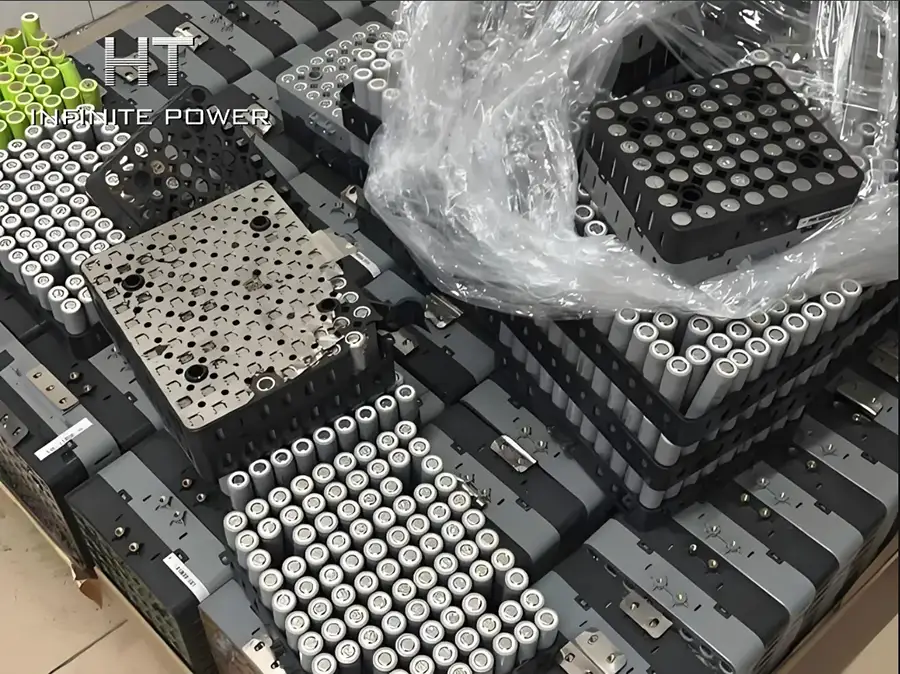
Disassemble the discharged lithium battery pack, remove the box cover, busbars and module screws, take out the module, and then further decompose the module to remove the battery cell.
Appearance inspection:
Perform an appearance inspection on the removed battery cells to select the battery cells with intact appearance and no obvious damage and deformation. For battery cells with problems such as damage and leakage, they need to be handled separately and are generally no longer recycled.
(3). Sorting and grouping
Sorting:
Sort the cells according to the test results. Group cells with similar performance into a group for subsequent reorganization and use. The sorting criteria can be determined according to specific application scenarios and needs, such as sorting according to parameters such as the remaining capacity, internal resistance, and voltage of the cells.
Grouping:
Group the sorted cells according to certain rules to form battery modules. During the grouping process, the matching between the cells needs to be considered to ensure the performance and safety of the battery module.
(4). Reorganization and packaging
Reorganization:
Reorganize the grouped battery modules, connect the cells by welding, connection, etc. to form a complete battery pack. During the reorganization process, attention should be paid to the structural design and electrical connection of the battery pack to ensure the reliability and safety of the battery pack.
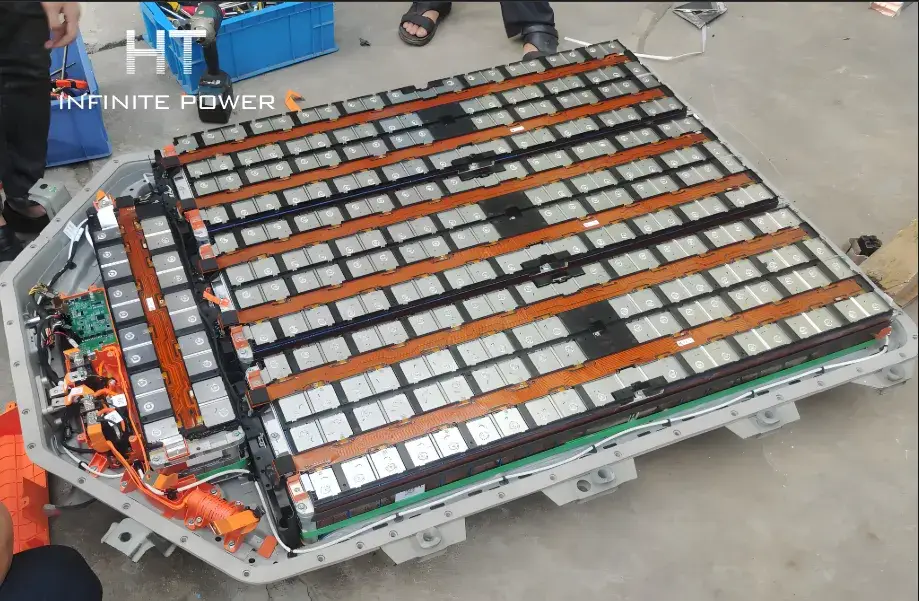
Install the battery management system (BMS):
In order to effectively manage and monitor the battery packs for cascade utilization, a battery management system needs to be installed. BMS can monitor the voltage, current, temperature and other parameters of the battery pack in real time to prevent the battery from overcharging, over-discharging, overheating and other problems, and protect the service life of the battery.
Packaging:
Package the reorganized battery pack, add protective measures such as the outer shell and insulation layer, and improve the mechanical strength and safety of the battery pack. The packaged battery pack needs to be labeled with the battery model, capacity, production date and other information.
(5). Performance testing and verification
Performance testing:
Conduct comprehensive performance testing on the packaged battery pack, including charging and discharging performance, cycle life, safety performance and other tests. The test conditions and standards need to be determined according to the specific application scenarios and requirements to ensure that the performance of the battery pack meets the requirements.
Verification:
Apply the qualified battery pack to the actual scenario for verification, such as trial use on energy storage power stations, low-speed electric vehicles and other equipment. Through the verification of actual applications, the performance and reliability of the battery pack can be further tested, and potential problems can be discovered and solved.
(6). Application and maintenance
Application:
Apply the verified qualified battery packs to appropriate fields, such as energy storage, low-speed electric vehicles, solar street lights, etc. During the application process, the battery packs need to be regularly maintained and managed, including charging, discharging, temperature control, etc., to ensure the normal operation of the battery packs.
Retirement and reprocessing:
When the performance of the battery packs used in cascades decreases to the point where they cannot meet the application requirements, they need to be retired. The retired battery packs can be recycled, and the valuable metals and materials in them can be recovered through disassembly, refining, etc.
2.Ways to recycle old lithium batteries
The treatment methods for waste lithium-ion batteries that cannot be recycled include physical recycling, chemical recycling, and biological recycling.
(1).Physical recycling method
It mainly separates the components in waste lithium-ion batteries through physical means such as mechanical crushing, screening, magnetic separation, and gravity separation.
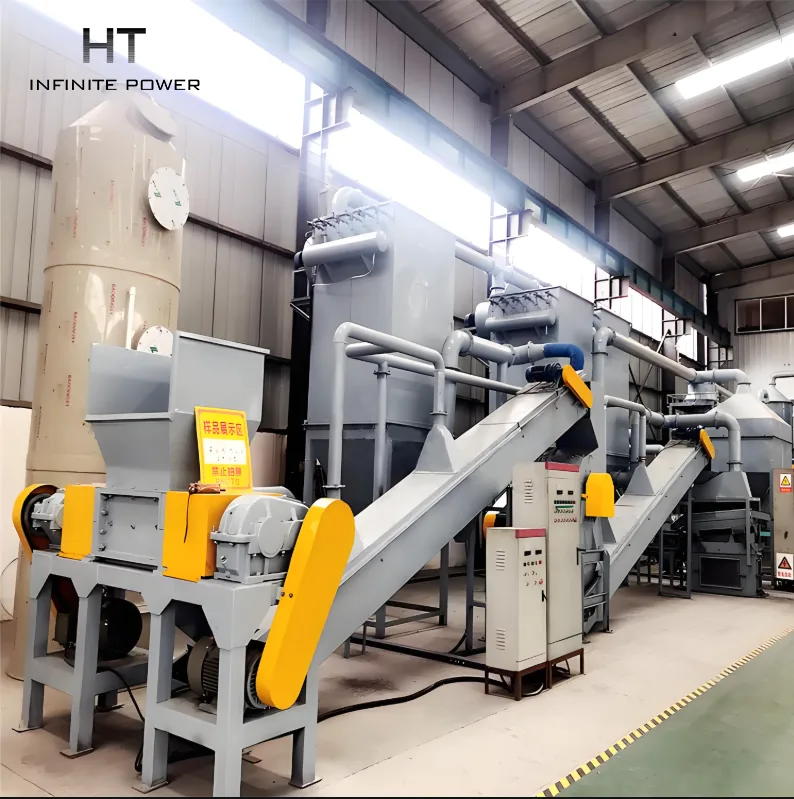
This method is simple to operate, has a high recovery rate of metals and black powder, is stable in operation, and is equipped with environmental protection devices to avoid secondary environmental pollution. The physical recycling method is mainly suitable for large-scale waste battery recycling and processing, and can achieve efficient separation through automated production lines.
(2).Chemical recovery method
It mainly separates metal elements and organic matter in waste lithium-ion batteries through chemical reactions. Commonly used chemical recovery methods include acid leaching, alkali leaching, high-temperature smelting, etc.
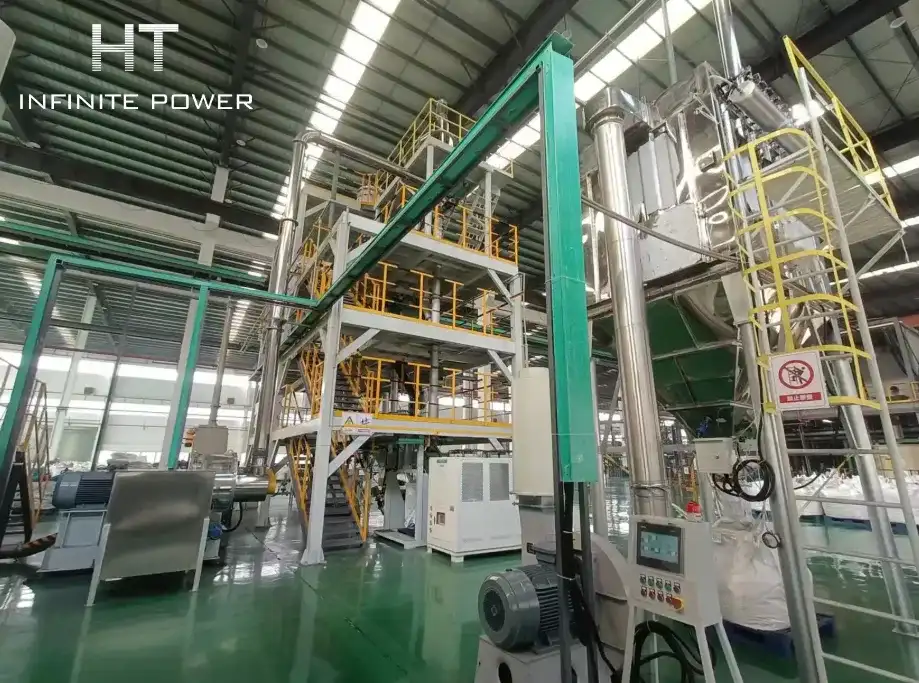
The chemical recovery method has a high recovery efficiency and can obtain metal elements with higher purity, but the operation process is more complicated and has high requirements for equipment and technology. At the same time, it will also produce certain pollutants such as wastewater and waste gas, which need to be subsequently treated.
(3).Biological recovery method
It mainly extracts metal elements from waste lithium-ion batteries through biological action. The biological recovery method has the advantages of environmental protection and low energy consumption, but it is still in the research stage, the recovery efficiency is low, and the composition requirements of waste batteries are high.
In short, the treatment method of waste lithium-ion batteries needs to be selected according to the specific situation, and it is necessary to pay attention to environmental protection issues and strengthen supervision and management. Through scientific and reasonable treatment methods and measures, the effective recycling of waste lithium-ion batteries can be achieved, environmental pollution and harm can be reduced, and sustainable development can be promoted.
What is a solid-state battery?
How to best store lithium batteries?