Photovoltaic + energy storage + agriculture is opening up a new future
2024-09-12
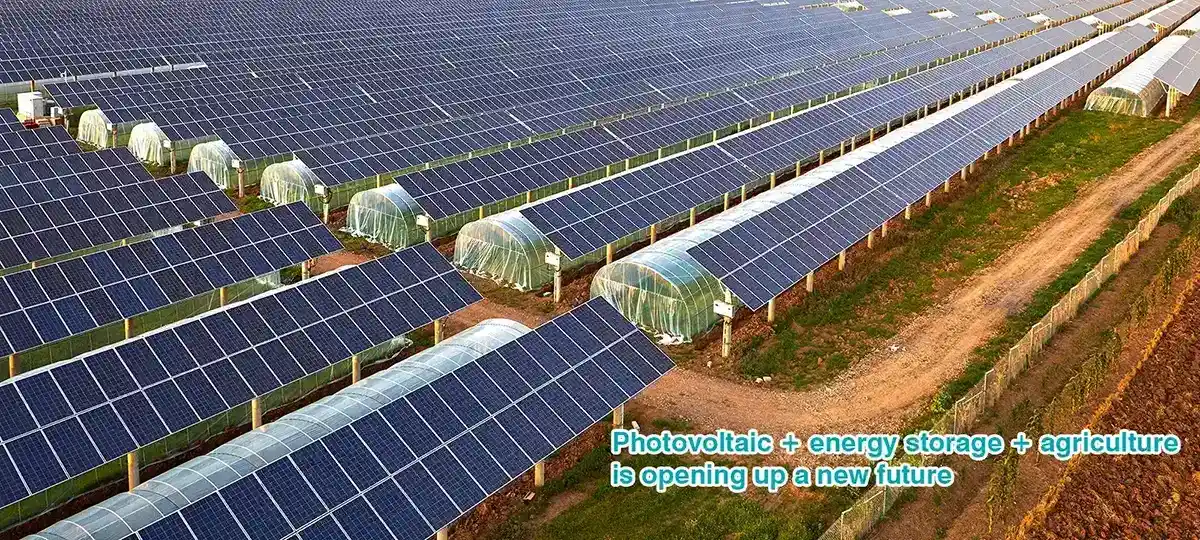
Driven by the global energy transformation and agricultural modernization, the integration model of photovoltaic + energy storage + agriculture is gradually emerging. This innovative combination not only opens up a new path for the production of clean energy, but also provides new impetus for the development of modern agriculture. Photovoltaic + energy storage + agriculture (i.e. "photovoltaic energy storage agriculture") maximizes the dual use of land by installing photovoltaic panels above farmland, achieving a win-win situation for energy and agriculture.
I. Advantages of photovoltaic + energy storage + agriculture
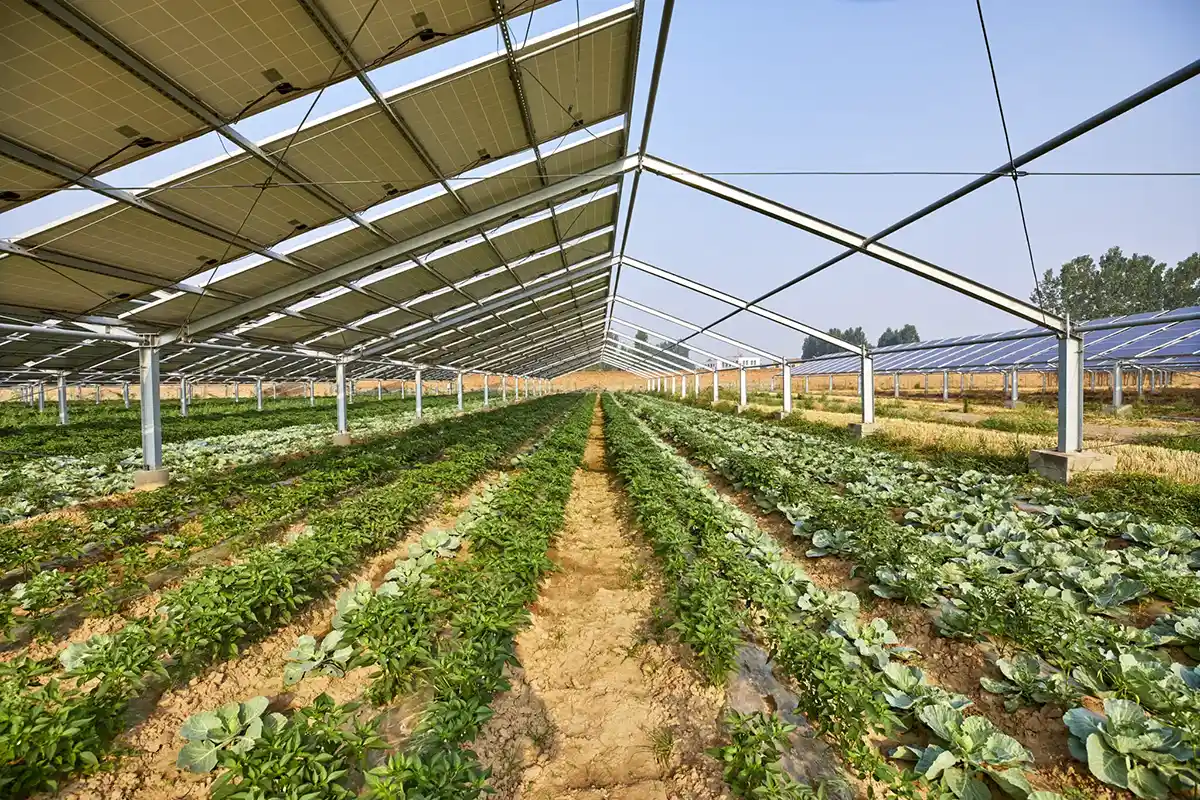
1. Dual utilization of land resources
Value-added utilization: By installing photovoltaic power generation systems on agricultural land, dual utilization of land resources can be achieved, which can not only carry out agricultural production, but also generate electricity to increase income.
Reduce land competition: Effectively alleviate the competitive pressure of agriculture and photovoltaic power generation on land resources.
2. Improve economic benefits
Multiple benefits: Farmers or landowners can obtain dual benefits of agricultural income and photovoltaic power generation income, improving overall economic benefits.
Reduce risks: Reduce the market risk of a single industry through diversified operations.
3. Improve the ecological environment
Reduce carbon emissions: Photovoltaic power generation is a clean energy that reduces the use of fossil fuels and helps reduce carbon emissions and greenhouse gas emissions.
Protect the soil: Photovoltaic panels can shade crops, reduce water evaporation, protect soil moisture, and reduce soil erosion.
4. Improve energy self-sufficiency
Energy supply: Photovoltaic power generation systems can provide a stable power supply for agricultural production, especially in remote areas or areas with insufficient grid coverage.
Energy security: Reduce dependence on external energy and improve energy security.
5. Promote agricultural modernization
Intelligent management: Use the electricity generated by the photovoltaic system to support intelligent agricultural equipment, such as sensors, automatic irrigation systems, etc., to improve the intelligence and automation level of agricultural production.
Data analysis: Improve the level of refined management of agricultural production through data collection and analysis.
II. Technical Implementation

1. Photovoltaic System Design
The design of photovoltaic agricultural system needs to comprehensively consider the arrangement of photovoltaic panels, installation height, angle adjustment, wind load, snow load and other factors to ensure the safety and power generation efficiency of the system. At the same time, it is necessary to consider the light demand of crops, reasonably adjust the spacing and inclination of photovoltaic panels, and ensure the normal growth of crops.
a) Light and shadow management
Photovoltaic panel layout: Reasonably design the arrangement of photovoltaic panels to ensure that the impact of photovoltaic panels on crop light is minimized. Select crops suitable for growing in partial shade, such as shade-loving plants and shade-tolerant plants.
b) Select high-efficiency components and inverters with appropriate capacity ratio
Select photovoltaic components with high conversion efficiency to increase power generation. To adapt to the agricultural environment, components with good weather resistance and corrosion resistance should be selected, which can be monocrystalline silicon components or bifacial components.
Inverter selection comprehensively considers capacity ratio and power conversion efficiency.
c) Bracket design
The elevated bracket design is adopted, and the installation height of the photovoltaic panel is generally between 3-5 meters, which is convenient for agricultural machinery operation and personnel passage. Adjustable angle brackets can also be used to adjust the tilt angle of the photovoltaic panel according to the season and crop needs to optimize the use of light. Wind and snow loads must be considered in the bracket design process.
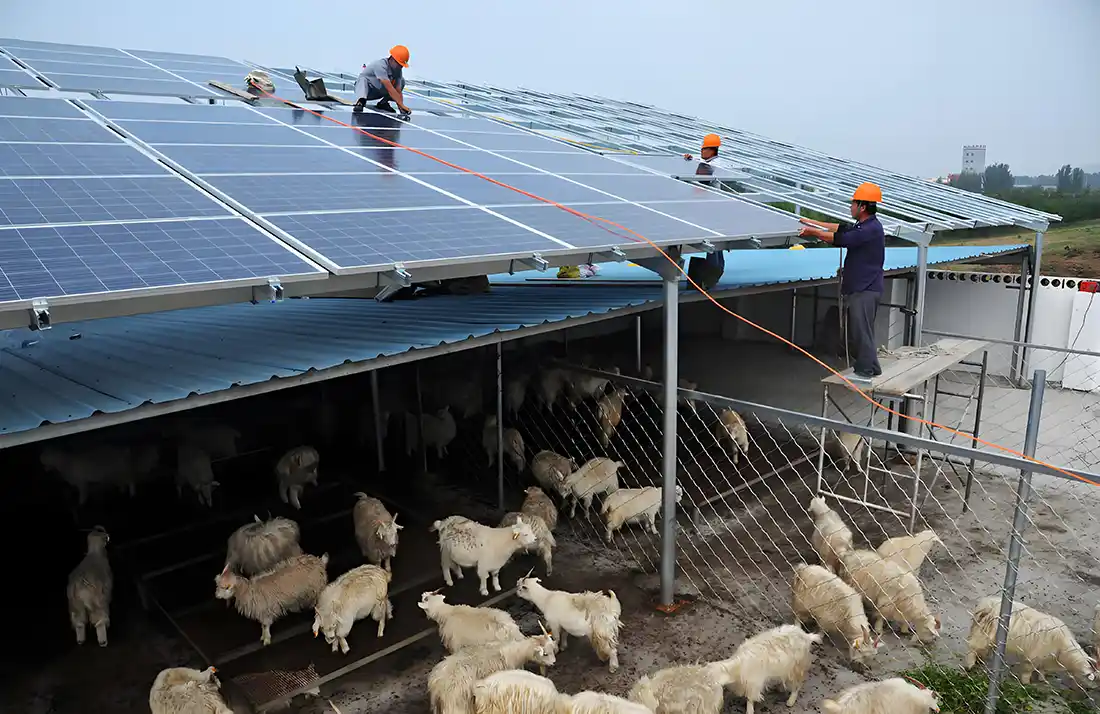
2. Power system integration
The power generated by the photovoltaic power generation system can be directly connected to the grid, or it can be used for agricultural production facilities (irrigation system design, greenhouse regulation, light regulation, etc.), or stored in energy storage batteries as a backup power supply, such as 100 kwh battery . A reasonable power system needs to be designed, including inverters, distribution cabinets, cables and other equipment to ensure stable and efficient power transmission.
3. Intelligent management system
Use technologies such as the Internet of Things and big data to manage photovoltaic agricultural systems intelligently. Sensors are used to monitor parameters such as light, temperature, humidity, soil moisture in real time to achieve automatic control and precise management, thereby improving agricultural production efficiency and photovoltaic power generation benefits.
4. Agricultural planting mode
Suitable crop selection: Choose crops suitable for planting under photovoltaic panels, such as shade-loving plants or crops that do not require high light. For example, mushrooms, strawberries, tea, Chinese medicinal materials, etc.
Planting density and method: Adjust the planting density and method to optimize crop growth according to the layout of photovoltaic panels and light conditions. Inter-row planting, three-dimensional planting, etc.
Water and fertilizer management: Rationally manage the supply of water and fertilizer to ensure the healthy growth of crops under photovoltaic panels. It can be achieved through intelligent irrigation systems such as drip irrigation and sprinkler irrigation.
Planting density and method: Adjust the planting density and method to optimize crop growth according to the layout of photovoltaic panels and light conditions. Inter-row planting, three-dimensional planting, etc.
Water and fertilizer management: Rationally manage the supply of water and fertilizer to ensure the healthy growth of crops under photovoltaic panels. It can be achieved through intelligent irrigation systems such as drip irrigation and sprinkler irrigation.
III. Problems with PV + Energy Storage + Agriculture

High initial investment cost: The installation of a PV power generation system requires a high initial investment, including the purchase and installation costs of PV panels, brackets, energy storage batteries, inverters and other equipment. Small and medium-sized farmers may face financing difficulties and find it difficult to bear the high initial investment.
High technical requirements: The PV + Energy Storage + Agriculture integration model requires professional technical support and management, involving professional knowledge in both PV power generation and agricultural production. In addition, the daily maintenance and management of the PV system requires certain technical and financial investment.
Land use restrictions: Not all types of agricultural production are suitable for combination with PV power generation, and it is necessary to select appropriate crops and PV system layouts according to specific circumstances.
Crop selection restrictions: Some high-stalk crops or crops that require full sunlight may not be suitable for planting under PV panels.
Policy and market uncertainty: The development of PV + Energy Storage + Agriculture projects depends to a large extent on the support of government policies, such as subsidies and tax incentives. The benefits of PV power generation are greatly affected by market electricity price fluctuations and there is a certain degree of uncertainty.
IV. Future Prospects
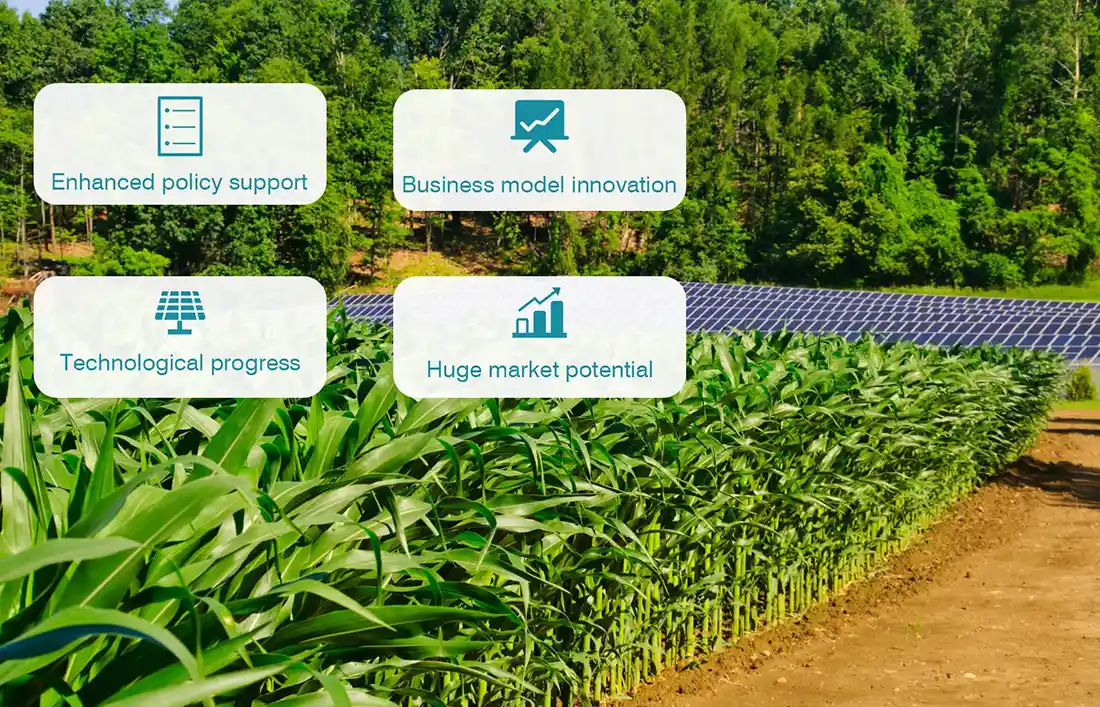
1. Enhanced policy support
With the global emphasis on renewable energy and agricultural modernization, governments will further strengthen policy support for photovoltaic agriculture. This includes providing financial subsidies, tax incentives, technical training and other measures to encourage farmers and enterprises to invest in photovoltaic agriculture.
2. Technological progress
The continuous progress of photovoltaic power generation technology and intelligent agricultural technology will further improve the efficiency and reliability of photovoltaic agricultural systems. In particular, the application of new high-efficiency photovoltaic components, intelligent control systems and other technologies will greatly improve the overall benefits of photovoltaic agriculture.
3. Business model innovation
The business model of photovoltaic agriculture will continue to innovate. Through cooperation with financial institutions, energy companies, and agricultural companies, explore a variety of financing and operation models, reduce the initial investment pressure of farmers, and achieve sustainable development of photovoltaic agriculture.
4. Huge market potential
As people's awareness of green environmental protection and sustainable development continues to increase, the market demand for photovoltaic agriculture will gradually expand. Especially in developing countries, photovoltaic agriculture can effectively solve the problems of energy shortage and agricultural inefficiency, and has broad development prospects.
Advantages and benefits of installing photovoltaic power plants in the desert
Is my roof suitable for installing a solar photovoltaic power generation system? How much installation area do I need?