How Much Can a Photovoltaic System Save on Your Electricity Bill?
2025-04-07
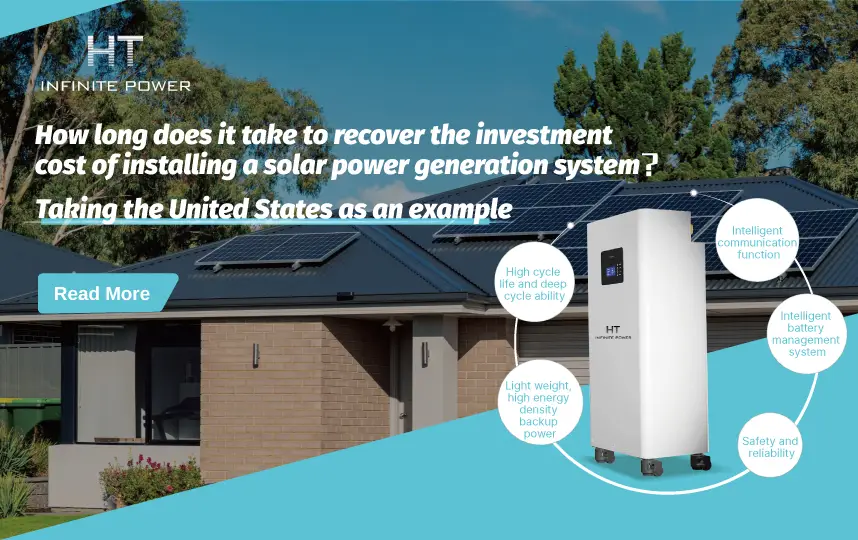
How long does it take to recover the investment cost of installing a solar power generation system - Taking the United States as an example.
In the United States, a family's monthly electricity bill is about $200. If you want to install a 10KW solar system , you can choose between two options: with or without energy storage batteries. You want to know how long the return on investment will be and which one is more suitable.
In this article, we will analyze in detail the return on investment of two solutions: photovoltaic power generation system and photovoltaic power generation system with energy storage batteries.
Electricity Price and Household Consumption
First, you need to know the electricity price in the United States. The average electricity price is about $0.15 per kWh, but it varies greatly from state to state. For example, California may be higher and Texas may be lower. If a user has a monthly electricity bill of $200, then the monthly electricity consumption is about 200 divided by 0.15, which is about 1,333 kWh. However, the actual electricity price may be different, and the electricity price in the user's state may be higher or lower. This data needs to be confirmed, but the user did not provide it, so it may be necessary to use the average value.
Choosing the right energy storage system?
Next, the power generation of a 10KW solar system in different regions is different. For example, in a sunny area, the annual power generation may be around 14,000 kWh, while the light may be around 12,000 kWh. Assume that the average annual power generation is about 12,000 to 15,000 kWh. This is about 1,000 to 1,250 kWh per month, which may cover part or all of the user's electricity consumption, depending on the matching of power generation and power consumption time.
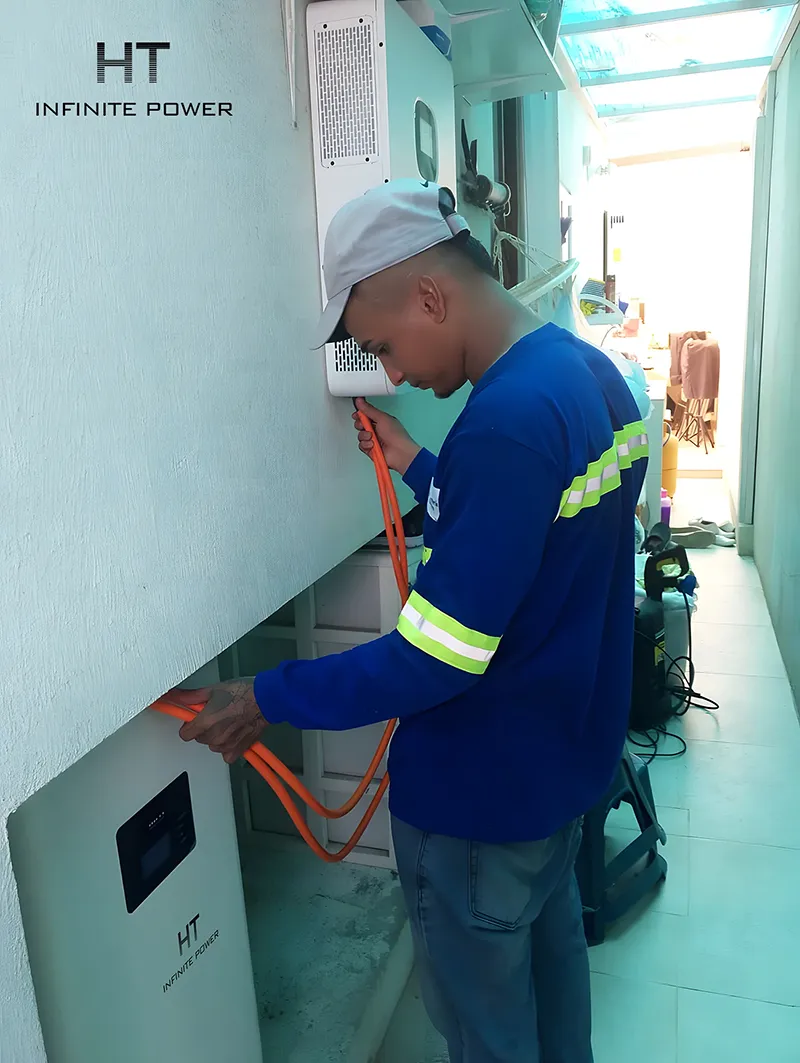
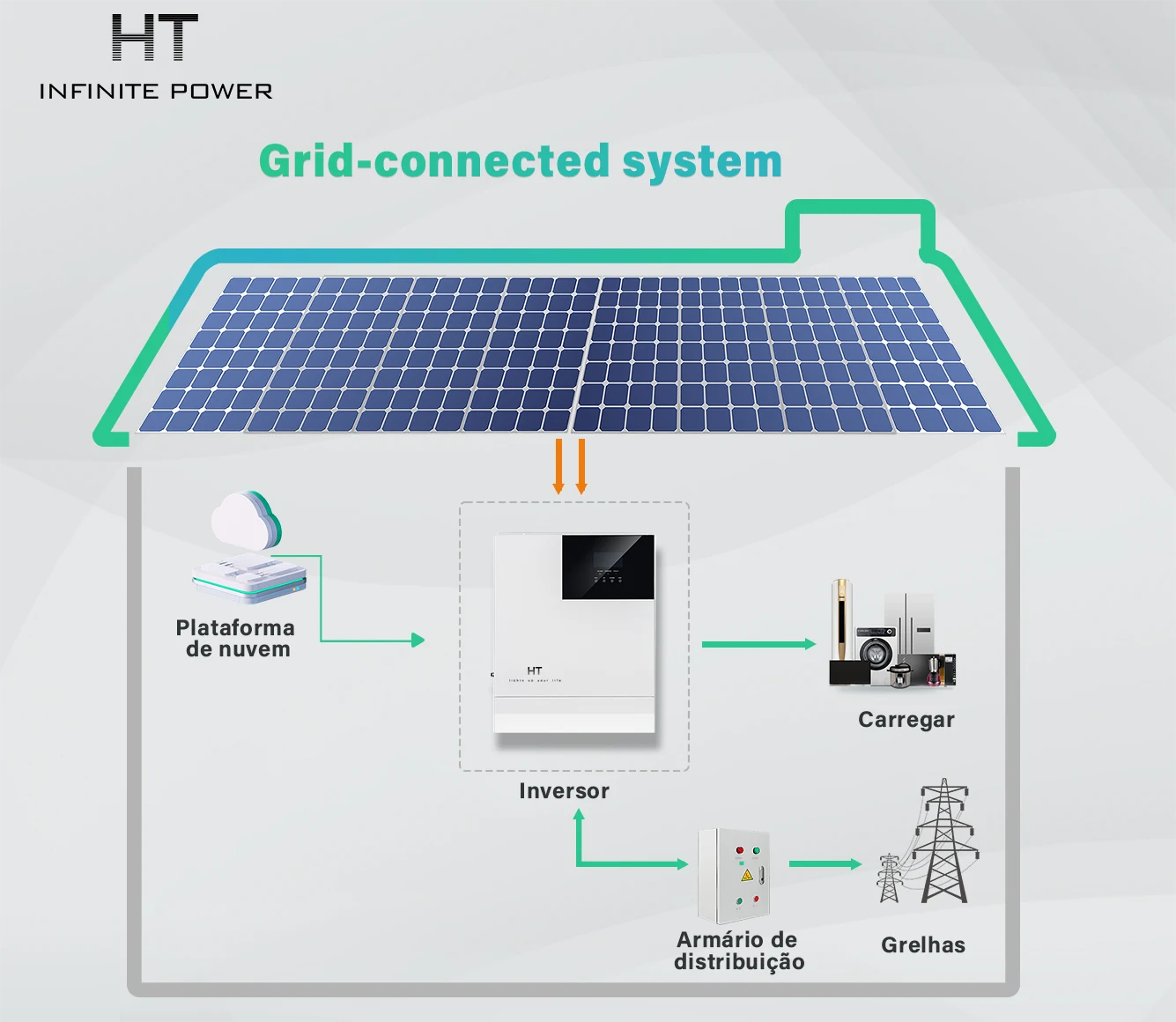
Without energy storage, if the electricity generated during the day is not used up, it can be sold to the grid, but some places have net metering electricity prices, and some may purchase at a price lower than the retail electricity price. At this time, the benefits of putting surplus electricity on the grid should be considered. If the electricity price is high and the net metering policy is good, the return without energy storage will be faster. Although energy storage is more expensive, it can be used at night or during power outages to increase self-sufficiency and reduce dependence on the grid, which is especially cost-effective in places where there is a large difference between peak and valley electricity prices or frequent power outages.
Cost and Payback Period Calculation
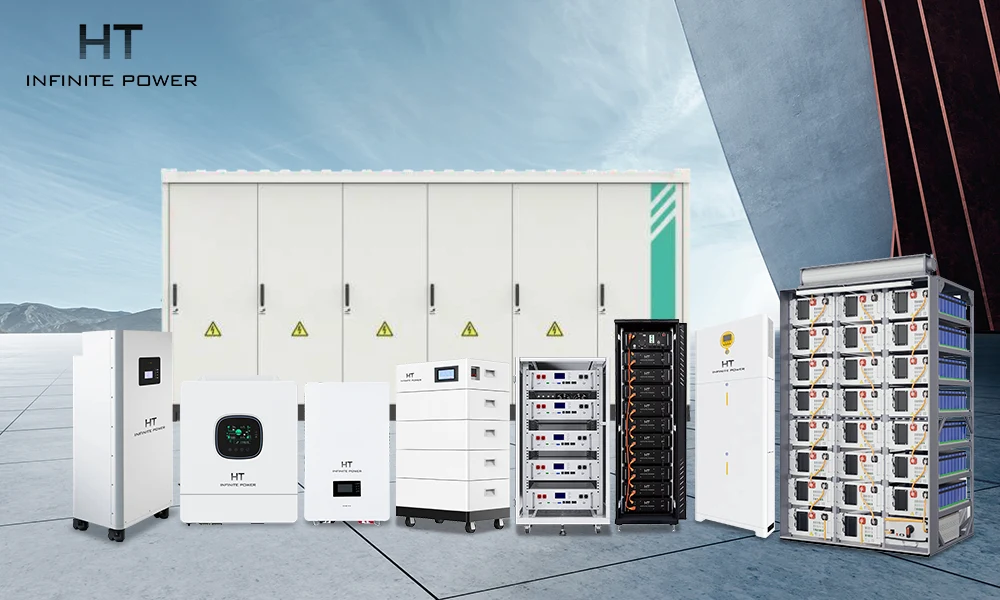
Now calculate the cost of the two options. The average cost of a 10KW system without energy storage in the United States is about $20,000, and the installation cost may be added, so the total cost may be around $25,000. For a system with energy storage , such as adding a 10kWh battery, the cost may increase by about $3,000, and the total cost may be around $28,000. But it depends on the type of battery. For example, the price of Tesla Powerwall is about $8,000 each, but the installation cost may be higher, so the overall cost may be higher. The price of other brands is much lower.
Then calculate the electricity cost saved. Without energy storage, assuming that the system can cover 80% of the user's electricity consumption, it will save $160 per month and $1,920 per year. Or if it is fully covered, it will save $2,400 per year. But in reality, it may be necessary to consider the sale of surplus electricity, such as if the electricity generated during the day is not used up, and it may save more by net metering. Assume that the system generates 14,000 kWh of electricity per year and the user consumes 16,000 kWh of electricity per year (200*12/0.15, assuming the electricity fee is 0.15, the user's annual electricity consumption is 200*12=2,400 US dollars, and 0.15 is 16,000 kWh. Therefore, the system generates 14,000 kWh of electricity, which may cover most of the electricity consumption, but it depends on the real-time usage. More precise calculations may be required.
Or another way, the user's monthly electricity bill is 200 US dollars. After installing solar energy, assuming that all electricity consumption is covered, it will save 2,400 US dollars per year. The system cost without energy storage is 25,000, and the return is The period is 25000/2400≈10.4 years. If there is surplus electricity to sell, it may be faster. But there may be maintenance costs, or factors such as reduced system efficiency, so you may need to take it into account.
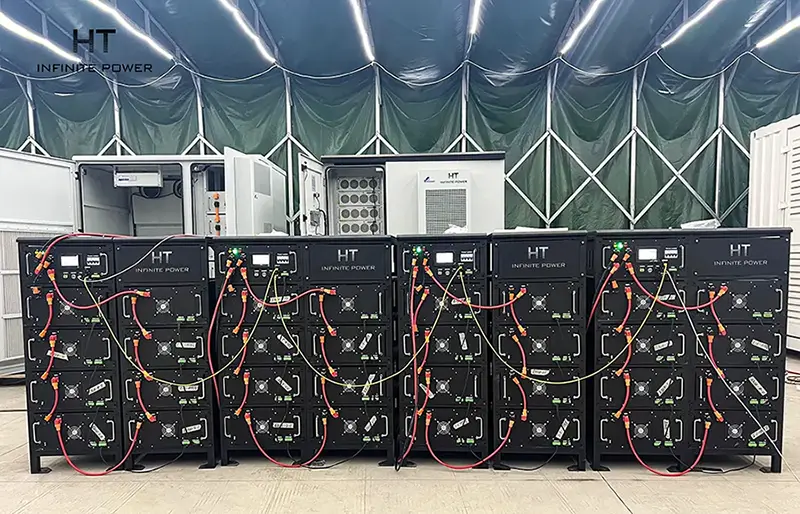
A system with energy storage, assuming a cost of $30,000, covers more self-use electricity, such as using stored electricity at night to reduce electricity purchases from the grid. It may be more cost-effective in places where electricity prices are charged by time of use, such as when peak electricity prices are high, storing electricity during low-price periods and using it during peak hours to save more. But if there is no time-of-use electricity price, the savings may not be obvious. In addition, energy storage can provide backup power during power outages and increase reliability.
Assuming that with energy storage, users almost don't need to buy electricity from the grid, saving all $2,400 per year, but the system cost is $30,000, and the payback period is $30,000/2,400≈12.5 years. This may be longer than without energy storage, but the battery life needs to be considered. For example, lithium batteries generally last about 10 years and may need to be replaced, which will increase costs. However, if electricity prices rise, the payback period may be shortened.
Incentives, Battery Lifespan, and Regional Differences
In addition, federal tax credits must be considered. The United States has a 26% solar investment tax credit, and this ratio may remain in 2023. This will reduce the actual cost. For example, without energy storage, the cost is $25,000, and after the credit, it is $25,000*0.74=18,500, and the payback period is $18,500/2,400≈7.7 years. With energy storage, the cost is $30,000, and after the credit, it is $30,000*0.74=22,200, and the payback period is $222/2,400≈9.25 years. This may be more practical.
But there may be other state or local subsidies, which will affect the results. In addition, the system life span is generally 25 years for solar panels and about 10 years for energy storage batteries. Therefore, a system without energy storage may not need major replacement within 25 years, while energy storage may require mid-term battery replacement, which increases costs. Therefore, when calculating the payback period, you may need to consider the cost of replacing the battery. For example, replacing the battery after 10 years will cost $3,000, which will result in a higher total cost and a longer payback period.
In addition, if the electricity price rises by 3% each year, the cost savings will also increase year by year, which may shorten the payback period. However, for simplicity, inflation may not be considered for the time being and static calculations may be used.
In addition, whether the user takes out a loan for installation and the interest expenses will also affect the rate of return, but it is assumed that the user pays in full.
Summary
In summary, the payback period without energy storage may be 7-8 years, and with energy storage may be 8-9 years, depending on the specific costs and savings. Therefore, if the user's main demand is economic returns, it is better to not have energy storage. But if the user cares about energy independence, dealing with power outages, or time-of-use electricity prices, it may be more appropriate to have energy storage.
It is necessary to verify whether these data are accurate, such as system costs, power generation, subsidies, etc. The situation may be different in different states in the United States, and specific analysis is required, but users may want to get a rough estimate, so it is more appropriate to give a range.
Recommendation
In the United States, the return on investment (ROI) of installing a 10KW solar system depends on multiple factors, including geographical location, electricity price policy, system cost, subsidy policy, etc. The following is an analysis and suggestions for the two options:
1. Basic assumptions
● Household electricity demand:
Monthly electricity bill of 200, annual average electricity bill of 200, annual average electricity bill of 2,400 (assuming electricity bill of $0.15/kWh, annual average electricity consumption of about 16,000 kWh).
● System power generation capacity:
10KW solar system generates about 12,000-15,000 kWh per year (depending on light conditions).
● Federal tax credit:
26% (2023 policy), which can reduce actual costs.
● Energy storage battery life:
About 10 years (replacement costs need to be considered).
2. Comparison of plans
● Without energy storage battery
Cost: about 20,000-20,000-30,000 (about 14,800-14,800-22,200 after credit).
Annual electricity bill savings:
If 80% of electricity consumption is covered (about 12,800 kWh), annual savings are $1,920.
If the surplus electricity is connected to the grid (net metering policy), a higher proportion may be covered.
Payback period:
Cost after credit / annual savings = 14,800 / 1,920 ≈ 7.7 years Cost after credit/annual savings = 14,800/1,920 ≈ 7.7 years
(If electricity consumption is fully covered, the payback period is shorter).
● With energy storage battery (10kWh)
Cost: about 30,000
Annual electricity savings:
Increase the proportion of self-use electricity to 90%+ (reduce peak electricity price expenditure).
If the electricity price is charged by time of use or power outages are frequent, the savings will be more significant.
Investment payback period:
25000 / 2,400≈10.4 (after tax deduction)
3. Key influencing factors
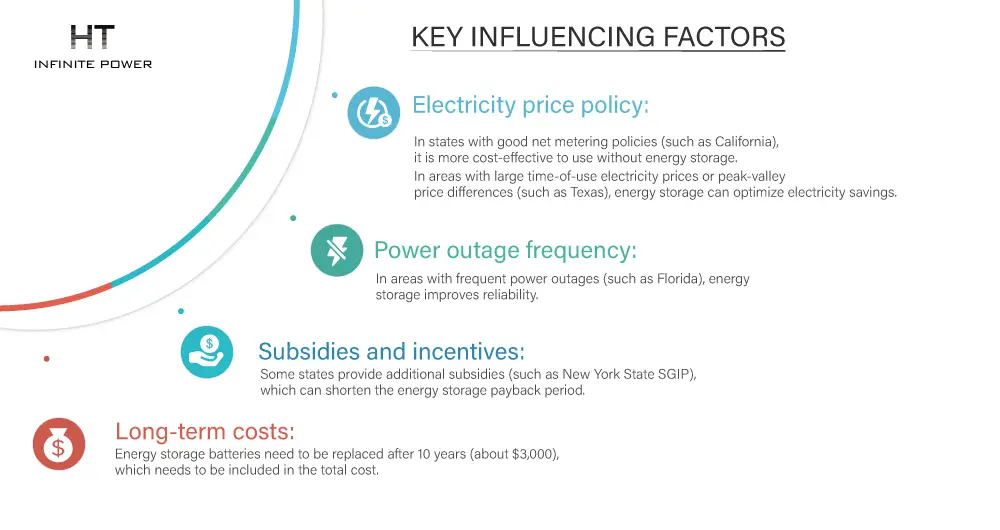
● Electricity price policy:
In states with good net metering policies (such as California), it is more cost-effective to use without energy storage.
In areas with large time-of-use electricity prices or peak-valley price differences (such as Texas), energy storage can optimize electricity savings.
● Power outage frequency:
In areas with frequent power outages (such as Florida), energy storage improves reliability.
● Subsidies and incentives:
Some states provide additional subsidies (such as New York State SGIP), which can shorten the energy storage payback period.
● Long-term costs:
Energy storage batteries need to be replaced after 10 years (about $3,000), which needs to be included in the total cost.
4. Recommendations
● Without energy storage, it is more economical:
The payback period is about 7 years, suitable for users who pursue short-term returns and stable power grids.
Recommended areas: Midwest or sunny states (such as Arizona) with favorable net metering policies and low electricity prices.
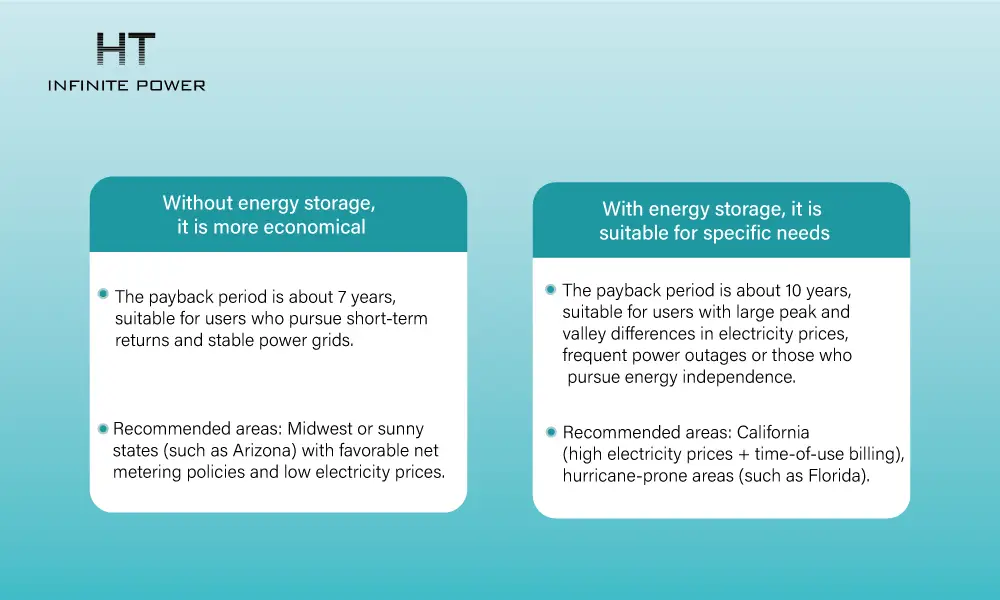
● With energy storage, it is suitable for specific needs:
The payback period is about 10 years, suitable for users with large peak and valley differences in electricity prices, frequent power outages or those who pursue energy independence.
Recommended areas: California (high electricity prices + time-of-use billing), hurricane-prone areas (such as Florida).
5. Simplified conclusion
Prioritize economic efficiency: choose without energy storage, ROI is faster.
Prioritize reliability: choose with energy storage to deal with power outages or time-of-use electricity prices.
Actual case: If California users enjoy high subsidies, the energy storage payback period can be shortened to less than 10 years.
(Note: The above calculation is a simplified model, which needs to be adjusted in combination with localized data.)
Energy storage solutions for islands and remote areas: Say goodbye to diesel generators!
In 2025, the European and American energy storage markets will continue to grow strongly!