Extreme Heat on the Rise: The Emergency Role of Commercial Energy Storage in Global Heatwaves
2025-08-19
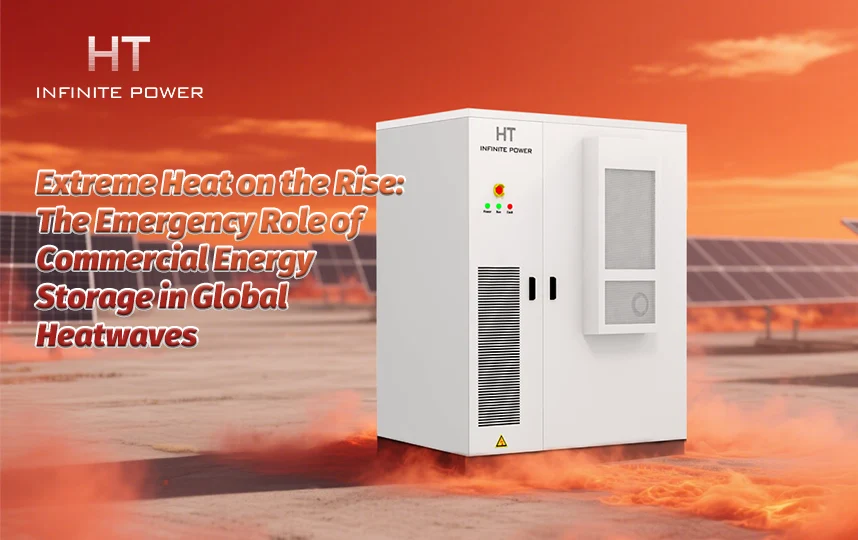
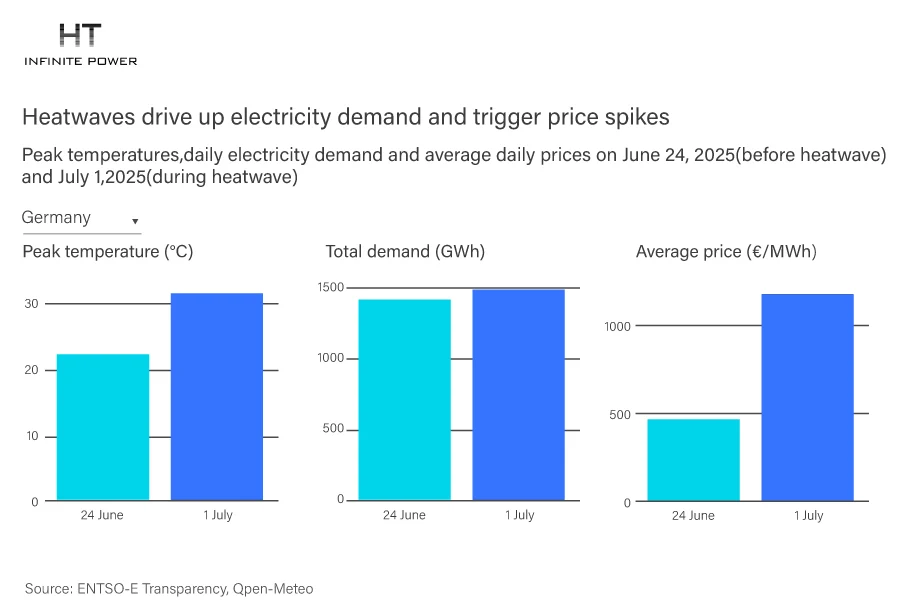
Heatwaves are no longer an occasional nuisance — they are a recurring operational risk. When temperatures climb, cooling loads spike, generation derates, and grid imports become less reliable. The result is not just higher bills; it is a cascade of operational problems: delayed shipments, refrigerated goods lost, production lines halted. Commercial energy storage (C&I ESS) does not pretend to cure every systemic failure. But it does something highly valuable: it buys time, stabilizes power delivery, and converts acute, fast-moving threats into manageable operational decisions. The rest of this article walks through how to design, price, operate and defend an ESS installation that actually performs when heat hits.
Why heatwaves are now an operational emergency
Before deciding on technology or budget, understand the phenomenon. Heatwaves compress several threats into one event.
The triple stress: demand surge, generation derating, and grid limits
When heat arrives, three things happen simultaneously. People turn on cooling; plants increase refrigeration and ventilation; and thermal generators lose capacity as cooling-water temperatures rise or efficiency drops. Overhead lines heat up and sag; their ampacity falls. That triple pressure creates windows of acute imbalance — short, sharp, and often regional.
Business impacts beyond the meter: spoilage, downtime, reputational cost
A grocery cold-room that loses power for four hours isn’t just an inventory problem. It is an insurance loss, a compliance headache, and a customer-relationship event. For manufacturing, a heat-induced interruption can mean ruined batches, rework and contractual penalties. All of those costs belong in a resilience business case.
What commercial energy storage reliably delivers during heat events
Think in practical terms: what outcomes do you actually want? The answers guide size and control logic.
Instant power support and peak shaving
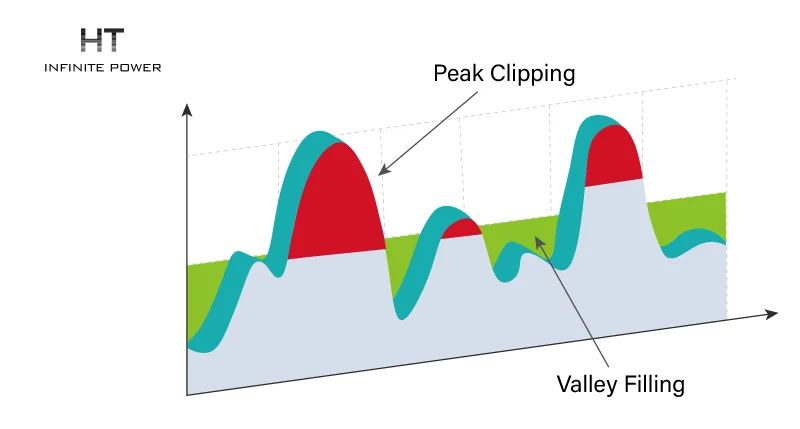
Batteries respond in milliseconds. That rapid headroom keeps compressors, pumps and critical control systems running through the short but expensive windows that determine demand charges. Shave a 15-minute peak, and you can often justify the whole system.
Short-term islanding and black-start options
With the right inverters and protection schemes, storage can isolate and sustain critical circuits. Not for days; typically for hours. But for many businesses, hours of seamless operation are the difference between acceptable disruption and catastrophic failure.
Dual-use economics: everyday revenue and emergency value
When not saving the day, an ESS can provide arbitrage, frequency response, or demand-response services. That ongoing revenue improves bankability. More important, treat resilience as a budget line and the everyday market stack as ROI — both together make the project investable.
Matching technology to the problem: short, medium and long-duration solutions
Not every technology fits every scenario. Pick the one that matches your “heatwave window.”
When lithium-ion is the right tool
Lithium-ion: dense, responsive, and cost-competitive for 0.5–4 hour events. If the objective is fast relief — shaving peaks created by clustered EV chargers, HVAC compressors or short cooling surges — lithium-ion is usually the right call.
Thermal storage: the heat specialist
When the primary need is cooling or heating, thermal stores (chilled water tanks, ice, phase-change material) provide far more cost-effective kWh-equivalent storage. Pair thermal stores with batteries for a compact, economical hybrid.
Long-duration and emerging tech: flow batteries, hydrogen hybrids
For multi-day resilience or seasonal bridging, emerging technologies become relevant. They bring different trade-offs — lower cycle efficiency, different CAPEX profiles — and should be evaluated only when the business needs exceed what batteries + thermal can economically deliver.
Engineering for heat: thermal management, siting, and hot-climate ops
Execution matters. Here’s what engineers overlook until it’s too late.
Cooling strategies: active, passive and hybrid
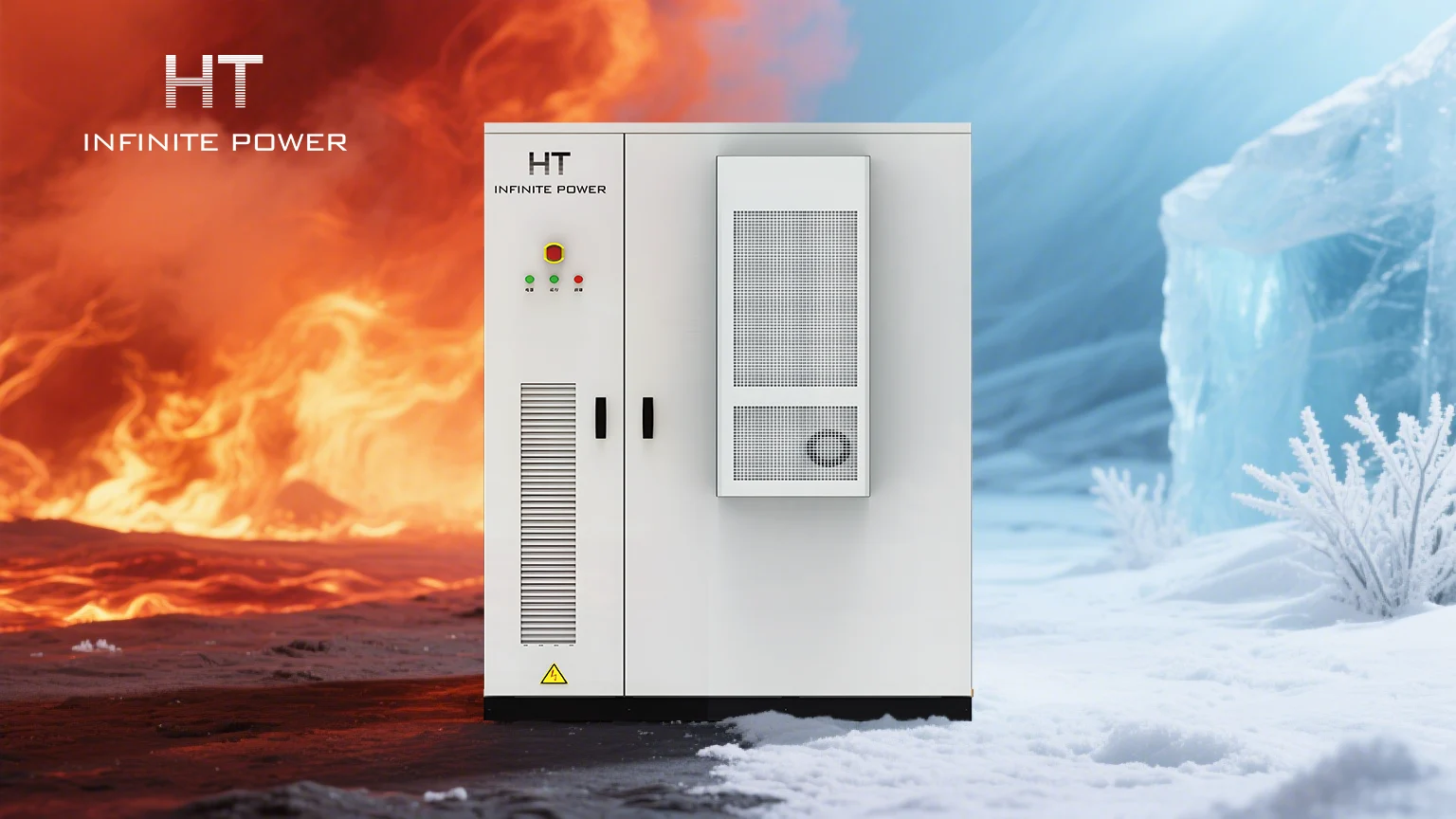
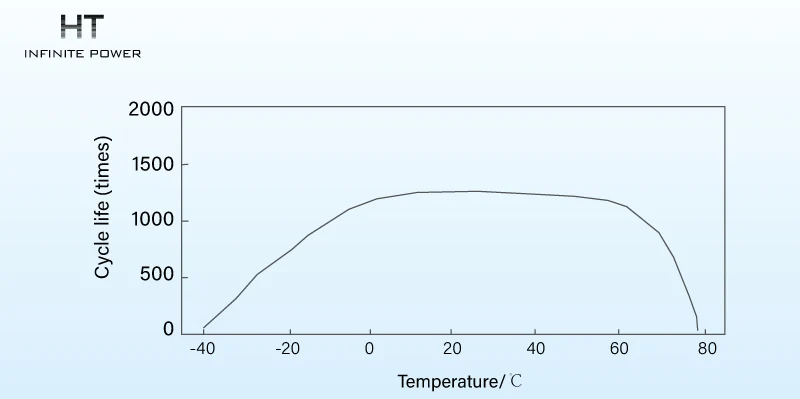
High ambient temperatures accelerate degradation and reduce output. Liquid cooling, directed airflow, shading, and evaporative pre-cooling are all viable. Design for expected ambient extremes, not average conditions.
Site layout, spacing and wildfire considerations
Siting must consider thermal runaway containment and defensible space in fire-prone areas. In humid climates, moisture control and corrosion protection are equally vital. Small layout choices change long-term reliability.
Sizing for real events: the “heatwave window” and the power-to-energy decision
Sizing must reflect the actual mission: is it shaving a short peak or sustaining critical loads for several hours?
Measuring the window: 15-minute data and duty cycles
Collect at least 12 months of 15-minute interval data. Isolate the heat-season hours when demand climbs. That band — often 3–6 hours daily during heatwaves — is your “heatwave window.”
Practical sizing example (logistics hub, 6-hour event)
Scenario: Logistics center, baseline load 2.0 MW. During a heatwave, cooling adds 1.5 MW for a 6-hour window. Refrigeration (1.5 MW of that) must not fail. Objective: sustain refrigeration and essential controls through the 6-hour window while shaving non-critical load.
Sizing approach:
- Critical power: 2.0 MW to sustain baseline critical loads.
- Relief target: shave 1.5 MW peak cooling load.
- Energy need: 1.5 MW × 6 hours = 9.0 MWh (gross).
- Design allowance: account for inverter efficiency (95%), battery derating at high temps (~10%), and SOC reserve (10%). Usable energy needed ≈ 9.0 MWh / (0.95 × 0.9 × 0.9) ≈ 11.7 MWh. Round to 12 MWh. Inverter/PCS sized for 3 MW (to handle simultaneous charging/discharging and transient loads).
This is large — and expensive — but for cold-chain logistics the avoided spoilage and contractual penalties often justify the investment. Smaller sites will prioritize power-first configurations.
Quick sizing rules and when to deviate
- Rule of thumb: 1 MWh per 1 MW of targeted relief for 1-hour mission.
- When to deviate: if peak durations are <30 min (make it power-heavy) or >4 hours (add energy or hybrid thermal).
EMS and control: predictive dispatch, modes, and operator overrides
A battery without smart controls is a battery that underperforms.
Forecast inputs that matter (weather, load, reservations)
EMS should ingest short-term weather forecasts, occupancy and reservation data (for chargers), and market price signals. Forecast-driven pre-charging beats reactive dispatch nearly every time.
Emergency mode vs commercial mode — a dispatch tree
Define explicit modes:
- Commercial: prioritize revenue stacking.
- Preparedness: maintain headroom before forecasted heatwave.
- Emergency: preempt market dispatch to preserve SOC for critical loads.
Operators must be able to override automatic modes, but defaults should protect resilience goals.
The Business Case for Commercial Energy Storage in a Heating World
Economics, simply put — what to count and a practical example
Money decisions for storage should start with one question: how much value does a system deliver when it matters most — not just on average days. In practice, include two buckets in your model: (A) the everyday revenues and savings (demand-charge cuts, time-of-use arbitrage, ancillary payments) and (B) the crisis or avoidance value (downtime avoided, spoiled inventory prevented, deferred grid upgrades). Treat (B) as real cash — it often turns a marginal project into a clear investment.
A compact, easy-to-read example helps. Imagine a 3 MW / 3.6 MWh system with an all-in installed cost of $1.2M and annual O&M of $30k. If the site can reasonably save $250k/year by shaving demand peaks and capture another $30k/year from markets, your net annual benefit is roughly $250k (we assume O&M offsets part of market gains). Spreading the $1.2M cost linearly, that gives a simple, pre-finance payback of about 4–5 years. As a directional metric, that payback and an approximate delivered cost of energy in the low hundreds of dollars per MWh tell you whether to proceed to detailed modeling.
Bottom line: use this lightweight approach to screen projects quickly — conservative assumptions for market income, and a realistic dollar figure for a single avoided outage, will give you a robust go/no-go. If the quick model looks promising, then pull the detailed LCOS spreadsheet and stress-test it against several heatwave or outage scenarios before committing capex.
Safety, standards and permitting in heat-prone regions
Design that ignores safety and permitting delays will never deliver on time.
Fire risk, thermal runaway, and testing regimes
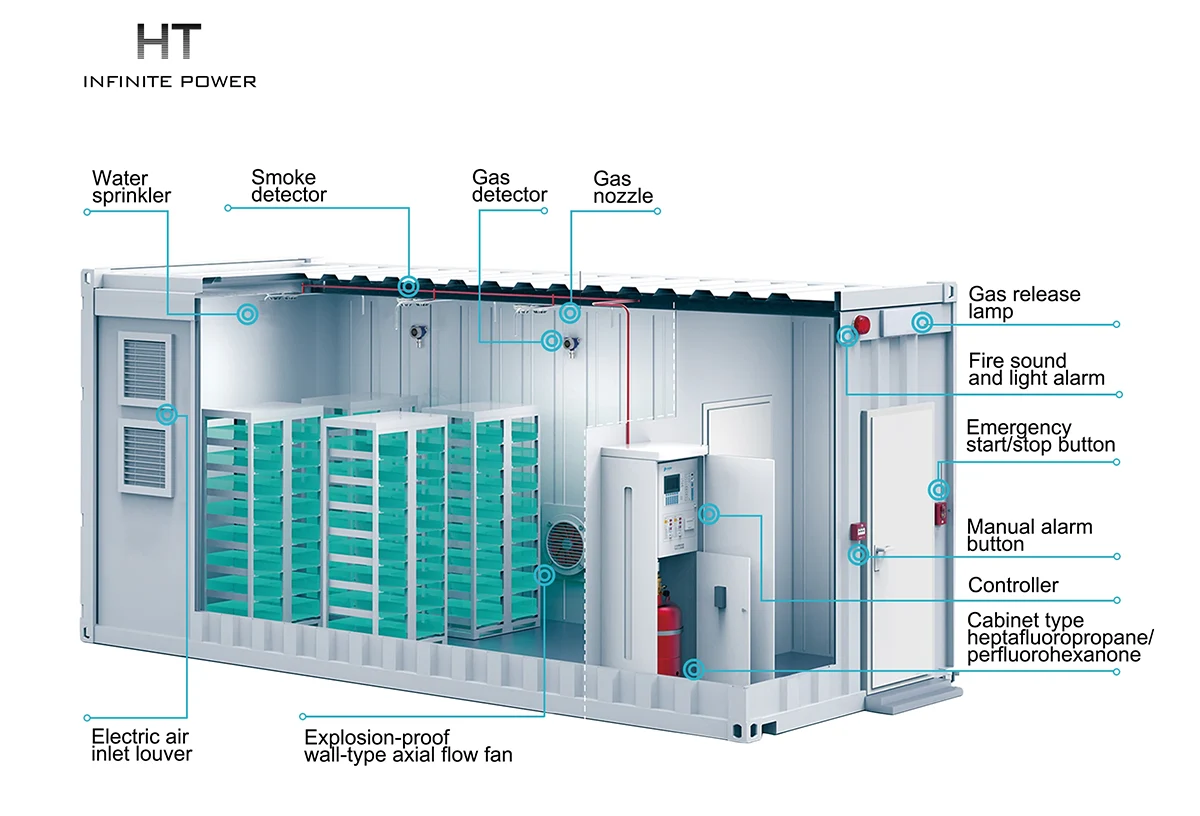
Adopt recognized standards, implement containment and suppression systems, run UL/IEC test protocols where applicable, and document all safety drills. Regulators and insurers want evidence, not promises.
Permitting, local stakeholders and insurer expectations
Start permitting discussions early. Engage local fire departments and neighbors. Clear, transparent safety materials reduce pushback and accelerate approvals.
O&M, lifecycle and second-life tradeoffs in hot climates
A hot climate shortens calendar life and increases the value of good O&M.
Degradation management and warranty planning
Plan for 3–5% equivalent capacity fade annually in hot operations; negotiate warranties that include performance remedies. Reserve 10–15% of CAPEX for mid-life module replacement budgeting.
Where second-life makes sense — and where it doesn’t
Second-life batteries can reduce CAPEX by 20–35%, but variability in history and thermal performance makes them risky for mission-critical heatwave resilience. Use them for lower-risk peak shaving if properly tested and warranted.
Global lessons: three concise case vignettes with practical takeaways
These are compact, actionable lessons operators can adapt.
Mediterranean industrial park: midday solar + storage
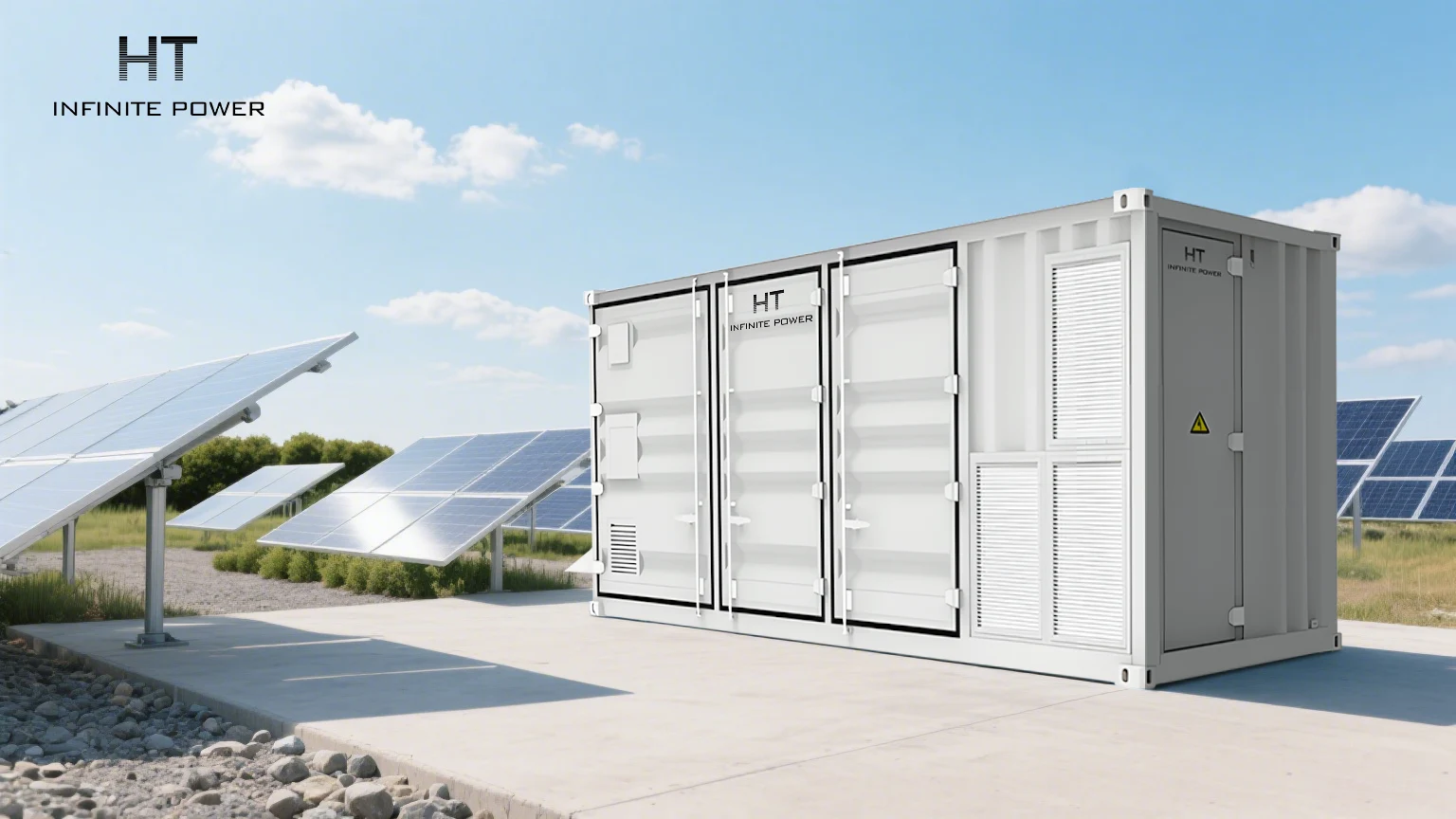
Lesson: solar reduces daytime grid draw; storage shifts the remaining evening ramp and supplies intermittent cooling — reducing gas-fired peaker reliance.
Southeast Asian logistics hub: humidity, heat and cooling strategies
Lesson: moisture control and corrosion protection often determine lifetime more than battery chemistry. Cooling systems must be designed for both heat and humidity.
North American urban centers: aggregated small systems as VPP
Lesson: many small assets, properly aggregated and controlled, provide emergency capacity that rivals a single central plant — with faster deployment and lower risk.
Limits and complements: what storage cannot fix alone
Storage is tactical, not strategic. It does not replace fuel-supply policy, pipeline investment, or the need for diversified generation. Treat it as one pillar in a resilience portfolio that includes demand response, contractual fuel security, and distributed generation.
Deployment roadmap — 10 concrete steps from data to commissioning
1.Meter at 15-minute resolution for ≥12 months.
2.Identify critical loads and acceptable outage durations.
3.Run 1-in-5 and 1-in-10 heatwave stress simulations.
4.Select technology mix (battery, thermal, hybrid).
5.Produce RFP with performance and degradation warranties.
6.Engage DSO/TSO and local authorities early.
7.Complete permitting and insurance negotiation.
8.Install, run FAT/SAT and emergency drills.
9.Tune EMS in a 90-day optimization phase.
10.Monitor KPIs and revise policies annually.
2.Identify critical loads and acceptable outage durations.
3.Run 1-in-5 and 1-in-10 heatwave stress simulations.
4.Select technology mix (battery, thermal, hybrid).
5.Produce RFP with performance and degradation warranties.
6.Engage DSO/TSO and local authorities early.
7.Complete permitting and insurance negotiation.
8.Install, run FAT/SAT and emergency drills.
9.Tune EMS in a 90-day optimization phase.
10.Monitor KPIs and revise policies annually.
Conclusion — make resilience measurable, not hopeful
Heatwaves will continue to test electrical systems and business continuity plans. Commercial energy storage is not a silver bullet but it is a measurable lever. Size it to mission, control it with intelligence, and price it with crisis scenarios in mind. Do that and you convert an existential spike into an operational parameter.
FAQs
Q1 — How much storage do I need to ride a typical heatwave afternoon?
Model your heatwave window. As a baseline: 1 MWh of usable energy per 1 MW of targeted relief per hour. Adjust for derating, efficiency losses and SOC reserve.
Q2 — Will operating in high ambient temps destroy batteries faster?
High ambient accelerates degradation. Design with active cooling, conservative depth-of-discharge, and replacement reserves.
Q3 — Can a battery do both markets and emergencies?
Yes — if the EMS supports priority tiers and contracts allow preemption for emergency use.
Q4 — Is thermal storage better than electric storage for cooling resilience?
Often yes. Thermal stores typically provide cheaper kWh-equivalent for temperature loads. Hybrid systems yield the best economics.
Q5 — What is a reasonable LCOS estimate for commercial systems today?
Using conservative modeling (8% discount, 15-year life, daily cycles), a mid-sized system example yields LCOS ≈ $120–140/MWh. Site-level modeling will vary.
What Are the Cost Differences Between Integrated and Modular Energy Storage Systems?
Battling Europe’s Gas Crunch: How Commercial-Scale Storage Strengthens Energy Security