Why More Commercial and Industrial Energy Storage Projects Are Choosing Hybrid Inverter Systems?
author: HT Infinite Power
2026-06-04

A few years ago, commercial and industrial energy storage projects often relied on separate devices: photovoltaic inverters, standalone power conversion systems (PCS), and independent energy management controllers. While functional, this approach introduced layers of complexity. Multiple communication links, intricate installation procedures, and coordination challenges often led to underutilized energy or operational inefficiencies.
Today, a clear trend is emerging: more commercial and industrial projects are integrating hybrid inverter systems. By combining PCS, MPPT, and EMS into a single unit, hybrid inverters streamline system architecture, reduce installation complexity, and enable more intelligent energy management. For operators, the shift isn’t just about efficiency—it’s about reliability, scalability, and unlocking the full potential of energy storage assets.
From Multi-Device Architectures to Integrated Hybrid Systems
In traditional setups, solar input, storage management, and load control each required separate hardware and software layers. This fragmentation can create inefficiencies. During peak solar hours, a misalignment between the PV inverter and PCS might prevent optimal charging, leaving energy unused. Similarly, manual coordination for backup or peak-shaving tasks increases operational risk.
Hybrid inverters address these challenges by merging core functions. MPPT algorithms continuously optimize solar harvesting, the PCS manages charging and discharging with precision, and the embedded EMS orchestrates energy routing across self-consumption, grid support, and backup needs. By centralizing control, hybrid inverters not only improve efficiency but also simplify system oversight.

Reducing Installation Complexity
The practical impact of integration is immediate for installers. With fewer components to wire, configure, and monitor, deployment time decreases significantly. A commercial rooftop project that might have previously required multiple days of commissioning can now be brought online faster, with fewer points of potential failure. Fewer devices also mean less ongoing maintenance, minimizing operational disruption and long-term costs.
Enabling Advanced Energy Management
Beyond installation simplicity, hybrid inverters transform how commercial and industrial energy storage systems interact with energy markets. Peak shaving, time-of-use arbitrage, and backup power are no longer separate considerations—they are managed simultaneously within a single platform. For example, during high electricity price periods, a hybrid inverter can discharge stored energy to reduce demand charges, while still maintaining reserve capacity for emergencies.
The embedded EMS continuously monitors solar production, storage levels, and load demand. This dynamic control ensures the facility derives maximum value from each kilowatt-hour, optimizing both operational performance and financial return.
Seamless Grid and Off-Grid Operation
Modern hybrid inverters excel in environments requiring both grid-tied and off-grid functionality. Whether a facility experiences intermittent grid supply, needs to maintain critical loads during outages, or aims to operate independently in microgrid scenarios, hybrid inverters handle transitions smoothly. This capability is particularly valuable for industrial facilities that cannot afford downtime or energy interruptions.
Expanding from Residential to Commercial and Industrial Applications
Initially, hybrid inverters gained traction in residential energy storage because of their compact form and ease of use. However, commercial and industrial projects present larger-scale challenges: multiple PV arrays, higher storage capacities, complex load patterns, and sophisticated energy management requirements. Manufacturers have responded with hybrid inverter systems capable of scaling to hundreds of kilowatts, integrating with external BMS, diesel generators, or microgrid controllers.
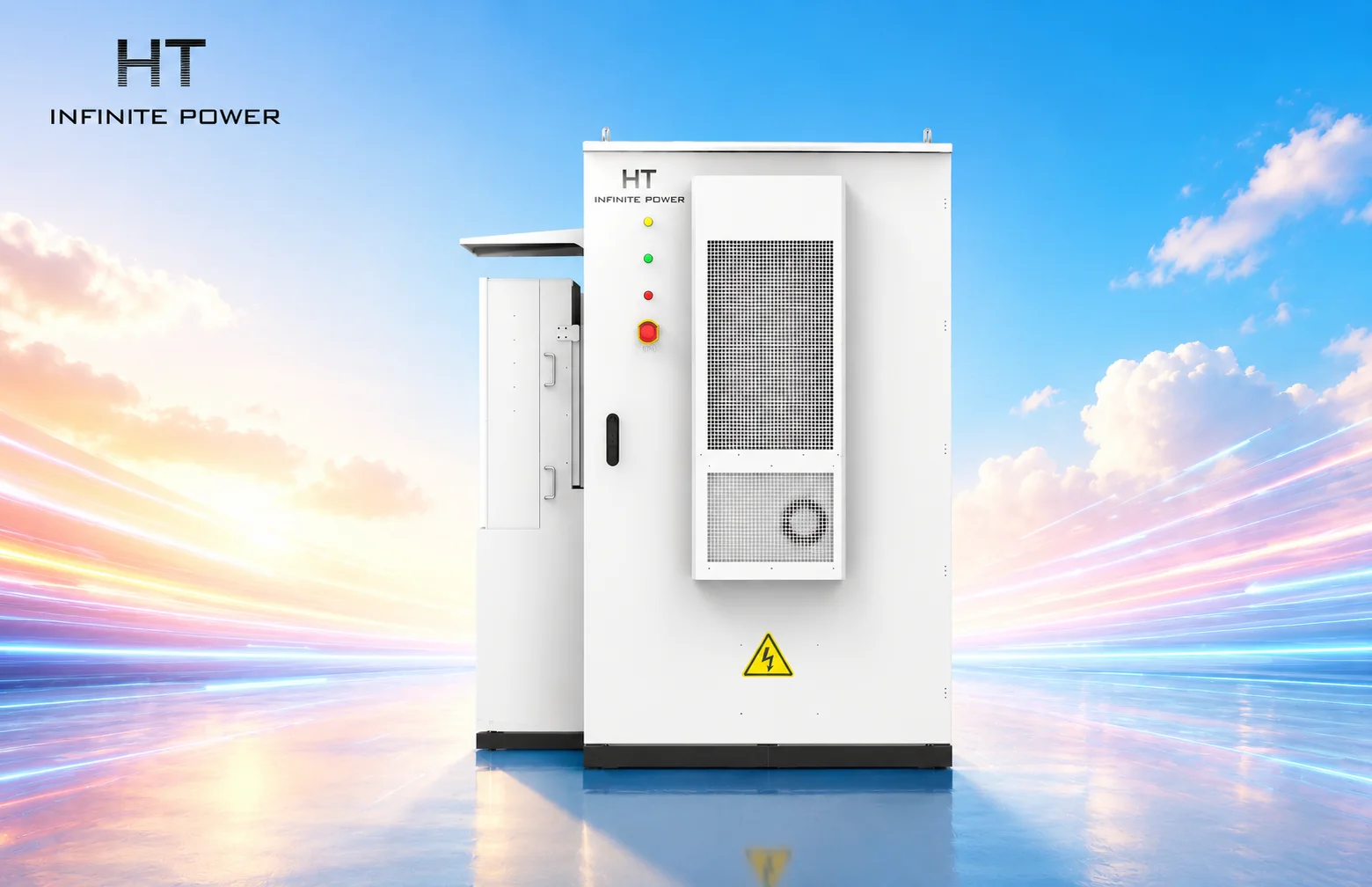
The ability to handle high-power scenarios while maintaining the simplicity and reliability of a single integrated system is driving adoption across commercial and industrial sectors.
Reliability and Long-Term System Performance
Hybrid inverter systems do more than simplify deployment—they actively enhance system reliability. By controlling solar input, storage charging, and energy dispatch from a unified platform, voltage and thermal stresses can be managed more effectively. BMS coordination ensures batteries are neither overcharged nor over-discharged, reducing degradation and prolonging service life.
Furthermore, embedded EMS algorithms adapt over time, responding to changing load profiles, grid conditions, and seasonal variations. This long-term adaptability ensures commercial energy storage projects maintain peak performance and predictable returns throughout their operational life.
Practical Operational Benefits
Operators also benefit from a simplified monitoring interface. Alerts, diagnostics, and performance metrics are centralized, allowing facility managers and EPC contractors to make informed decisions quickly. In larger systems, consistent monitoring across multiple sites or energy assets becomes feasible without adding layers of complexity.
A Strategic Choice for Modern Energy Systems
The rise of hybrid inverter adoption in commercial and industrial projects reflects more than technological evolution—it represents a shift in energy strategy. Project owners seek systems that deliver reliability, operational flexibility, and financial optimization without introducing unnecessary complexity. Hybrid inverters provide a single, integrated solution that aligns with these priorities.
By combining efficiency, scalability, and intelligent energy management, hybrid inverter systems are becoming the cornerstone of modern commercial and industrial energy storage projects. For stakeholders—from EPCs to facility managers—the choice is increasingly clear: integration, simplicity, and adaptability drive value far more than adding more devices or chasing theoretical capacity gains.
FAQ
What makes hybrid inverters ideal for commercial and industrial storage projects?
They integrate PCS, MPPT, and EMS in a single unit, simplifying installation, improving energy efficiency, and enabling advanced management strategies.
They integrate PCS, MPPT, and EMS in a single unit, simplifying installation, improving energy efficiency, and enabling advanced management strategies.
Can hybrid inverters manage backup and peak-shaving simultaneously?
Yes. Modern hybrid inverters coordinate energy dispatch to provide backup power while optimizing load and cost savings.
Are hybrid inverters scalable for large industrial systems?
Absolutely. They can handle multiple PV arrays, high storage capacity, and integrate with BMS or microgrid controllers.
Do hybrid inverters improve battery lifespan?
Yes. Coordinated charging, discharging, and thermal management reduce battery stress and extend operational life.
AIDC Energy Storage Enters a Strategic Era: Lithium, Semi-Solid, and Sodium Batteries Advance on Three Parallel Fronts
Why “Charge High, Discharge Low” and “Charge Low, Discharge High” Occur in Lithium Batteries