What is the black start technology of energy storage system and its function and principle
2025-09-18
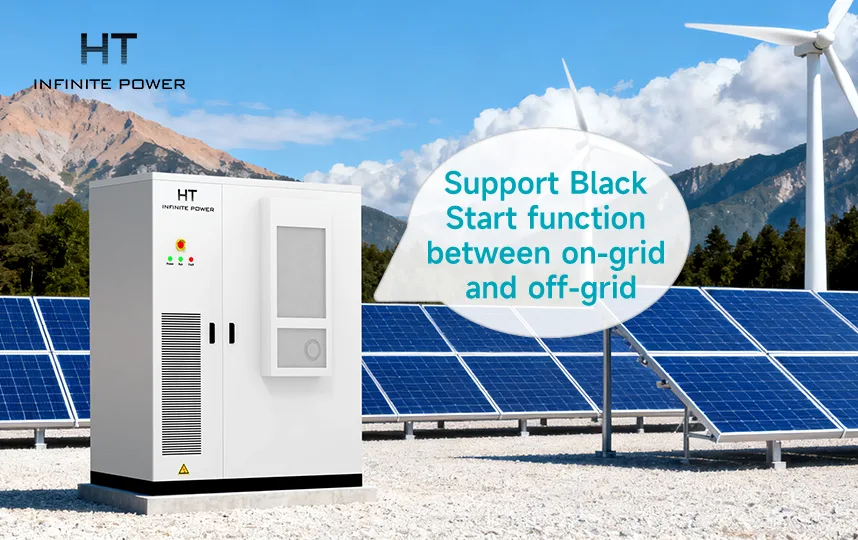
An energy storage system (ESS) is a system that stores and supplies electrical energy, offering smooth transitions, peak-to-valley shifting, and frequency and voltage regulation. It can smooth the output of solar and wind power, reducing the impact of randomness, intermittency, and volatility on the grid and users. Charging during off-peak periods and discharging during peak periods can reduce user electricity bills. During a main grid outage, ESS can operate in an isolated island mode, ensuring uninterrupted power supply.
Because energy storage systems can be integrated into every aspect of the power system, from generation, transmission, distribution, and utilization, they not only improve traditional power generation, but the development and application of energy storage technology will also revolutionize the planning, design, layout, operation, management, and use of smart grids.
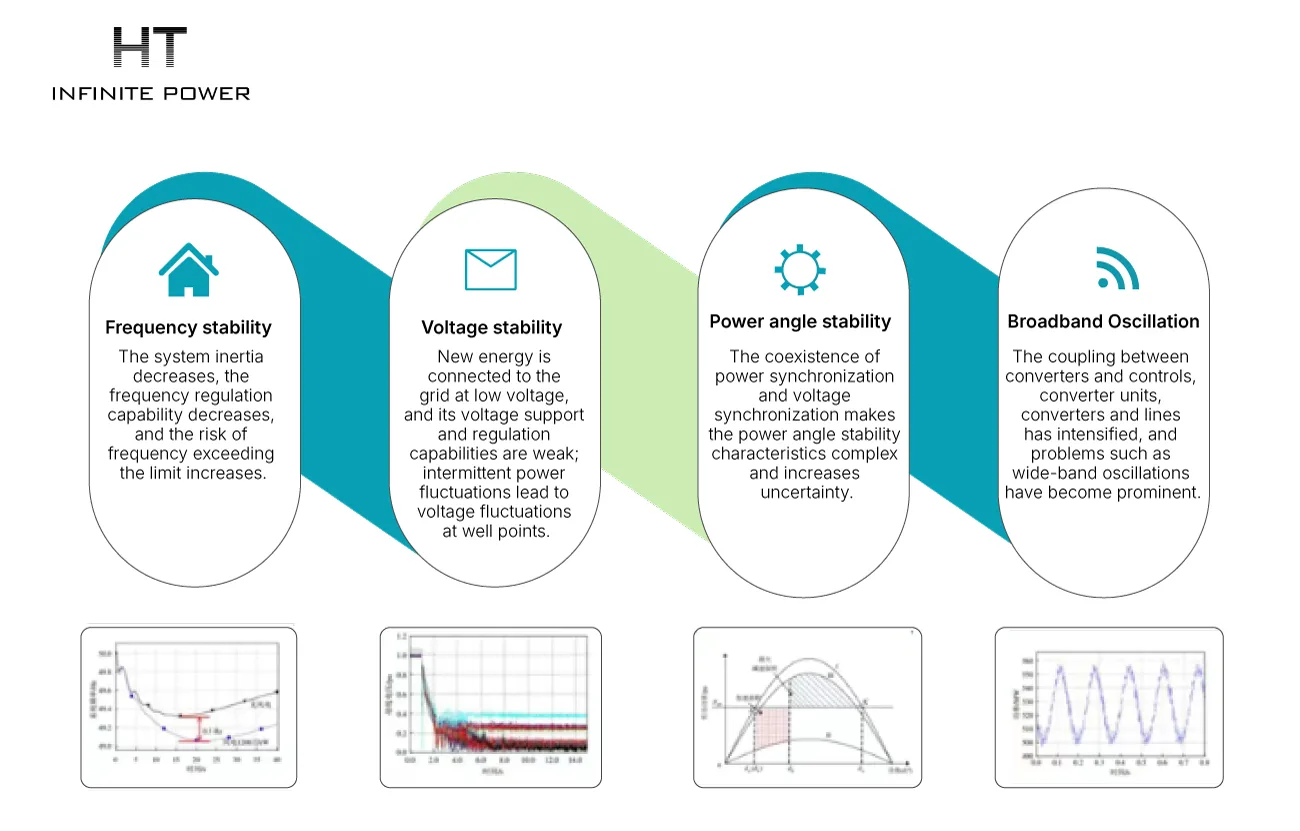
1.Frequency stability
The system inertia decreases, the frequency regulation capability decreases, and the risk of frequency exceeding the limit increases.
2.Voltage stability
New energy is connected to the grid at low voltage, and its voltage support and regulation capabilities are weak; intermittent power fluctuations lead to voltage fluctuations at well points.
3.Power angle stability
The coexistence of power synchronization and voltage synchronization makes the power angle stability characteristics complex and increases uncertainty.
4.Broadband Oscillation
The coupling between converters and controls, converter units, converters and lines has intensified, and problems such as wide-band oscillations have become prominent.
A "black start" of an energy storage system refers to the process of restarting the power grid by using the energy storage system as a backup power source after a large-scale power outage or failure. In this case, the grid is completely blacked out, a so-called "black" state, and the energy storage system provides the necessary energy to gradually restore normal operation.

Ⅰ. The Role of Energy Storage System Black Starts
In recent years, numerous large-scale power outages have occurred worldwide. While the development of smart grids can improve the self-healing capabilities of power systems, the myriad of factors that cause power outages make it unrealistic to completely prevent widespread blackouts. Therefore, developing effective and reliable recovery plans to quickly restore power to the system after a major blackout is crucial for minimizing losses.
A power system black start involves the process of restoring power to the entire system by enabling self-starting generators within the grid to drive power generation from non-self-starting units. Simply put, the purpose of a black start is to quickly activate more power sources, thereby restoring more generating capacity.
Ⅱ. Black Start Principles of Energy Storage Systems
As active energy storage equipment, energy storage stations can export power to the grid during peak load periods, helping to share the regional grid's power supply burden. During off-load periods, the grid charges the energy storage station, storing excess energy. When the grid experiences short-term or long-term faults, or a complete blackout, the energy storage station enters corresponding operating states: short-term synchronization, long-term synchronization, and island operation.
After the short-term or long-term fault is repaired, the energy storage station and the grid are seamlessly resynchronized. In island operation, the energy storage station relies entirely on stored energy to maintain its own operation and can supply critical loads in the region.
A typical black start process consists of three phases:
1) Initialization: The energy storage system uses its internal batteries to self-start and establish a stable DC bus voltage.
2) Grid Reconfiguration: Prioritizes restoring power to substations, gradually expanding the power supply range through loop closing operations.
3) Load Restoration: Following the principle of "critical first, then general," critical loads such as hospitals and communication base stations are restored in sequence.
Ⅲ. Key Black Start Technologies:
1) Multi-machine Coordinated Control: Utilizing a distributed coordinated algorithm, this system achieves 100% voltage synchronization across multiple energy storage converters and >99% circulating current suppression.
2) Grid-Based Control: Utilizing Virtual Synchronous Generator (VSG) technology, this system simulates the inertia response of synchronous generators, achieving a frequency regulation accuracy of ±0.01Hz.
3) Shock Resistance: Utilizing an active damping algorithm, this system can withstand shocks up to 10 times the rated current without disconnecting from the grid.

Ⅳ. Energy Storage System Black Start Design
In the past, diesel generators (DGEs) were often used as the power source for black starts. From an environmental perspective, diesel generators cause significant noise and air pollution, while energy storage systems offer zero noise, no pollution, and energy savings.
From an economic perspective, although energy storage systems require a relatively large initial investment, they can participate in the frequency regulation market and generate sustainable revenue from auxiliary frequency regulation services. In terms of response speed, energy storage systems can reach full load within seconds as a black start power source, while DGEs require approximately 30 seconds. Therefore, energy storage systems offer distinct advantages for black starts.
Ⅴ. Black start design considerations:
A black start essentially provides an additional off-grid VF source (providing an additional off-grid power source to the power plant).
1) First, select the battery (capacity) and PCS power based on the actual load curve, and design the PCS power load for maximum power.
2) For the VF source, there are two main control modes: droop control and master-slave control.
3) Startup sequence.
4) Start the power of each node and select the peak power.
5) Startup duration (peak power duration) for each node.
6) Power supply switchover plan after startup is complete.
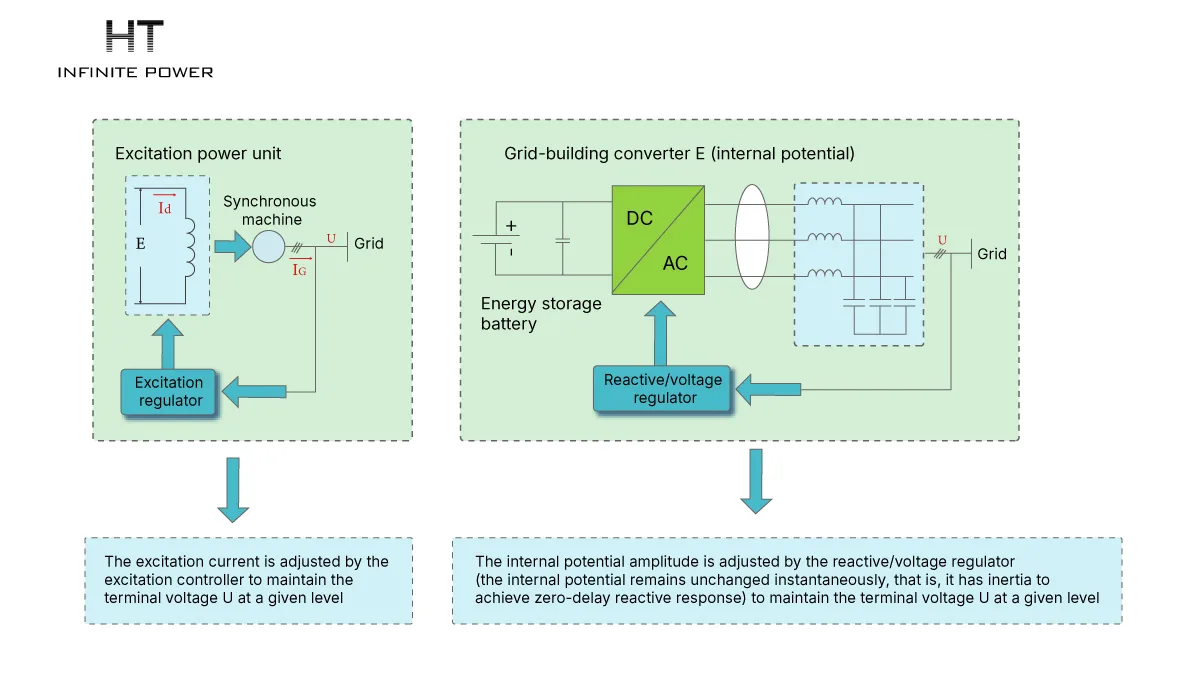
Due to black start, the load power generally ranges from more than ten megawatts to dozens of megawatts, but the current maximum single-machine power of PCS equipment is 2.5MW, so multiple PCS devices need to be connected in parallel to achieve black start.
Ⅵ.PCS Equipment Parallel Control Technology:
1. Droop Control
Principle: Each inverter unit detects its own output power and uses the droop characteristic to determine the output voltage frequency and amplitude. Each inverter then fine-tunes its output voltage amplitude and frequency in opposite phases to achieve equal distribution of active and reactive power. If the system impedance is inductive, and there is a small amplitude and phase difference between the output voltages of two off-grid inverters, the inverter with the leading phase will bear more active power, while the inverter with the higher amplitude will bear more reactive power. Droop control constructs relationships between frequency and active power, and amplitude and reactive power, respectively. This ensures that inverters with greater active power have lower frequencies (reduced phase lead) and those with greater reactive power have lower amplitudes, thereby achieving equal power distribution among the inverters.
Control Block Diagram: This includes a power droop loop (detecting active power and amplitude deviation), an AC voltage loop, an inductor current loop, SVM modulation, and a phase-locked loop (with an internally set angle). Detecting voltage amplitude and phase deviation outputs control parameters (proportional gain and integral gain) through a voltage loop. This is then controlled by a current loop (for fast and precise current regulation) and SVM modulation (space vector pulse width modulation), ultimately outputting IGBT trigger pulses to achieve power balance.
2. Master-Slave Control
Principle: One inverter module is designated as the master, while the others are slaves. The master uses dual closed-loop voltage and current control, while the slaves utilize only the current loop. Slave current commands are derived from the output of the master voltage loop. High-speed communication is required for data exchange between the master and slaves.
Control Block Diagram: The master includes the AC voltage loop, inductor current loop, SVM modulation, and a phase-locked loop (with an internally set angle); the slaves include the inductor current loop, SVM modulation, and a phase-locked loop (with an angle sent by the master or locked to the master voltage phase).
The differences between PQ, VF, droop, and VSG control strategies of energy storage PCS
The three-level architecture of energy storage BMS: BAU, BCU, BMU