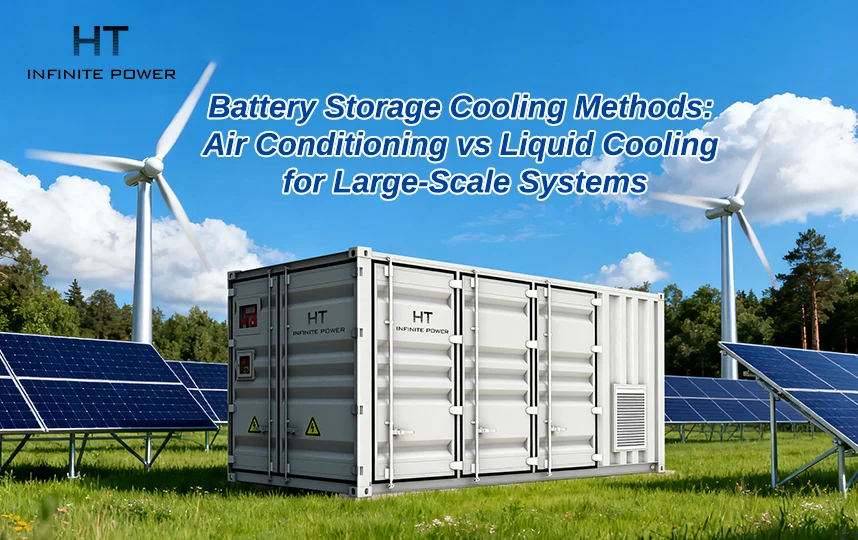
Battery Storage Cooling Methods: Air Conditioning vs Liquid Cooling for Large-Scale Systems
Why Cooling Matters in Large-Scale Battery Systems

- Overheating: Accelerates chemical breakdown, reduces cycle life, and increases safety risks.
- Cold conditions: Decrease power output, slow charging, and cause uneven aging.
Air Conditioning for Battery Storage
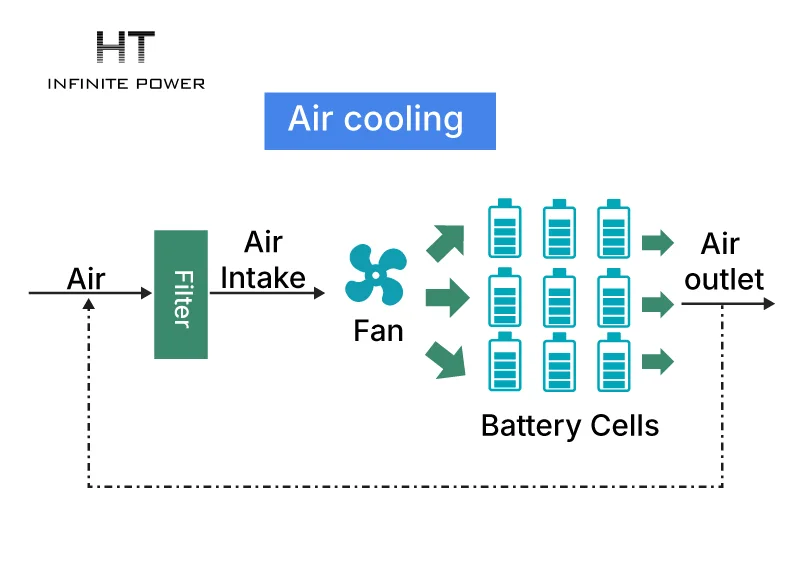
How AC Cooling Works
Advantages of AC Cooling
- Mature technology: AC systems are well-understood and widely adopted.
- Easy retrofitting: Ideal for indoor installations or containerized modules.
- Precision: Can keep temperature within a tight range for moderate-scale projects.
Limitations of AC Cooling
- Energy-intensive: Especially in hot climates, AC can consume 5–10% of total system output.
- Limited scalability: Large racks require complex ducting and multiple fans, raising both installation and maintenance costs.
- Maintenance overhead: Fans and refrigeration units need regular inspection; blocked airflow can lead to hotspots.
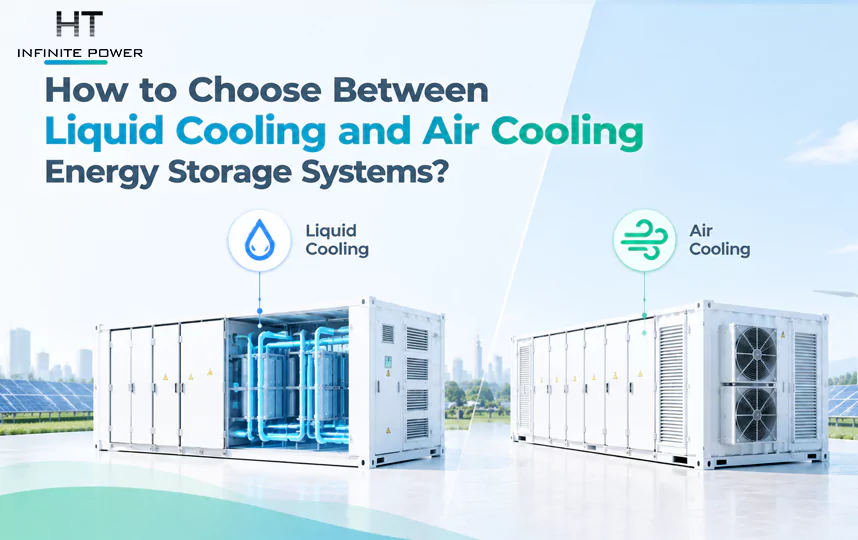
Liquid Cooling for Large-Scale Systems
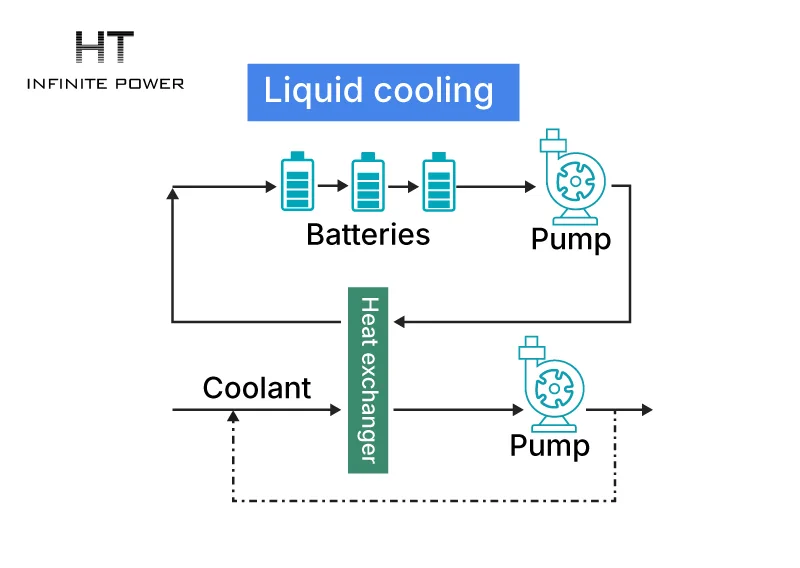
How Liquid Cooling Works
Advantages of Liquid Cooling
- Superior thermal efficiency: Liquids absorb and move heat faster than air, minimizing hotspots.
- Uniform temperature distribution: Reduces cell imbalance, extending battery life.
- Scalable for high-density systems: Works well for large racks where air cooling is insufficient.
Limitations of Liquid Cooling
- Higher upfront cost: Pumps, heat exchangers, and plumbing increase CAPEX.
- Complex maintenance: Leaks, pump failures, and fluid degradation require regular inspection and expertise.
- Potential safety risks: Any leak could compromise the system if not promptly detected.
Energy Efficiency Comparison
|
CoolingMethod |
EnergyUse |
Scalability |
MaintenanceComplexity |
LifecycleImpact |
|
AC Cooling |
High |
Moderate |
Medium |
Moderate |
|
Liquid Cooling |
Low |
High |
High |
High |
While AC is simpler and has lower initial cost, liquid cooling often wins on total energy efficiency and battery longevity, making it more economical over 10–15 years for large-scale systems.
TCO: Total Cost of Ownership Perspective
When evaluating cooling methods, upfront cost alone is misleading. Consider:
1.CAPEX: Initial system cost including fans or pumps, ducts, and installation.
2.OPEX: Energy consumption for cooling, maintenance, and replacements over time.
3.Battery longevity: How uniform cooling impacts degradation and replacement intervals.
Example scenario:
- AC Cooling: $500,000 upfront; $60,000/year in electricity; 8-year battery life → higher long-term cost.
- Liquid Cooling: $750,000 upfront; $36,000/year in electricity; 10-year battery life → lower TCO.
Over a decade, liquid cooling proves more cost-effective, despite higher initial expenditure.
Environmental and Site Considerations
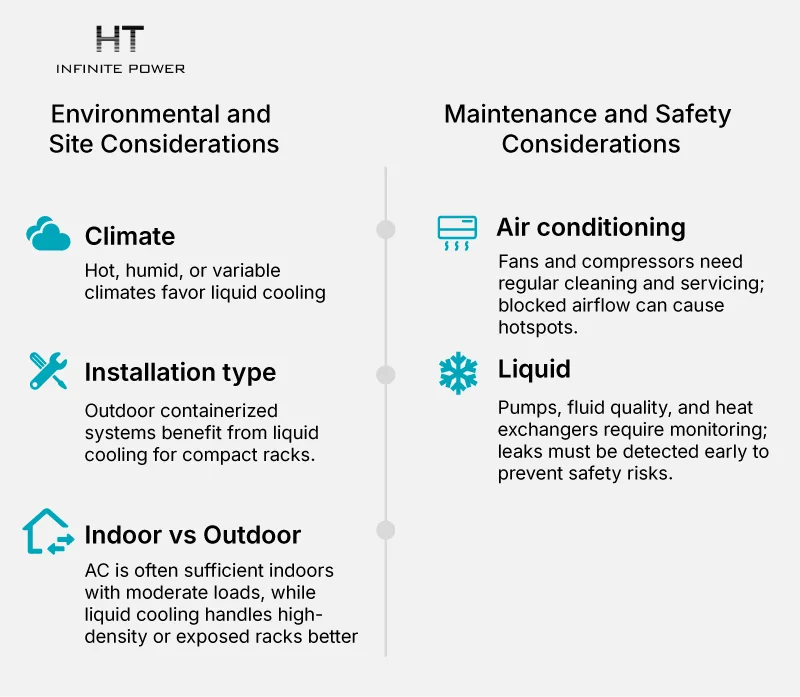
- Climate: Hot, humid, or variable climates favor liquid cooling.
- Installation type: Outdoor containerized systems benefit from liquid cooling for compact racks.
- Redundancy: Liquid systems can include backup pumps, temperature sensors, and leak detection for uninterrupted cooling.
- Indoor vs Outdoor: AC is often sufficient indoors with moderate loads, while liquid cooling handles high-density or exposed racks better.
Maintenance and Safety Considerations
- AC: Fans and compressors need regular cleaning and servicing; blocked airflow can cause hotspots.
- Liquid: Pumps, fluid quality, and heat exchangers require monitoring; leaks must be detected early to prevent safety risks.
Both methods require active monitoring, but liquid cooling generally provides more consistent protection against thermal events.
Making the Right Choice
Deciding between AC and liquid cooling requires evaluating:
- System scale and density
- Environmental conditions
- Energy costs and efficiency priorities
- Maintenance capabilities
- Long-term battery replacement costs
- Small to medium indoor systems: AC cooling is often sufficient.
- Large-scale, high-density, or outdoor systems: Liquid cooling offers better thermal management, extended battery life, and reduced operational costs.
Conclusion
Cooling is not just a support function—it is central to the safety, performance, and ROI of large-scale battery energy storage systems. While air conditioning provides a simple, proven approach for smaller installations, liquid cooling excels in efficiency, scalability, and uniform temperature control for high-density and outdoor deployments. By considering environmental factors, system size, and long-term TCO, operators can choose the cooling method that ensures reliability, longevity, and financial efficiency.
The three-level architecture of energy storage BMS: BAU, BCU, BMU
IP Ratings, Cooling Methods, and Outdoor Cabinet Selection Guide for Battery Energy Storage Systems