Virtual Energy Storage vs. Physical Energy Storage: A Practical Comparison of PV-Storage Solutions in Europe
2025-12-26
In 2025, energy storage has become the central enabler for converting photovoltaic electricity into economic value—whether you are an end user or a commercial and industrial project developer. This article analyzes three energy storage application models, providing clear guidance on system architecture, solution selection, and business models to support informed decision-making.
Part One: Residential Scenario
Assume your home rooftop is equipped with a 6–9 kWp photovoltaic system. At midday, PV generation exceeds household demand, causing the electricity meter to run in reverse; in the evening, electricity demand rises as cooking, heat pumps, and electric vehicle charging come online. Without an energy storage strategy, surplus PV power generated at midday is fed into the grid at a low tariff, while electricity must be purchased at a higher price in the evening. The core value of energy storage lies precisely in shifting this electricity across time—storing surplus generation and using it during peak demand periods.
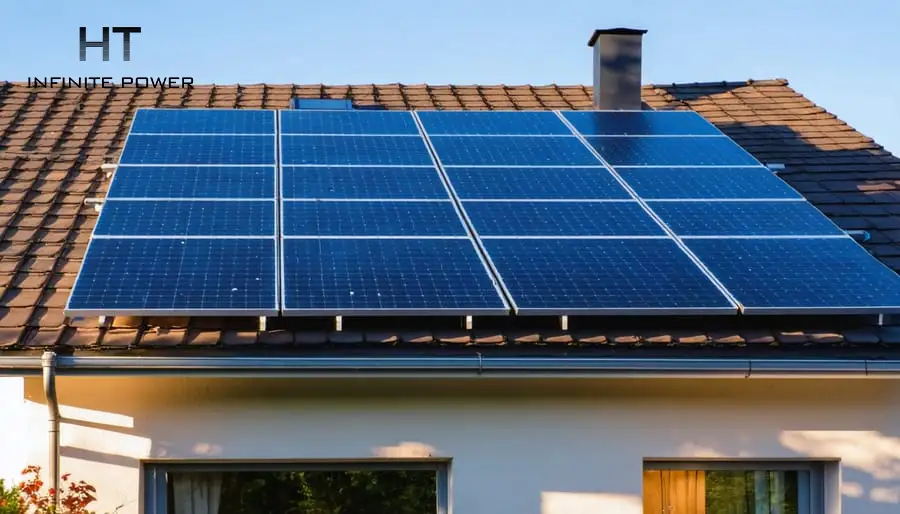
Two Value Capture Models
1.Battery Energy Storage (On-site Deployment)
Surplus electricity generated at midday is stored and released during evening demand peaks, enabling the following benefits: increased self-consumption rates; basic backup power for critical loads (such as the distribution board, lighting, and refrigerators); and additional electricity cost savings. In this context, the battery functions as a household energy “peak shaver,” precisely aligning PV output with household consumption patterns.
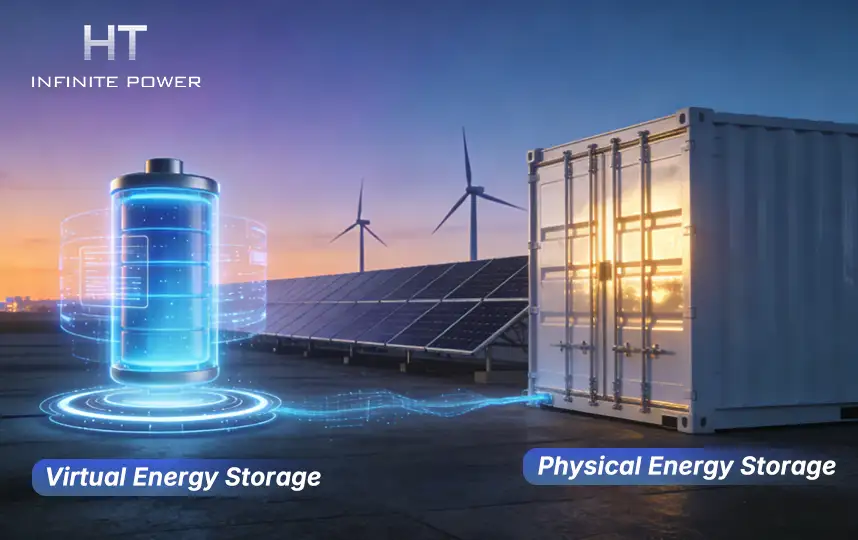
2.Virtual Energy Storage
No physical system modification is required. Surplus PV electricity is credited in kilowatt-hours to a digital account managed by the grid supplier and later returned according to contractual rules. This model is suitable for users who do not require autonomous power supply but are constrained by upfront investment, and it simplifies electricity bill optimization.
Note: In France, this model is not eligible for self-consumption subsidies; because no physical energy is stored, it provides no backup power in the event of a grid outage.
Note: In France, this model is not eligible for self-consumption subsidies; because no physical energy is stored, it provides no backup power in the event of a grid outage.
Residential Scenario: Physical Energy Storage vs. Virtual Energy Storage
| Comparison Dimension | Physical Energy Storage | Virtual Energy Storage |
|---|---|---|
| Self-supply / Emergency Power | Provides basic backup power | Cannot provide backup |
| Investment | Requires on-site installation and control | Simple solution, no hardware or on-site intervention needed |
| Technical Complexity | Meets eligibility conditions | Does not meet eligibility conditions |
| Incentives for Self-use | Meets eligibility conditions | Does not meet eligibility conditions |
| Typical Deployment Scale | 2–4 hours of backup configuration | No configuration required |
| Maintenance Requirements | Low | Maintenance-free |
Precise System Sizing: Avoid Overdesign
Core Sizing Principles: Battery power should be matched to the household’s peak load, while storage capacity should correspond to the effective time shift between midday generation and evening consumption (typically 2–4 hours). Overdesign should be avoided: oversized battery capacity leads to low charging efficiency in winter, ties up excess capital, and does not deliver additional value. Where time-of-use electricity tariffs apply, control strategies can enable “off-peak charging and peak-time discharging,” combining photovoltaic self-consumption with electricity price arbitrage for dual benefits.
Quick Decision Guide
If local energy control and supply autonomy are priorities, on-site battery storage is the preferred option. If contractual simplicity and zero upfront investment are the main considerations, virtual energy storage is more suitable. If peak–off-peak price differentials are significant, on-site battery storage can maximize economic returns through time-based arbitrage.
Part Two: Commercial and Industrial Scenario
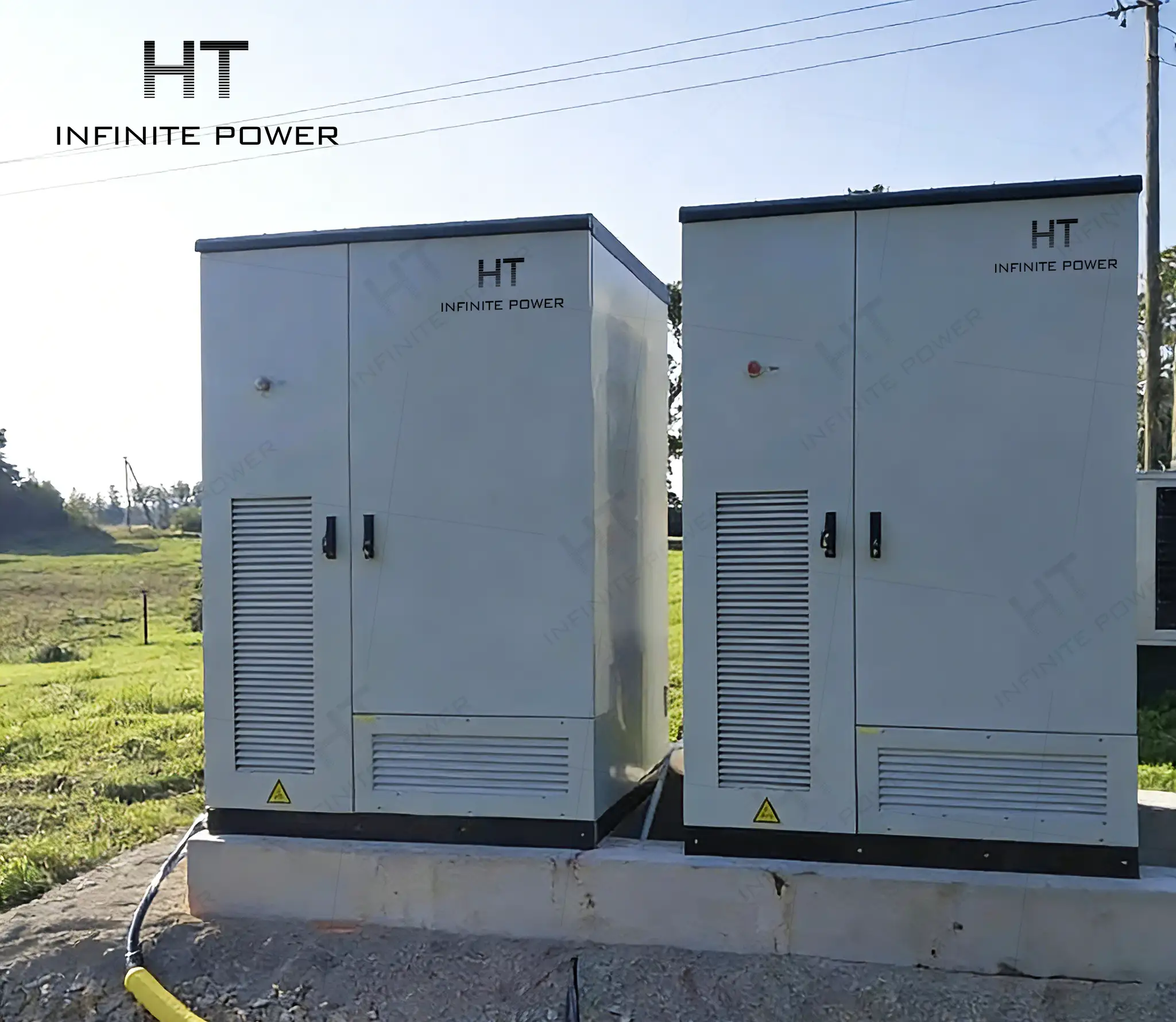
Assume a commercial or industrial project equipped with approximately a 1 MWp photovoltaic system: at midday, rooftop and carport generation significantly exceeds on-site electricity demand, while demand peaks occur in the morning and evening due to HVAC start-up, production processes, canteen operations, and electric vehicle charging stations. The core objectives of the project are to increase self-consumption, reduce maximum demand, and avoid adding operational complexity.
Core Value of On-Site Energy Storage
A battery energy storage system deployed at the grid connection point acts as an “energy buffer,” capturing surplus photovoltaic generation at midday and releasing it during demand peaks. Key benefits include time-based arbitrage (reduced electricity purchases during peak hours), peak shaving and load shifting, support for electric vehicle charging, and readiness for participation in regional flexibility mechanisms. Real-world project data show that this approach can increase self-consumption rates to around 60%, offering a strong balance between technical feasibility and economic viability.
Rational System Design and Sizing
Key design principles include matching battery power to the target peak-shaving load and aligning storage capacity with the effective load-shifting window (typically 2–4 hours is sufficient). Seasonal control strategies should be incorporated to avoid charging at inappropriate times. System functionality can be further enhanced through electric vehicle supply equipment (EVSE) management and smart charging strategies, such as staggered start-up, current threshold control, and priority allocation.
Cautious Participation in Grid Ancillary Service Markets
In France, battery energy storage systems have been eligible to participate in primary frequency control (FCR – Frequency Containment Reserve) since 2017. As of June 19, 2024, secondary frequency control (aFRR – Automatic Frequency Restoration Reserve) has been opened through daily tenders operated by the French transmission system operator RTE. Participation requires compliance with real-time telemetry, a minimum of 1 MW of available capacity, and firm availability commitments, and typically involves contracting with an aggregation service provider.
Golden Rule: always prioritize on-site electricity demand first, and only allocate remaining capacity to grid services. This hierarchy ensures operational stability and forms a robust foundation for the project’s business model.
When Should Virtual Energy Storage Be Prioritized?
For small commercial and industrial projects with a contracted capacity below 36 kVA, virtual energy storage can optimize electricity costs without upfront investment or on-site installation. Contracted capacity costs can be treated as operating expenses (OPEX) and amortized accordingly. However, important limitations must be considered: virtual energy storage cannot provide peak shaving, offers no backup power during outages, and leaves operational control largely in the hands of the electricity supplier. As such, it is best suited for transitional phases or for projects with low requirements for supply continuity and no available space for technical installations.
An Efficient Decision-Making Framework
If the primary objectives are maximizing self-consumption, controlling demand charges, and maintaining operational autonomy, on-site battery energy storage is indispensable. If grid capacity is sufficient and the goal is limited to short-term contract optimization, virtual energy storage can serve as an alternative. Regardless of the model selected, the following principles should always apply: rational system sizing, evaluation of multiple scenarios, and a clearly defined priority between on-site electricity use and participation in grid services.

Part Three: Industrial and Large-Scale Projects — The Core Role of BESS (Battery Energy Storage Systems)
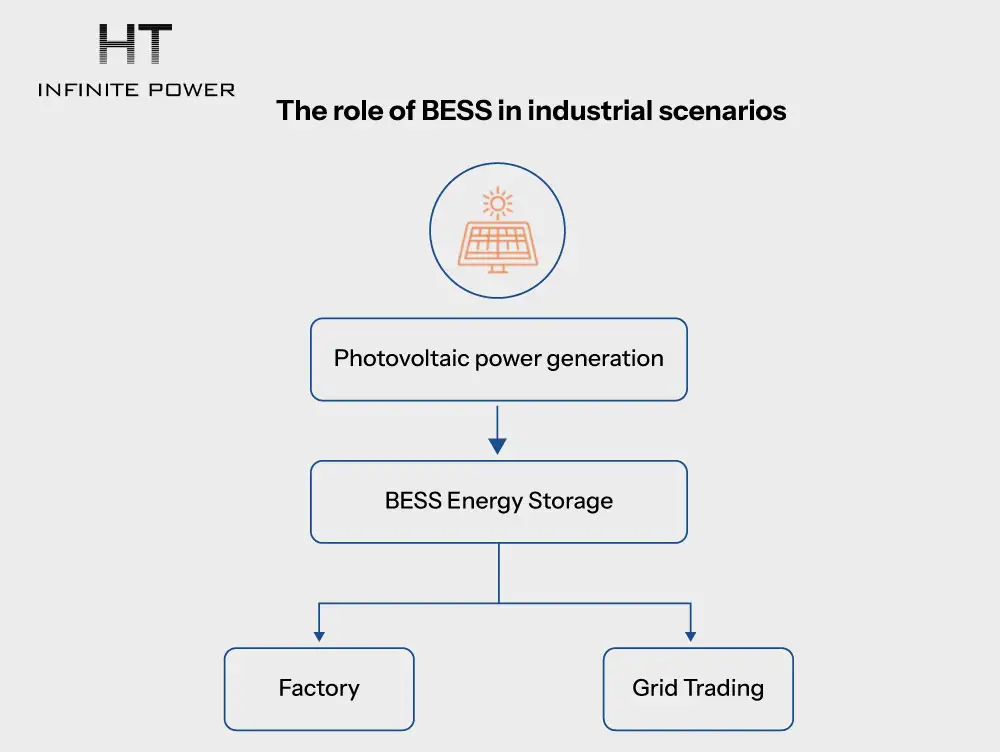
For energy-intensive industrial applications—such as furnaces, compressors, pump systems, processes with rapid load ramping, and scenarios requiring high reliability—photovoltaic systems typically cover midday generation needs, while peak demand and load ramps occur during other periods. In this context, a BESS becomes a critical operational asset, delivering dual value:
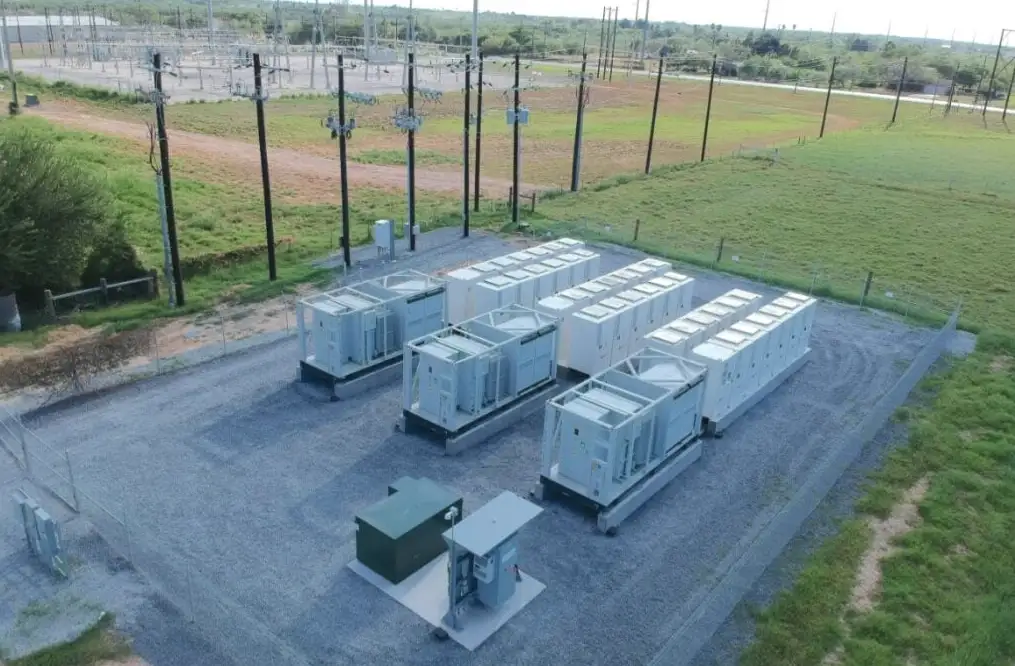
1.Increasing self-consumption, limiting peak demand, and providing basic backup power for critical loads, thereby optimizing electricity costs.
2.When idle, participating in grid ancillary services (frequency regulation reserves, electricity price arbitrage, regional congestion management) to generate additional revenue.
Pre-Deployment Prerequisites
Before integrating a battery energy storage station into a photovoltaic project, the following conditions must be met:
1.Real-time telemetry and robust control capabilities to manage power setpoints, state of charge (SOC) limits, ramp rates, and reserved capacity.
2.Fulfillment of availability commitments in line with the requirements of the target ancillary service mechanisms (typically via an aggregator).
3.Clearly defined priority governance rules: on-site consumption takes precedence, with only residual capacity allocated to the market. Note that every hour of capacity committed to grid services is unavailable for internal backup use.
2.Fulfillment of availability commitments in line with the requirements of the target ancillary service mechanisms (typically via an aggregator).
3.Clearly defined priority governance rules: on-site consumption takes precedence, with only residual capacity allocated to the market. Note that every hour of capacity committed to grid services is unavailable for internal backup use.
Rational Sizing: Avoid Overdesign
• Power rating: Based on the target peak-shaving load and process-related ramping requirements (start-up or rapid load fluctuations).
• Energy capacity: Matched to the effective time-shifting window; in most scenarios, a single-cycle duration of 1–4 hours is sufficient.
• Electrical design: Includes dedicated protection devices, compatible metering equipment, islanding capability (to ensure emergency power supply), and safe shutdown schemes.
• Operational control: Clear service priority (on-site use first), defined SOC upper and lower limits, seasonal control strategies, and an efficient monitoring platform with alarm functions.
• Energy capacity: Matched to the effective time-shifting window; in most scenarios, a single-cycle duration of 1–4 hours is sufficient.
• Electrical design: Includes dedicated protection devices, compatible metering equipment, islanding capability (to ensure emergency power supply), and safe shutdown schemes.
• Operational control: Clear service priority (on-site use first), defined SOC upper and lower limits, seasonal control strategies, and an efficient monitoring platform with alarm functions.
Safe and Efficient Decision-Making Process
1.Define the core application scenario (curtailment mitigation and self-consumption prioritized).
2.Validate annual value creation.
3.Gradually expand into grid services.
4.Reserve operational margins (maintenance, grid fault response).
5.Incorporate battery maintenance and replacement planning from the project design stage.
2.Validate annual value creation.
3.Gradually expand into grid services.
4.Reserve operational margins (maintenance, grid fault response).
5.Incorporate battery maintenance and replacement planning from the project design stage.
Step-by-Step Sizing and Design Methodology
• Define objectives: Identify the core requirements (self-consumption, demand charge control, emergency backup, flexibility services) and establish clear priorities.
• Data preparation: Compile high-resolution load profiles, contracted capacity, consumption patterns, EV charging infrastructure parameters, and the applicable electricity tariff structure.
• Key parameters: Align peak power rating with load demand and size energy capacity according to the effective time-shifting window (ensuring year-round charge/discharge feasibility).
• System integration: Incorporate protection devices, metering equipment, telemetry functions required for grid services, and well-defined operating procedures.
• Data preparation: Compile high-resolution load profiles, contracted capacity, consumption patterns, EV charging infrastructure parameters, and the applicable electricity tariff structure.
• Key parameters: Align peak power rating with load demand and size energy capacity according to the effective time-shifting window (ensuring year-round charge/discharge feasibility).
• System integration: Incorporate protection devices, metering equipment, telemetry functions required for grid services, and well-defined operating procedures.
Trends and Key Considerations for 2026
The capacity of energy storage power plants continues to grow steadily, but it still cannot fully meet the supporting needs of the explosive growth in photovoltaic (PV) installations.
High electricity price volatility and frequent negative price periods have strengthened the value of energy storage in price arbitrage and demand management.
Electricity grid ancillary service markets are gradually opening up (for example, France’s aFRR mechanism is now accessible to storage), but relevant requirements need to be incorporated during the design phase.
Core value of energy storage: not “excess capacity used rarely,” but “rational sizing + robust operational management.”
Conclusion: Energy storage is no longer optional; it has become the key link to maximizing PV value.
Residential scenarios: For autonomy and curtailment absorption, choose on-site batteries; for optimizing electricity costs without investment, choose virtual storage.
Commercial & industrial scenarios: On-site batteries are the main lever to increase self-consumption and control peak demand, while also paving the way to participate in flexibility mechanisms.
Industrial scenarios: BESS (battery energy storage systems) can optimize project operations and, under clear management rules, generate additional revenue.
FAQ: Common Questions on PV + Energy Storage Solutions
What is the core difference between virtual storage and on-site battery storage?
The key distinction lies in “physical presence” and “emergency capability.” On-site batteries are physical devices that can provide backup power. Virtual storage is a digital account service with no hardware and no emergency backup, offering advantages in low investment and simplicity.
What key indicators should be considered when selecting storage for commercial & industrial projects?
- Potential for increased self-consumption
- Potential to reduce peak demand
- Initial investment payback period (ROI)
- Eligibility to participate in grid ancillary services
- Maintenance costs
Why emphasize “rational design” when selecting BESS for industrial projects?
Oversizing can lead to idle equipment and tied-up capital. Since industrial loads are usually fixed, 1–4 hours of storage capacity can meet most peak-shifting needs. Rational design maximizes investment returns.
What problems can Archelios Pro solve in PV + storage projects?
It allows fast project data import, simulates multiple storage scenarios, quantifies economic benefits, and generates professional reports—helping avoid selection mistakes and shortening the project design cycle.
What requirements must storage meet to participate in grid ancillary services?
Real-time telemetry capability, sufficient capacity, availability commitments, and cooperation with aggregators (in most cases). Specific requirements must comply with the local grid operator’s rules.
Power Quality Challenges in Grid-Connected BESS
What is STS, and what is the difference between STS and PCS?