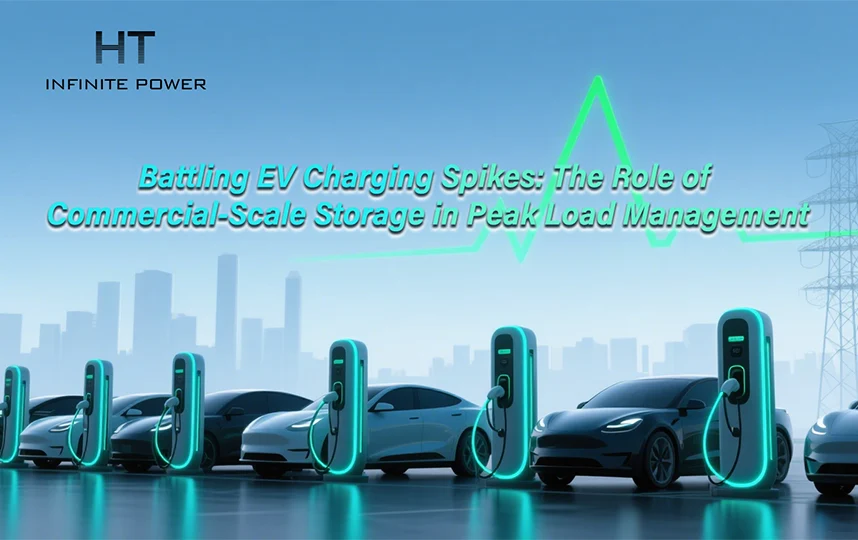
Battling EV Charging Spikes: The Role of Commercial-Scale Storage in Peak Load Management
2025-08-13
The Anatomy of a Charging Surge
From Kilowatts to Megawatts in Minutes
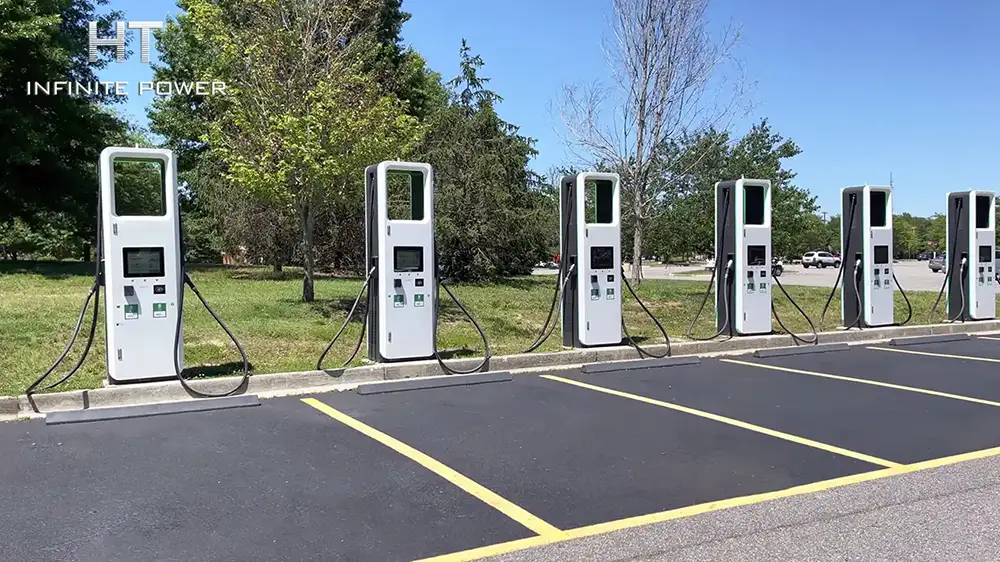
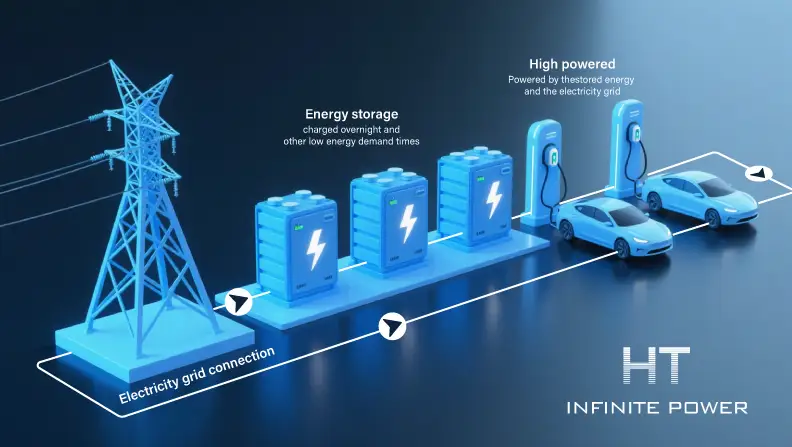
In commercial or public EV charging hubs, energy demand doesn’t grow — it explodes. When multiple 150 kW DC fast chargers activate simultaneously, what starts as a moderate 200 kW baseline can spike to 3 MW in under five minutes. This isn’t rare; in urban corridors and high-traffic retail parks, it’s becoming routine.
According to BloombergNEF (2024), global EV sales are projected to surpass 16 million units annually, with charging infrastructure growing fastest in Asia and Europe. What does that mean for the grid? Unpredictable, highly concentrated bursts of demand that local infrastructure simply wasn’t built to absorb.
According to BloombergNEF (2024), global EV sales are projected to surpass 16 million units annually, with charging infrastructure growing fastest in Asia and Europe. What does that mean for the grid? Unpredictable, highly concentrated bursts of demand that local infrastructure simply wasn’t built to absorb.
Hidden Costs and Strain on Local Grids
These sudden spikes affect more than voltage stability. They introduce infrastructure wear, increase transformer heating, and — perhaps most critically — result in excessive demand charges. In many markets, commercial users pay not just for total energy consumed (kWh), but also for their highest 15-minute peak draw (kW) within a billing cycle.
A single unbuffered EV surge can inflate a site’s monthly bill by thousands of dollars, even if the rest of the time it's under baseline. Worse yet, grid reinforcement — from transformer upgrades to substation expansion — can take 12–36 months and cost over USD 1 million per MW added.
A single unbuffered EV surge can inflate a site’s monthly bill by thousands of dollars, even if the rest of the time it's under baseline. Worse yet, grid reinforcement — from transformer upgrades to substation expansion — can take 12–36 months and cost over USD 1 million per MW added.
Energy Storage as a Peak Load Solution
Power vs Energy — Choosing the Right Specs
Commercial energy storage systems are not one-size-fits-all. Operators must strike a delicate balance:
- Power Rating (kW or MW) determines how much load can be instantly offset.
- Energy Capacity (kWh or MWh) governs how long that support can be sustained.
A charging hub expecting 3 MW spikes for up to 45 minutes might deploy a 3 MW/2 MWh system. Oversizing leads to unnecessary CAPEX, while undersizing risks partial protection and faster degradation.
Intelligent Dispatch: From Peak Shaving to Grid Sync
Advanced Energy Management Systems (EMS) continuously monitor site load, tariff structures, and grid signals to operate storage optimally. Key strategies include:
- Peak Shaving: Discharging to cap site load at a pre-set threshold.
- Time-of-Use Arbitrage: Charging off-peak (low rates), discharging on-peak.
- Frequency Regulation: Offering real-time response to grid fluctuations.
- Virtual Power Plant (VPP) Participation: Aggregated control across sites for grid-level balancing.
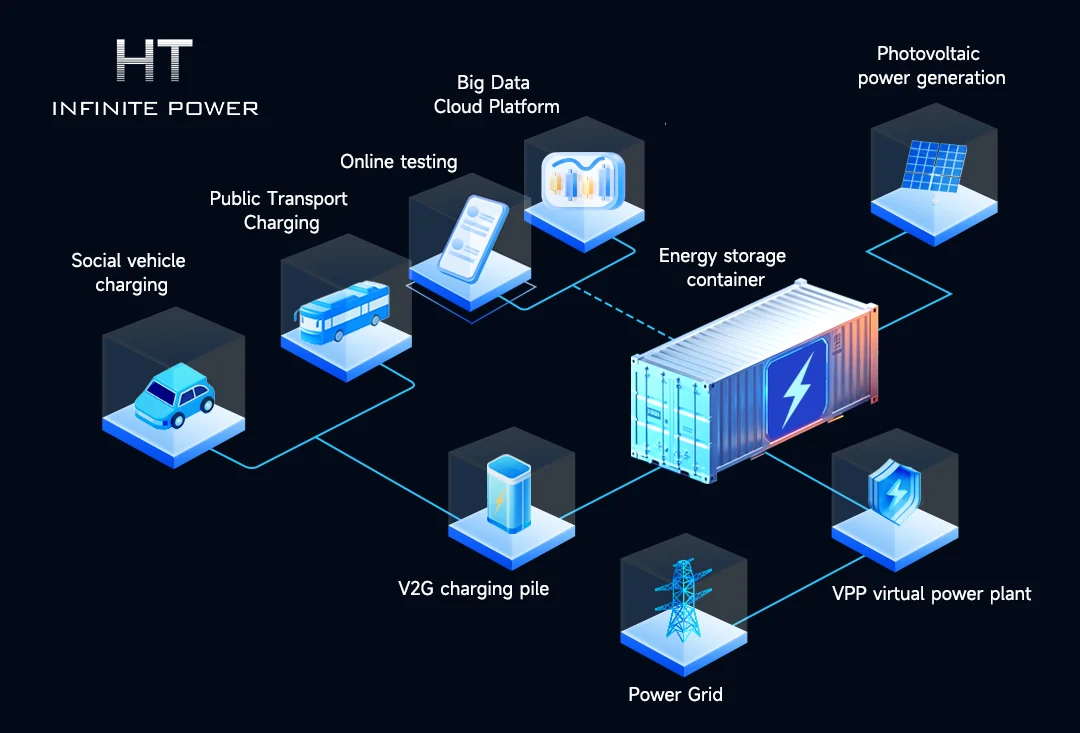
AI-driven EMS increasingly leverage predictive analytics — traffic data, weather forecasts, historical EV activity — to preemptively manage charge/discharge cycles, reducing latency and maximizing ROI.
Real-World Use Cases Across Four Continents
China – Highway Service Areas and Battery Swapping Zones
By 2024, China’s EV corridor program equipped 40+ highway rest areas with modular 1 MW/2 MWh battery systems. The goal: ensure grid stability during national holidays when traffic — and charging — triples. Cloud-based EMS controls reduce grid draw spikes by 60% and also serve swapping stations, which require high-voltage replenishment in short bursts.
Germany – Urban Malls with High EV Traffic
A commercial center in Munich integrated a 750 kW/1.5 MWh lithium system with solar PV. EV charging demand, HVAC loads, and lighting systems previously caused late-afternoon surges. Post-installation, demand charges dropped 35%, while the ESS earned extra revenue through German capacity reserves under the Bundesnetzagentur program.
UAE – Logistics Hubs Operating 24/7
A freight consolidation zone near Dubai Airport installed 2 MW/3 MWh storage to buffer overlapping forklift and EV-fleet charging cycles. Designed for desert conditions, the system includes dual-redundant liquid cooling, self-contained fire suppression, and remote diagnostics. Annual savings exceeded $320,000 in year one, bolstered by DEWA’s grid services market.
Australia – Tourism Sites in Grid-Weak Regions
At Circular Quay, Sydney’s public charging hub added a 1 MW/2.5 MWh ESS. During cruise season, when tour buses, refrigeration, and EVs compete for power, the system seamlessly buffers peaks. It also islands during outages, offering resilience for grid-weak sites — a key asset as wildfires and storms increase.
The Financial Equation: TCO, ROI, and Hidden Revenue
How Demand Charges Reshape Economics
In California, New South Wales, and large swaths of Europe, demand charges account for up to 50% of commercial energy bills. Shaving even 10% off a site’s peak can lead to five- or six-digit annual savings. A 1 MW/2 MWh system costing USD 800,000 might pay for itself in under 4 years through avoided demand charges alone.
Energy Arbitrage, FFR, and Capacity Markets
Beyond savings, commercial ESS can generate revenue:
- Energy arbitrage: Buy low (off-peak), sell high (on-peak). Yields vary with volatility.
- FFR (Fast Frequency Response): Offered in markets like the UK and Australia.
- Capacity services: Long-term grid support contracts in Germany, UAE, and India.
These layers of income improve bankability and attract green finance instruments.
Codes, Incentives, and Policy Leverage
Global Interconnection Standards (EU, US, China)
- EU: EN 50549 for distribution-grid ESS compliance.
- US: IEEE 1547-2018 governs grid-tied DERs, including energy storage.
- China: GB/T 36276 for ESS safety, with city-level microgrid rules evolving.
Compliance ensures safety, reduces integration friction, and unlocks incentive eligibility.
Incentive Maps: Grants, Tax Credits, and Feed-in Models
- Europe: EU’s REPowerEU funds cover 30% of storage CAPEX with renewable pairing.
- China & UAE: Regional industrial parks offer zero-interest ESS loans.
- Australia: State-level rebates support commercial deployments near urban load centers.
- US: Inflation Reduction Act’s ITC offers 30% credit for standalone storage.
Engineering Considerations for Commercial ESS
Load Profiling & Site-Specific Sizing
Good design starts with bad data — or rather, fixing it. Load profiling over 12 months (15-minute resolution) reveals not just peak magnitude, but timing, duration, and seasonality. System design then targets worst-case loads, not averages.
Integration with PCS, HVAC & Safety Systems
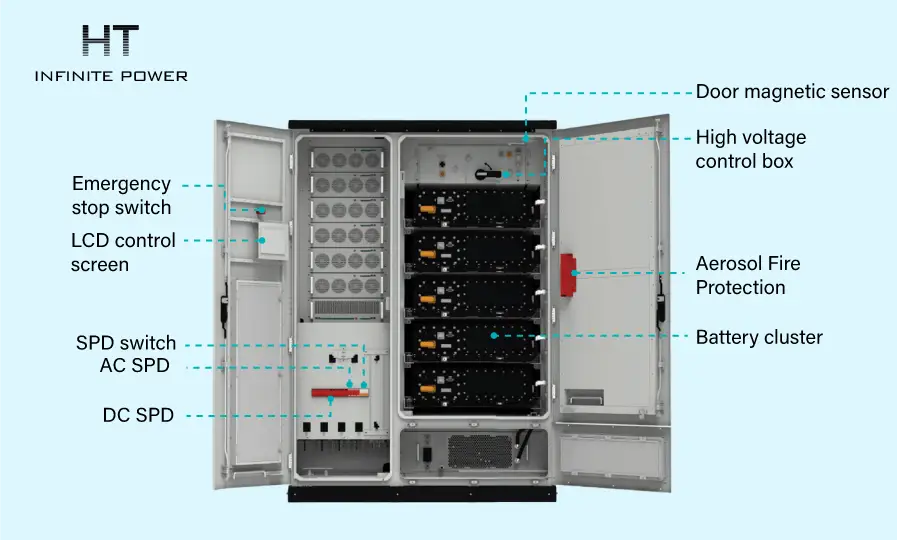
- Power Conversion System (PCS) must match grid specs and harmonics.
- Thermal management: Air-cooled for temperate zones, liquid or hybrid for tropical/dust-prone areas.
- Fire Safety: Systems must meet UL 9540A, include gas suppression, thermal runaway isolation, and remote shutdown.
Aging, Degradation & Lifecycle Controls
Cycle depth, calendar age, and C-rate all affect degradation. EMS software can reduce stress by limiting depth-of-discharge, rotating module usage, and incorporating weather-adjusted control.
Forward Look: Emerging Models and Tech
Second-Life Batteries and Cost Innovation
Used EV packs — retired after 70–80% capacity — are finding new life in stationary storage. Projects in Spain and Japan show CAPEX reductions of 30–40%, with minimal performance trade-off, provided stringent BMS and warranty frameworks are in place.
Hydrogen Integration & Multi-Day Storage
Hybrid systems coupling batteries and electrolyzers are emerging. Batteries handle daily cycling, while hydrogen offers backup or seasonal storage — particularly in remote industrial zones.
AI Forecasting and Autonomous Energy Dispatch
Next-gen EMS uses LSTM models and edge computing to forecast load spikes and solar output, enabling dispatch decisions without operator input. These self-tuning systems adapt to tariff changes, weather anomalies, and equipment degradation in real time.
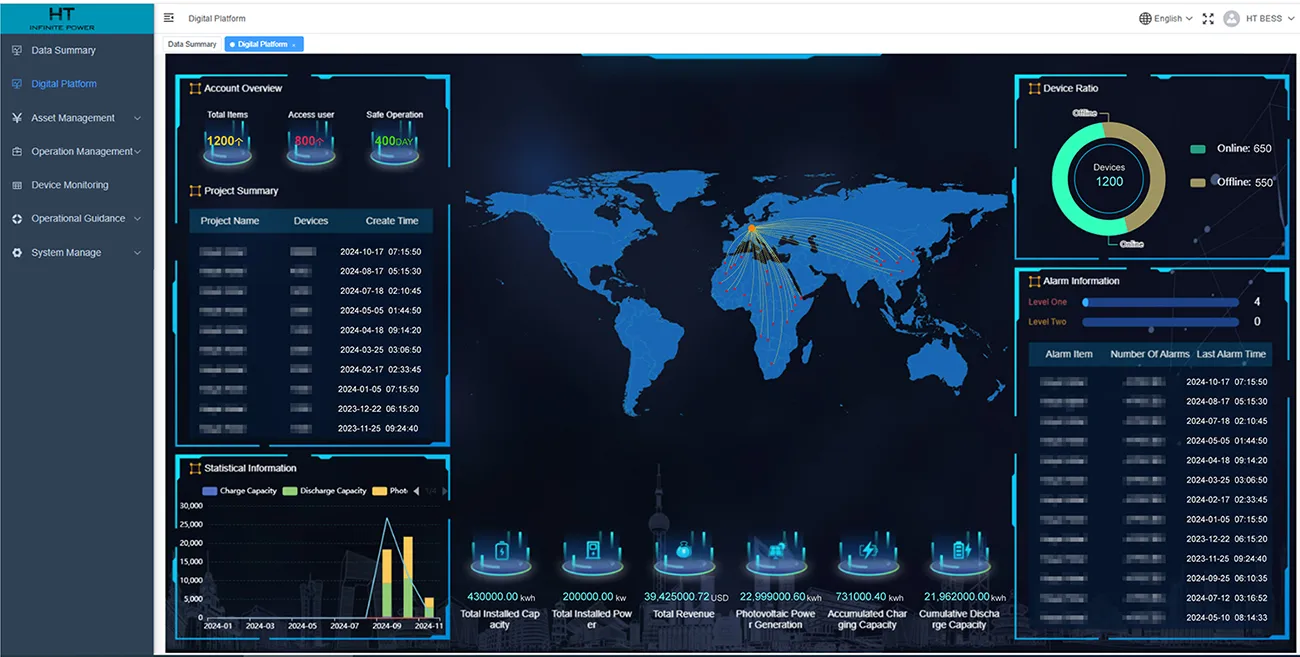
Conclusion: Beyond Buffering — ESS as Strategic Asset
Commercial energy storage isn’t just a tool to smooth out spikes — it’s becoming a core infrastructure asset. As EV adoption accelerates, facilities that proactively deploy ESS not only protect themselves from grid shocks, but also gain strategic advantages: reduced OPEX, enhanced resilience, and participation in evolving energy markets. The future of EV infrastructure depends not just on chargers, but on the smart storage that supports them.
Frequently Asked Questions (FAQs)
Q1. Can storage fully eliminate demand charges from EV charging?
Not entirely — but it can drastically reduce their impact, often cutting 30–60% of the peak charges depending on system sizing and EMS quality.
Q2. How long does a commercial ESS typically last?
10–15 years with proper O&M. Cycle life depends on depth of discharge and ambient conditions.
Q3. Does the system need solar or wind to work?
No. Storage works standalone. Coupling with renewables can improve economics, but isn’t required for peak shaving.
Q4. What are the main safety risks, and how are they mitigated?
Fire, thermal runaway, and electrical arc risk are managed through certified enclosures (UL 9540A), gas suppression, and thermal monitoring.
Q5. What size system do I need for a 1 MW peak?
Depends on duration of peaks. For 30-minute mitigation, a 1 MW / 0.5 MWh system may suffice. Load data profiling is essential for precision.
Battling Europe’s Gas Crunch: How Commercial-Scale Storage Strengthens Energy Security
Batteries vs. Generators Backup Power Solution: A Comprehensive Comparison