Application of Commercial & Industrial Energy Storage PCS and Replacement of Diesel Generators: The Practice of an Energy Revolution
2025-03-15
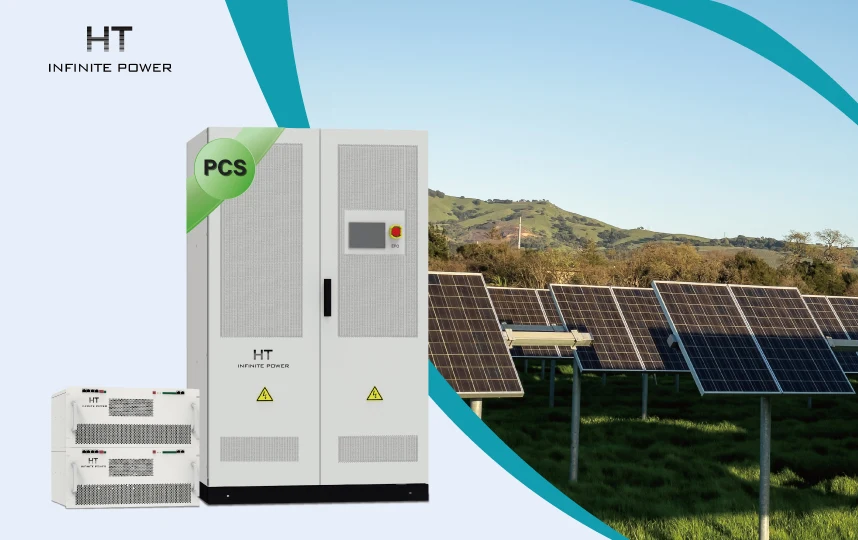
Under the global energy transition, commercial and industrial energy storage systems (ESS) are becoming critical tools for enterprises to address power demand and cost challenges. As a core component, the Power Conversion System (PCS) not only enhances energy storage efficiency but also redefines energy supply logic in industrial and commercial scenarios by replacing traditional diesel generators. This article analyzes the working principles, application scenarios, economic and environmental advantages of PCS, alongside international case studies, to demonstrate how this technology creates sustainable value for businesses.
1. Working Principles and System Integration of PCS
The Power Conversion System (PCS) is a critical device connecting energy storage batteries to the grid. Its primary function is to enable bidirectional conversion between direct current (DC) and alternating current (AC). In charging mode, PCS converts AC power from the grid or renewable sources (e.g., solar PV) into DC for battery storage. In discharging mode, it inverts stored DC power back to AC for on-site consumption or grid feedback.

Unlike diesel generators, which rely on fuel combustion, energy storage systems operate on a "store-release" cycle. When grid power is stable, the system charges during off-peak hours to reduce costs; during outages or peak pricing periods, it discharges stored energy to achieve "time-shifting" of electricity. This dynamic regulation allows PCS not only to serve as backup power but also to optimize energy consumption through demand-side management (DSM).
For example, a German automotive manufacturing plant integrated a 2MW/4MWh energy storage system with PCS and solar PV. By charging during low-price periods and discharging during production peaks, the facility reduced annual peak power procurement costs by €120,000. This case highlights how PCS’s intelligent control algorithms—such as price signal-based charging strategies—outperform diesel generators in operational flexibility.
2. Key Scenarios for Replacing Diesel Generators
Diesel generators have long served as backup power sources in commercial and industrial settings, but their high emissions, noise pollution, and maintenance costs are increasingly problematic. In contrast, PCS-driven energy storage systems excel in the following scenarios:
(1).Critical Facility Backup Power
In 2021, U.S.-based data center operator Vantage Data Centers replaced diesel generators with a lithium battery storage system (5MW PCS + 20MWh capacity). The system provides 4 hours of backup power during grid failures while earning $450,000 annually through California Independent System Operator (CAISO) demand response programs. Compared to diesel solutions, lifecycle costs dropped by 38%, and nitrogen oxide (NOx) emissions were eliminated.
(2).Dynamic Electricity Cost Management
At Stanmore Resources’ open-pit coal mine in Queensland, Australia, an 8MW/32MWh storage system with real-time price-responsive PCS charges when spot prices fall below AUD 30/MWh and discharges when prices exceed AUD 100/MWh. Diesel generators are reserved for extreme scenarios, resulting in a 22% annual reduction in energy expenses.
(3).Off-Grid and Microgrid Solutions
A Zambian copper mining site, previously dependent on diesel generators due to weak grid infrastructure, adopted a PCS-controlled "solar + storage" microgrid in 2022. Monthly diesel consumption plummeted from 1.2 million liters to 180,000 liters, cutting fuel costs by 84%. Here, PCS manages energy storage while coordinating hybrid dispatch between diesel generators and renewables.
3. Quantified Technical and Economic Advantages
From a lifecycle cost (LCOE) perspective, energy storage systems now surpass diesel generators economically. According to BloombergNEF (2023), the LCOE for commercial storage systems ranges from 0.15–0.25/kWh,whiledieselgenerationcostsfluctuatebetween0.15–0.25/kWh,whiledieselgenerationcostsfluctuatebetween0.30–0.45/kWh due to oil price volatility (Figure 1). Including carbon taxes (e.g., EU CBAM), diesel’s total costs rise by 20–35%.
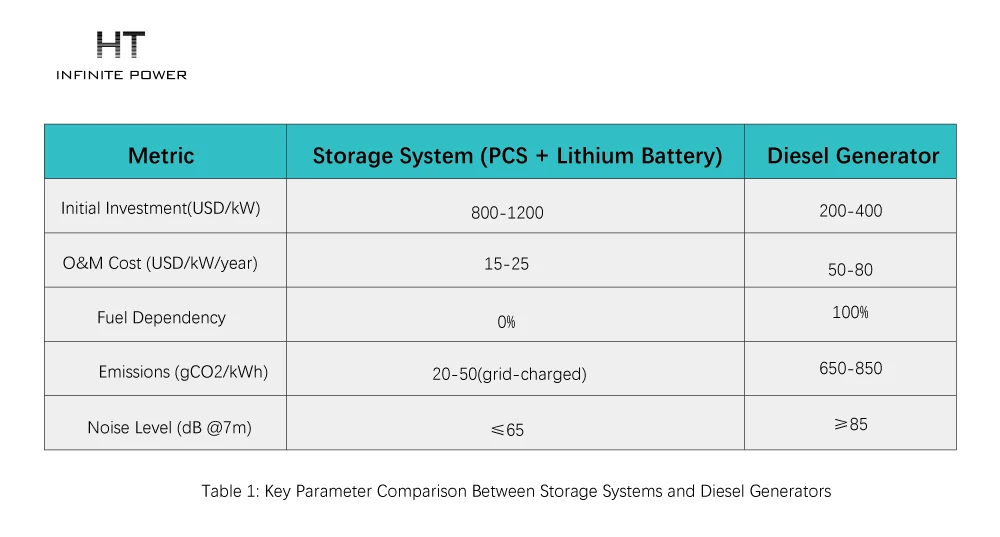
Table 1: Key Parameter Comparison Between Storage Systems and Diesel Generators
Notably, energy storage systems enable diversified revenue streams. Beyond direct cost savings, they generate income through grid services like frequency regulation. For instance, in the UK’s Dynamic Containment market, storage systems earn up to £120/MW daily via PCS’s millisecond-level response.
4. Customer Value Transformation: From Cost Center to Profit Engine
For commercial and industrial users, PCS-based storage systems transform energy assets from cost burdens into profit-generating "virtual power plants" (VPPs). This shift manifests in three dimensions:
(1).Enhanced Operational Resilience
Renesas Electronics deployed a 10MW storage system at its Naka semiconductor plant in Japan. During the 2023 typhoon season, the system mitigated four voltage sag incidents, preventing wafer production losses exceeding $2 million per event. Diesel generators, requiring 10–30 seconds to start, cannot address millisecond-level interruptions.
(2).ESG Goal Achievement
IKEA’s Belgian distribution center reduced annual CO2 emissions by 4,200 tons after adopting storage systems, contributing 15% to its 2030 climate targets. The system also participates in a local VPP, earning €180,000 yearly through frequency regulation services.
(3).Asset Monetization Innovations
Texas-based retailer H-E-B deployed a 6MW storage system via an "Energy Storage as a Service" (ESaaS) model, achieving $1.2 million net profits in Year 1 without upfront investment. Service providers recover costs by sharing energy savings and market revenues, enabled by PCS’s digital interfaces for real-time energy and financial tracking.
5. Challenges and Future Pathways

Despite their advantages, PCS storage systems face barriers like inconsistent technical standards and lagging market mechanisms. For example, the EU lacks unified grid interconnection standards, forcing multinational firms to conduct redundant certifications. Some emerging markets restrict storage participation in electricity trading.
Future advancements will focus on:
● Hybrid Energy Management:
Integrating solar, fuel cells, and storage via PCS-driven smart controls.
● AI-Driven Optimization:
Machine learning for price and load forecasting to maximize profits.
● Modularization:
Containerized PCS units for rapid deployment in diverse industrial settings.

Conclusion
From diesel displacement in African mines to revenue innovation in Californian data centers, commercial and industrial energy storage systems are proving their technical and economic viability globally. In this silent energy revolution, PCS acts not only as a current converter but also as a catalyst for reimagining energy management—transforming short-term backup solutions into long-term strategic assets. As factories increasingly achieve "negative electricity costs" through storage, the ultimate impact of this transition may exceed all expectations.

Industrial and commercial energy storage systems, why are you recommended to choose "customization"?
PCS vs. Inverters in Energy Storage: Functions and Applications