Battling Europe’s Gas Crunch: How Commercial-Scale Storage Strengthens Energy Security
2025-08-15

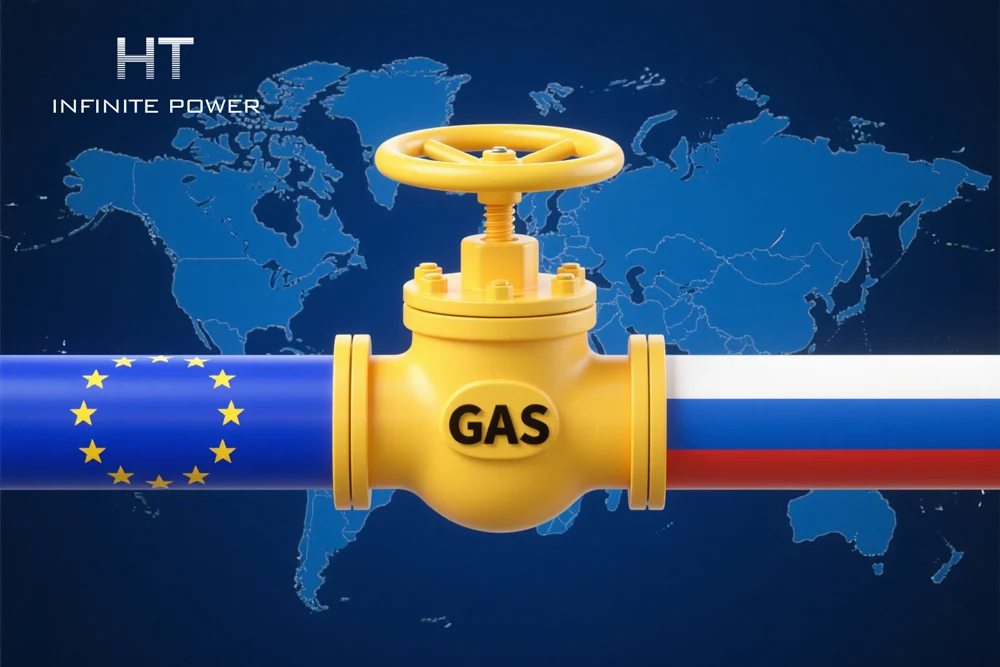
During the harsh European winters, energy markets face increasing pressure due to gas supply constraints. The surge in gas prices and disruptions in supply chains have caused significant stress on industrial and commercial energy users. According to the International Energy Agency’s (IEA) World Energy Outlook 2024, approximately 40% of Europe’s natural gas consumption depends on imports, primarily from Russia, Norway, and Algeria IEA World Energy Outlook 2024. The ongoing geopolitical tensions have exacerbated supply volatility, putting European energy security under growing threat.
Commercial-scale energy storage systems (C&I ESS) — including battery banks, thermal storage, and hybrid solutions — have emerged as essential tools to mitigate natural gas shortages, reduce energy costs, and enhance grid resilience. These systems not only smooth out peak electricity demand, easing stress on the grid, but also facilitate partial electrification of industrial heat and processes, decreasing reliance on natural gas.
Commercial-scale energy storage systems (C&I ESS) — including battery banks, thermal storage, and hybrid solutions — have emerged as essential tools to mitigate natural gas shortages, reduce energy costs, and enhance grid resilience. These systems not only smooth out peak electricity demand, easing stress on the grid, but also facilitate partial electrification of industrial heat and processes, decreasing reliance on natural gas.
Europe’s Gas Dependence and Emerging Crisis
Historical Reliance and Recent Shocks
Europe has long depended on natural gas to meet flexible electricity demand and industrial heat requirements. While renewables have rapidly grown, natural gas remains a critical balancing fuel and essential for winter heating. The European Network of Transmission System Operators for Electricity (ENTSO-E) reported in its 2023 Winter Outlook that gas-fired generation accounted for approximately 30% of Europe’s electricity during peak winter months ENTSO-E Winter Outlook 2023. Recent reductions in Russian gas supplies have sharply disrupted this balance, triggering price volatility and supply shortages.
Economic and Industrial Impacts
Rising gas prices increase operational costs across key industrial sectors, including chemicals, metals, and glass manufacturing, which rely heavily on high-temperature processes. Meanwhile, commercial and logistics hubs have seen surging electricity demand, particularly from clustered electric vehicle (EV) charging and cooling loads — creating new grid challenges.
Commercial Energy Storage: Core Functions and Benefits
Peak Load Management and Demand Charge Reduction
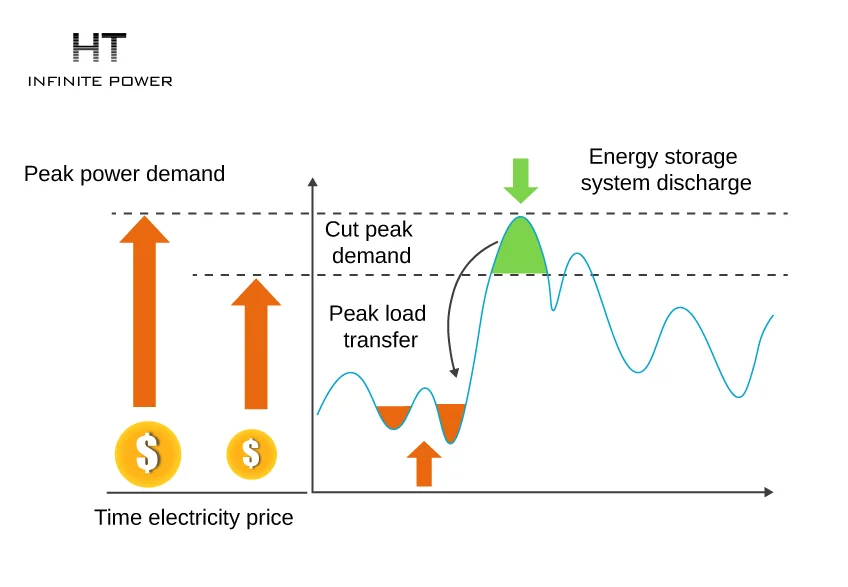
Commercial storage systems reduce demand charges — a significant portion of commercial electricity bills — by lowering the peak power drawn from the grid. Batteries discharge stored energy during peak price periods, flattening demand spikes and delivering direct operational cost savings.
Supporting Grid Stability and Fast Response
Energy storage offers millisecond-level response speeds, enabling frequency regulation and voltage support services that traditional gas turbines cannot match without excessive wear. The European Energy Research Alliance (EERA) highlights that battery storage can increase grid reserve capacity by over 20%, enhancing system stability during supply shocks European Energy Research Alliance.
Enabling Electrification of Heat and Industrial Processes
Storage’s Role in Power-to-Heat Solutions
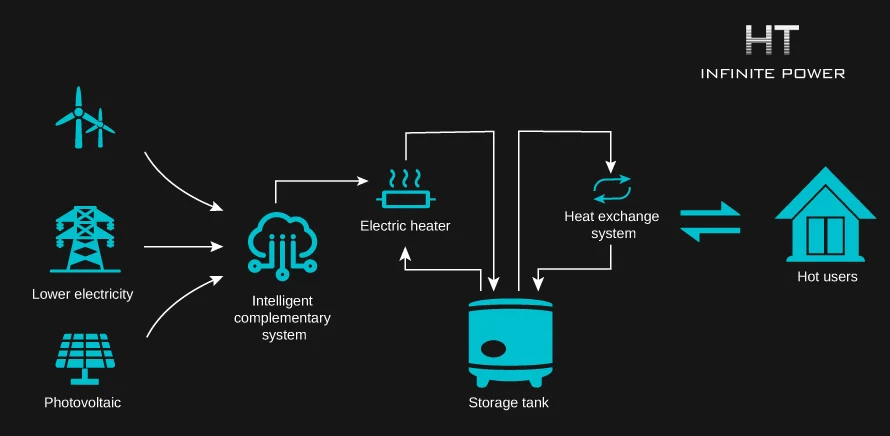
Electrification is a primary strategy for reducing gas consumption. Storage systems optimize electricity usage timing to power heat pumps and electric heaters more efficiently. By charging during off-peak, low-price hours and discharging during high demand, storage helps alleviate grid stress while maintaining heat supply reliability.
Thermal Energy Storage and Hybrid Systems
Thermal storage technologies — such as insulated water tanks or phase-change materials — serve as cost-effective, long-duration buffers. Combined with battery storage, hybrid systems provide multi-scale resilience: batteries manage short-term power peaks, while thermal storage sustains heat delivery over longer periods, advancing industrial and commercial decarbonization.
Financial Considerations: Cost Structures and Revenue Streams
Evaluating Levelized Cost of Storage (LCOS)
The economic viability of storage depends on factors like battery lifespan, efficiency, and upfront costs. Levelized Cost of Storage (LCOS) quantifies the total cost per unit of stored energy. Bloomberg New Energy Finance (BNEF) reports that European commercial storage LCOS has fallen to $120–150/MWh in 2024 BloombergNEF.
Revenue Stacking in European Markets
Revenue stacking — combining multiple income streams — improves project economics. Storage can generate income through demand response incentives, ancillary services, energy arbitrage, and capacity contracts. Countries such as Germany and France have established policies enabling multi-market participation, reducing investor risk.
Policy Landscape and Regulatory Framework in Europe
Incentives and Funding Programs
The European Commission’s REPowerEU initiative explicitly supports energy storage development with grants, tax incentives, and innovation funding European Commission REPowerEU. National governments supplement with subsidies aimed at accelerating industrial storage adoption.
Grid Access and Market Participation
Despite growth potential, market access and grid connection procedures can delay storage deployment. Many European nations are revising regulations to streamline interconnection and facilitate market participation for storage assets.
Technical Aspects of Storage Deployment
Sizing and Integration Strategies
Effective storage sizing requires detailed load analysis, identifying peak demand intervals and duration. Power capacity (kW) must cover instantaneous peaks, while energy capacity (kWh) should meet expected discharge durations. Oversizing increases costs; undersizing reduces benefits.
Energy Management and Safety Considerations
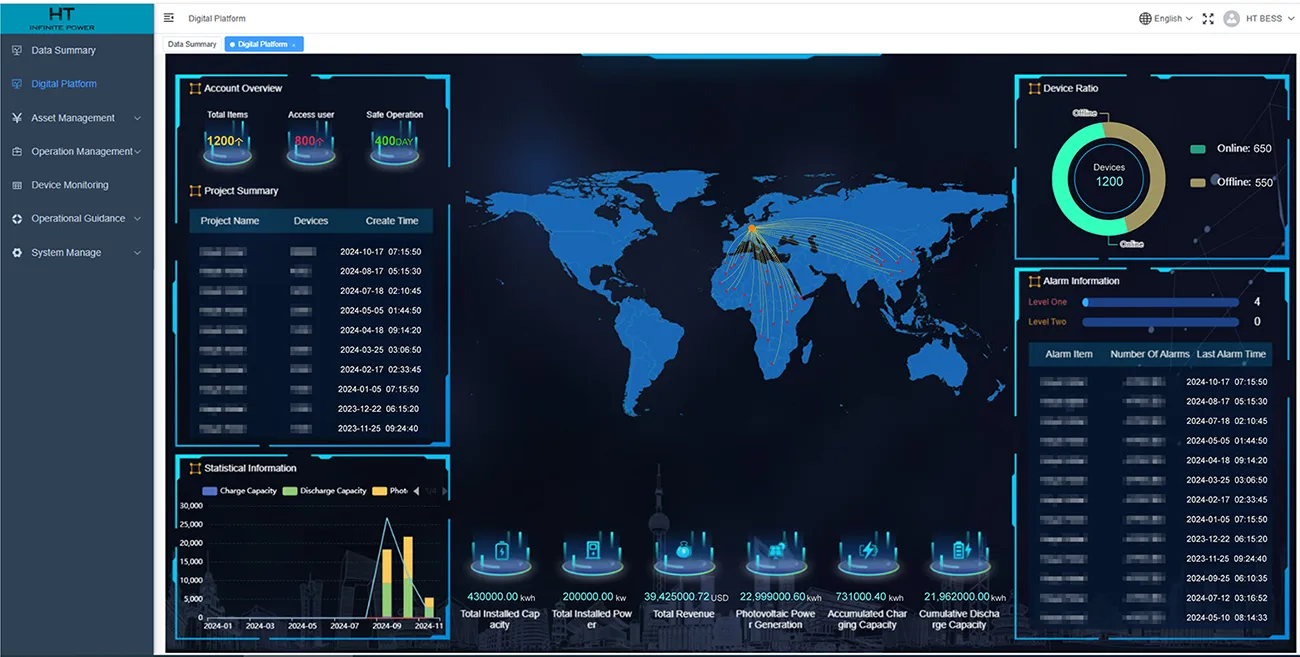
Energy Management Systems (EMS) optimize storage dispatch by factoring tariffs, grid signals, and forecasts. Power Conversion Systems (PCS) and Battery Management Systems (BMS) must integrate with facility control systems for seamless operation. Thermal management, fire safety, and maintenance access are vital design considerations.
Operational Challenges and Lifecycle Management
Battery Degradation and Maintenance
Battery capacity degrades with cycling and temperature. Intelligent EMS can extend life by adjusting operating parameters. Resilience-oriented use during crises may accelerate wear, but this trade-off must be incorporated into financial planning
Second-Life Battery Applications
Repurposed EV batteries offer cost advantages for less critical storage roles, though new cells with warranties remain preferable for high-reliability needs unless second-life packs come fully certified.
Real-World Use Cases and Applications
- Heavy industry integrates storage to shave peaks and partially electrify heat processes, reducing gas consumption and tapping balancing markets.
- Commercial and logistics centers use batteries to mitigate demand charges from clustered EV charging and refrigeration.
- District heating networks deploy distributed storage aggregated as Virtual Power Plants (VPPs) to smooth demand and reduce peaker reliance.
Conclusion: Storage as a Pillar of European Energy Resilience
In an era defined by supply uncertainty, commercial energy storage emerges as practical energy insurance. It mitigates immediate risks, lowers operational costs, and enables electrification strategies that gradually reduce gas dependency. Still, storage must complement diversified supply portfolios, demand management, and policy reforms to build truly resilient energy systems.
FAQs
Q1: Can commercial energy storage replace gas peaker plants?
Not fully. Storage excels at short, rapid response but may be uneconomical for prolonged supply shortages without hybridization.
Q2: What payback periods are typical under gas stress scenarios?
With demand charge savings and stacked revenues, paybacks often occur within a few years, especially when resilience value is factored in.
Q3: Are second-life batteries suitable for commercial storage?
Yes, in lower-criticality settings, but warranty and reliability must be ensured.
Q4: How to determine optimal storage sizing?
Match peak power reduction needs with discharge duration, starting with roughly 1 hour of storage at peak kW.
Q5: What are common regulatory challenges?
Permitting, grid interconnection, and market participation rules often delay deployment; early stakeholder engagement is crucial.
Extreme Heat on the Rise: The Emergency Role of Commercial Energy Storage in Global Heatwaves
Battling EV Charging Spikes: The Role of Commercial-Scale Storage in Peak Load Management