What are sodium-ion batteries and it's advantages
2024-12-28
What is a sodium-ion battery?
There are many types of batteries nowadays. From the perspective of material systems, lithium-ion batteries occupy an absolute dominant position. However, due to the bottleneck caused by the performance of lithium-ion batteries themselves, the research of other materials has become more urgent.
Among them, sodium-ion batteries, as an emerging energy storage technology, have gradually become a hot spot for research and application due to their advantages such as rich resources and low cost. This article will introduce the relevant knowledge of sodium-ion batteries in detail and explore their potential and application prospects in the field of modern energy.
Sodium-ion battery definition
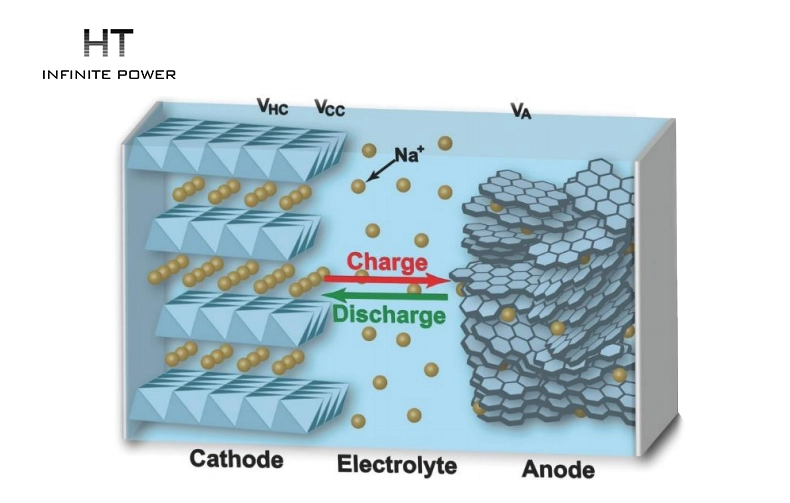
Sodium-ion battery is a rechargeable battery that uses sodium ions to move between the positive and negative electrodes of the battery to store and release energy. Similar to lithium-ion batteries, sodium-ion batteries rely on the embedding and de-embedding process of sodium ions in the positive and negative electrode materials to achieve charging and discharging.
The history and development of sodium-ion batteries
The concept of sodium-ion batteries can be traced back to the 1970s, but due to the reactive chemical properties of sodium, its research progress has been relatively slow. Until recent years, with the advancement of materials science, especially the development of new electrode materials, the performance of sodium-ion batteries has been significantly improved.
In the mid-2010s, sodium-ion batteries regained widespread attention as lithium resource prices rose and demand for alternative energy storage technologies increased. A series of technological breakthroughs have promoted the improvement of sodium-ion battery performance:
New cathode materials: Scientists have developed a variety of new cathode materials, such as sodium iron phosphate (NaFePO4), sodium manganese nickel oxide (NaMn1/3Ni1/3Co1/3O2) and Prussian blue compounds (such as Na2FeFe(CN)6). These materials exhibit higher specific capacities and better cycling stability.
Advanced anode materials: In terms of anode materials, the performance of hard carbon has been further optimized, and some new materials such as phosphorus, tin and antimony-based materials have also demonstrated good sodium storage properties.
Electrolytes and separators: Researchers have developed more stable electrolytes and high-performance separators that improve the overall safety and efficiency of batteries. Commercial exploration and initial application (late 2010s - early 2020s)
Commercial application areas of sodium-ion batteries
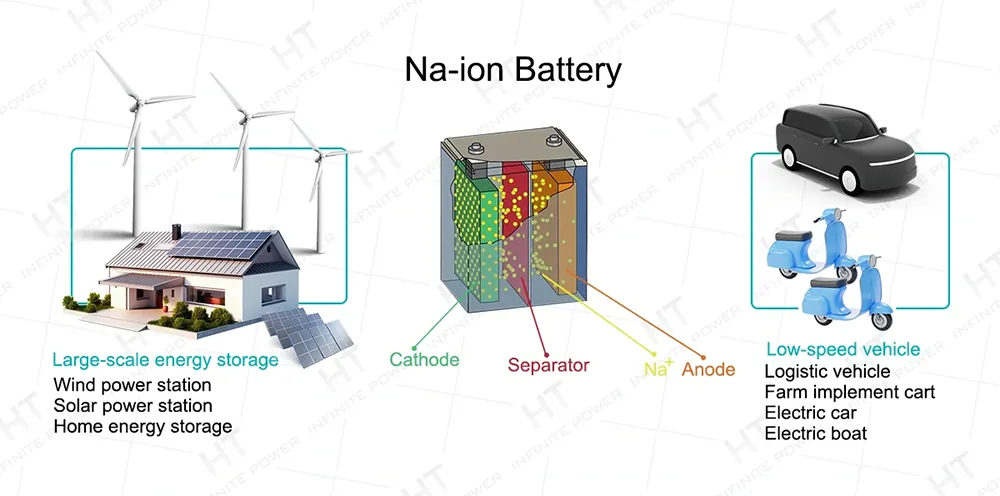
From the late 2010s to the early 2020s, the research on sodium-ion batteries gradually moved from the laboratory to industrialization. Several leading battery manufacturers and research institutions began to explore the commercial applications of sodium-ion batteries:
Sodium-ion batteries have shown obvious advantages in the field of large-scale energy storage. In 2019, French battery manufacturer Saft announced the development of sodium-ion-based energy storage solutions for the storage and peak load regulation of renewable energy.
Electric vehicles
Some low-speed electric vehicles and electric bicycles are beginning to experiment with sodium-ion batteries, although lithium-ion batteries are still the main choice in applications with higher energy density requirements.
Portable Electronic Devices
Although the application of sodium-ion batteries in portable electronic devices is still in the exploratory stage, their low cost and environmentally friendly characteristics make them potential in specific markets.
How Sodium-Ion Batteries Work?
Sodium-ion batteries, which rely on sodium ions to move between the positive and negative electrodes for charging and discharging, are mainly composed of positive and negative electrode materials, electrolytes, separators, and positive and negative electrode shells.
The working principle of sodium-ion batteries is similar to that of lithium-ion batteries. When charging, sodium ions are released from the positive electrode and embedded in the negative electrode through the electrolyte. At the same time, the compensation charge of electrons is supplied to the negative electrode through the external circuit to ensure the balance of charge between the positive and negative electrodes. When discharging, the opposite is true. Sodium ions are released from the negative electrode and embedded in the positive electrode through the electrolyte.

Charging process:
During the charging process, sodium ions are released from the positive electrode material and migrate to the negative electrode material through the electrolyte.
Discharging process:
During the discharging process, sodium ions are released from the negative electrode material and migrate back to the positive electrode material through the electrolyte.
Main advantages of sodium-ion batteries

Rich resources
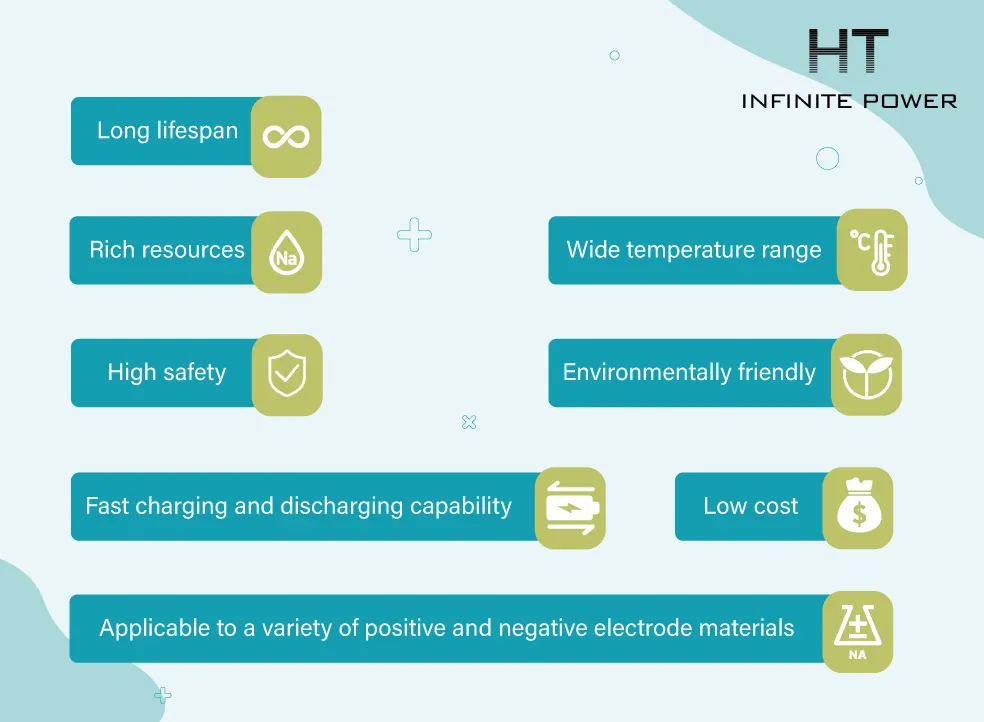
Sodium is one of the most abundant elements in the earth's crust, accounting for about 2.27% of the total mass of the earth's crust. Compared with lithium, sodium resources are widely distributed and have low mining costs. This feature gives sodium-ion batteries a clear advantage in raw material supply, reduces dependence on rare metal resources, and can effectively reduce production costs.
low cost
The manufacturing cost of sodium-ion batteries is low, mainly due to the abundance of sodium resources and low-cost positive and negative electrode materials. Commonly used cathode materials for sodium-ion batteries include layered oxides and Prussian blue analogs, and negative electrode materials can be hard carbon or sodium titanate. Compared with lithium-ion batteries, sodium-ion batteries have significant cost advantages in raw materials and production processes, making them more economical.
High safety

Sodium-ion batteries have high thermal stability and are not prone to thermal runaway, which reduces safety risks during battery use. The electrolyte options are diverse, and non-flammable, low-volatility electrolyte systems can be used to further improve the safety performance of the battery. This gives sodium-ion batteries a clear advantage in application scenarios that require high safety, such as energy storage systems and electric vehicles.
Long lifespan
Sodium-ion batteries have a long cycle life and can undergo thousands of charge and discharge cycles with little performance degradation. This feature makes them excellent in energy storage systems that require long-term stable operation. In addition, sodium-ion batteries maintain good performance in high and low temperature environments and are adaptable to a variety of complex working environments.
Environmentally friendly
The materials of sodium-ion batteries are environmentally friendly and non-toxic, and do not contain heavy metals and organic solvents that are harmful to the environment. Its production and recycling process has little impact on the environment, which meets the requirements of green energy and sustainable development. With the improvement of environmental awareness, the environmental advantages of sodium-ion batteries will receive more attention.
Applicable to a variety of positive and negative electrode materials
Sodium-ion batteries have a wide range of positive and negative electrode materials. Positive electrode materials include layered transition metal oxides, polyanion compounds and Prussian blue analogs; negative electrode materials include hard carbon, soft carbon, sodium titanate and metallic sodium. This diverse material selection gives sodium-ion batteries greater flexibility in performance optimization and cost control.
Fast charging and discharging capability

Sodium-ion batteries have good fast charging performance and can complete the charging process in a short time. This feature gives them obvious advantages in applications that require fast charging, such as electric vehicles and emergency power supplies.
Wide temperature range
Sodium-ion batteries are stable over a wide temperature range and can work normally in high and low temperature environments. Especially under high temperature conditions, the performance of sodium-ion batteries remains good, which gives them unique advantages in some extreme environment applications.
The future development direction of sodium-ion batteries
The development prospects of sodium-ion batteries are broad, and future research will continue to focus on the following directions:
Material optimization
Further optimize cathode and anode materials to improve specific capacity and cycle life. For example, on April 2, 2024, Zhongna Energy released a new product at the 2024 High-tech Sodium Electricity Industry Summit-high-rate sodium iron sulfate ion battery NFS-50, which is targeted at UPS, automotive hybrids, and automotive start-stop power supplies. High-magnification power consumption scenarios.
It is reported that this battery cell has the core advantages of high safety, high rate, long life and low temperature rise. With its 10C high rate discharge capability, it can continue to discharge for 5.7 minutes. Under the condition of 10C discharge, the temperature rise is only 13℃. Lifespan is significantly extended. It has a capacity of 50Ah, a nominal voltage of 3.6V, an energy density of 100Wh/kg, a cycle life of more than 5000 times, and a charge and discharge temperature support of -20~55S°C.
Electrolyte and separator
The current focus of electrolytes and separators is to develop more stable and efficient electrolytes and separators to improve the overall performance of the battery. For example, some progress has been made in the research of organic electrolytes in sodium-ion batteries, according to Zhang Fuming, Wang Jing, Zhang Peng, and Shi Zhiqiang. Research progress of organic electrolytes in sodium-ion batteries. Materials Engineering, 2021, 49(1): 11 -22.’s research found that ether-based and other organic electrolytes can improve the application of hard carbon and other materials in sodium-ion batteries.
Large-scale production
Explore large-scale production processes, reduce manufacturing costs, and promote the commercial application of sodium-ion batteries.
For example:
On December 22, 2022, INNOGEN successfully held the signing ceremony for the launch of INNOGEN Technology's new sodium-ion battery and the establishment of a sodium-ion battery mass production base in Chengdu, Sichuan.
On December 22, 2022, INNOGEN successfully held the signing ceremony for the launch of INNOGEN Technology's new sodium-ion battery and the establishment of a sodium-ion battery mass production base in Chengdu, Sichuan.
Summary of sodium-ion batteries
As a rising star in the energy field, sodium-ion batteries are rapidly occupying the research high ground with their advantages of rich resources, low cost, high safety performance and environmental friendliness. From early exploration to technological breakthroughs, and then to today's commercial applications, the development of sodium-ion batteries is full of challenges and innovations. With the continuous advancement of technology, the application prospects of sodium-ion batteries in fields such as energy storage, electric transportation and portable devices are becoming more and more broad, heralding a revolution in energy storage technology.
Major companies have entered the market and launched their own sodium-ion battery products, indicating that sodium-ion battery technology has moved from the laboratory to the market and the pace of commercialization has accelerated. The active layout of companies such as China Science and Technology Sodium, CATL, Cube New Energy, and EVE Energy has not only accelerated the research and development and industrialization of sodium-ion battery technology, but also contributed Chinese wisdom and Chinese solutions to the transformation of the global energy structure. With the continuous optimization of sodium-ion battery technology and the further reduction of costs, its role in the future energy market will become more and more prominent, bringing cleaner and more efficient energy solutions to human society.
Wind solar hybrid power generation system and solutions
What is supercapacitor energy storage and its application areas?