The difference between AC coupling and DC coupling in photovoltaic energy storage systems
2024-11-11

Energy storage technology refers to the process of storing energy through energy storage equipment and releasing it when needed; photovoltaic + energy storage combines solar photovoltaic power generation with energy storage technology to store the electricity generated by the photovoltaic system in order to ensure a stable power supply when needed.
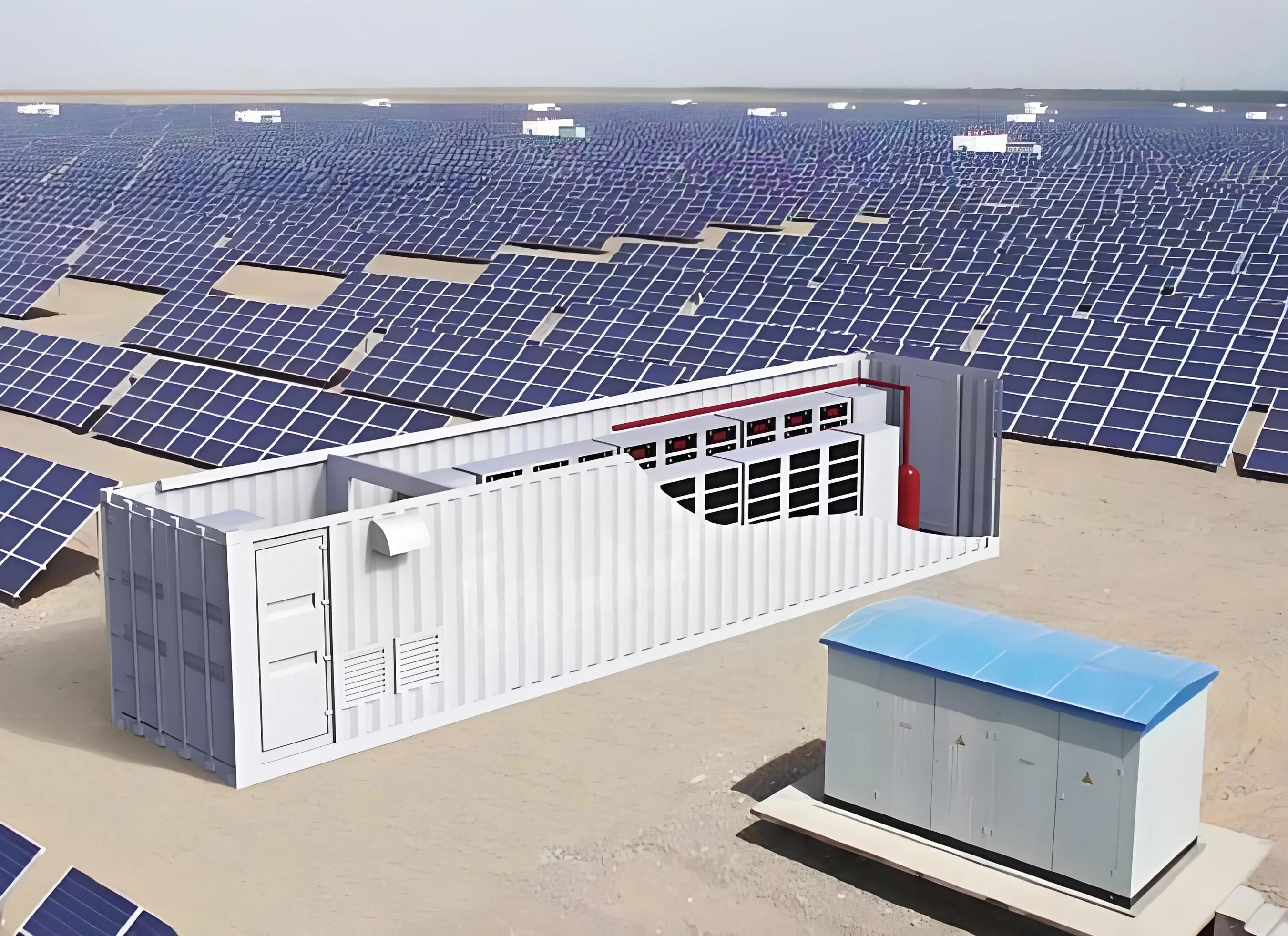
Currently, the system solutions for photovoltaic + energy storage on the market mainly include DC coupling and AC coupling. So what are the differences between these two solutions?
In this article, we will introduce in detail the definition, working principle, application scenarios and advantages of AC coupling and DC coupling in photovoltaic energy storage systems.
Definition of DC coupling and AC coupling
DC coupling means that the energy storage battery and photovoltaic module are connected to the DC side of the photovoltaic storage machine (photovoltaic inverter plus energy storage inverter). The photovoltaic storage machine is directly connected to the photovoltaic module, and the energy collection point is on the DC side.

AC coupling means that the energy storage system and the photovoltaic system are connected on the AC side (such as the AC bus), the energy storage system (battery, energy storage inverter) and the photovoltaic system (photovoltaic modules, photovoltaic inverter) work independently of each other, and the energy collection point is on the AC side.

However, due to differences in line structure, electrical equipment, etc., there are also significant differences between DC coupling and AC coupling in terms of working principles, flexibility, efficiency, etc.
How AC and DC coupling work
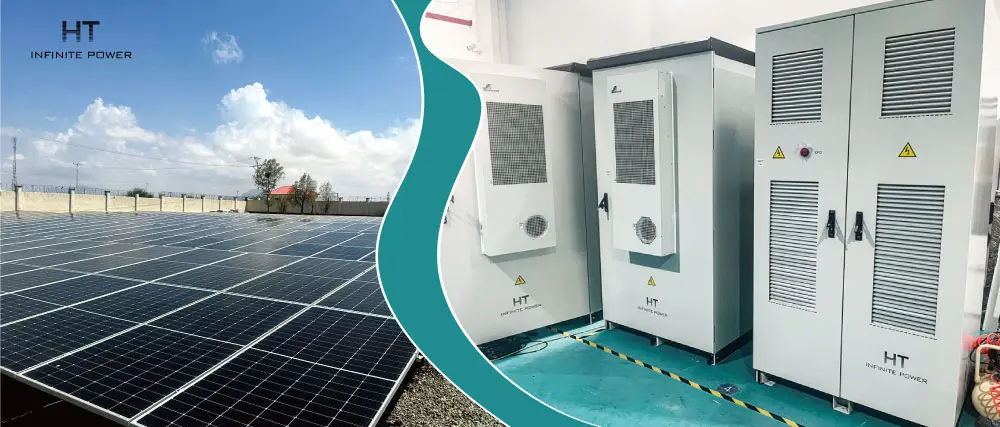
DC coupling:
In this solution, the photovoltaic inverter and the energy storage converter are integrated into a photovoltaic storage machine, which is directly connected to the photovoltaic modules, power grid, batteries, etc. to form a whole. When the photovoltaic system is running, the generated electricity can be used to charge the battery through the photovoltaic storage machine, and can also be used to power the load or be input into the power grid.
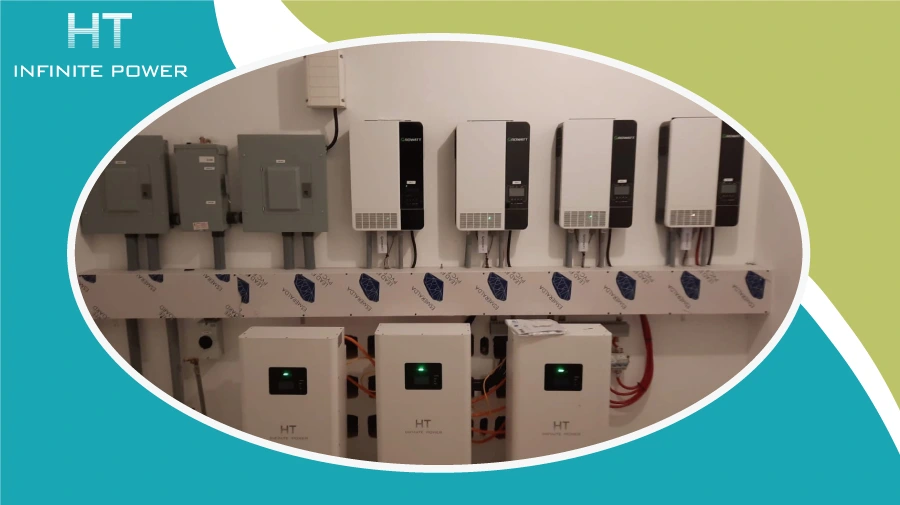
AC coupling:
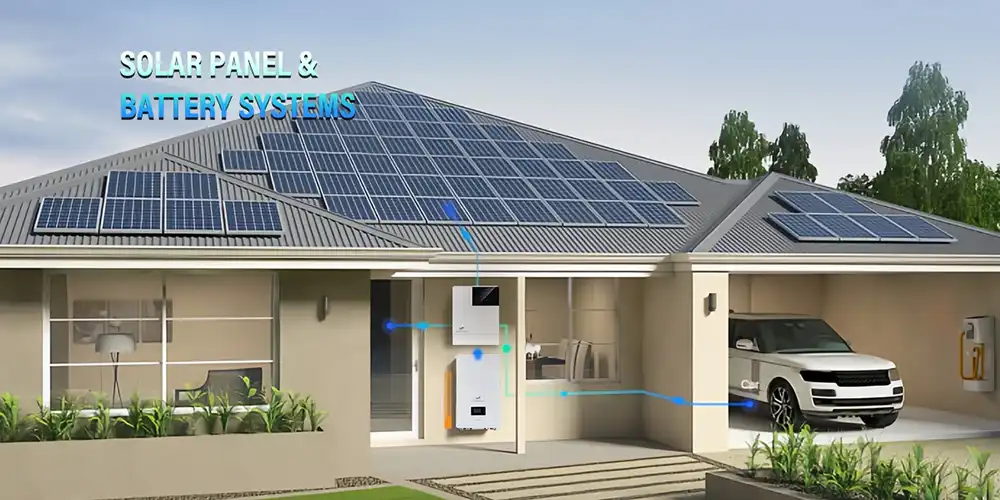
This solution includes two parts: photovoltaic system and energy storage system. The photovoltaic system consists of photovoltaic array and photovoltaic inverter; the energy storage system consists of energy storage inverter and battery. The two systems can operate independently without interfering with each other, or they can be disconnected from the grid to form a microgrid system. When the photovoltaic system is running, the generated electricity can be used to power the load or input into the grid through the photovoltaic inverter, and can also be used to charge the battery through the energy storage inverter.
Characteristics of AC coupling

1. Easy to connect to the grid:
By connecting through an AC transformer, the energy storage unit can be smoothly connected to the power network without complex control and modulation.
2. Able to solve the reactive power problem:
AC transformers can provide compensation for both active power and reactive power, thereby effectively improving the stability and reliability of the power system.
3. No impact on the power system:
AC coupling will not change the frequency and phase of the power system, so it will not affect the stability of the power system.
Characteristics of DC coupling

1. It can realize bidirectional flow of energy:
DC converters can realize bidirectional flow of energy at the same time, that is, the energy storage unit can release energy to the power network and store energy from the power network.
2. High control accuracy:
DC coupling can realize precise control of energy by controlling the switching devices of the DC converter, so that the energy storage system can respond faster and have higher control accuracy.
3. Strong suppression of harmonics:
DC converters can effectively suppress harmonics in the power network, thereby improving the waveform quality of the power system.
AC coupling and DC coupling have their own characteristics, so they are suitable for different application scenarios.
AC coupling is suitable for the following scenarios:
1. High requirements for grid connection:
For some energy storage systems that require large-scale grid connection (such as BESS exceeding 5MW/10MWH), AC coupling is a simple and reliable connection method.
2. High requirements for reactive power compensation:
For some occasions where reactive power compensation is required, AC coupling can provide a more flexible reactive power compensation method.
3. The charging and discharging rate requirements are not high:
For some scenarios where the charging and discharging rate requirements are not high, AC coupling can meet the requirements.
DC coupling is more suitable for the following scenarios:
1. High requirements for bidirectional energy flow:
For some application scenarios that require bidirectional energy flow, such as distributed energy, microgrids, etc., DC coupling can better meet the needs.
2. High requirements for harmonic suppression:
For some application scenarios that require improved waveform quality, such as data centers, airports, etc., DC coupling can better suppress harmonics.
3. High requirements for charging and discharging rates:
For some scenarios that require fast charging and discharging, such as photovoltaic energy storage charging piles, DC coupling can provide higher charging and discharging rates.
Comparison between AC coupling and DC coupling
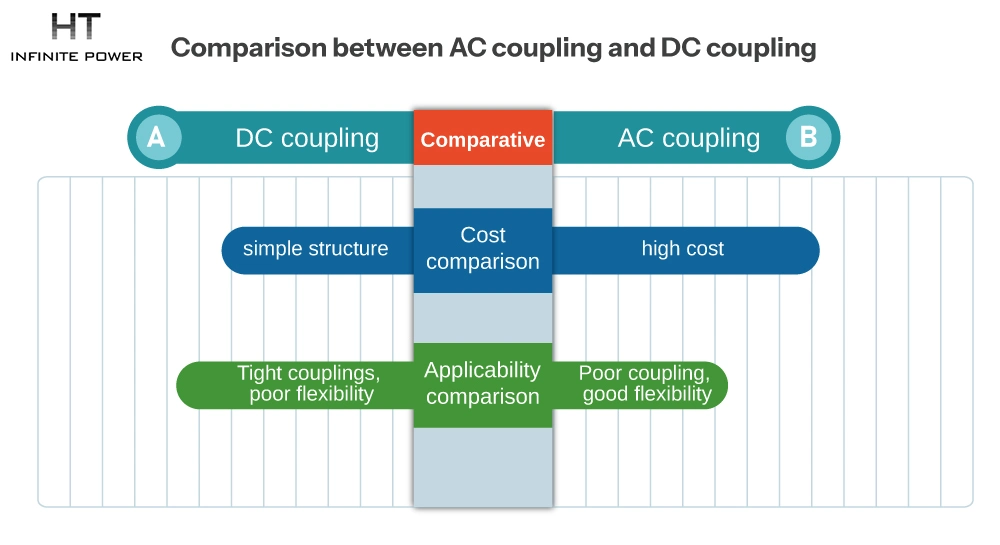
1. Cost comparison
DC coupling includes controller, energy storage inverter and switch, AC coupling includes photovoltaic inverter, energy storage inverter and distribution cabinet. From the cost point of view, the controller is cheaper than the photovoltaic inverter, and the switch is cheaper than the distribution cabinet. The DC coupling solution can also be made into a controller and inverter all-in-one machine, which can save equipment cost and installation cost. Therefore, the cost of DC coupling solution is lower than that of AC coupling solution.
2. Applicability comparison
In the DC coupling system, the controller, energy storage battery and energy storage inverter are in series, the connection is relatively tight, but the flexibility is poor. In the AC coupling system, the photovoltaic inverter, energy storage battery and energy storage inverter are in parallel, the connection is not tight, and the flexibility is good.
For example
If an energy storage system needs to be installed in an already installed photovoltaic system, it is better to use AC coupling. It only requires the installation of energy storage batteries and energy storage inverters, which will not affect the original photovoltaic system. In principle, the design of the energy storage system has no direct relationship with the photovoltaic system and can be determined according to demand.
If it is a newly installed off-grid system, photovoltaics, energy storage batteries, and inverters must be designed based on the user's load power and power consumption, and a DC coupling system is more suitable.
However, the power of DC coupling systems is relatively small, less than 500kW per system. Larger systems are easier to control with AC coupling.
Efficiency comparison between DC coupling and AC coupling
From the perspective of photovoltaic utilization efficiency, the two solutions have their own characteristics.
If the user has more load during the day and less at night, it is better to use AC coupling. The photovoltaic modules directly supply power to the load through the photovoltaic inverter, and the efficiency can reach more than 96%.
If the user's load is relatively small during the day and relatively large at night, the photovoltaic power generated during the day needs to be stored and used at night. It is better to use DC coupling. The photovoltaic modules store electricity in the battery through the controller, and the efficiency can reach more than 95%. If it is AC coupling, photovoltaic power must first be converted into AC power through a photovoltaic inverter, and then converted into DC power through a bidirectional converter, and the efficiency will drop to about 90%.
Summary:
To sum up, the characteristics and selection of DC coupling and AC coupling are not absolute. It is necessary to combine the actual application requirements and make a multi-faceted analysis to choose the appropriate connection method.
What is a blade battery? What are the advantages of blade batteries in new energy?
How to size a pv energy storage system?