How to size a pv energy storage system?
2024-11-07

The design of a pv energy storage system needs to consider many aspects, including the goals of the pv energy storage system, photovoltaic component selection, installation and safety. It involves knowledge in multiple fields such as power electronics, battery technology, energy management, etc. A successful pv energy storage system can not only store electrical energy effectively, but also optimize the electricity consumption pattern of households or businesses, reduce electricity bills, and even provide off-grid power supply capabilities when necessary.
1. Energy demand and load analysis
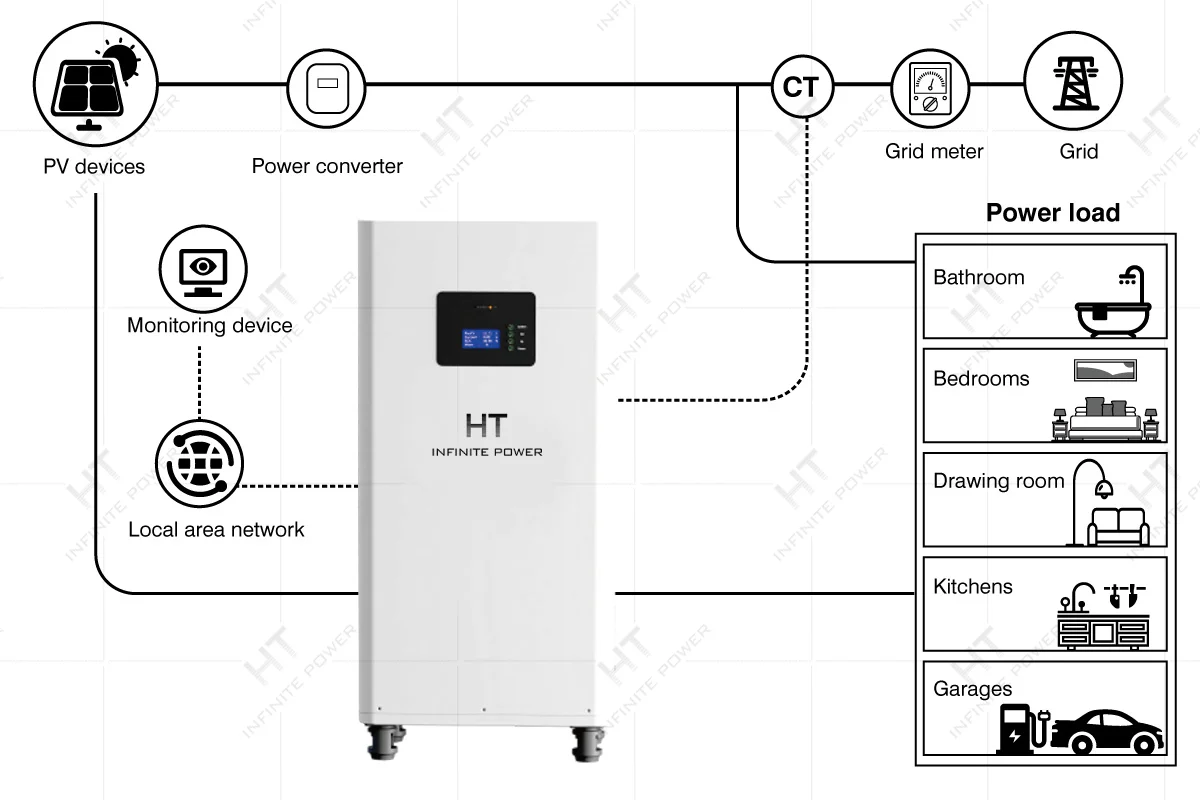
The pv energy storage system first needs to analyze the energy demand of the household or enterprise, including power load analysis, load type classification and peak power consumption period.
(1). Load demand
Understand the daily power consumption of the family or enterprise, determine the key loads (such as refrigerators, air conditioners, etc.) and their power. Household loads are generally divided into inductive loads and resistive loads. Loads with motors such as washing machines, air conditioners, refrigerators, water pumps, and range hoods are inductive loads. The starting power of the motor is 5-7 times the rated power. When calculating the power of the inverter, the starting power of these loads must be taken into account. The output power of the inverter must be greater than the power of the load. Resistive loads mostly refer to conventional electrical equipment without motors, such as lighting, computers, etc.
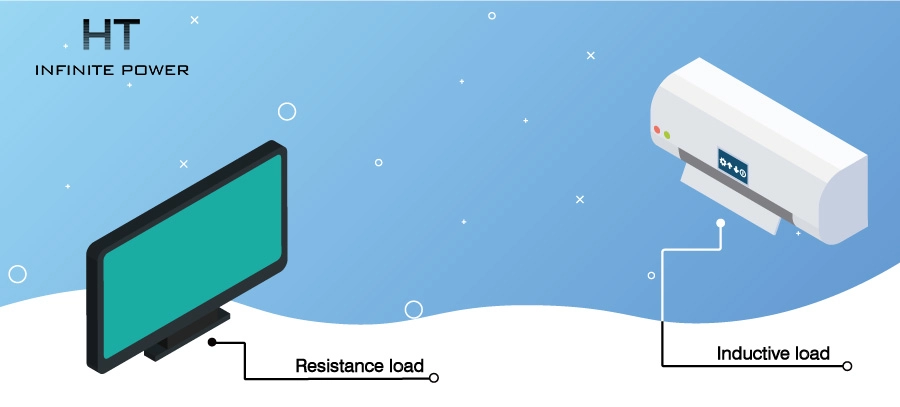
Calculating the load power is crucial for the design of pv energy storage systems. It determines the power of the inverter.
At present, many inductive loads use variable frequency starting technology. For such loads, the load power can be calculated according to the conventional resistive load. If it is a non-variable frequency starting inductive load, it is usually necessary to select an inverter with an isolation transformer or a power frequency inverter. (You can consult your equipment supplier or HT INFINITEPOWER staff to confirm the type of your electrical equipment)
(2). Energy storage capacity
The pv energy storage system needs to estimate the energy storage battery capacity based on the daily electricity consumption. However, for ordinary households or enterprises, considering that all loads cannot be turned on at the same time, in order to save costs, the sum of the load power can be multiplied by a coefficient of 0.7~0.9.

(3). Usage scenario
Consider whether the PV energy storage system needs to support grid-connected operation, off-grid operation, or a combination of the two, i.e. a hybrid energy storage system.

2. Calculation of solar panel capacity of pv energy storage system
(1).Calculating Solar Panel Capacity Based on Sunlight and Energy Demand
Calculate the capacity of solar panels based on sunlight conditions and energy demand to ensure that they can meet the energy needs of the home or business base load and provide backup power at night or in bad weather.
(2).Design Principle: Matching Photovoltaic Power Generation with Annual Energy Demand
The design principle of photovoltaic modules is to meet the daily electricity demand of the load under average weather conditions, that is, the annual power generation of the solar cell module must be equal to the annual electricity consumption of the load.
(3). Determine the power demand of the home or business
First, you need to calculate the average daily power consumption of the home or business. This can be estimated by looking at historical electricity bills. For example, if a home's average daily power consumption is 30kWh, then this will be the minimum power generation target that the PV energy storage system needs to meet.
(4). Understand the local sunshine conditions
The sunshine hours (solar radiation) in different regions are different, which will affect the power generation of photovoltaic modules. You can query the annual average sunshine hours through local meteorological data or online tools. Or you can consult HT INFINITEPOWER staff to help you query a more accurate annual average sunshine time.
(5). Consider the efficiency of photovoltaic modules
The efficiency of photovoltaic modules is affected by many factors, including module type (monocrystalline silicon, polycrystalline silicon, etc.), installation angle and direction, etc. The efficiency of general household or commercial pv energy storage systems is between 70% and 80%.

Assuming that the average daily electricity consumption of a household or enterprise is 10 kWh, the target self-sufficiency rate is 80%, the local photovoltaic panels can generate an average of 0.4 kWh of electricity per square meter per day, and assuming that the system efficiency factor is 0.3, the total power of the required photovoltaic components is: Potal=10s~26.67kWp0.3
In actual situations, considering factors such as the size of the components and the available space on the roof, it may be necessary to guarantee the sale. This means that in order to achieve an 80% self-sufficiency rate, the household or enterprise needs to install at least 26.67kWn of photovoltaic components
3. Pv energy storage system inverter and battery capacity matching
The capacity of the inverter needs to match the solar panels and battery bank, including both DC capacity and AC capacity.
(1). Determine the load requirements
First, you need to understand the total power requirements of your electrical equipment or system. This includes home or business electricity, commercial electricity, industrial electricity, etc. You can obtain this information by looking at the power parameters on the equipment nameplate or consulting the equipment manufacturer. (This is very important)
(2). Calculate peak power demand
After determining the total power demand, you need to calculate the peak power demand. Peak power refers to the maximum power required when all devices are working at the same time at a certain moment. Usually, the peak power demand is 20%~30% higher than the total power demand.
(3). Consider the inverter efficiency of the pv energy storage system
When the inverter converts DC power into AC power, there will be a certain amount of energy loss. Therefore, when calculating the inverter power, the inverter efficiency needs to be considered. The inverter efficiency is usually between 90% and 98%.
(4). Calculate the inverter power of the pv energy storage system
Based on the above information, the required inverter power can be calculated. The formula is as follows:
Inverter power = (peak power demand/inverter efficiency) × safety factor
The safety factor is usually 1.2~1.5 to ensure that the inverter can still work normally under extreme conditions.
Inverter power = (peak power demand/inverter efficiency) × safety factor
The safety factor is usually 1.2~1.5 to ensure that the inverter can still work normally under extreme conditions.
(5). Power matching
According to the calculated inverter power, select the inverter model that matches it. Make sure the rated power of the inverter can meet the peak power demand.
(6). Pv energy storage system inverter type
Inverters are divided into single-phase and three-phase types. Single-phase inverters are suitable for homes or small businesses, while three-phase inverters are suitable for large enterprises and industrial applications. Inverters can also be divided into off-grid and hybrid types according to whether they need to be connected to the grid.

You can choose the appropriate inverter type according to the power usage scenario
4. Selection and type considerations of battery pack capacity for pv energy storage system
The battery pack is the core of the pv energy storage system. The capacity needs to be determined according to energy demand and system design, while considering the cycle depth and battery type.
The current mainstream energy storage battery type is lithium iron phosphate battery. High safety and long service life.
5. Pv energy storage system battery management system (BMS)
BMS is essential for monitoring, protecting and optimizing battery performance. For a detailed introduction to BMS, please refer to article “What is BMS for energy storage batteries and what does it do?”
6. Whether the pv energy storage system is connected to the grid
Consider whether the pv energy storage system needs to be connected to the grid to achieve two-way energy exchange. Since the efficiency of photovoltaic power generation is affected by time and climate, some users will choose to connect the pv energy storage system to the grid to ensure that they can still get power from the grid when the sun is insufficient. Or sell the excess electricity to the grid company to make a profit.
7. Pv energy storage system operation mode
Different operation modes of the system should be considered during design, such as grid-connected, off-grid, and energy storage strategies under peak and valley electricity price differences.
Different application scenarios have different requirements for the operation mode of the pv energy storage system. The operation mode of the system mainly depends on the type of inverter.
Different application scenarios have different requirements for the operation mode of the pv energy storage system. The operation mode of the system mainly depends on the type of inverter.

8. Key points in the design of pv energy storage systems
Determine the power of the inverter according to the load type and power, confirm the component power according to the power consumption, and determine the battery capacity according to the nighttime power consumption or expected power consumption.
The capacity unit of the energy storage system is kWh. Its main function is to store excess electricity when the light conditions are sufficient, and to continue to supply power to electrical equipment when the light conditions are insufficient or at night. The size of the energy storage battery capacity depends on the daily power generation of the photovoltaic panel and the backup time under the condition of no photovoltaic.
For example, if the household load power is 10KW, the average power consumption time at night is 8 hours, the power of the electrical equipment is 5KW, and considering the DOD (depth of discharge) of the energy storage battery is 90%, then the capacity of the energy storage battery should be at least: 5KW*8HOUR*1.1=44KWH.
A perfect pv energy storage system needs to consider the average daily power consumption of electrical equipment, lighting conditions, photovoltaic panel configuration, installation location, and select the appropriate inverter according to the actual power consumption scenario and configure the reasonable energy storage battery capacity according to the power consumption time.
You can also contact the HT INFINITEPOWER team to get a professional one-to-one pv energy storage system design solution for free
The difference between AC coupling and DC coupling in photovoltaic energy storage systems
What Is a Battery Microgrid and What Are Its Key Benefits?